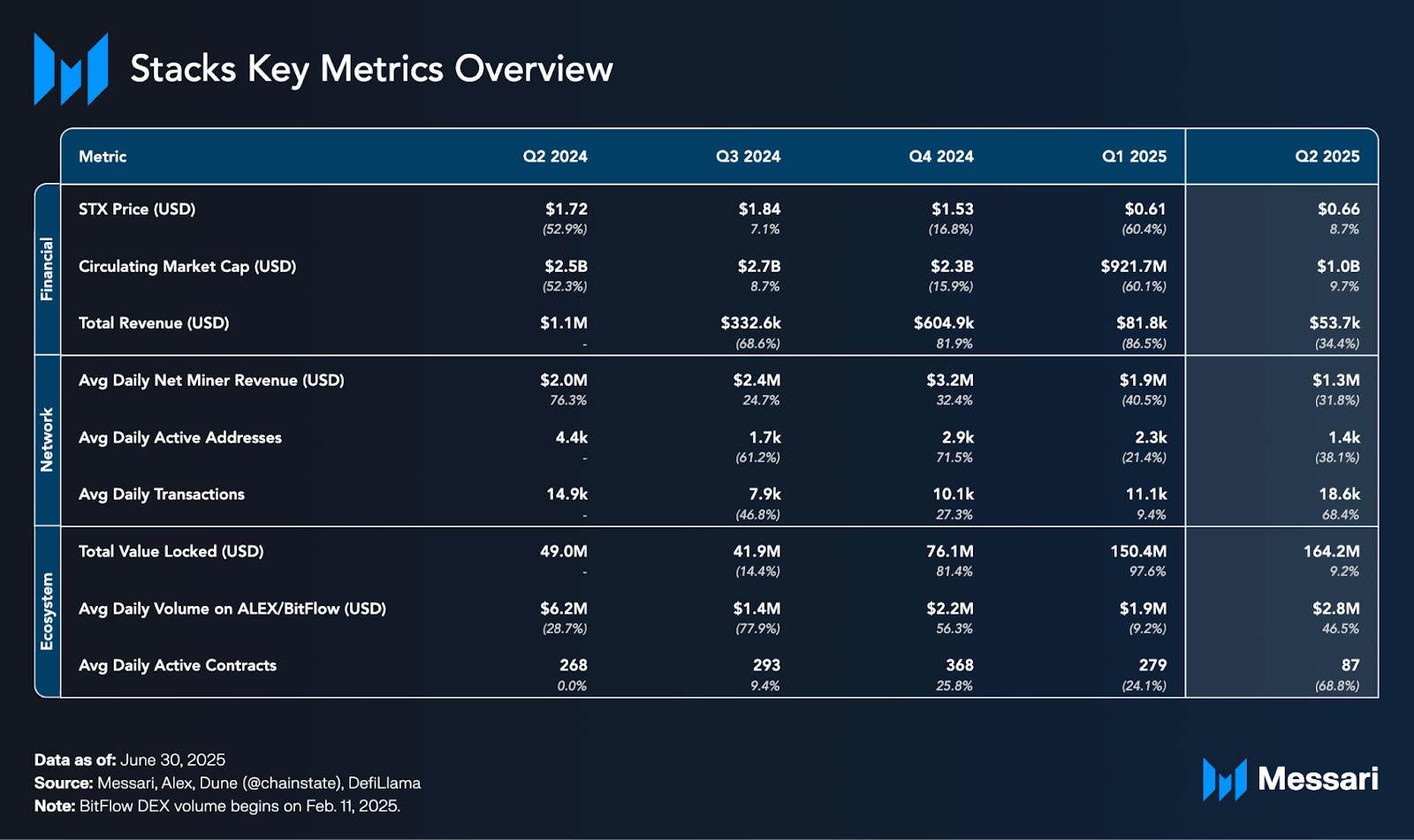
Stacks saw overall growth across several metrics in H1 2025, including DeFi TVL in USD (+97.6% Q1, +9.2% Q2), total transactions (+9.4% Q1, +68.4% Q2), total STX locked (+3.3% Q1, +2.4% Q2), and STX-denominated revenue (+0.8% Q1, flat in Q2).
In contrast, market cap and price trends reflected broader crypto market conditions: circulating market cap (–60.1% Q1, +9.7% Q2), STX price (–60.4% Q1, +8.7% Q2), average daily active addresses (–21.4% Q1, –38.1% Q2), and USD-denominated revenue (-86.5% Q1, –34.4% Q2) declined.
sBTC withdrawal functionality was activated in late April, the first 1,000 BTC cap filled in four days, while the second and third caps reached capacity in under 24 hours and 2.5 hours, respectively.
The Stacks blockchain briefly halted in January due to Signers being knocked offline during a Bitcoin forking, and a GitHub security incident led to a temporary pause in sBTC signer activity in March.
Jump Crypto, UTXO Capital, SNZ, BitGo, Hex Trust, Copper, and FORDEFI all integrated or expanded support for sBTC and STX, signaling rising institutional confidence in Stacks as a compliant, capital-efficient Bitcoin Layer 2.
Stacks released its 2025+ roadmap, which introduces trustless sBTC minting, dual staking with BTC and STX, fee abstraction, STX value accrual, and faster block production, among others. The upgrades aim to deepen trust minimization, expand institutional adoption, and strengthen Stacks’ role in scaling Bitcoin’s programmable economy.
Primer
Stacks (STX) is a Bitcoin Layer-2 (L2) that allows smart contracts and decentralized applications to use Bitcoin as a secure base layer. Transactions are executed on Stacks and settled on Bitcoin, leveraging Bitcoin's security and capital while offering arbitrary programmability that is not possible on its scriptable settlement layer.
Stacks has knowledge of the full Bitcoin state, thanks to its Proof-of-Transfer (PoX) consensus mechanism and Clarity programming language, allowing it to read from Bitcoin at any time. With PoX, miners commit BTC to eligible Stacks addresses that participate in consensus. This process of STX tokenholders participating in consensus and earning BTC from miners is known as Stacking. PoX runs parallel to Bitcoin’s Proof-of-Work (PoW) consensus, hashing and settling Stacks transactions on Bitcoin. Metadata from newly mined Stacks blocks are anchored to every Bitcoin block, allowing users to verify the canonical Stacks blockchain via Bitcoin blocks.
The recent Nakamoto upgrade strengthens Stacks’ integration with Bitcoin by (i) introducing sBTC, a decentralized tokenized BTC, (ii) enabling faster block production, (iii) improving Bitcoin finality, and (iv) reducing the chances of Maximal Extractable Value (MEV) exploitation.
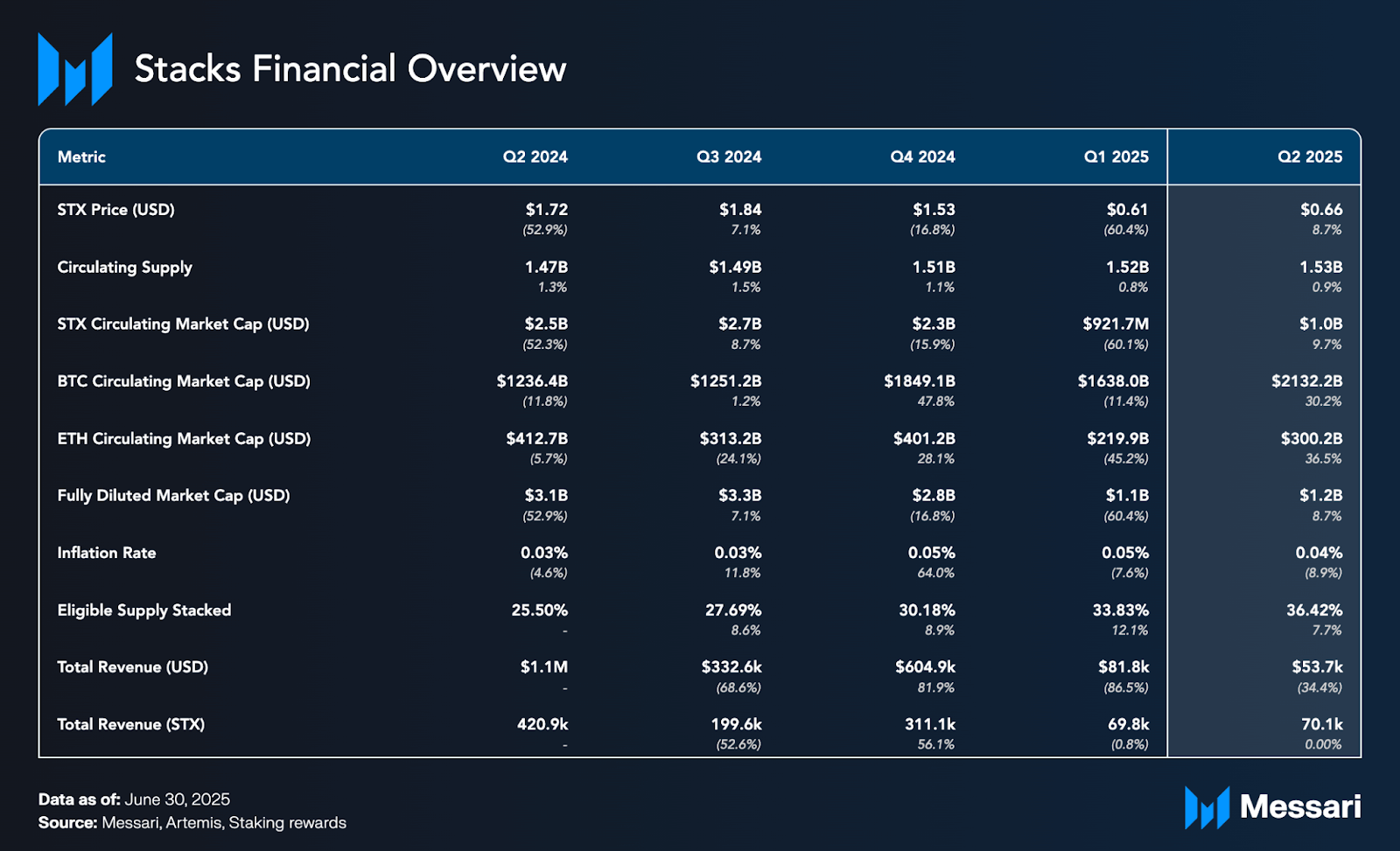
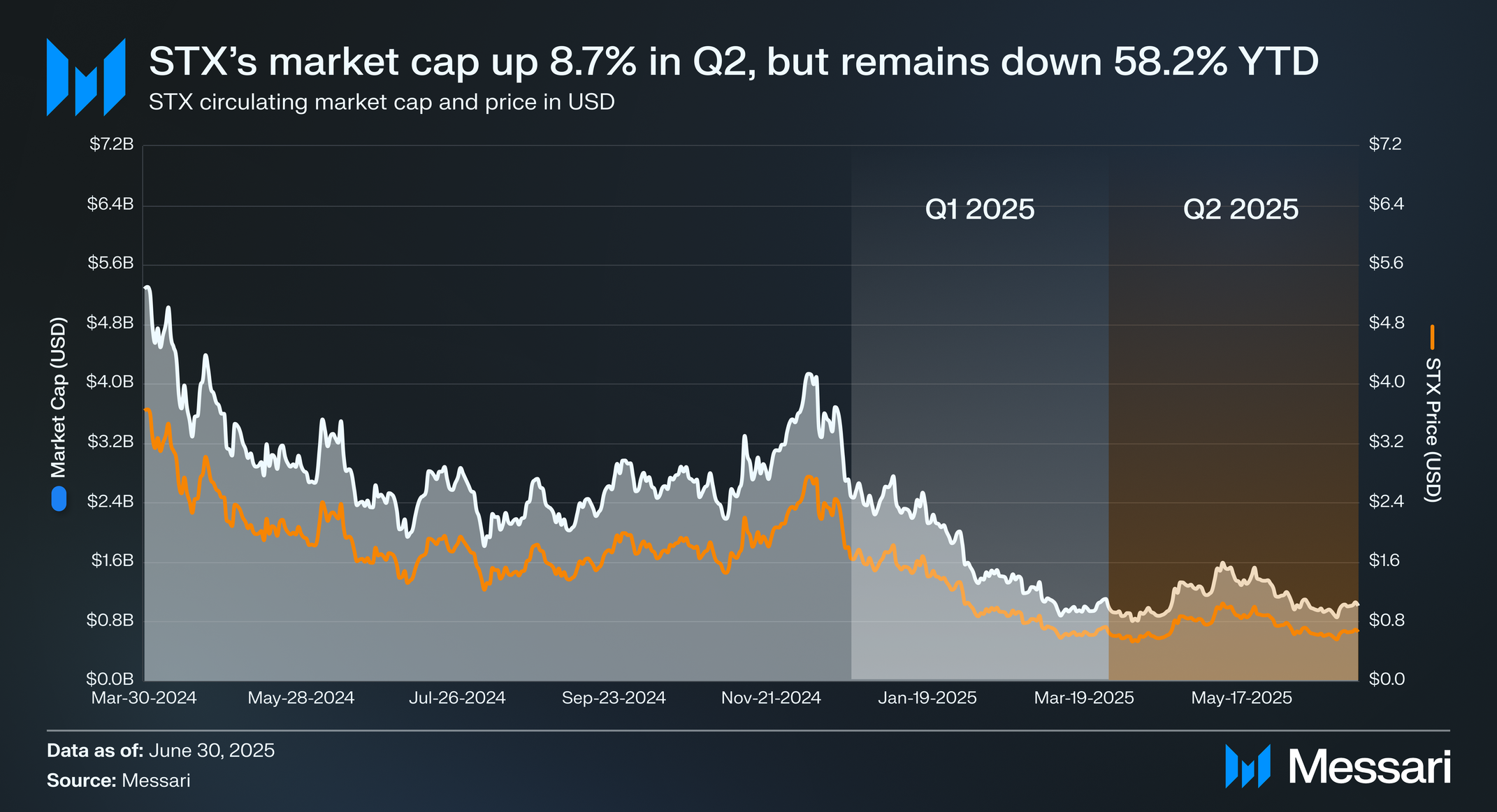
Q1 was marked by a broad downturn across crypto markets, with Bitcoin’s circulating market cap declining 11.4% and Ethereum’s falling 45.2%. In line with this trend, STX’s circulating market cap dropped 60.1% from $2.3 billion to $921.7 million. Its market cap ranking fell from 51 at the end of Q4 2024 to 67 at the end of Q1 2025.
In Q2, Bitcoin and Ethereum recovered up 30.2% and 36.5% QoQ, respectively. Stacks moved up 9.7% from $921.7 million to $1.0 billion, though its market cap rank declined further to 69. STX price followed a similar trajectory, dropping 60.4% in Q1 from $1.53 to $0.61, then increasing 8.7% in Q2 to $0.66. Year-to-date, STX is down 58.3% in market cap and 59.0% in price, falling from $2.31 billion to $1.01 billion and from $1.53 to $0.66, respectively.
Revenue
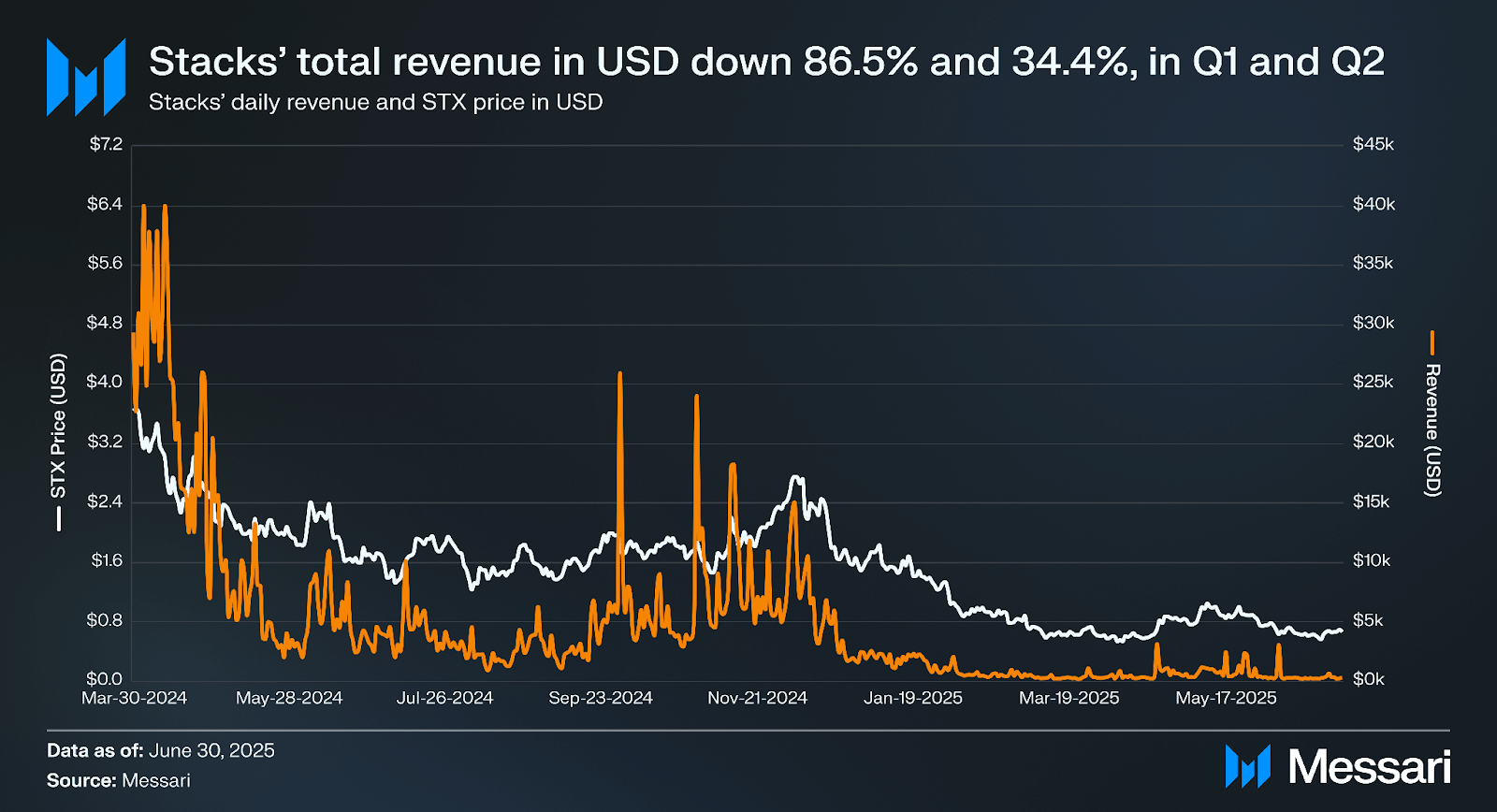
Stacks' revenue is measured as total transaction fees and is distributed to Miners through Stacks’ PoX mechanism (along with the coinbase reward, i.e., issuance). In Q1 2025, USD-denominated revenue declined 86.5% QoQ from $604,923 to $81,844. STX-denominated revenue fell more moderately, down 77.6% from 311,073 STX to 69,796 STX. In Q2, this divergence widened further: USD-denominated revenue dropped another 34.4% QoQ to $53,713, while STX-denominated revenue was nearly flat at 70,111 STX. The relative stability in STX terms suggests that while price action dampened dollar-denominated revenue, onchain activity remained consistent.
Network Analysis
Usage
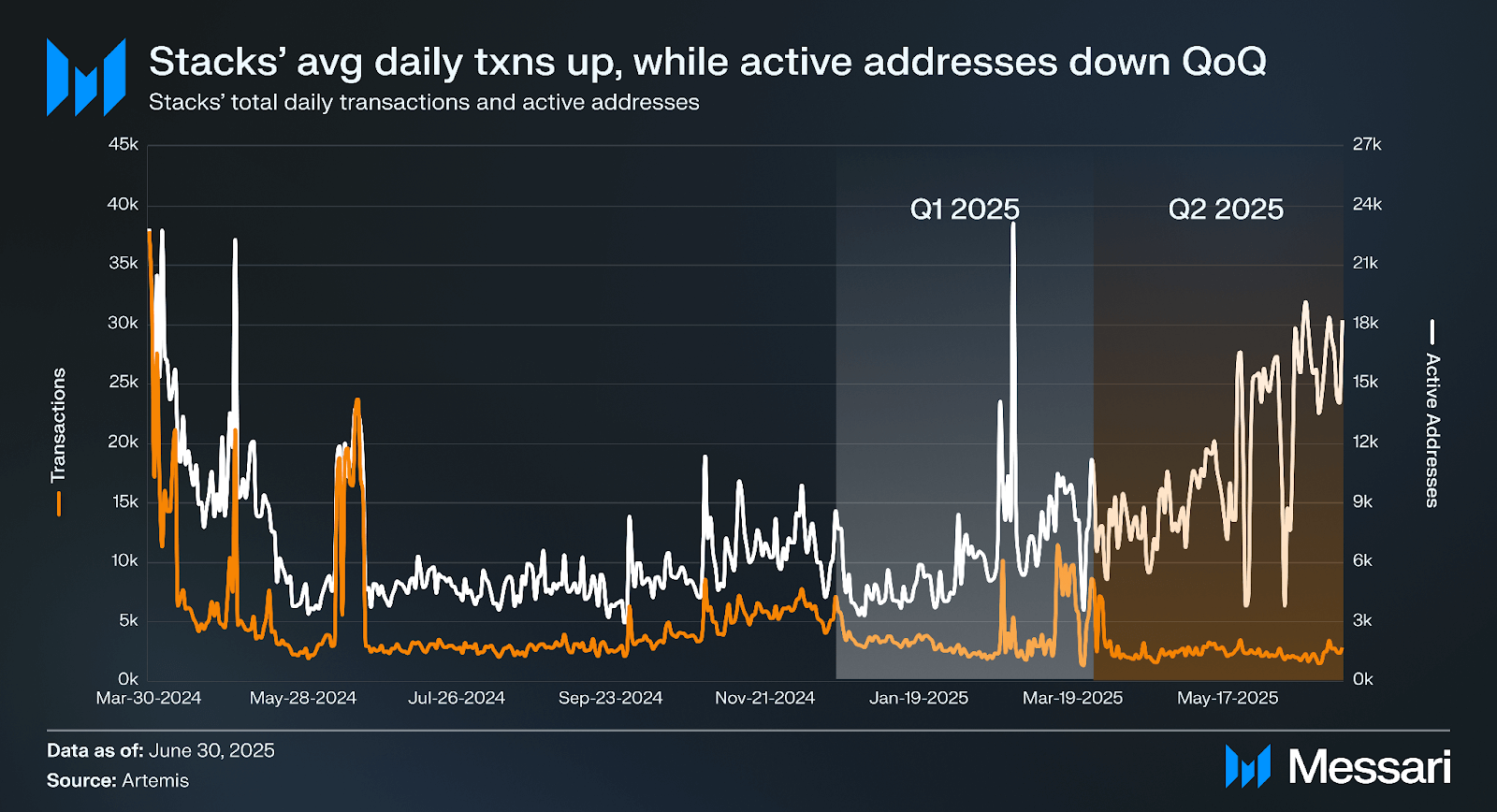
Average daily transactions increased in Q2, driven by DeFi protocols gaining traction across the Stacks ecosystem, despite the decline in users. From Q4 to Q1, average daily transactions increased 9.4% from 10,110 to 11,059. This growth picked up further in Q2, jumping 68.4% to 18,622. In contrast, average daily active addresses continued their decline in 2025. From Q4 to Q1, active addresses fell 21.4% from 2,902 to 2,281. This accelerated in Q2, with a 38.1% QoQ decline, from 2,281 to 1,412, as early-year activity from STX-20 inscriptions and new protocol launches tapered off.
In STX terms, average transaction fees declined 69.1% QoQ in Q1 2025, falling from 0.27 to 0.08 STX, and continued to drop 33.9% in Q2 to 0.05 STX. In USD terms, fees dropped 79.8% in Q1, from $0.51 to $0.10, and another 61.2% in Q2 to $0.04.
Stacks Improvement Proposals (SIP)
One new SIP, SIP-031, was introduced in the first half of 2025, aiming to improve Stacks' funding, coordination, and long-term ecosystem growth.
SIP-031
SIP-031 proposes a five-year growth emissions plan aimed at scaling the Stacks ecosystem by (i) creating a community-governed endowment funded through new STX emissions and (ii) launching a dedicated operating entity to manage execution across core development, growth, and ecosystem strategy. The Endowment is designed to address persistent bottlenecks (i.e., underfunding, fragmented coordination, and regulatory complexity) by consolidating capital under transparent governance, with improved financial reporting and community oversight. Funds would be allocated toward grants, DeFi incentives, marketing, security, and liquidity provisioning. The emissions plan introduces modest inflation, averaging 5.75% annually, with optional token burns if targets are exceeded.
Nakamoto and sBTC Developments
The Nakamoto upgrade was successfully activated in Q4 2024, following Stacks’ proposed rollout plan. This upgrade laid the foundation for sBTC, the first decentralized Bitcoin (BTC) peg that allows smart contracts to write back to the Bitcoin blockchain. Unlike other synthetic BTC variants, like wBTC (wrapped BTC), sBTC does not rely on federations or centralized custodians. Instead, sBTC uses an open network in which anyone can help maintain the peg. The exact details can be read in the original whitepaper. However, it’s important to note that while sBTC was originally designed to operate with fully decentralized open-membership signers, the current live implementation uses a federation of 14 elected signers as its base security model. The long-term roadmap still plans to rotate and expand this signer set toward a permissionless, dynamically rotating system aligned with the original whitepaper design.
Bootstrapping Phase: sBTC initially launches with a limited group of Signers selected through community voting. These Signers are responsible for maintaining the sBTC peg wallet, ensuring a 1:1 backing of BTC to sBTC.
Signer Rotation Phase (scheduled for Q2–Q3 2025): Will transition the signer set from the initial cohort to a fully decentralized and dynamically rotating group, marking a key milestone in trust minimization and network decentralization.
Time to Cap Fill
In Q4 2024, core functionality testing (Phase 0) was completed on testnet, followed by the launch of Phase 1 in December, which enabled mainnet Bitcoin deposits up to a 1,000 BTC cap, filled within just four days.The rollout was supported by security partners like Asymmetric Research and Immunefi. In Q1 2025, sBTC testing expanded with new tools on Clarinet and the Hiro Platform, while the second deposit cap was opened, with 97% filled on the first day. Although sBTC withdrawals were delayed, they were officially launched at the end of April, marking the beginning of seamless two-way BTC transfers between Bitcoin L1 and the Stacks L2, initially capped at 150 BTC per day. In Q2 2025, the third deposit cap went live and was filled in just 2.5 hours, adding capacity for another 2,000 BTC and highlighting strong, sustained demand for Bitcoin-native DeFi access through sBTC.
The accelerating pace of deposit cap fills: four days, one day, then two and a half hours, suggests rising engagement from both institutions and DeFi participants seeking exposure to Bitcoin-native applications.
Blockchain Halts
On Jan. 6, 2025, the Stacks blockchain halted at block 429,036 around 7:30 UTC due to a temporary drop in signer participation, which disrupted the threshold required for optimal block signing. Core developers quickly identified the issue as signer-related and began coordinating restoration. By 8:46 AM UTC, block production resumed, though intermittent activity was expected as signers fully restored participation.
Later in March, Stacks' core developers disclosed that they had identified and mitigated a supply chain attack targeting the Stacks GitHub organization. An attacker compromised a GitHub user with write access, modified workflows, and exfiltrated repository and organization-level secrets such as API tokens. In response, the team rotated credentials, reviewed audit logs and sensitive repositories, and hardened GitHub configurations with stricter controls. To allow time for these steps, the team delayed the sBTC withdrawal functionality and cap raise to April 30, 2025. As an interim safeguard, over 30% of sBTC signers voluntarily halted their signing activity to prevent further risk. The team confirmed that no releases were compromised, all funds remain safe, and the network operates normally.
Stacking
Stacking, similar to mining on Bitcoin, is largely dominated by pools. In the post-Nakamoto era, nearly everyone must delegate to a pool. Thus, it is impossible to know how many participants are in the custodial pools as the data is not directly onchain.
The system operates as a feedback loop driven by the interaction between miners and Stackers through the Proof-of-Transfer (PoX) mechanism. Miners transfer BTC to produce blocks, while Stackers lock STX to support consensus, network security, and receive BTC rewards. Specifically, the more miners participating in the network, the more BTC rewards can be distributed among Stackers. However, assuming the number of miners stays constant, an increase in Stacker participation reduces rewards for Stackers overall.
Stackers, Miners, and Stacking
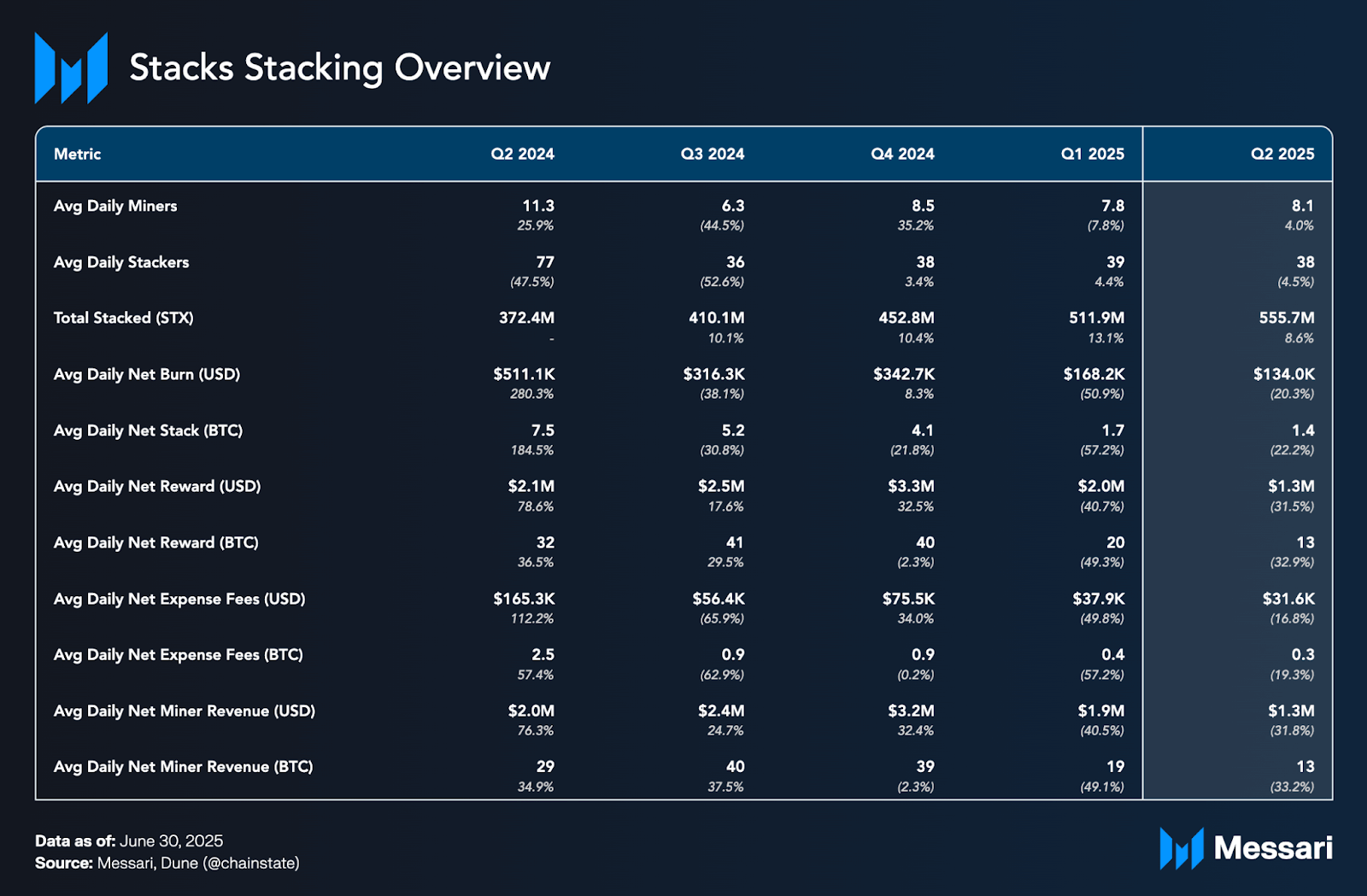
Pool participation continues to dominate Stacking in H1 2025, making it difficult to assess unique participation. What is more visible is the steady growth in total STX locked: from 452.8 million STX in Q4 2024 to 511.9 million in Q1 (+13.0%), and further to 555.7 million in Q2 (+8.6%). Average daily Stackers remained stable within these pools, increasing slightly from 38 to 39 in Q1 (+3.4%) before returning to 38 in Q2 (–4.5%). While individual participation appears flat, aggregate commitment trended upward. In accordance, average daily miners dropped 7.8% in Q1 to 7.8 and only partially recovered in Q2 (+4.0% to 8.1).
Net Burn and Net Stack
The impact of this slowdown was visible across capital flows and economic incentives. Average daily net burn fell from $342,700 to $168,200 per day in Q1 (-50.9%), and declined further to $134,000 per day in Q2 (-20.3%). Similarly, average daily net stack volumes dropped from 4.1 BTC to 1.7 BTC in Q1 (-57.2%) and decreased again to 1.4 BTC per day in Q2 (-22.2%). These drops point to the close dependency of Stacks’ PoX mechanism on Bitcoin; specifically, when BTC appreciates faster than STX, economic incentives may be temporarily misaligned.
Net Rewards and Expense Fees
Stacking rewards and associated expense fees also contracted. In Q1, average daily net rewards declined from $3.3 million to $2.0 million, a 40.7% drop. This was followed by another decline in Q2 to $1.3 million, down 31.5% from the previous quarter. Average daily net expense fees followed a similar pattern, falling from $75,521 to $37,939 in Q1, a 49.8% decrease, and dropping further in Q2 to $31,551, a 16.8% decline. These trends indicate growing consolidation among larger Stackers who now dominate reward capture, further reducing incentives for smaller participants to engage.
Miner Revenue
Miner revenue mirrored the broader reset. In Q1, average daily net miner revenue fell from $3.2 million to $1.9 million, a 40.5% decline, and dropped further to $1.3 million in Q2, a 31.8% decrease. The BTC-denominated equivalents followed a similar path, falling from 39 BTC to 19 BTC in Q1, and then down to 13 BTC in Q2. The decrease in the number of active miners and lower competition for BTC rewards resulted in diminished revenue.
Ecosystem Analysis
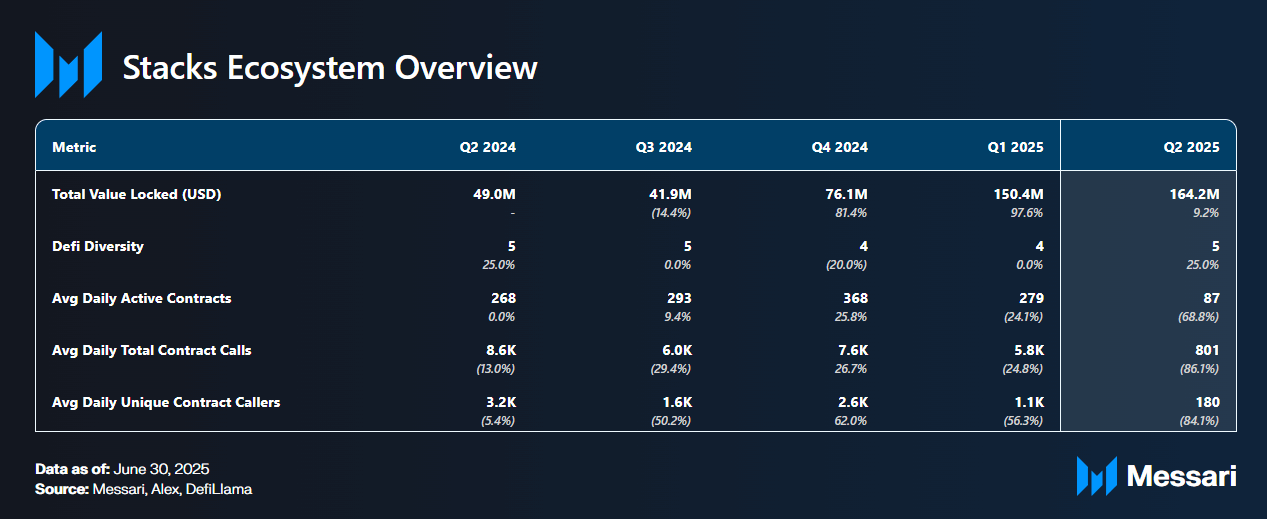
The overview table highlights several key metrics, including the DeFi Diversity score, which tracks the number of protocols accounting for the top 90% of DeFi TVL. A more distributed DeFi landscape helps reduce systemic risk from protocol-specific failures. Stacks ended Q2 2025 with a DeFi Diversity score of 5, up from 4 in the two previous quarters.
DeFi Total Value Locked (TVL)
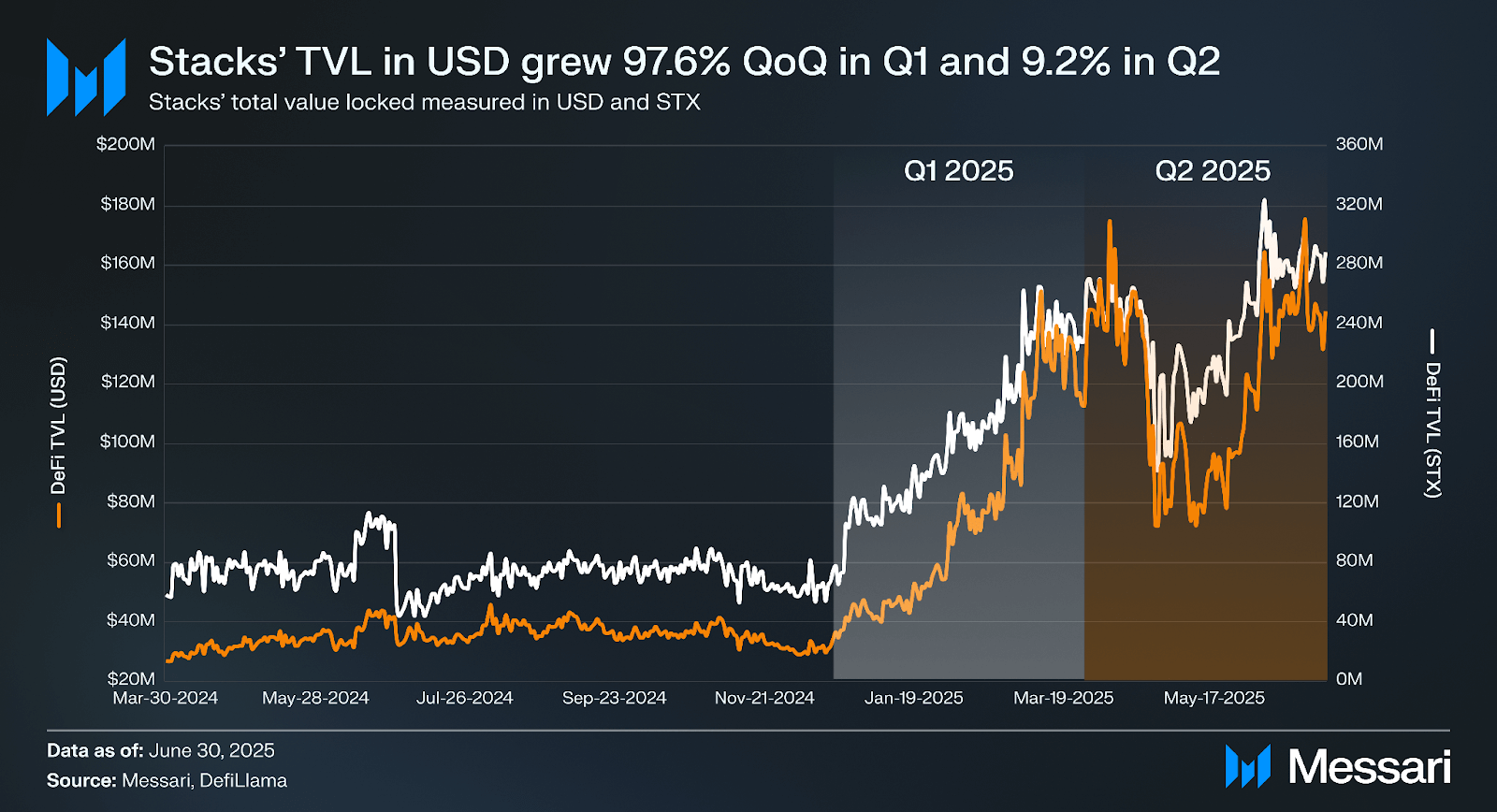
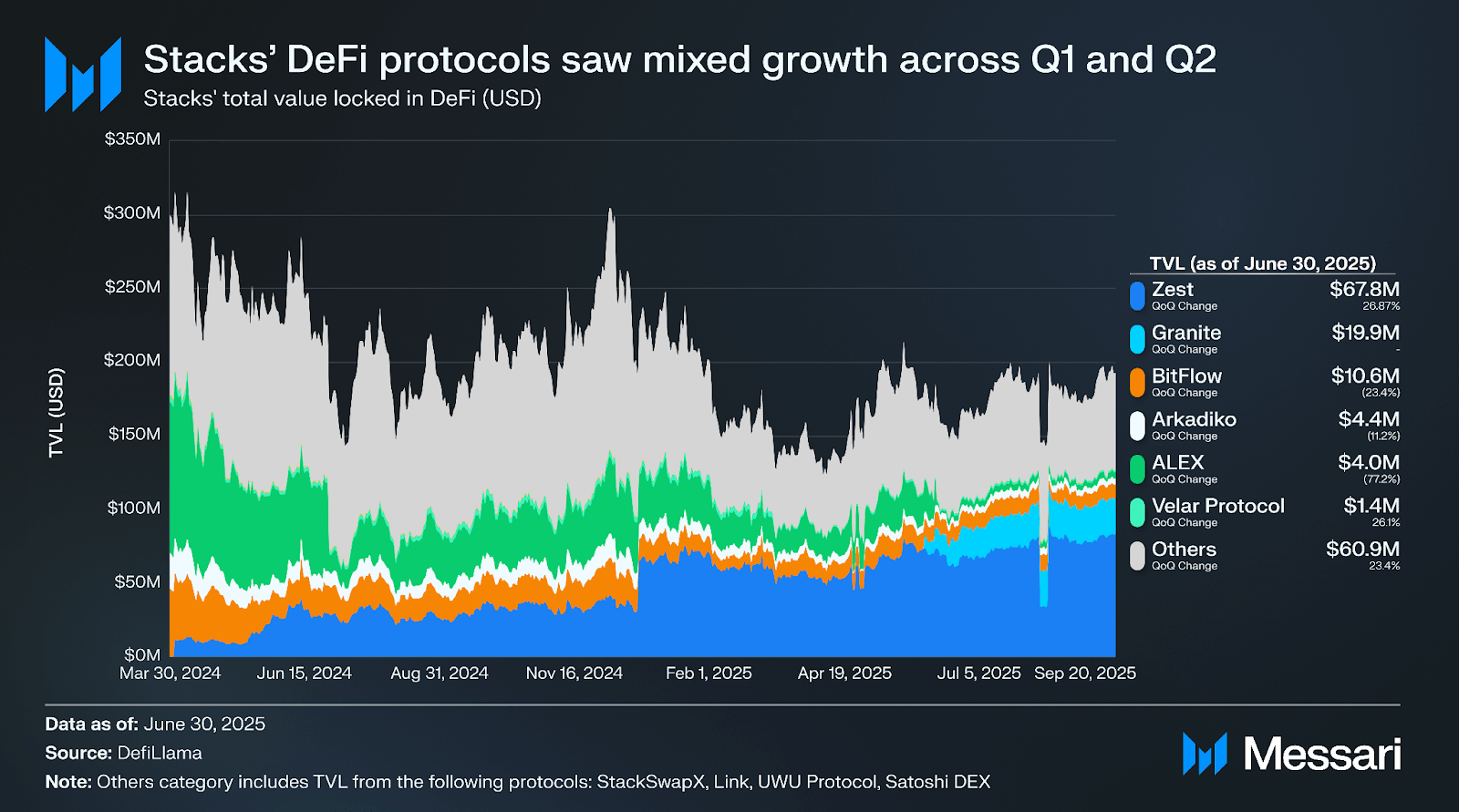
From Q4 2024 to Q1 2025, Stacks’ DeFi total value locked (TVL) climbed 97.6% from $76.1 million to $150.4 million. This growth continued in Q2, with TVL increasing another 9.2% to $164.2 million. However, contract-level activity trended in the opposite direction.
In Q1, average daily active contracts fell 24.1% from 368 to 279, while average daily contract calls declined 24.8% from 7.6K to 5.8K. Unique contract callers also dropped 56.3% from 2.6K to 1.1K during the same period. This trended into Q2 with average daily active contracts declining another 68.8% to 87, while total contract calls dropped 86.1% to 801 and unique contract callers fell 84.1% to 180 from 1,130. This divergence reflects the growing concentration of user engagement within a handful of capital-efficient DeFi protocols, notably Granite, Bitflow, and Velar.
The total TVL across Stacks’ top DeFi protocols declined 26.8% in Q1 2025 to $96.6 million, before recovering 12.2% in Q2 to $108.3 million, showing signs of stabilization and renewed activity following the March low.
Specifically, in Q2, Zest led all protocols with $67.8 million in TVL, growing 26.9% QoQ and accounting for 62.6% of total DeFi value on Stacks. Granite debuted with $19.9 million in TVL, quickly establishing itself as a major player. Bitflow followed with $10.6 million, though its TVL declined 23.4% QoQ. Arkadiko dropped another 11.2% QoQ to $4.4 million, while ALEX fell 77.2% to $4.0 million, now making up just 3.7% of Stacks’ total TVL. Velar Protocol rose 26.1% to $1.4 million, rebounding after a prior collapse. Meanwhile, smaller protocols such as StackSwap ($123K, +4.2%), UWU Protocol ($6.3K, +13.1%), Satoshi DEX ($3.9K, -45.5%), and XLink ($7.5K, -12.7%) each remained below the $1 million threshold.
New 2025+ Roadmap
Released in Q2, the Stacks 2025+ Roadmap outlines a strategy to strengthen the network's position as the leading Bitcoin Layer-2 by advancing performance, trust minimization, and capital efficiency. Central to the roadmap are the upcoming “Satoshi Upgrades,” which propose the following:
Improved custodial options for institutional participants wanting to get involved with sBTC, aiming to lower operational friction and meet compliance requirements.
Self-minting options that aim to make sBTC fully self-custodial, removing intermediaries from the issuance process.
Bitcoin post-conditions to enforce L1 controls on smart contracts, giving developers more robust primitives for secure Bitcoin-native interactions.
Allowing network fees to be paid in sBTC instead of STX, simplifying the UX for Bitcoin users who no longer need to hold two tokens to transact on Stacks.
Introducing dual staking with BTC and STX to enhance network security and yield design, while letting users be rewarded in native BTC.
Vaults for easy UI/UX, making complex interactions, such as staking and rewards management, more accessible.
Alongside these Satoshi Upgrades are technical enhancements, including:
A new version of Clarity that can compile to WebAssembly (Wasm), broadening language support and tooling for developers.
No cooldown for Stacking, improving liquidity and user flexibility.
UI/UX improvements for Stacking, including a new Stacking Pool Rewards Calculator and tracking system for delegations, accepted commitments, and participation stats. This also includes a standalone REST API and SDK for better pool operator integration and transparency.
Launching PoX 5, an upgrade to the Proof-of-Transfer consensus mechanism that refines economic incentives and further decentralizes miner-stacker coordination.
Finally, the roadmap includes broader ecosystem initiatives such as:
Expanding interoperability for sBTC through integrations with Axelar and Wormhole, allowing it to flow across other chains and applications.
Onboarding of new wallets to support improved access and regional compatibility.
Marketing efforts, including the hiring of a CMO and new grants to grow developer and user activity.
Together, these upgrades seek to scale Bitcoin’s programmable economy, attract institutional capital to reach the goal of $1 billion in DeFi TVL, and accelerate STX value capture.
Developer Metrics
Earlier in the year, Stacks was ranked as the 7th fastest-growing crypto developer ecosystem by Electric Capital, driven by strong developer engagement. However, this momentum weakened over the following quarters.
In Q1, the average number of weekly core developers fell 12.7% QoQ, from 120.5 to 105.2, while ecosystem developers grew 25.6%, increasing from 30.7 to 38.5. Commit activity showed a divergence: weekly core commits declined 27.4% to 739.4, whereas ecosystem commits rose 17.2% to 234.3, suggesting that ecosystem contributors remained relatively active despite shifts in core team structure.
By Q2, core developers dropped 33.7% QoQ to 69.8, and ecosystem developers fell 35.8% to 24.7. Commit volumes declined across the board, with core commits down 49.1% QoQ to 376.4, and ecosystem commits dropping 38.7% to 143.6. These declines reflect a broader contraction in development activity, particularly among core contributors.
Institutional Adoption
Early in the year, Jump Crypto, UTXO Capital, and SNZadopted sBTC as part of their broader Bitcoin strategy. In April, BitGo integrated sBTC into its custody infrastructure, extending its role beyond a Signer to an enabler of institutional BTC deployment on Stacks. Shortly after, Hex Trust expanded its institutional custody and staking services to include STX and sBTC, targeting demand in Asia and the UAE. In June, Hex Trust further deepened its support by adding SIP-010 token support, allowing more compliant access to Bitcoin-denominated DeFi yield. FORDEFI also integrated Stacks to allow institutional BTC holders to move capital into the Bitcoin Layer 2 ecosystem. Rounding out the quarter, Copper launched sBTC stacking features, adding programmable Bitcoin yield to its institutional offering and reinforcing the growing infrastructure for institutional participation in Bitcoin DeFi.
General Development and Growth
Other general developments that occurred across Q1 and Q2 include:
January:
Granite integrated the Pyth Network oracle into Stacks, delivering real-time institutional-grade price feeds to support Bitcoin-native DeFi.
LearnWeb3 launched its second Stacks course focused on building apps using Clarity and introduced a $25,000 bounty to support sBTC integration.
February:
PushChain integrated with Stacks to enable cross-chain transaction support, unlocking seamless wallet interoperability.
Immunefi and Stacks launched their second Attackathon.
CoinTracker became the first tax platform to support automatic categorization of Stacks DeFi transactions, including staking.
Major institutions, including Jump Crypto, UTXO Capital, and SNZ, have adopted sBTC as part of their Bitcoin strategy, signaling growing institutional interest in Bitcoin DeFi through Stacks.
March:
Stacks launched Ascent, a new builder initiative offering grants and support for early-stage startups building on Stacks.
Stacks' founder expressed a positive outlook on potential Bitcoin covenant support, noting that while Stacks does not rely on Bitcoin L1 changes, a well-implemented covenant solution could significantly benefit sBTC upgrades.
April
Bitfinex announced it would list STX, with trading going live on April 10, broadening access to Bitcoin-native DeFi.
Stacks Asia Foundation launched a campaign with Taptive, SNZ Capital, and others to grow sBTC TVL toward 21,000 BTC.
Stacks Asia DLT Foundation joined Abu Dhabi Global Market (ADGM), securing regional regulatory recognition.
May
Sui Network integrates Stacks and sBTC, extending Bitcoin-native DeFi to its ecosystem.
June
STX DEFI SZN launched, offering a 50,000 STX reward pool across quests with Granite, Bitflow, Zest, and others to grow Bitcoin-native DeFi.
Stacks held its third hackathon of the year in Las Vegas, drawing hundreds of builders and project submissions.
Closing Summary
In Q1 2025, the broader crypto market contracted, with Bitcoin and Ethereum market caps down 11.4% and 45.2% QoQ. STX underperformed both assets, with its circulating market cap and price dropping 60.1% and 60.4% respectively. Despite these declines, Stacks saw a sharp recovery in network revenue, which rose 1144.8% QoQ in USD terms. Protocol-level trends were mixed: average daily transactions increased 9.4% even as daily active addresses declined 21.4%, and DeFi TVL in USD terms grew 97.6% to $150.4 million. Total STX stacked also rose modestly, up 13.1% from 452.8 million to 511.9 million STX.
In Q2, markets rebounded, with Bitcoin and Ethereum gaining 30.2% and 36.5%, respectively. STX stabilized alongside broader recovery, climbing 9.7% in market cap and 8.7% in price. However, usage metrics remained uneven: average daily active addresses declined another 38.1%, while average daily transactions increased 68.4%. USD-denominated revenue fell 34.4%, though total STX stacked continued to grow, increasing 8.6% from 511.9 million to 555.7 million STX.
Despite these metrics, institutional traction advanced with (i) BitGo, Copper, and Hex Trust all launching sBTC custodial and stacking support, (ii) ForDeFi integrating sBTC into its protocol, and (iii) Jump Crypto, UTXO Capital, and SNZ all adopting sBTC into their Bitcoin strategy. Additionally, the launch of Stacks’ 2025+ roadmap outlined upcoming self-custodial sBTC, post-conditions for Bitcoin, dual staking, and PoX upgrades, laying technical and economic groundwork for scaling Bitcoin-native DeFi. While H1 reflected the growing pains, it also marked the foundation for Stacks’ next era as Bitcoin’s programmable layer.
This report was commissioned by the Stacks Foundation. All content was produced independently by the author(s) and does not necessarily reflect the opinions of Messari, Inc. or the organization that requested the report. The commissioning organization may have input on the content of the report, but Messari maintains editorial control over the final report to retain data accuracy and objectivity. Author(s) may hold cryptocurrencies named in this report. This report is meant for informational purposes only. It is not meant to serve as investment advice. You should conduct your own research and consult an independent financial, tax, or legal advisor before making any investment decisions. Past performance of any asset is not indicative of future results. Please see our Terms of Service for more information.
No part of this report may be (a) copied, photocopied, duplicated in any form by any means or (b) redistributed without the prior written consent of Messari®.