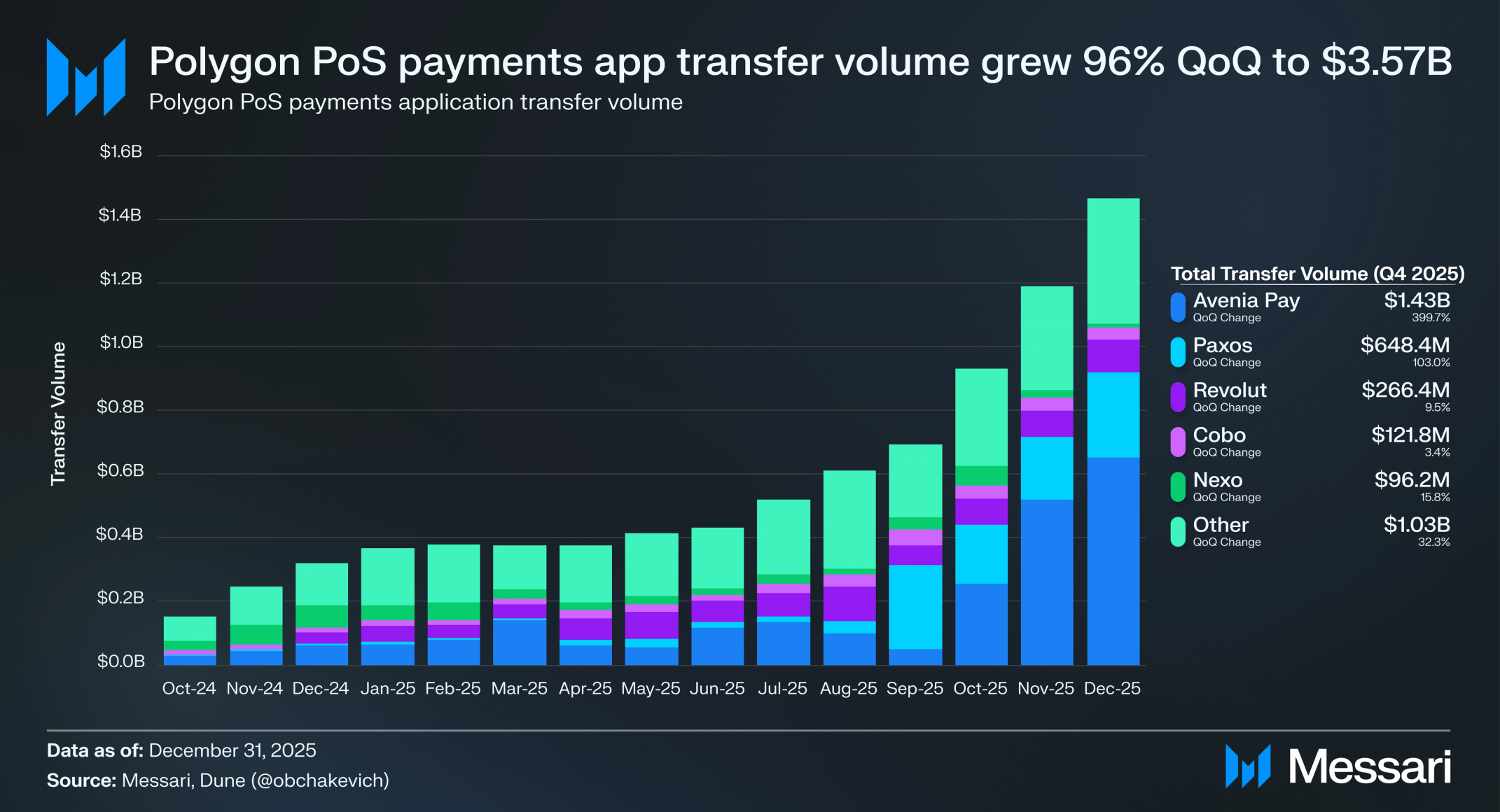
Over 50 payments-focused applications on Polygon PoS facilitated $3.57 billion in transfer volume, up 96.5% QoQ and 399.2% YoY.
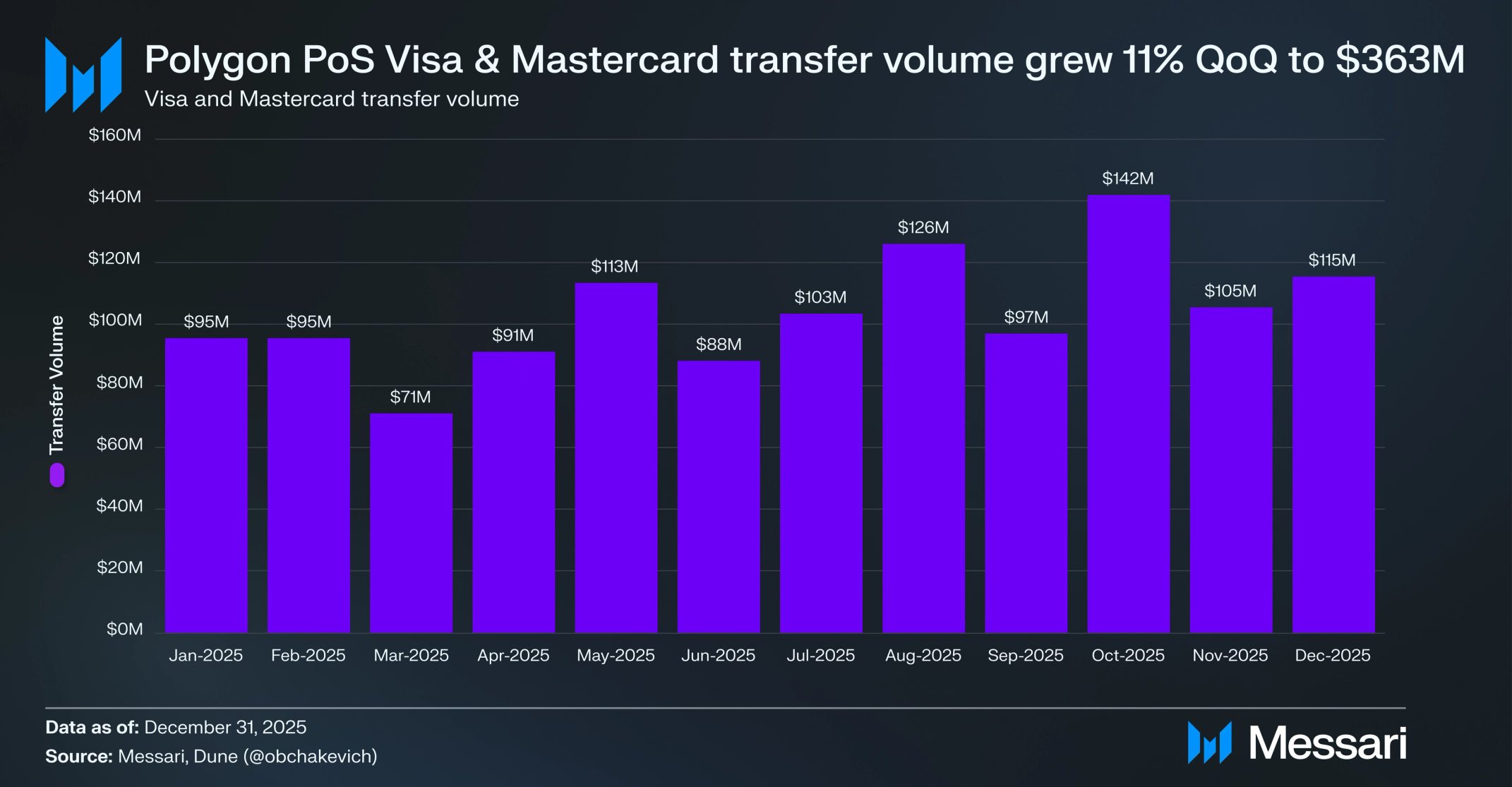
Stablecoin-linked crypto cards processed $362.6 million in combined Mastercard and Visa volume across ten card programs.
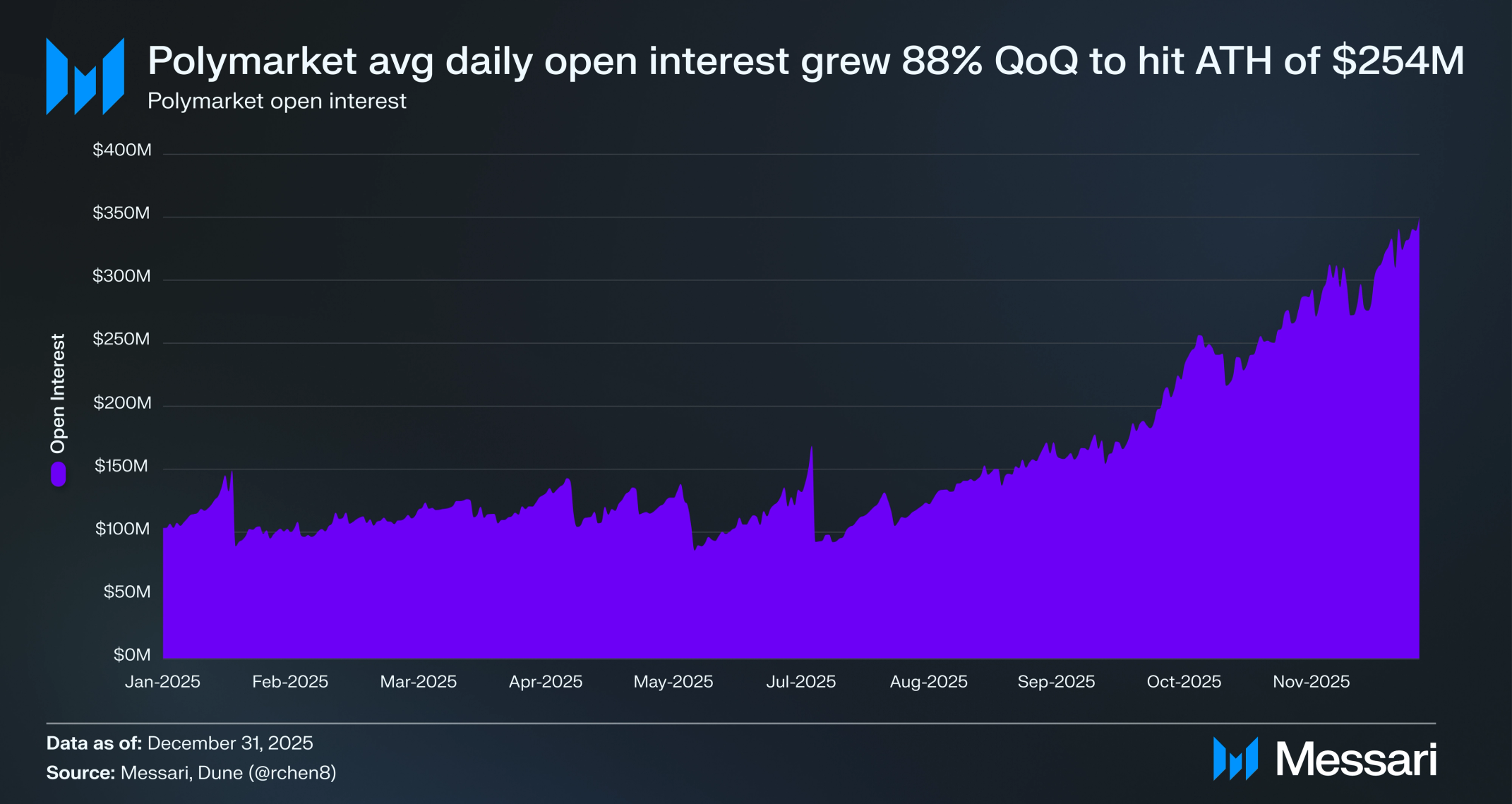
Polymarket recorded an all-time high average daily open interest of $253.9 million in Q4, up 88.1% QoQ and 49.7% YoY, surpassing its prior peak of $169.6 million in Q4 2024 during the U.S. election cycle.
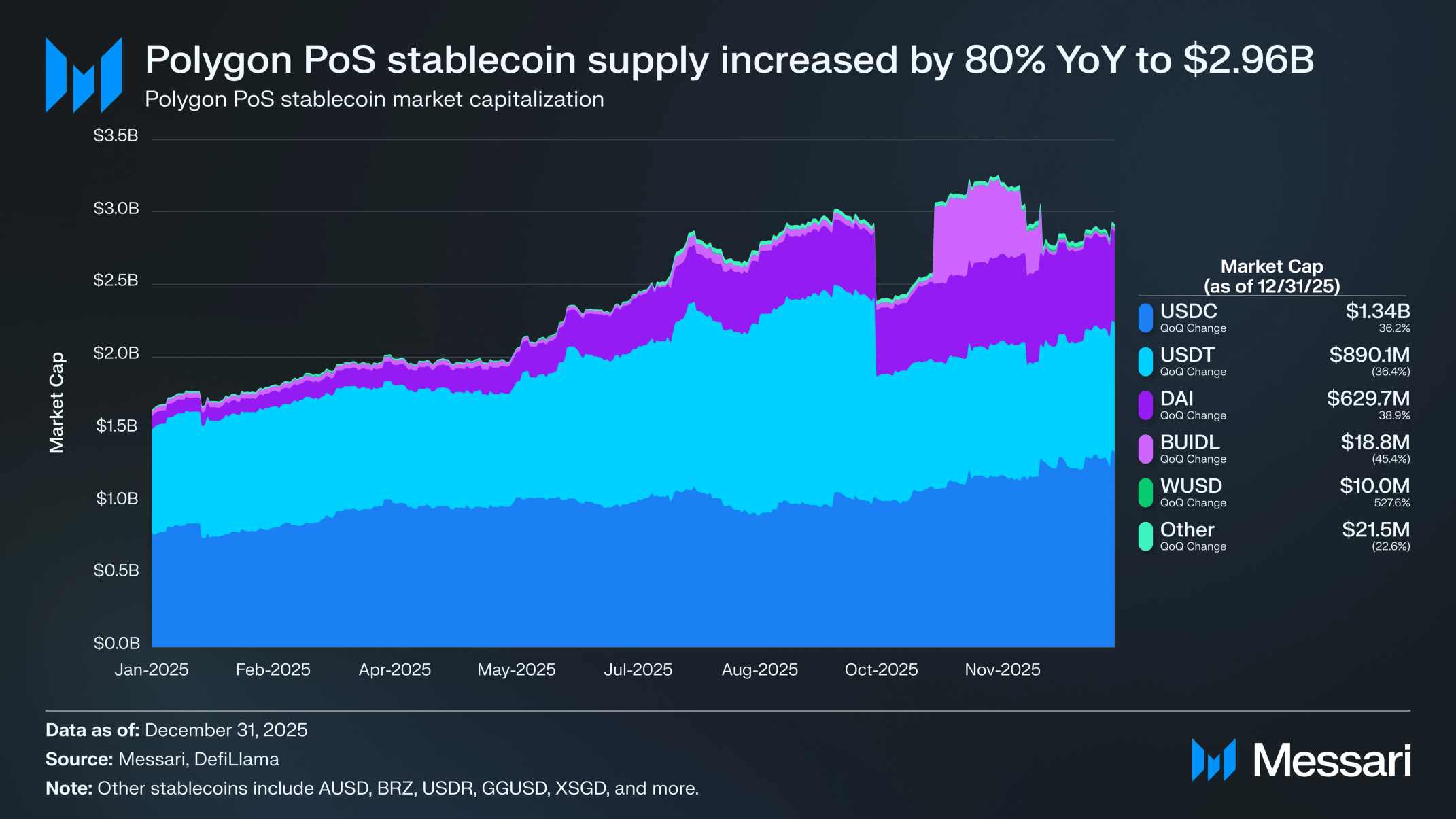
Polygon PoS DeFi TVL ended 2025 at $1.16 billion, with QuickSwap and Polymarket’s TVL increasing by 12.2% and 103.4% QoQ, respectively. Stablecoin supply grew 80.1% YoY to $2.96 billion, driven primarily by USDC, which rose 36.2% QoQ to $1.34 billion.
Polygon upgraded its core infrastructure through the Rio and Madhugiri hardforks, enabling near-instant finality and establishing a clear path toward ~5,000 TPS through architectural and consensus-level upgrades.
Primer
Polygon Labs is a global blockchain payments company building infrastructure for stablecoin-based payments and onchain money movement at scale. Its core objective is to support faster, lower-cost, and more reliable settlement by combining blockchain rails with the orchestration and interoperability required to integrate with existing financial systems.
The Polygon Proof-of-Stake (PoS) network serves as the primary production environment for this effort, supporting large-scale stablecoin transfers, card settlement, remittances, and enterprise payment flows. To support these use cases, Polygon Labs is developing the Open Money Stack, an integrated set of blockchain networks, interoperability protocols, and supporting services designed to make onchain money usable within existing financial workflows. The Open Money Stack encompasses blockchain settlement, cross-chain coordination, wallet infrastructure, on- and off-ramps, stablecoin interoperability, and compliance tooling. While several components are already in production, others remain under active development as Polygon Labs expands its payments capabilities.
From an architectural perspective, Polygon Labs continues to invest in zero-knowledge (ZK) technology as a foundation for scaling payments and interoperability. It has contributed to the development of multiple ZK-based systems, including Polygon zkEVM and Polygon Miden, and provides the Polygon Chain Development Kit (CDK) for deploying application-specific chains. These systems are designed to interoperate through the Agglayer, which aims to coordinate liquidity and settlement across connected chains while anchoring to Ethereum.
Polygon has established itself as a natural home for payment solutions, offering low fees, fast settlement, and an accessible development environment. In Q4, over 50 payments-focused applications on Polygon PoS facilitated $3.57 billion in transfer volume, up 96.5% QoQ and 399.2% YoY.
In Q4, stablecoin-linked crypto cards processed $362.6 million in combined Mastercard and Visa volume on Polygon PoS, across ten different card programs. Mastercard accounted for $96.2 million and Visa for $266.4 million, reflecting continued traction in bridging digital assets with traditional payment rails. Polygon PoS continues to see adoption as settlement infrastructure for stablecoin payments, with payment networks, fintechs, and enterprises selecting the network for card programs, remittances, and merchant settlement. Developments in the payments ecosystem during Q4 include:
DeCard launched global stablecoin payments on Polygon, enabling USDC and USDT spending at over 150 million merchants worldwide, with blockchain settlement abstracted away from merchants.
Flutterwave selected Polygon as the default blockchain for a new stablecoin-based cross-border payments product, enabling instant, low-cost enterprise payouts across more than 30 African countries, with consumer remittances planned in a later phase.
Stripe expanded stablecoin payments on Polygon to support recurring subscriptions, enabling businesses to accept USDC-based subscription payments from crypto wallets.
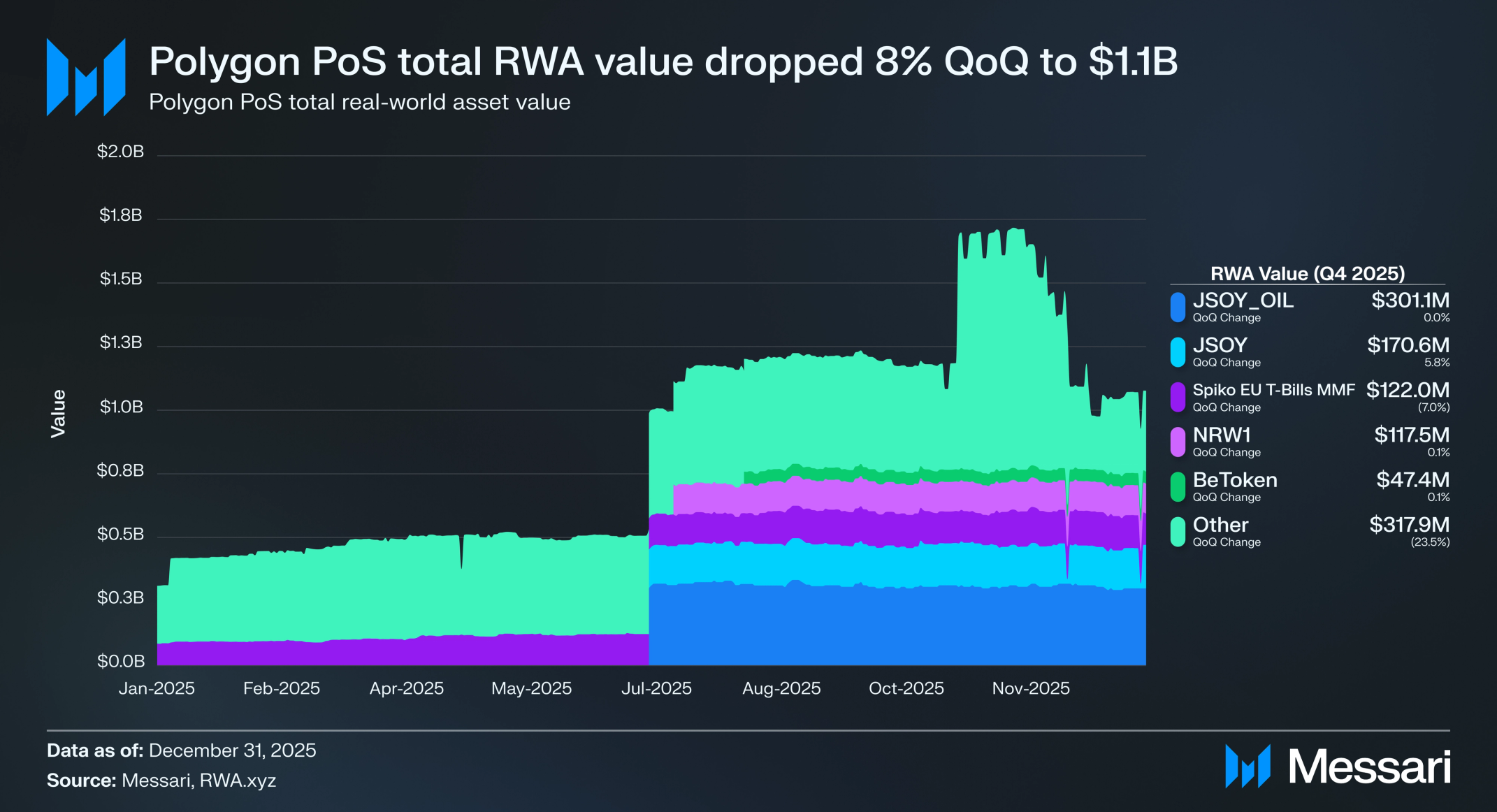
Real-world assets (RWAs) continued to gain momentum on Polygon in Q4 2025, reinforcing the network’s role as a core infrastructure layer for asset tokenization. Growing demand from traditional financial institutions and proven product-market fit for digitized collectibles, such as Pokémon cards on Courtyard, helped drive a notable increase in onchain RWA allocations. Polygon ranked 9th by total RWA value at quarter end, totaling $1.08 billion. Key RWA developments this quarter include:
Calastone integrated Polygon to bring global fund distribution onchain, enabling tokenized fund share issuance and settlement across its network, which processes over £250 billion in monthly fund flows.
BeToken partnered with Polygon to tokenize 100% of Beself Brands’ equity onchain, launching one of Europe’s first fully regulated equity tokens under Spanish and E.U. securities law, with legally recognized economic and governance rights.
Chain GDP
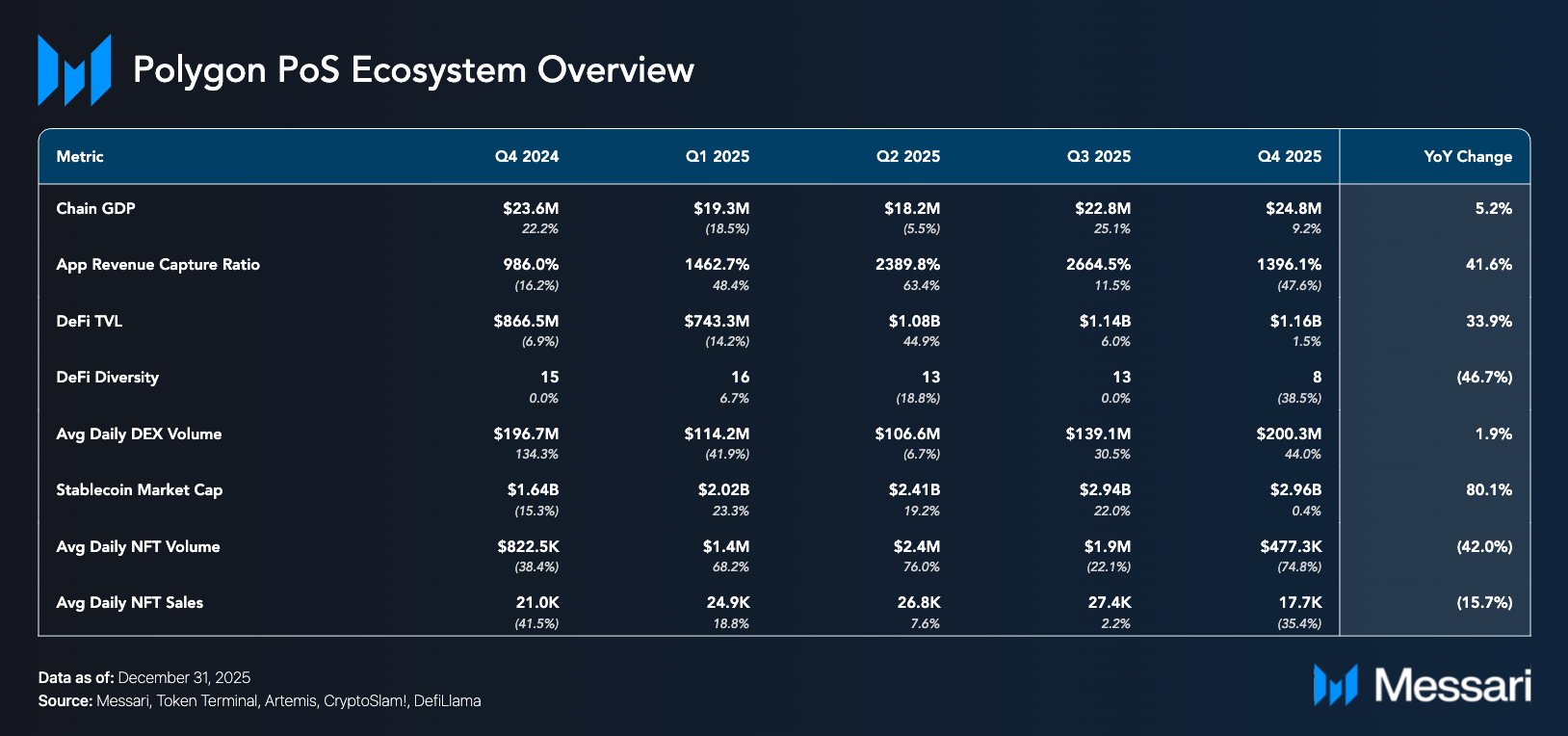
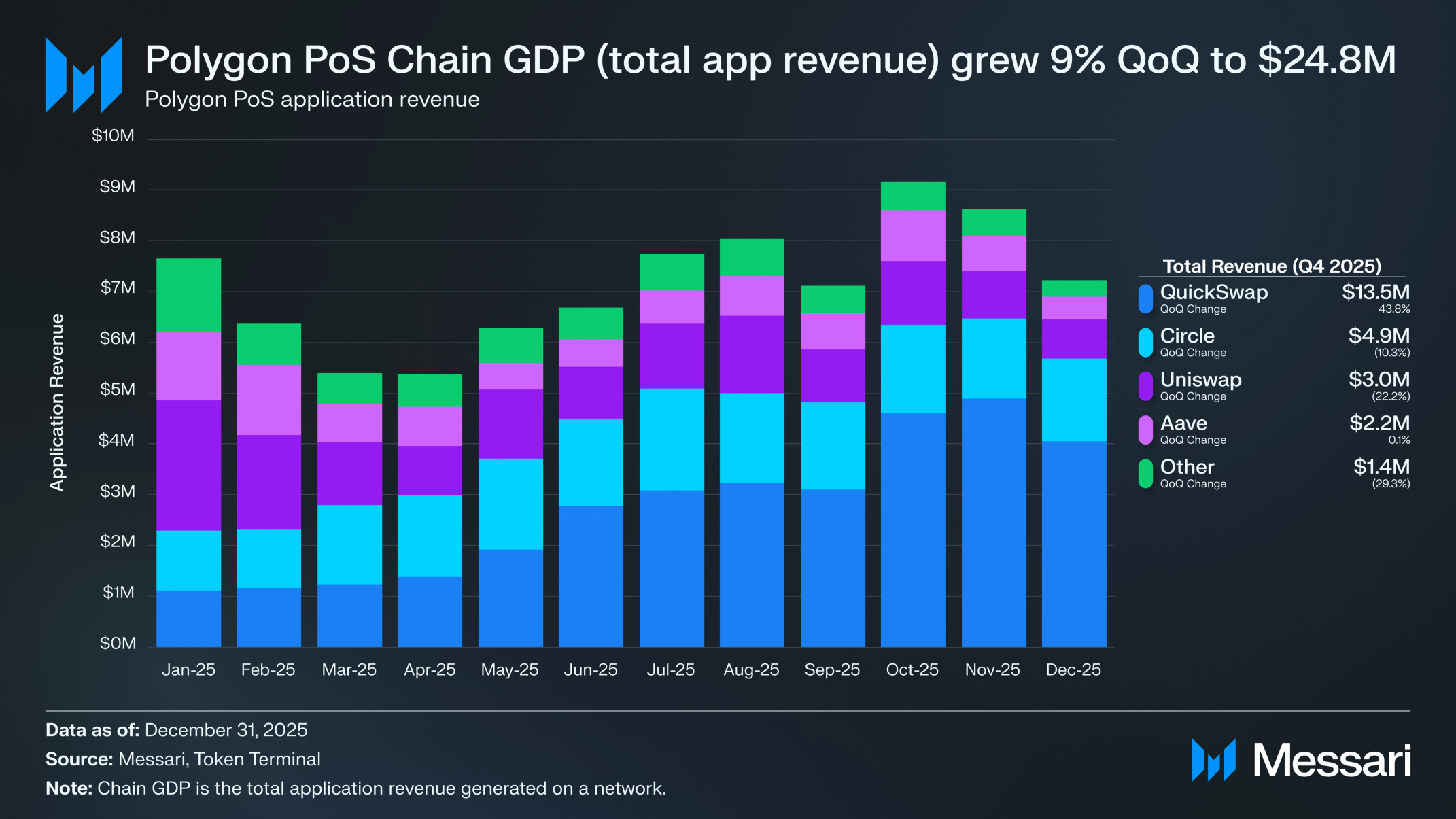
Chain GDP is defined as the total application revenue generated on a network. In Q4 2025, Polygon’s Chain GDP grew 9.2% QoQ to $24.8 million, a 5.2% YoY increase. The top four leaders by application revenue in Q4 were:
A network’s App Revenue Capture Ratio (App RCR) is the ratio of revenue generated by its applications to its Real Economic Value (REV). In the case of Polygon PoS, REV is defined as the sum of base transaction fees and priority fees. In Q4 2025, Polygon’s App RCR was 13.96x, a 47.6% QoQ decrease, but a 41.6% YoY increase. This implies that for every $100 spent in Polygon transaction fees, applications earned approximately $1,396 in revenue.
For context, App RCR varied across major ecosystems in Q4 2025:
A higher App RCR suggests that applications are efficiently converting onchain activity into revenue, reflecting a mature and monetizable ecosystem. Conversely, a lower App RCR can signal inefficiencies in value capture or an ecosystem still developing monetization pathways.
DeFi
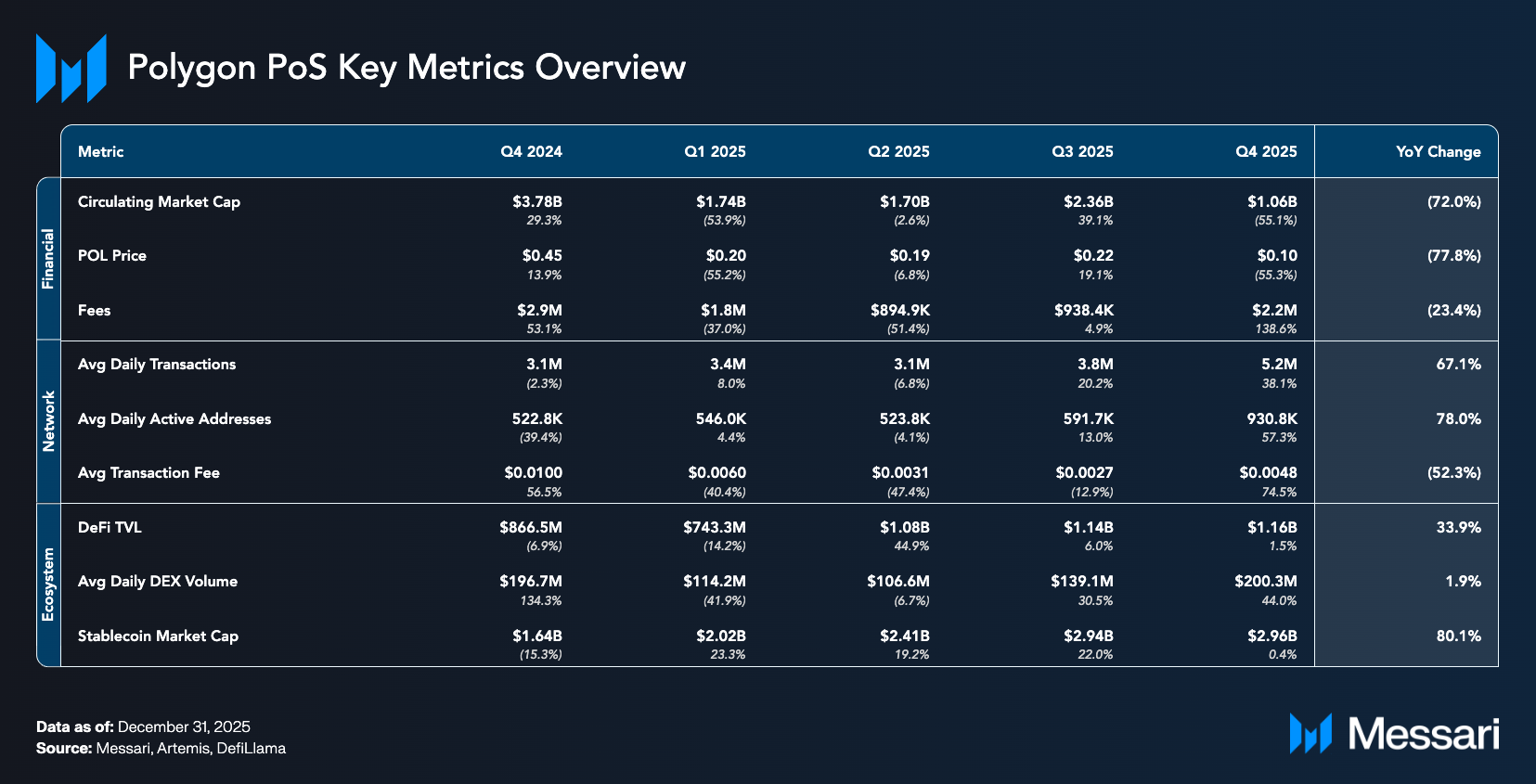
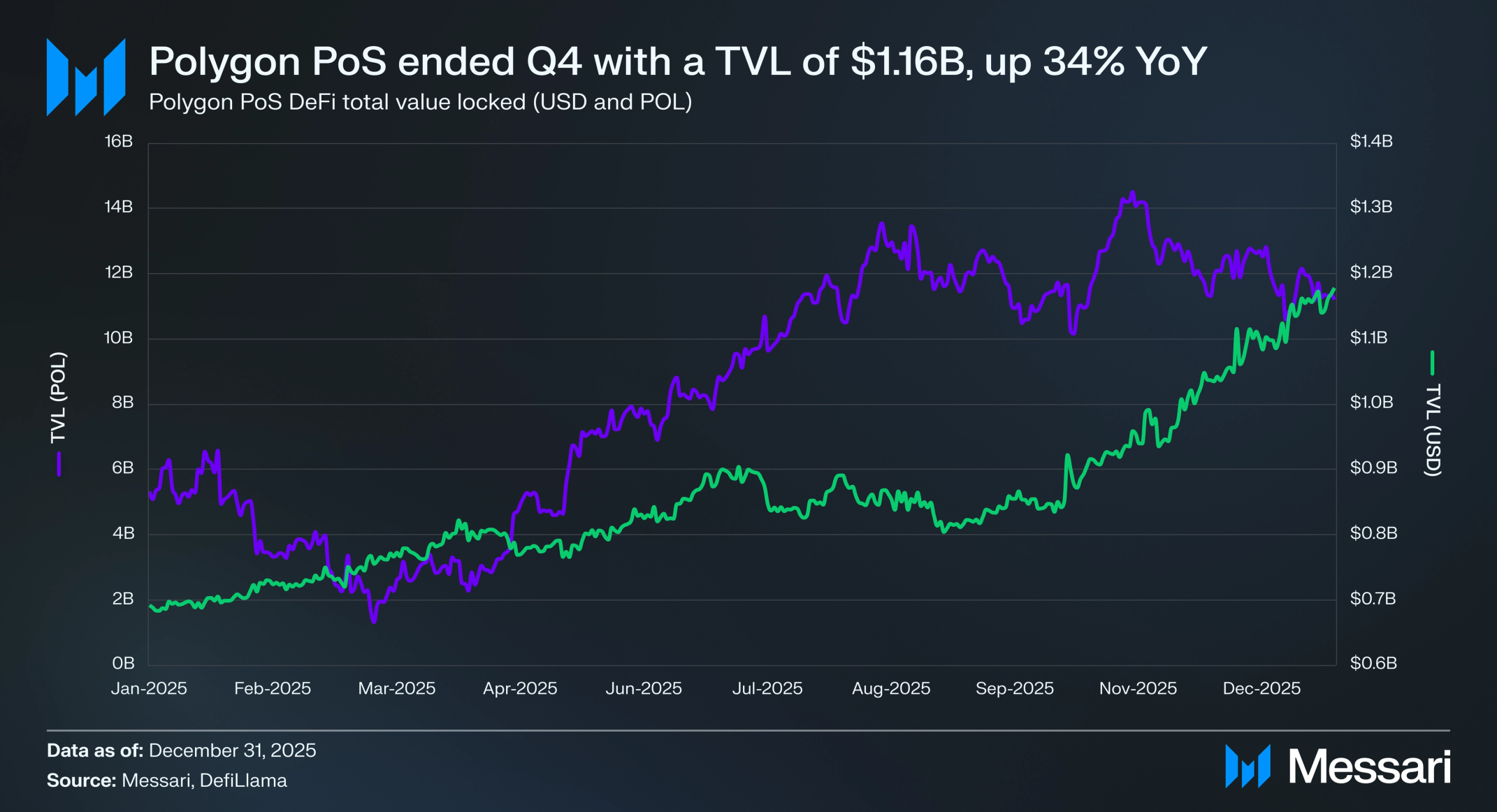
Polygon PoS DeFi total value locked (TVL) ended Q4 2025 at $1.16 billion, a 1.5% QoQ increase and 33.9% YoY increase. Polygon rose from being the 13th-largest network by TVL to the 11th.
TVL by Protocol
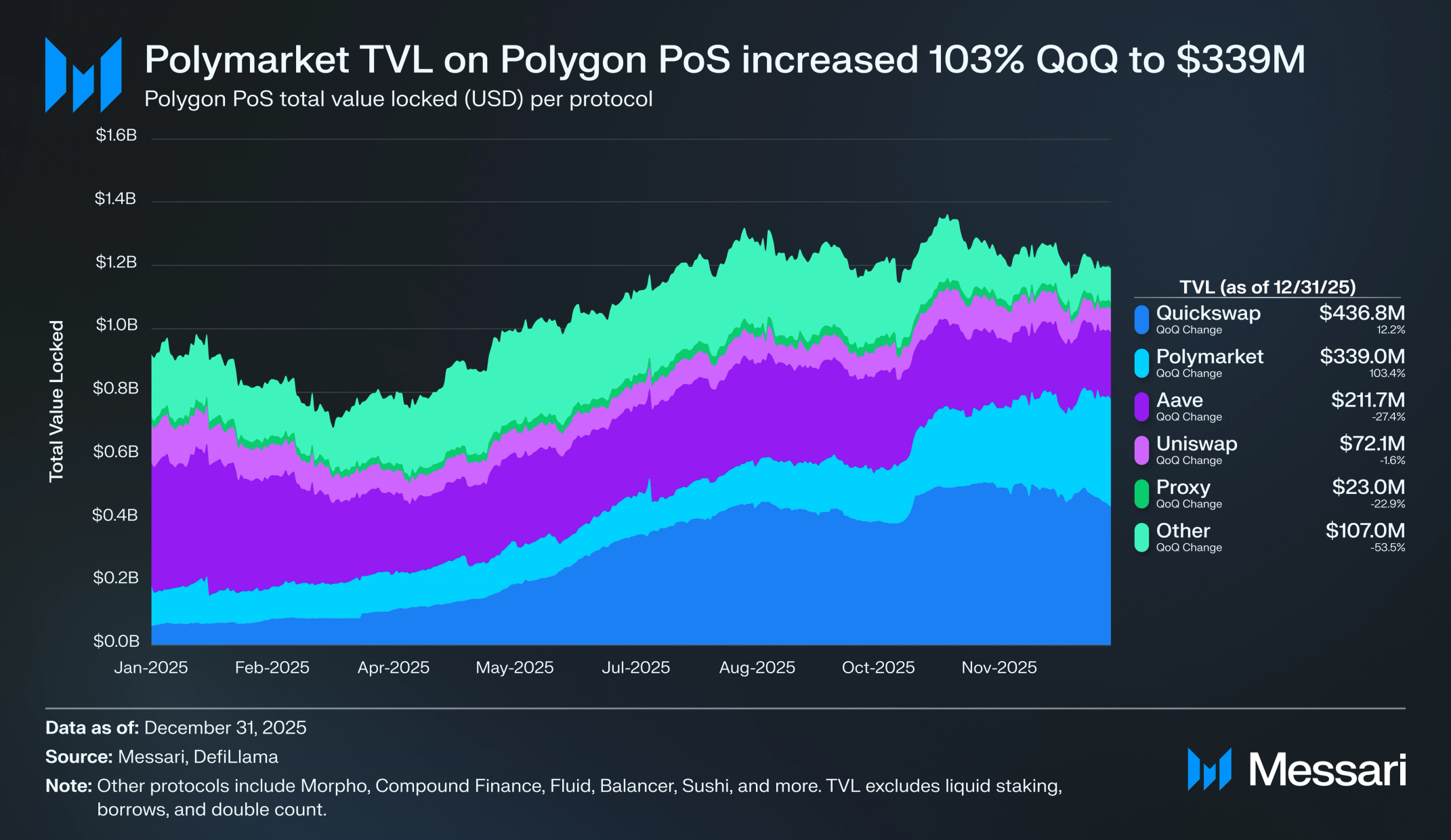
QuickSwap was the top protocol by TVL on Polygon PoS in Q4, ending the quarter with $436.8 million, a 12.2% QoQ increase. Polymarket surpassed Aave to become the second-largest protocol by TVL, ending the quarter with $339 million (+103.4% QoQ). Aave fell to third, ending the quarter with $211.7 million (-27.4% QoQ). Uniswap remained the fourth-largest protocol with $72.1 million in TVL (-1.6% QoQ), while Proxy surpassed Morpho to become fifth as its TVL decreased less than Morpho’s to $23.0 million (-22.9% QoQ).
Stablecoins
Polygon PoS ended Q4 with $2.96 billion in stablecoin supply, up 0.4% QoQ and 80.1% YoY. Growth across major assets was largely offset within the quarter, as USDC expanded 36.2% QoQ to $1.34 billion while USDT declined 36.4% QoQ to $890.1 million, resulting in minimal net change at the aggregate level. DAI supply increased 38.9% QoQ to $629.7 million. BUIDL, which doubled in Q3, retraced 45.4% QoQ to $18.8 million. WUSD was the fastest-growing stablecoin, rising 527.6% QoQ to $10.0 million following WSPN'sGlobal Payment infrastructure upgrade. By quarter end, Polygon PoS ranked as the 8th-largest blockchain by stablecoin supply, 5th in monthly active USDT addresses, and 1st in active USDC addresses.
Local-Currency Stablecoins
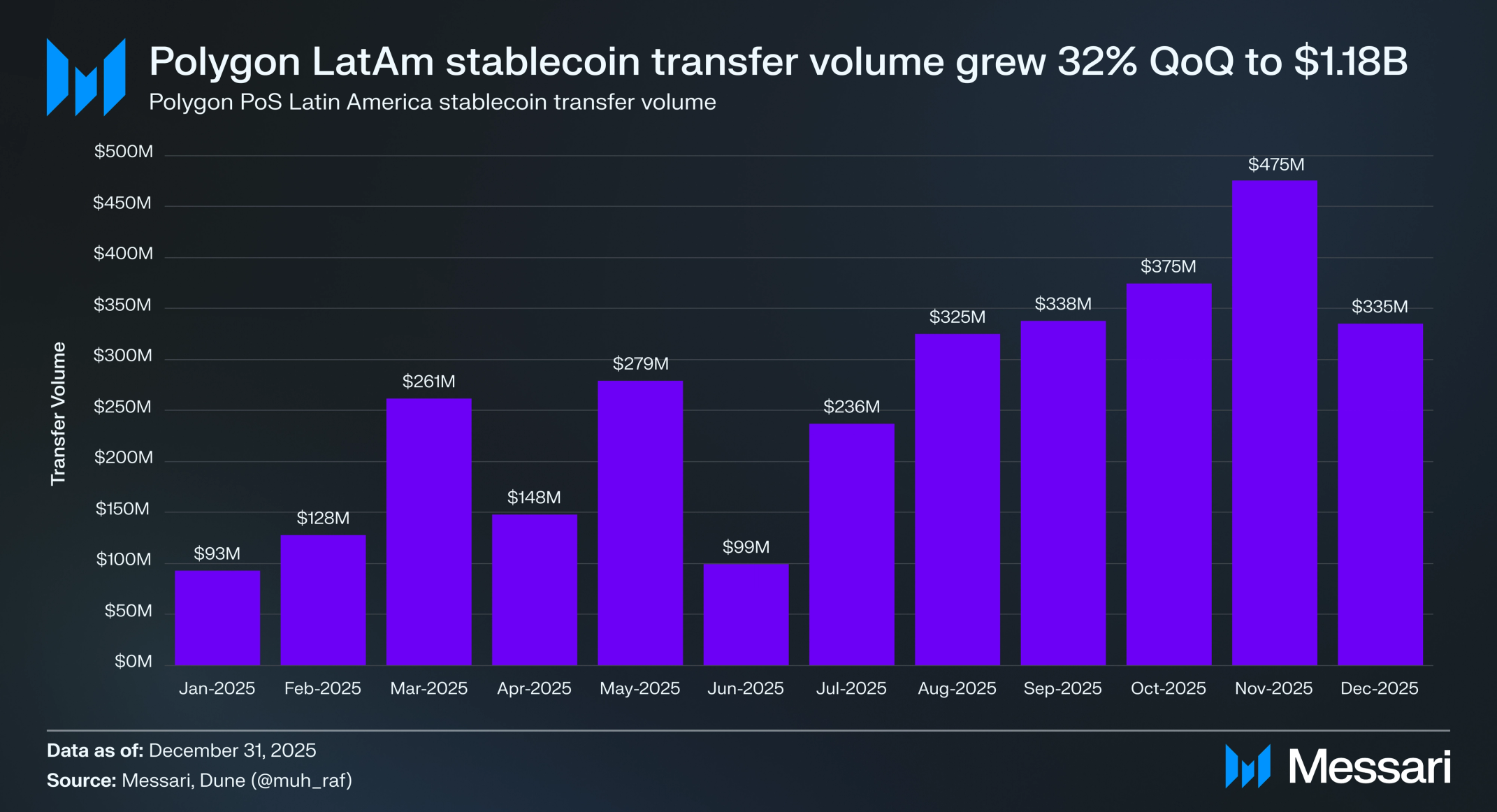
Non-USD stablecoin activity in Latin America continued to expand on Polygon PoS in Q4 2025, reinforcing the network’s role as a primary settlement layer for regional payments and cross-border transfers. LatAm stablecoin transfer volume on Polygon grew 31.8% QoQ to $1.18 billion, driven by increased usage of locally denominated stablecoins for remittances, treasury operations, and business payments. During the quarter, Polygon processed approximately 89% of total LatAm non-USD stablecoin transfer volume, highlighting its central role in regional onchain payment flows.
Brazilian real-denominated stablecoins accounted for the largest share of transfer activity on Polygon in Q4, with BRL-backed assets (BRL1, BRLA, and BRZ) facilitating $666.3 million in cumulative transfer volume. Colombian peso-denominated stablecoins were the second-largest category, with COPM contributing $518.3 million in Q4 transfer volume. Other regional currencies, including peso-linked stablecoins used in Argentina and Chile, contributed smaller but persistent volumes.
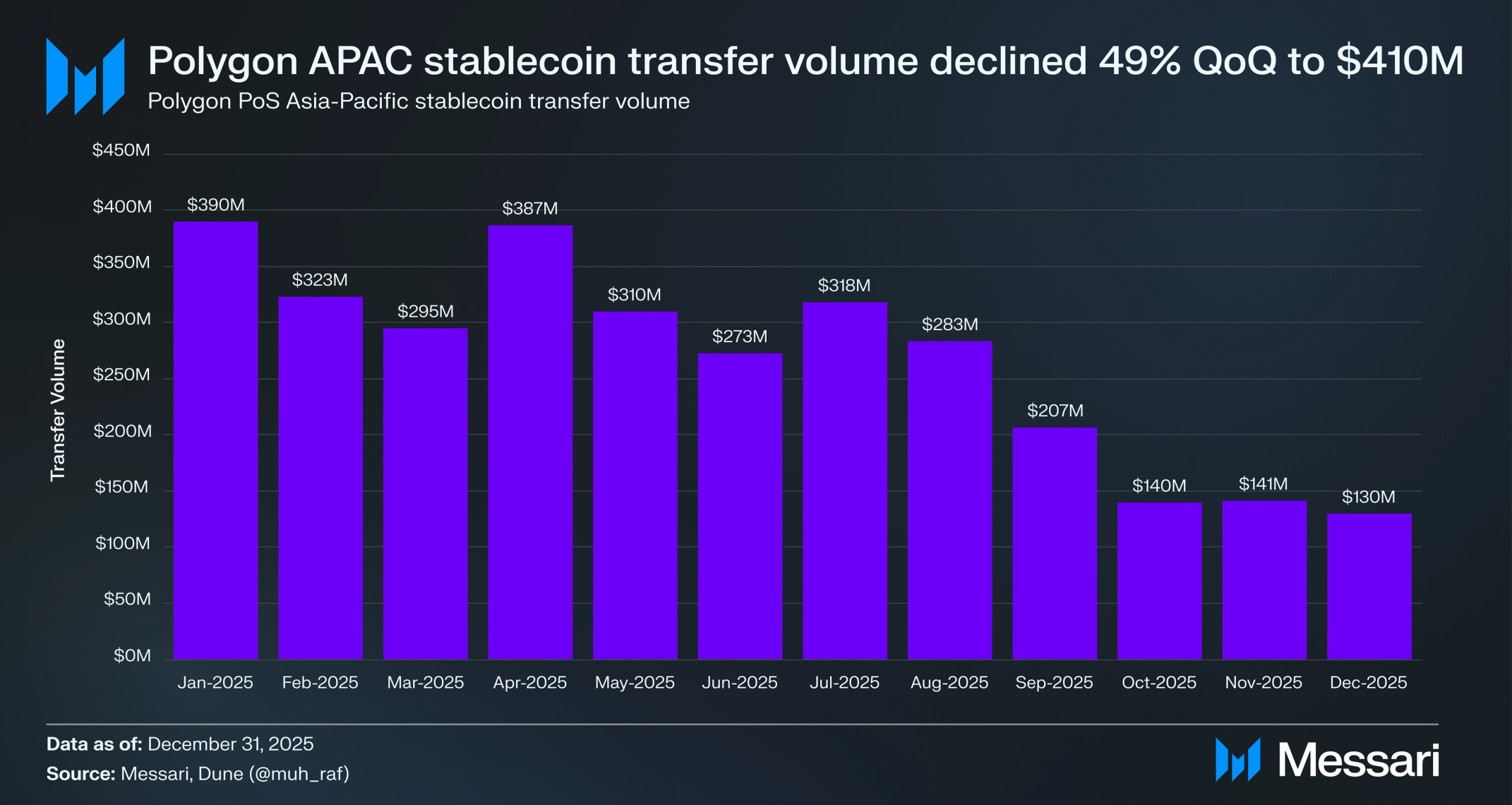
Non-USD stablecoin activity in Asia-Pacific declined on Polygon PoS in Q4 2025 following elevated activity earlier in the year. APAC non-USD stablecoin transfer volume on Polygon fell 49.2% QoQ to $410.4 million. Despite the sequential decline, Polygon maintained a share of approximately 40% of total APAC non-USD stablecoin transfer volume during Q4, underscoring its continued relevance as a settlement network for non-USD stablecoins in the region.
Singapore dollar-denominated stablecoins accounted for the largest share of transfer activity on Polygon in Q4, with XSGD facilitating $204.8 million in cumulative transfer volume. Indonesian rupiah-denominated stablecoins formed the second-largest category, with IDR-backed assets (IDRP, IDRT, and IDRX combined) accounting for $151.5 million in Q4 transfer volume. Australian dollar- and Japanese yen-denominated stablecoins contributed smaller but meaningful volumes, with AUDF processing $28.7 million and JPYC facilitating $25.3 million in transfers during the quarter. Compared to Latin America, APAC usage exhibited a more balanced relationship between outstanding balances and transfer activity, consistent with enterprise- and treasury-oriented use cases rather than high-frequency retail payments.
DEX Volume
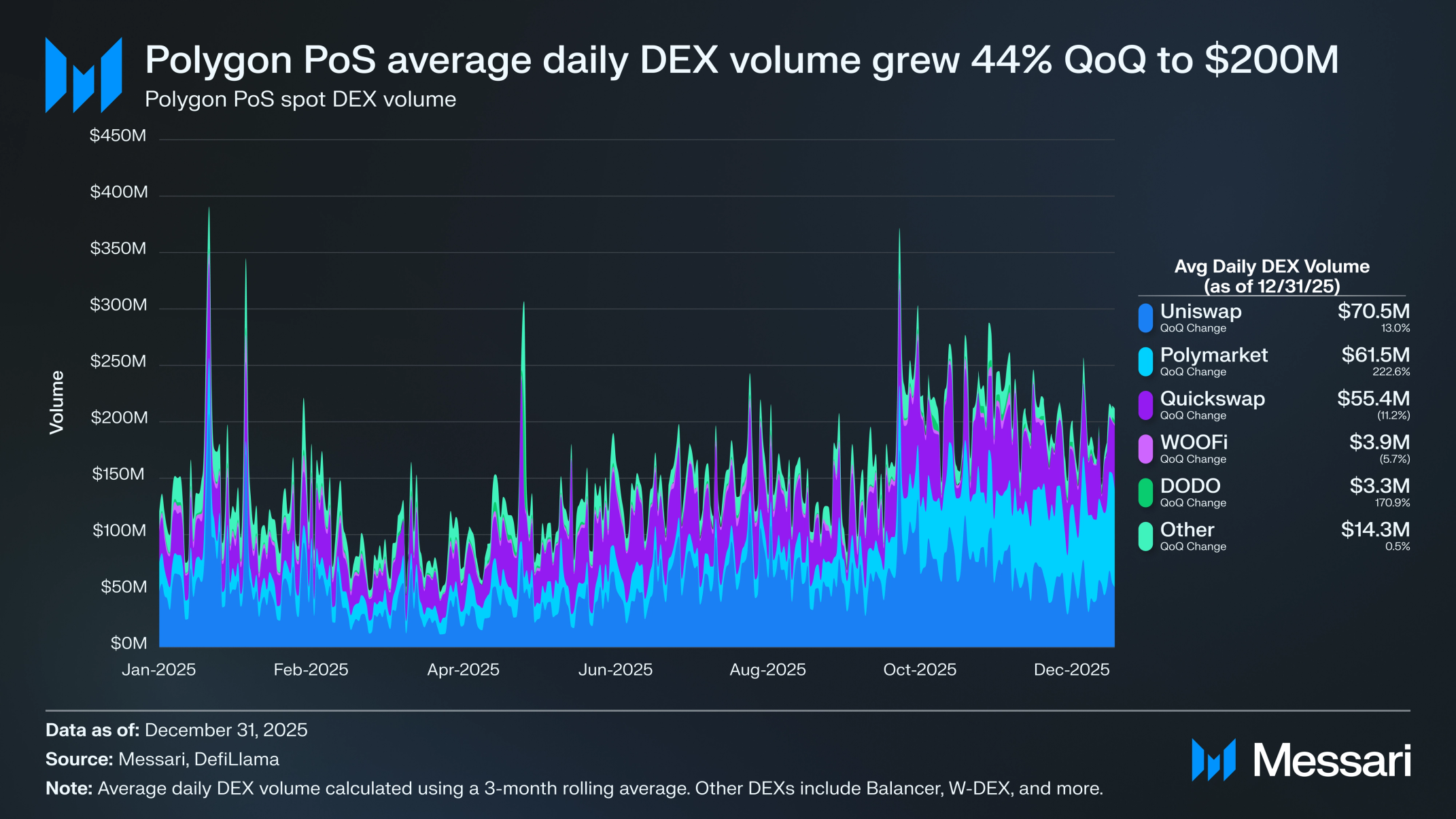
Average daily spot DEX volume rose 44% QoQ to $200.3 million, a 1.9% YoY increase. The top five DEXs by average daily volume are listed below:
Uniswap led the market with $70.5 million in average daily volume, up 13.0% QoQ, capturing a 33.8% market share.
Polymarket ranked second with $61.4 million, up 222.6% QoQ and a 29.5% share.
QuickSwap placed third with $55.4 million, a 11.2% QoQ decrease and a 26.5% market share.
WOOFi ranked fourth at $3.9 million, down 5.7% QoQ and a 1.8% share.
DODO rounded out the top five with $3.3 million, up 170.9% QoQ and a 1.6% share.
Polymarket
Polymarket recorded an all-time high average daily open interest of $253.9 million in Q4 2025, up 88.1% QoQ and 49.7% YoY, surpassing its prior peak of $169.6 million in Q4 2024 during the U.S. election cycle.
In October, Polymarket announced a strategic investment of up to $2 billion from Intercontinental Exchange (ICE), the parent company of the New York Stock Exchange, valuing the company at approximately $8 billion pre-money. As part of the agreement, ICE will become a global distributor of Polymarket’s event-probability data to institutional investors and partner with the platform on future tokenization initiatives. The investment represents the largest private capital raise in crypto to date.
Throughout Q4, Polymarket also expanded its distribution through a series of high-profile partnerships. The platform announced integrations with Google Finance and Yahoo Finance to surface prediction market probabilities directly within consumer financial products. Polymarket additionally partnered with PrizePicks to distribute federally regulated event contracts ahead of its U.S. relaunch and signed multi-year agreements with major sports leagues, including the UFC and NHL, to integrate live prediction market data into broadcasts and digital fan experiences. Collectively, these partnerships extend Polymarket’s reach across institutional data, consumer finance, and mainstream sports audiences as it prepares to re-enter the U.S. market.
NFTs
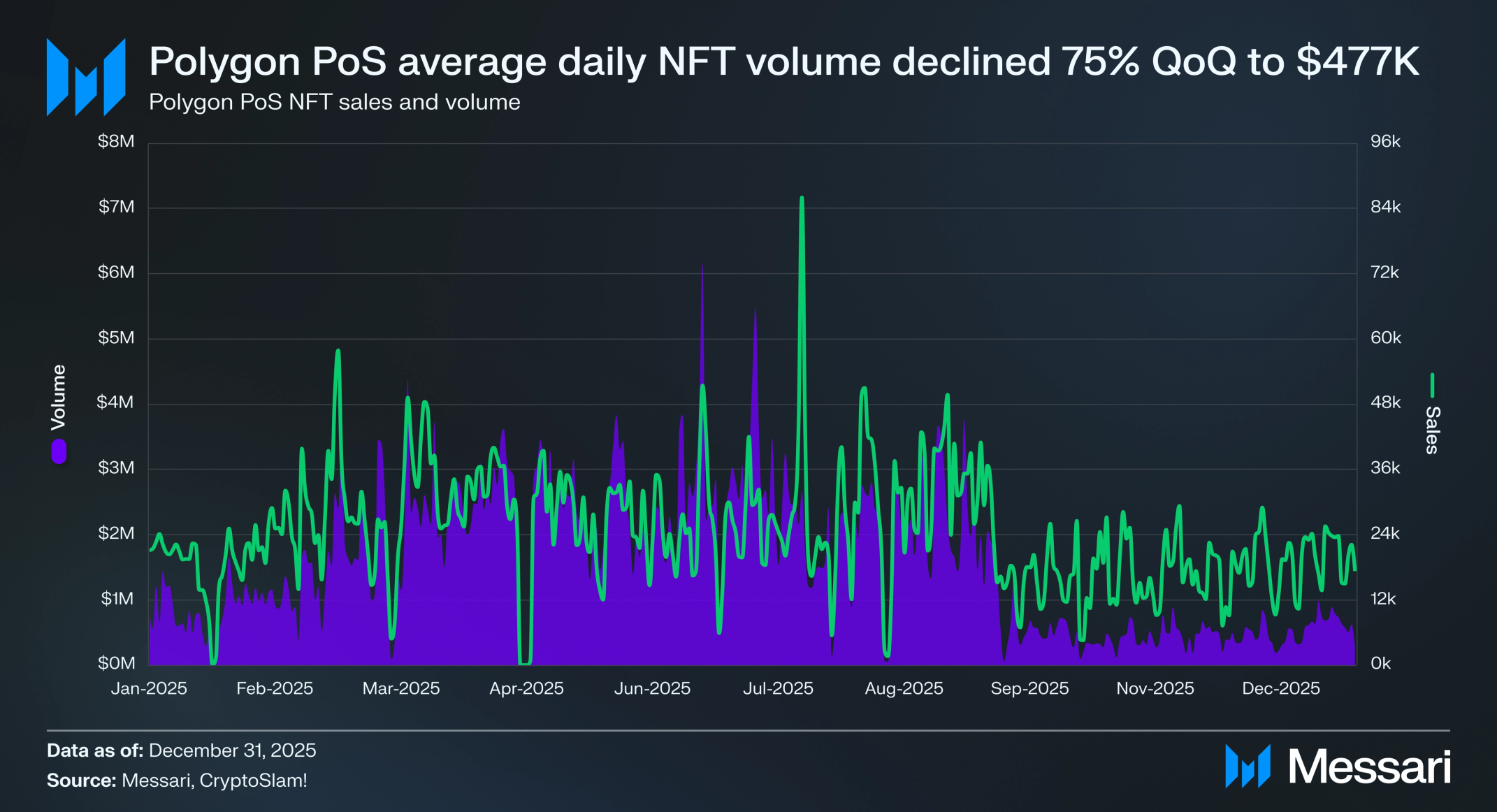
Polygon PoS experienced a decline in NFT activity during Q4 2025. Average daily NFT trading volume dropped to $477,000, representing a 74.8% QoQ and 42.0% YoY decrease. Average daily NFT sales also dropped to 17,700, marking a 35.4% QoQ and 15.7% YoY decrease. NFT activity during the quarter was primarily driven by Courtyard, which recorded $36.7 million in sales (83.7% of total NFT volume in the quarter).
Financial Analysis
Transaction Fees
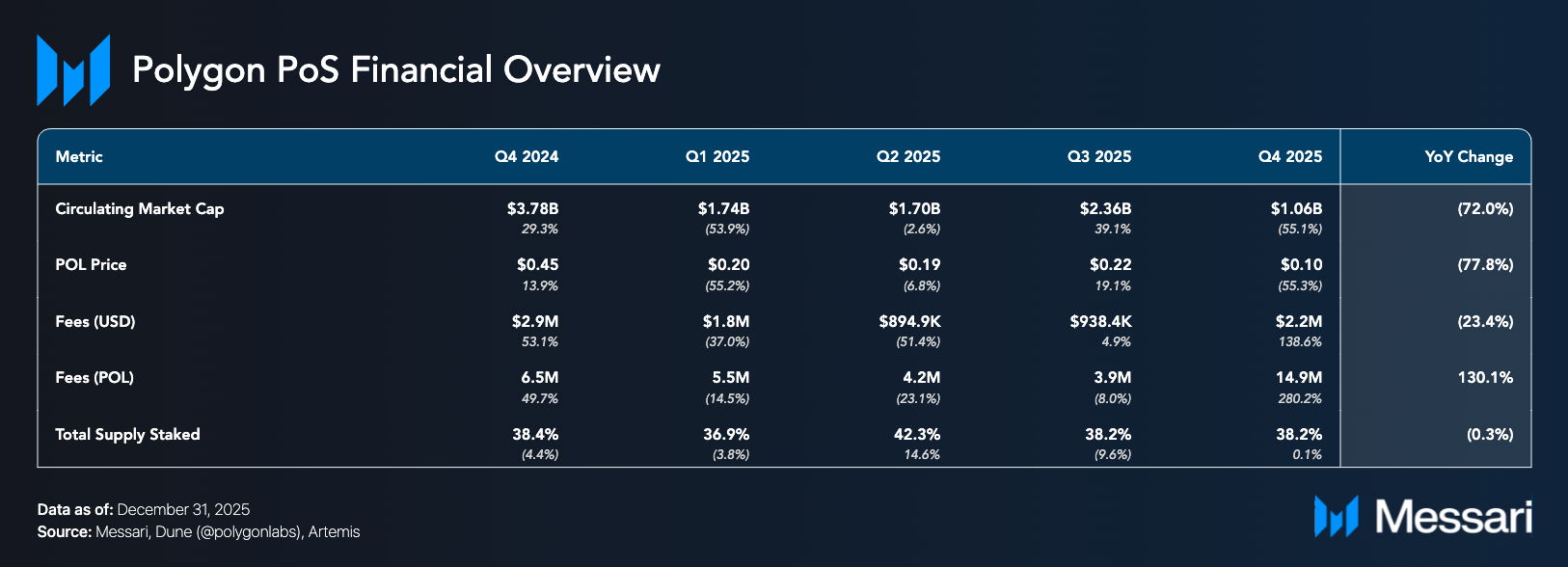
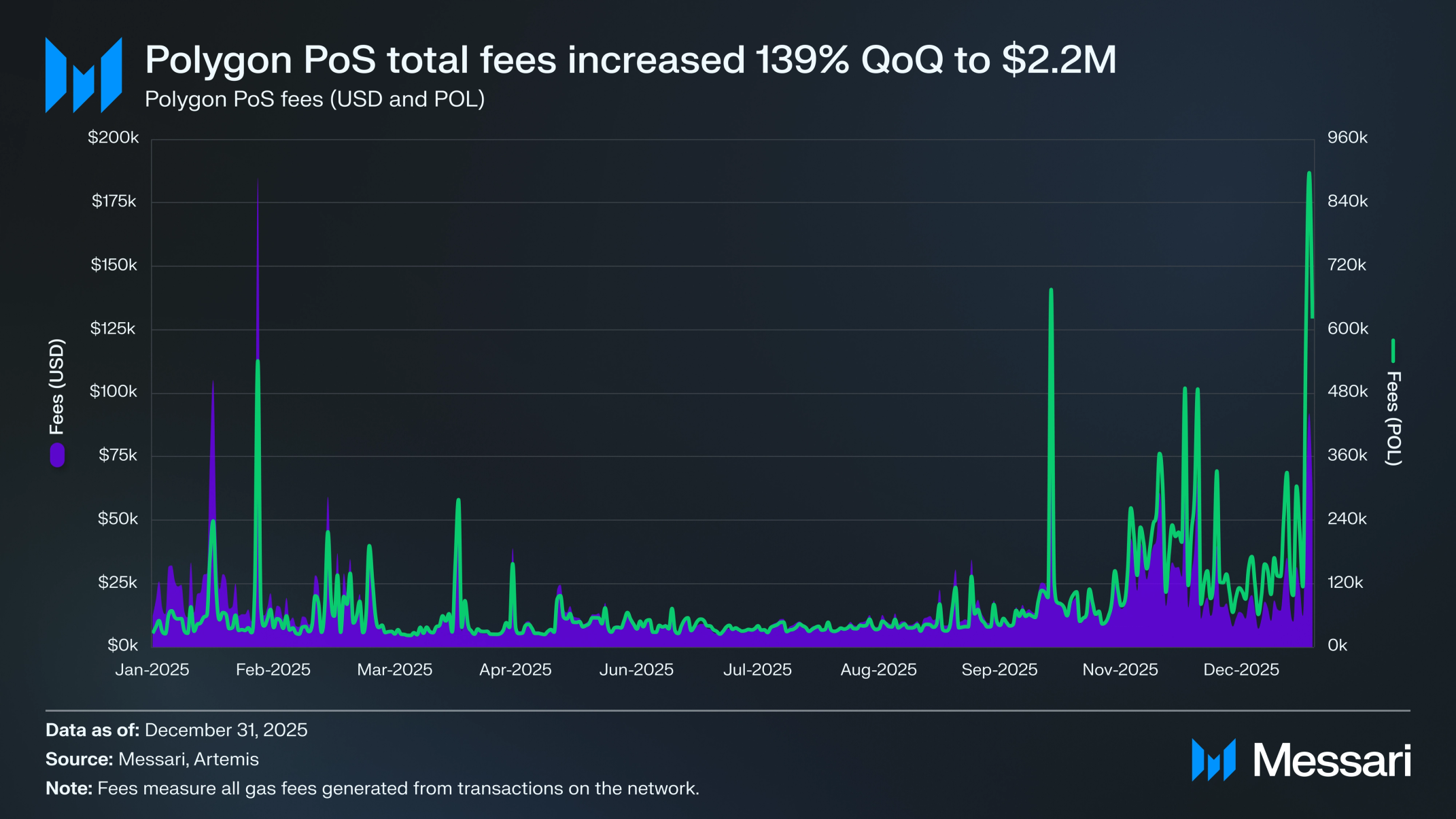
In Q4 2025, total transaction fees (POL) increased by 280.2% QoQ to 14.9 million, while total transaction fees (USD) rose 138.6% to $2.2 million. Year-over-year (YoY) total transaction fees (POL) rose 130.1%, while total transaction fees (USD) dropped 23.4%. The sharp QoQ increase was driven by higher transaction demand across major applications, including increased activity from high-volume protocols such as Polymarket, which led to materially higher aggregate gas consumption.
Market Capitalization
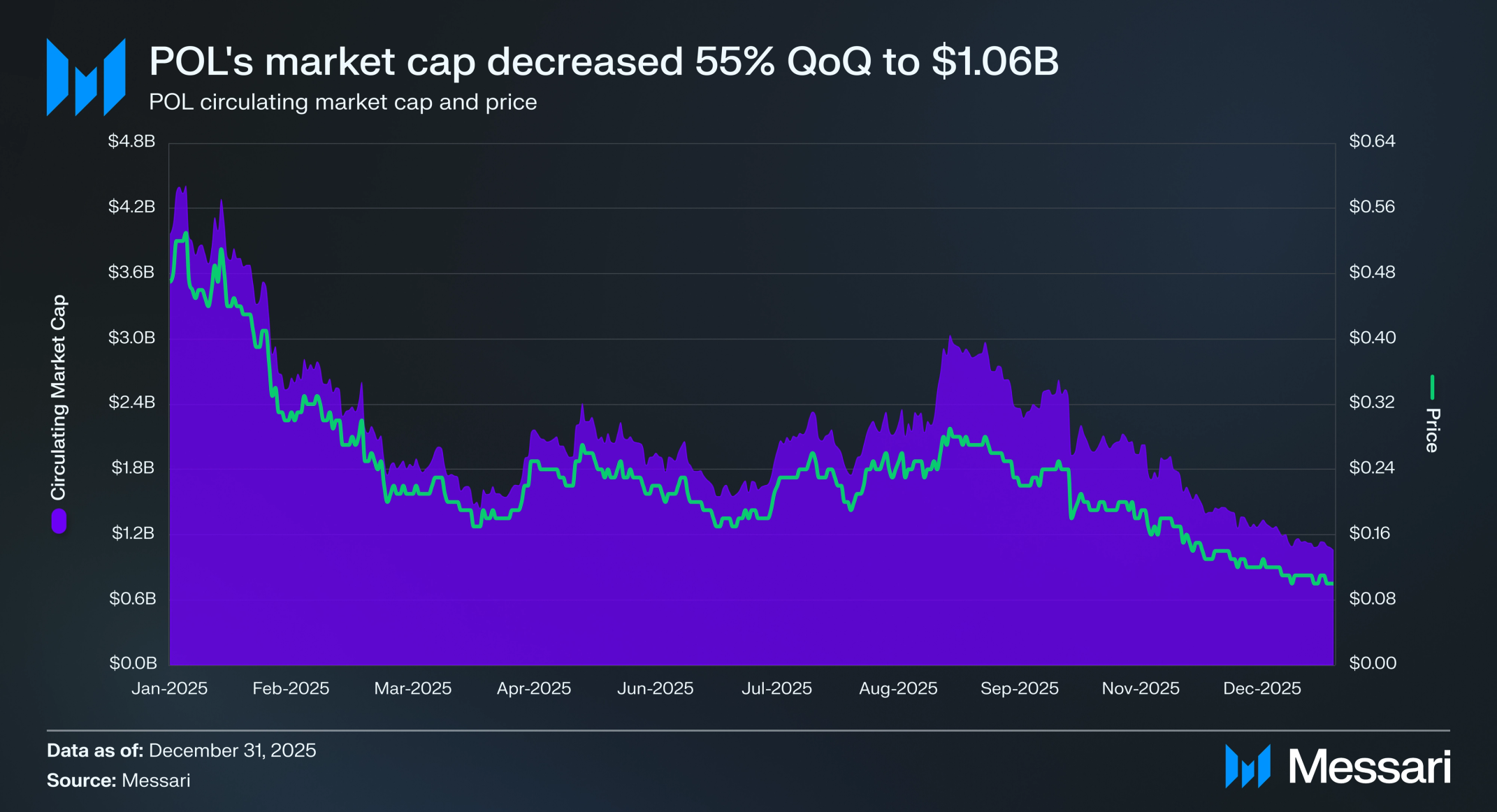
In Q4 2025, POL’s circulating market cap decreased 55.1% QoQ to $1.06 billion, underperforming the broader crypto market, which dropped by 23.5% over the same period. POL ranks as the second-largest Ethereum L2 token by market cap behind MNT, and in front of ARB, OP, and STRK. Over the past year, POL’s price declined by 77.8% and its circulating market cap dropped by 72%, underperforming the broader crypto market, which decreased by 10.5% over the same period.
Network Analysis
Activity
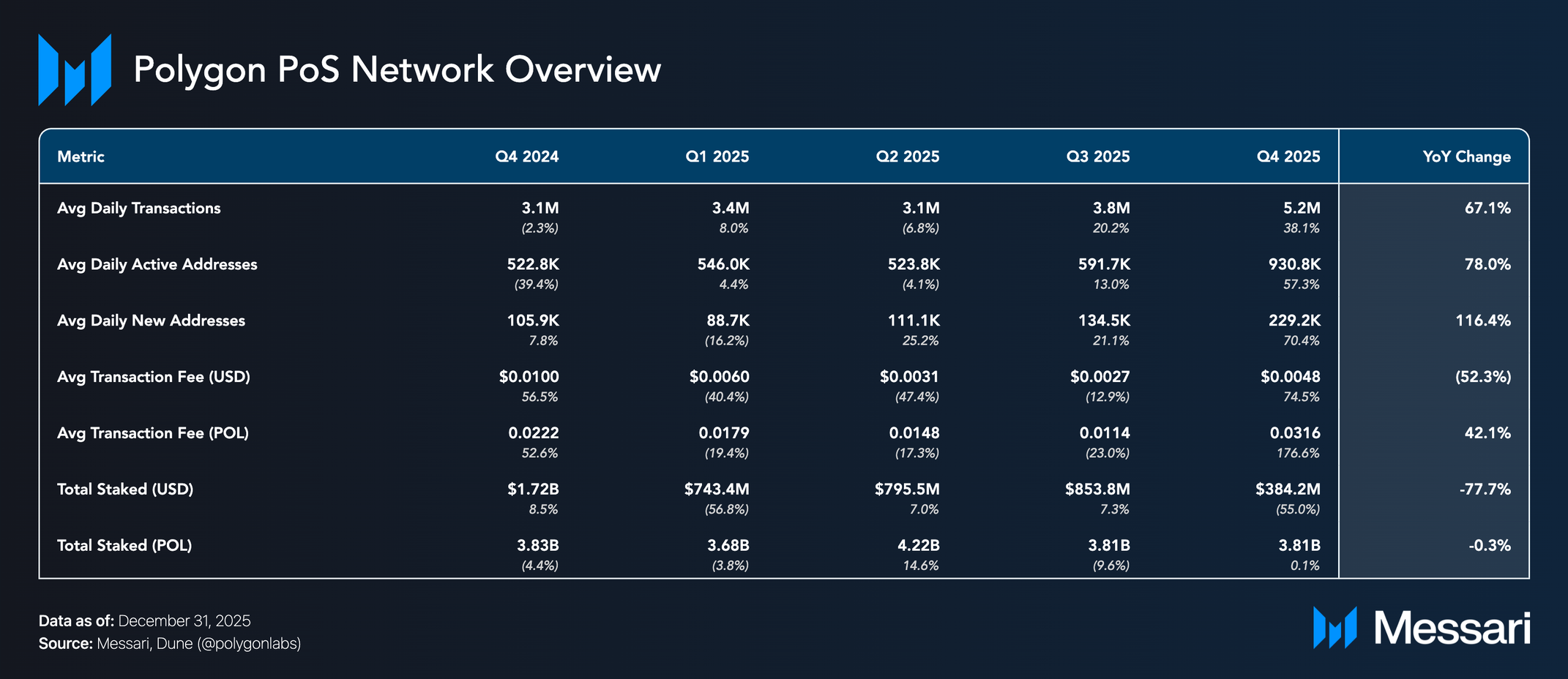
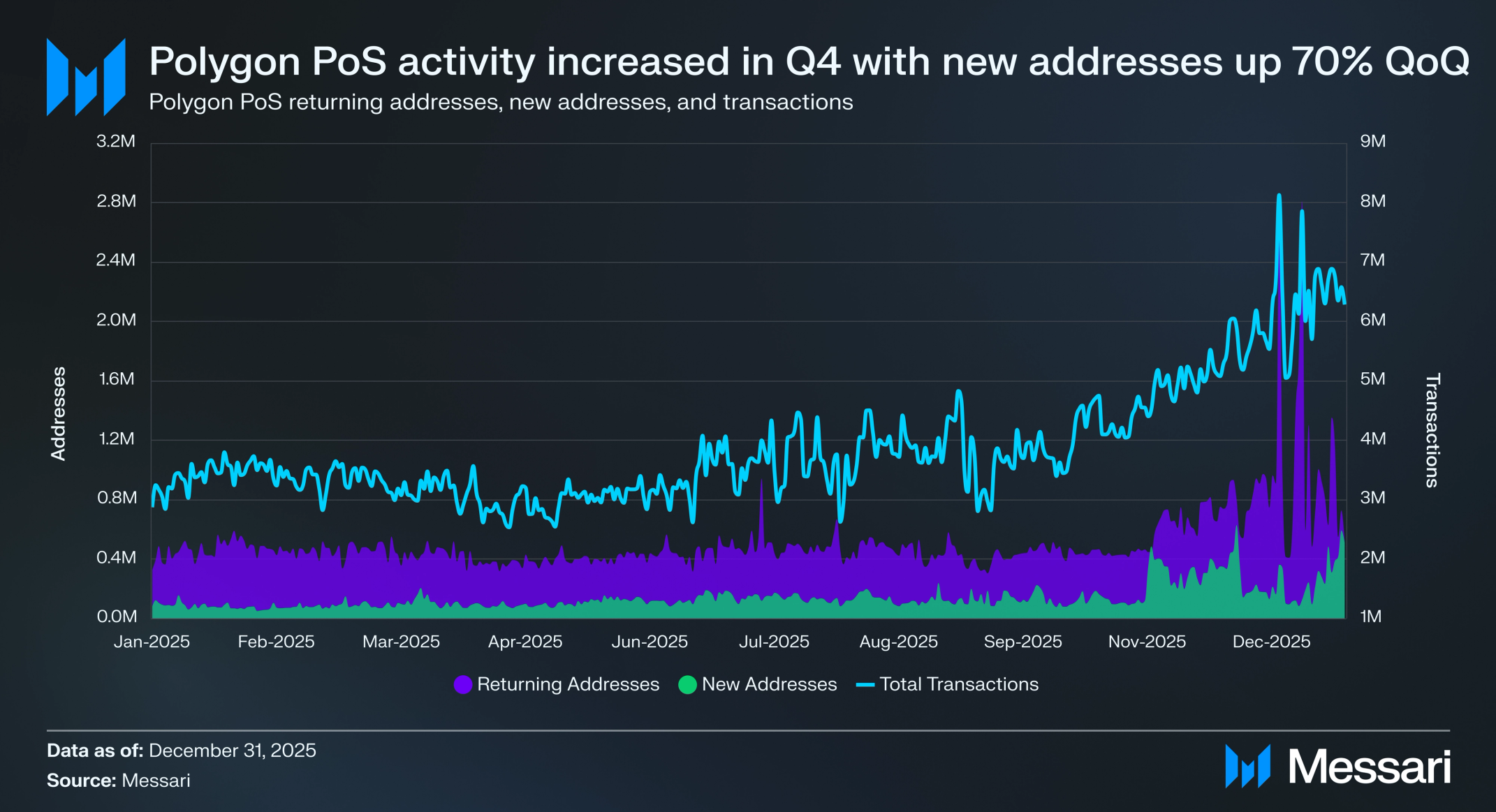
In Q4 2025, average daily active addresses (DAAs) on Polygon PoS increased 57.3% QoQ to 930,800, a 78% YoY increase. Similarly, average daily transactions increased 38.1% QoQ to 5.2 million, a 67.1% YoY increase. The average daily number of new addresses grew the most, increasing 70.4% QoQ to 134,500, a 116.4% YoY increase.
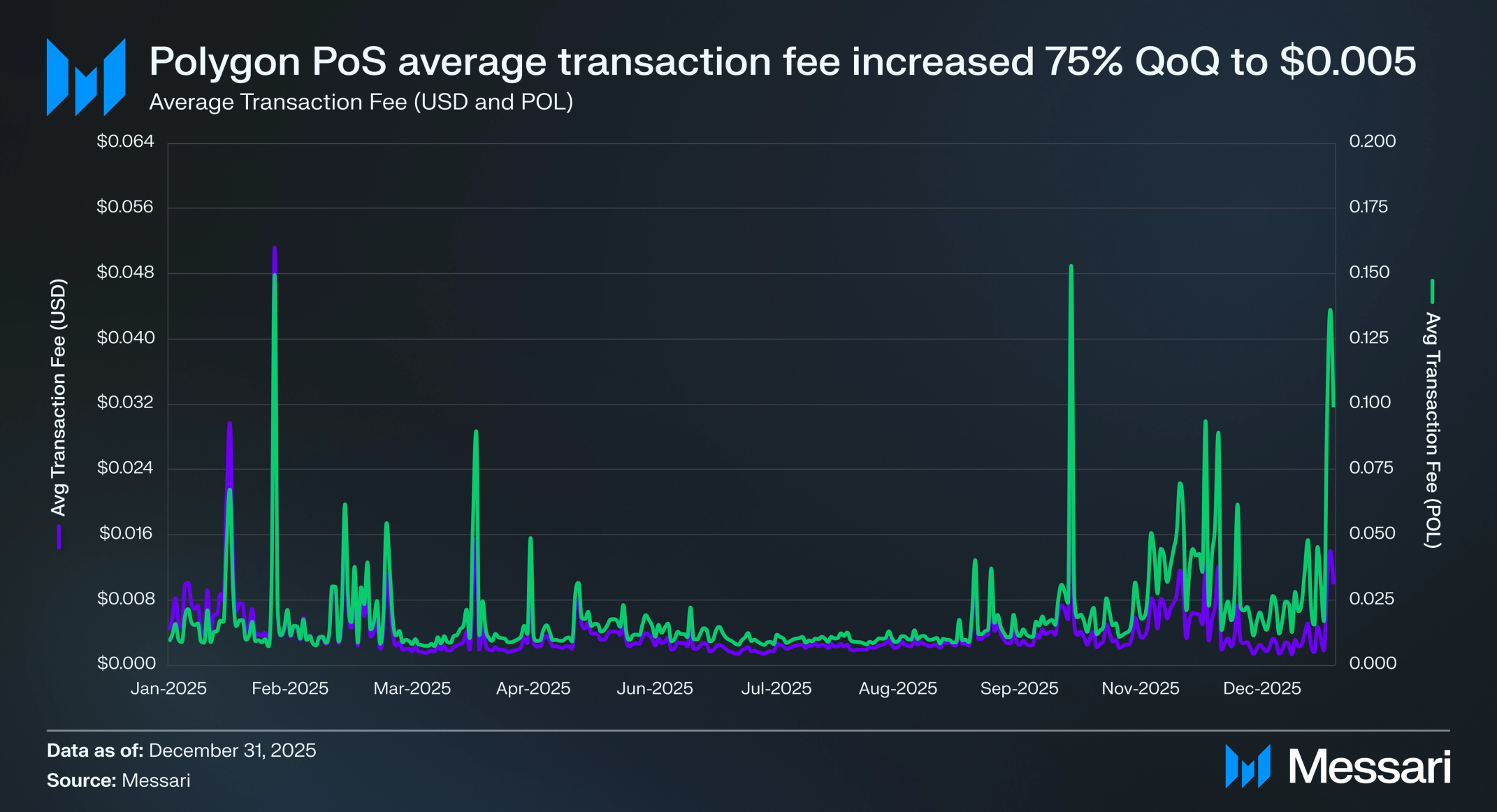
Consistent with the increase in total transaction fees, Polygon’s average transaction fee (POL) rose 176.6% QoQ to 0.0316 POL, while the average transaction fee (USD) increased 70.4% to $0.0048. YoY total transaction fees (POL) rose 42.1%, while total transaction fees (USD) dropped 52.3%. As application activity intensified during the quarter, increased competition for blockspace resulted in higher gas bids, pushing up average transaction fees despite Polygon’s low absolute fee levels.
Technical Development
Rio Hardfork
In October 2025, Polygon deployed the Rio hard fork on mainnet, delivering a payments-focused redesign of block production and validation. The upgrade introduced the Validator-Elected Block Producer (VEBloP) model (PIP-64), where validators elect a single block producer per span, reducing proposer churn and separating block creation from validation. This shift established the foundation for Polygon PoS to scale toward ~5,000 transactions per second while eliminating chain reorganizations, allowing blocks to be treated as final immediately, a critical improvement for payments and settlement use cases.
Rio also implemented witness-based stateless block validation (PIP-72), enabling validators to verify blocks without storing the full network state. This significantly reduces hardware and storage requirements, lowers node operating costs, and shortens sync times. To maintain validator incentives under the new architecture, Rio introduced an updated fee distribution model (PIP-65) that redistributes transaction fees, including MEV, between the active block producer and the broader validator set. Together, these changes make Polygon PoS faster, lighter, and more reliable, strengthening its positioning as a base layer for stablecoin payments and real-time financial applications.
x402 Infrastructure
During Q4, Polygon rolled out infrastructure to support agentic payments via the x402 protocol. Polygon set up multiple facilitators on Polygon PoS that enable fee-free payments using x402, allowing applications and automated agents to exchange value programmatically through standard HTTP payment flows without requiring users to manage gas payments directly. This expands Polygon’s payments stack to support agent-driven workflows alongside traditional user-initiated payments.
Madhugiri Hardfork
In December 2025, Polygon deployed the Madhugiri Hardfork, translating the architectural gains from Rio into near-term performance improvements. The upgrade standardized consensus time to one second (PIP-75), enabling block times to be adjusted within the protocol without requiring future hard forks. As a result, Polygon PoS increased throughput by roughly 33% to ~1,400 transactions per second, while establishing a path to higher capacity through parameter tuning rather than disruptive network upgrades.
Madhugiri also activated several Ethereum Fusaka EIPs that strengthen network security and resilience, including changes to MODEXP gas pricing and bounds, as well as a per-transaction gas cap to reduce denial-of-service risk and stabilize block validation. Together, these changes improve uptime, harden the network against edge-case attacks, and make Polygon more predictable for payments and enterprise integrations. By decoupling future performance improvements from hardforks, Madhugiri enhances Polygon’s operational reliability and supports continued scaling toward its ~5,000 TPS target.
Closing Summary
In Q4 2025, Polygon continued to scale real-world usage despite broader market weakness. While POL’s circulating market cap declined 55.1% QoQ amid a market-wide drawdown, onchain activity and application-level adoption accelerated. Average daily active addresses rose 57.3% QoQ, and transactions increased 38.1%, reflecting growing demand for low-cost, high-throughput settlement. Chain GDP grew 9.2% QoQ to $24.8 million, and applications continued to capture outsized value relative to network fees, underscoring Polygon’s role as an application-driven ecosystem.
Payments emerged as Polygon’s strongest growth area during the quarter. Payments-focused applications processed $3.57 billion in transfer volume, nearly doubling QoQ and rising more than 4x YoY, while stablecoin-linked crypto cards recorded $362.6 million in Mastercard and Visa volume across ten programs. Enterprise and fintech integrations expanded meaningfully, with platforms such as DeCard, Flutterwave, Mastercard, Revolut, Stripe, Stableport, and Shift4 deploying stablecoin payments, subscriptions, and merchant settlement on Polygon. These integrations reinforce Polygon PoS as a preferred settlement layer for global, always-on payments.
Institutional adoption also deepened across real-world assets and infrastructure. Polygon ranked among the top networks by RWA value as tokenized money market funds, Treasury-backed yield tokens, regulated equity, global fund distribution, and sovereign debt instruments launched onchain. On the protocol side, the Rio and Madhugiri hardforks delivered near-instant finality, eliminated reorg risk, and improved consensus efficiency, establishing a clear path toward higher throughput via parameter tuning rather than disruptive upgrades. Together, these developments position Polygon as a mature, production-grade network at the intersection of payments, tokenization, and onchain financial infrastructure.
This report was commissioned by Polygon Labs. All content was produced independently by the author(s) and does not necessarily reflect the opinions of Messari, Inc. or the organization that requested the report. The commissioning organization may have input on the content of the report, but Messari maintains editorial control over the final report to retain data accuracy and objectivity. Author(s) may hold cryptocurrencies named in this report. This report is meant for informational purposes only. It is not meant to serve as investment advice. You should conduct your own research and consult an independent financial, tax, or legal advisor before making any investment decisions. Past performance of any asset is not indicative of future results. Please see our Terms of Service for more information.
No part of this report may be (a) copied, photocopied, duplicated in any form by any means or (b) redistributed without the prior written consent of Messari®.
Jake is a Research Analyst on the Protocol Research team. He previously worked as an Investment Analyst at an AI-driven crypto research platform and as a Venture Analyst at a digital assets venture fund. He advised multiple RWA tokenization projects on tokenomics. Jake graduated from the University of Southern California, where he studied Philosophy and Finance.
Jake is a Research Analyst on the Protocol Research team. He previously worked as an Investment Analyst at an AI-driven crypto research platform and as a Venture Analyst at a digital assets venture fund. He advised multiple RWA tokenization projects on tokenomics. Jake graduated from the University of Southern California, where he studied Philosophy and Finance.