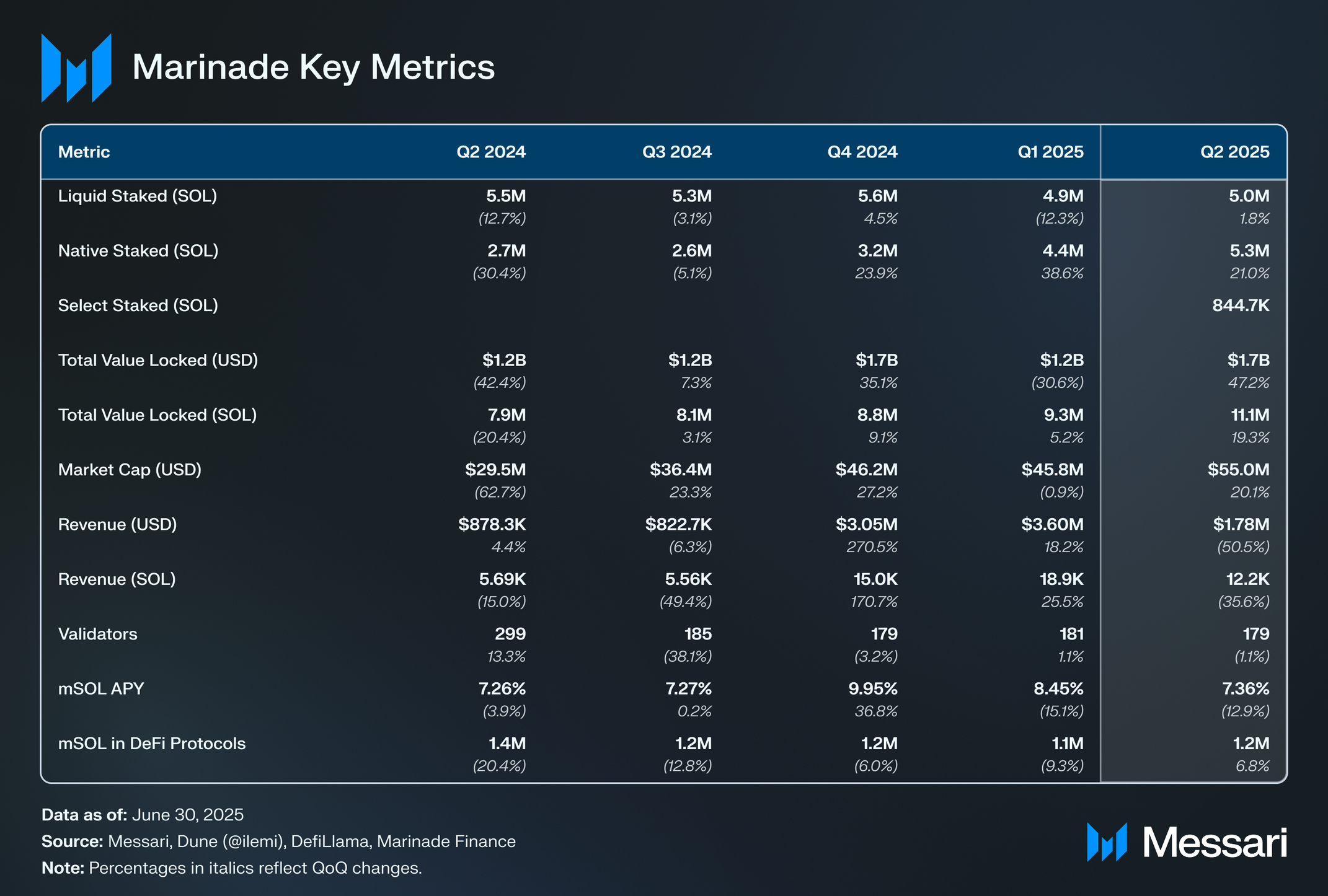
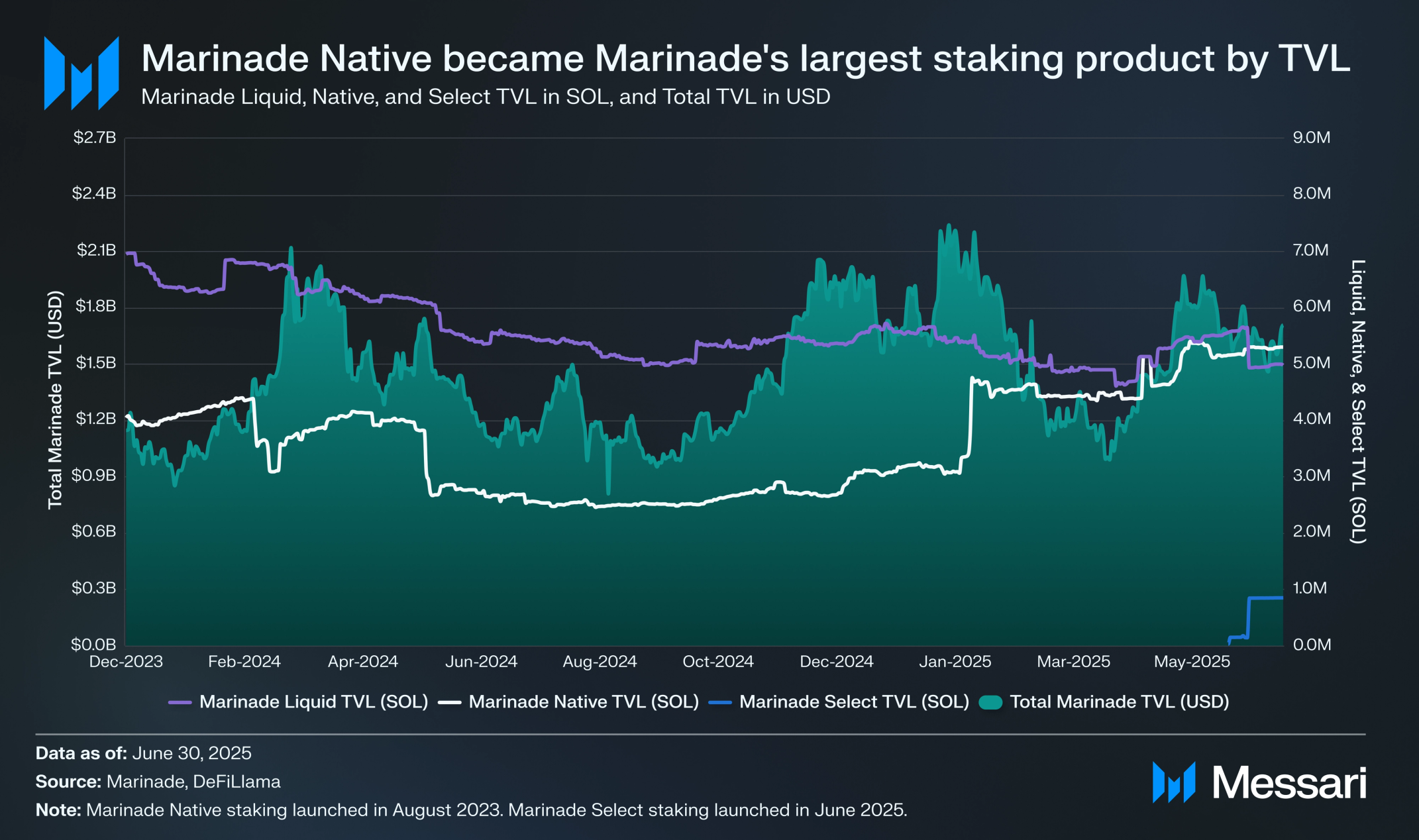
Marinade Native TVL grew 21.0% QoQ to 5.3 million SOL, surpassing Marinade liquid’s mSOL as Marinade’s largest staking product by TVL.
Marinade Select attracted 844,700 SOL in TVL following its June 2025 launch. Marinade Select consists of a high-performing KYC-verified validator set, designed for enterprise adoption and available to retail stakers as well.
Marinade Select was named as the staking provider in Canary Capital’s proposed Canary Marinade Solana ETF. Marinade Native provides staking services for the live Bitwise Solana Staking ETP.
The Marinade DAO approved the use of protocol revenue for MNDE buybacks. Under MIP-11, up to 40% of fees generated by the Stake Auction Marketplace (SAM) will be used to repurchase MNDE on the open market.
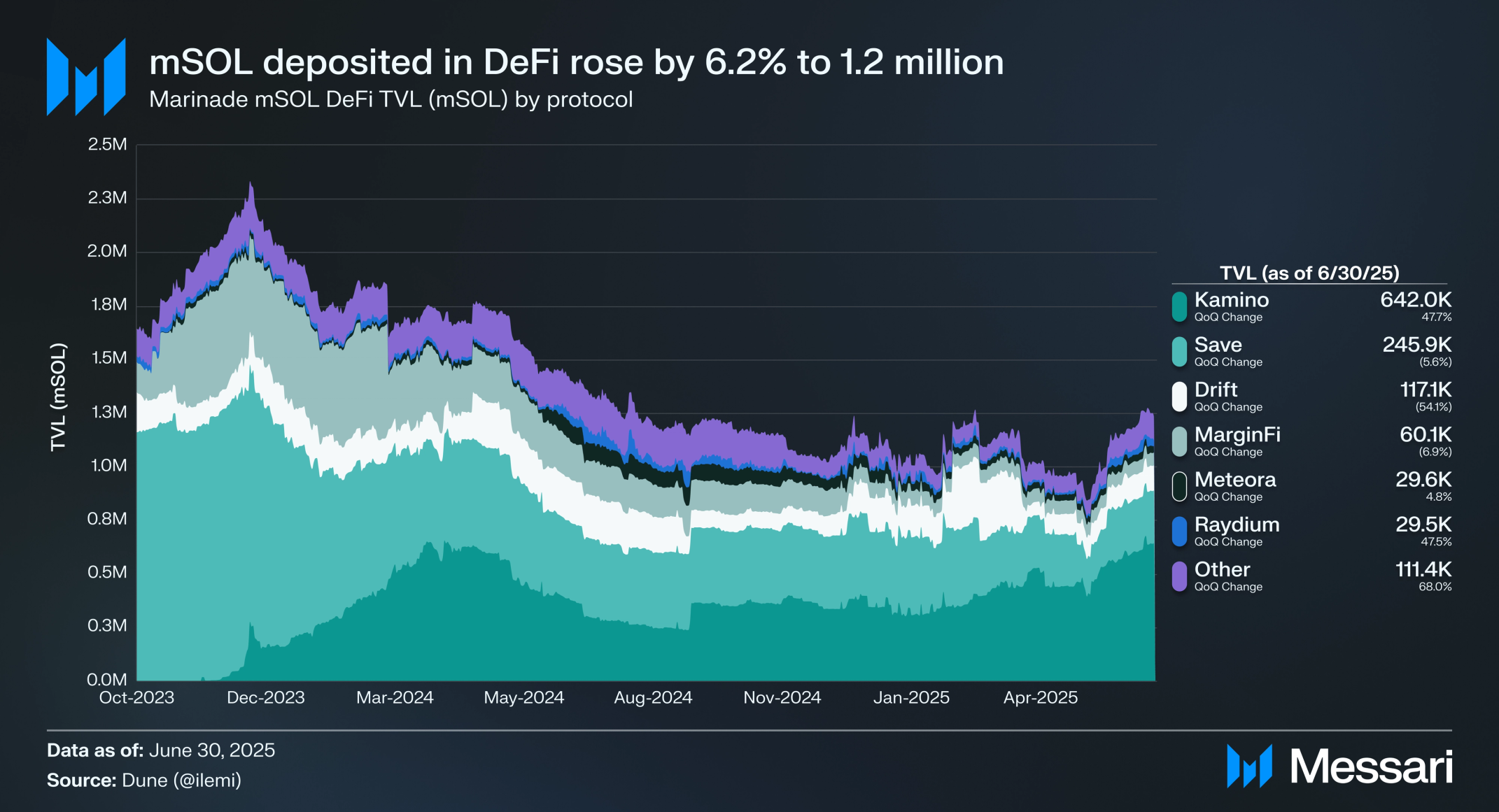
mSOL usage in DeFi grew 6.2% QoQ to 1.2 million mSOL. Kamino now accounts for over 50% of all mSOL in DeFi, driven by rising demand for leveraged yield strategies using Kamino’s multiply vaults.
Primer
Marinade (MNDE) is an automated staking protocol on Solana that offers three core products: liquid staking via mSOL, native Solana staking via Marinade Native, and Marinade Select, an enterprise-focused native staking solution that launched in Q2’25 and consists of a curated validator set that has been verified through KYC and is committed to ethical MEV practices.
Marinade Native allows users to delegate SOL directly to top-performing validators while retaining custody of their SOL, minimizing risks, and providing consistently higher staking yields compared to any 0% fee validator. Marinade Native does not use any smart contracts, charges no management fees, and does not issue a liquid staked token. Institutional-grade features such as SOC 2 Type 2 compliance, integrations with custodians like BitGo, Zodia, and Copper, a staking rewards report tool for tax purposes, and instant liquidity via Native Instant Unstake have positioned Marinade Native as a leading choice for institutional stakers.
Marinade’s liquid staking product, Marinade SOL (mSOL), is a tokenized version of staked SOL that can be freely used across DeFi protocols. Users receive mSOL when staking through Marinade’s liquid staking interface, allowing them to earn staking rewards while maintaining the flexibility to trade, lend, or use their assets within Solana’s growing DeFi ecosystem.
Marinade was founded during the March 2021 Solana x Serum Hackathon and launched on mainnet on Aug. 2, 2021. Marinade’s governance token, MNDE, was released a few months later, with a retroactive airdrop for mSOL holders. Marinade has not raised venture capital funding or conducted public token sales. Instead, Marinade’s token, MNDE, has mainly been distributed via various campaigns to reward users and contributors. Beyond incentives, MNDE is used for governance on Realms. Previously, Marinade delegated staked SOL to validators based on its algorithmic delegation strategy. After Q2’24, the delegation strategy was updated with the launch of the Stake Action Marketplace (SAM), where validators bid on stakers' SOL deposits, creating a market-based mechanism for validator competition and enabling stakers to earn optimized returns.
To participate in Marinade, validators need to meet specific criteria for eligibility, notably a maximum 7% commission. In April 2024, Marinade launched Protected Staking Rewards (PSR), which also requires validators to put up a SOL bond to be eligible for stake on Marinade. The PSR is a safeguard that guarantees 100% uptime insurance. It enforces an onchain service-level agreement protecting stakers from validator downtime and commission changes, protecting users' staking rewards.
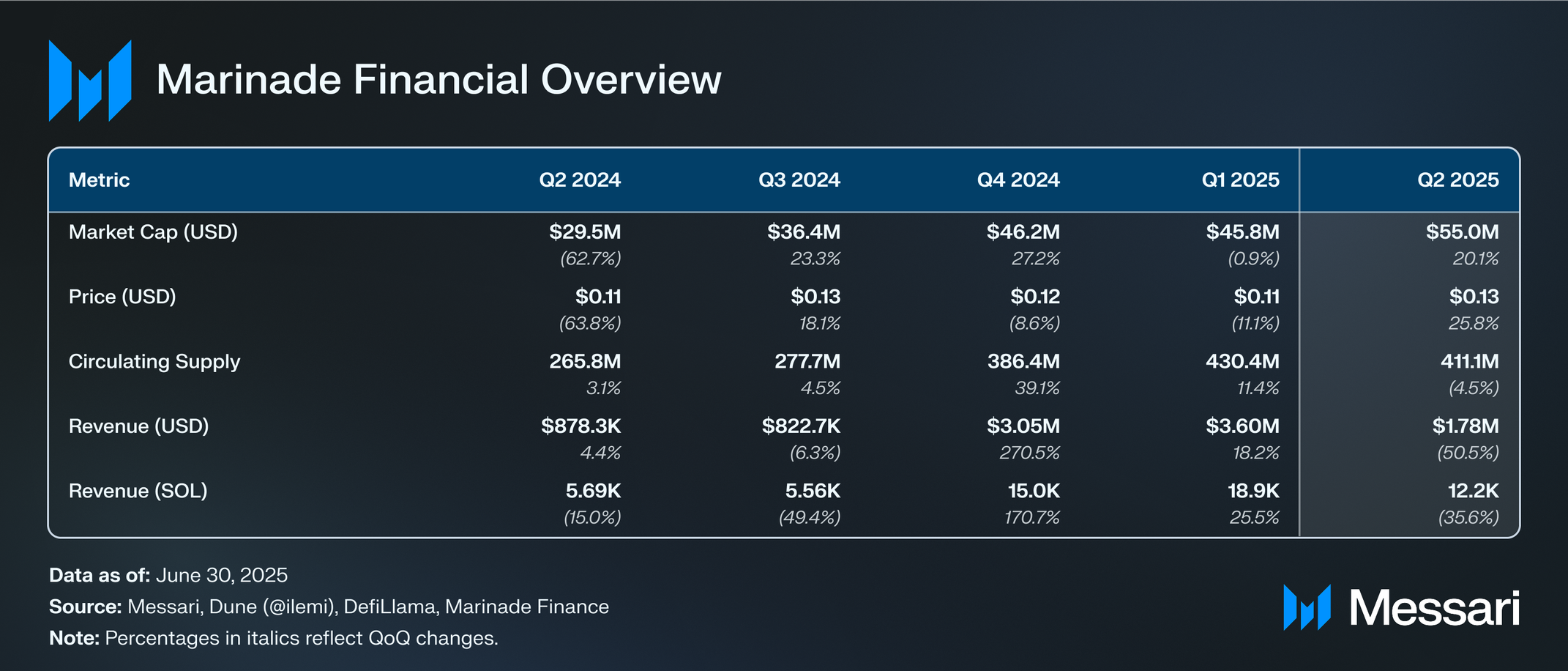
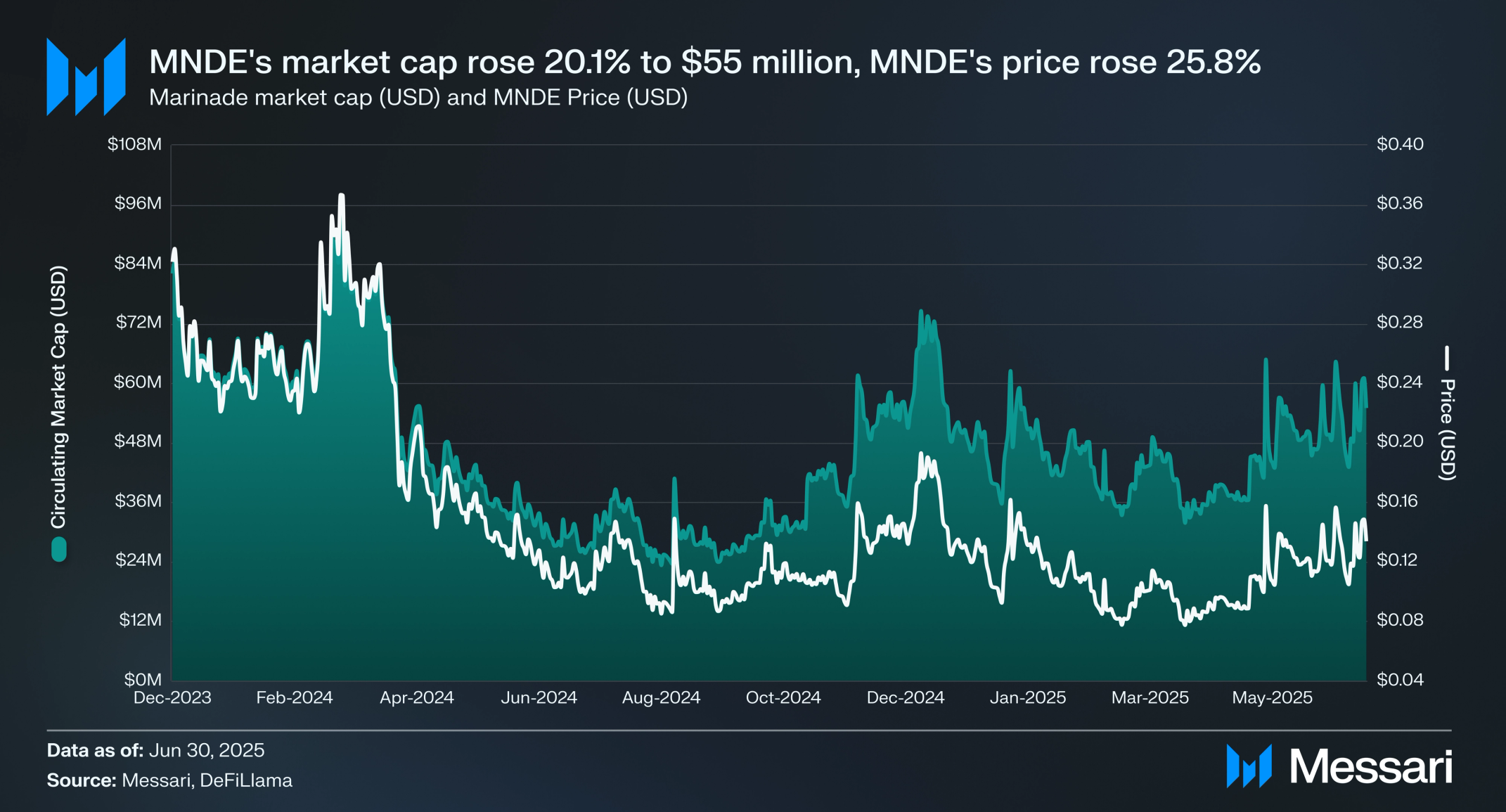
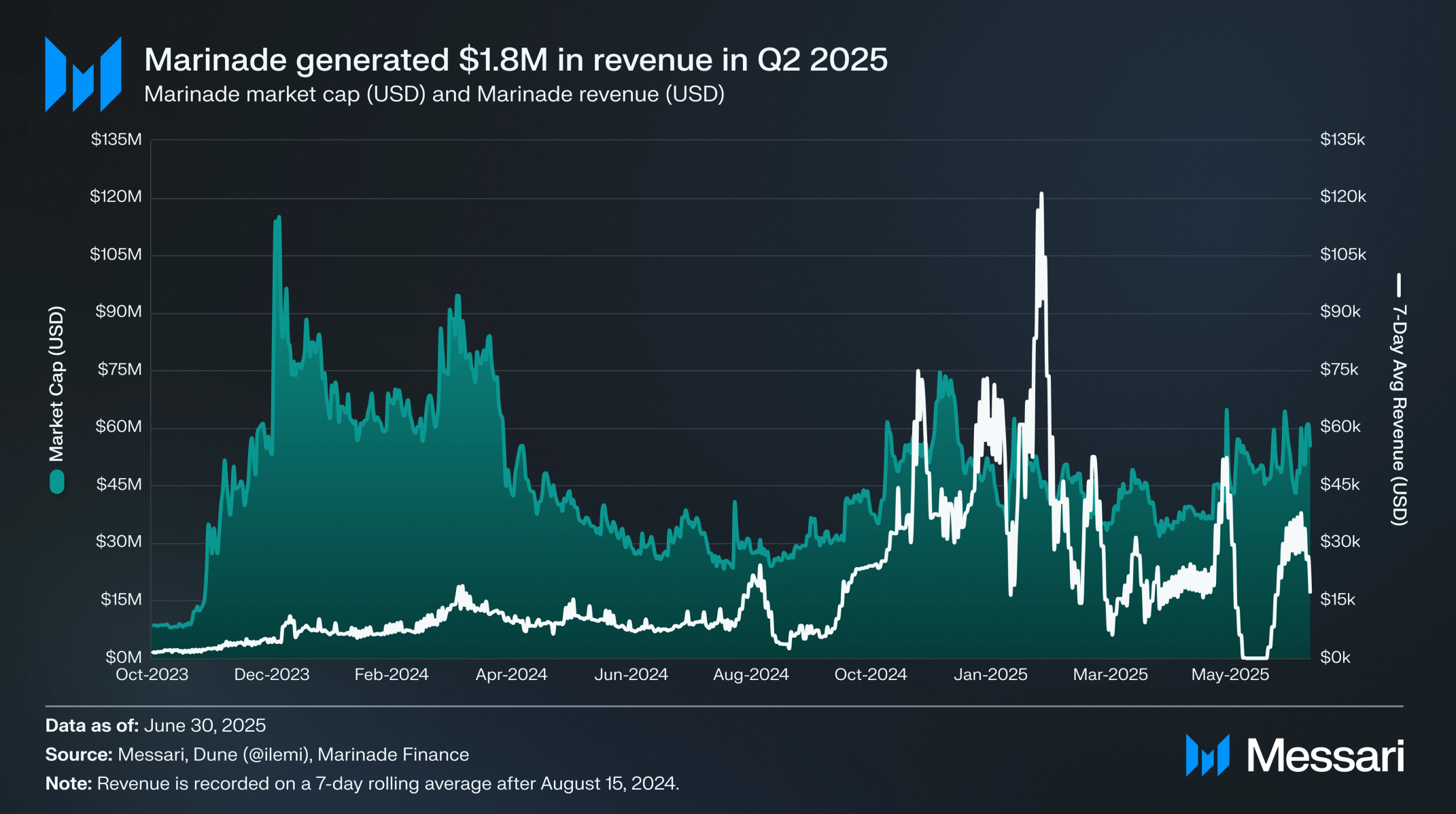
During Q2’25, Marinade Finance’s market capitalization increased 20.1% QoQ, rising from $45.8 million to $55.0 million. This growth was driven by a 25.8% increase in MNDE’s price, which climbed from $0.106 to approximately $0.134. The circulating supply of MNDE declined 4.5% over the quarter, from 430.4 million to 411.1 million tokens, reinforcing that price appreciation primarily accounted for the rise in market cap. The upward momentum in MNDE’s price coincided with growing institutional interest in Marinade Select and increased attention on Solana staking infrastructure ahead of potential Solana ETF approvals.
Marinade’s liquid staking product allows users to receive mSOL, a tokenized receipt of their staked SOL that is freely usable across DeFi applications. Marinade Native enables users to stake without receiving a token, retain full custody, eliminate smart contract risk, and earn staking rewards directly to their stake accounts with no management fees. Marinade Select, launched on June 5, 2025, offers a staking service tailored to institutions with a curated KYC-verified validator set with a track record of reliability and commitment to ethical onchain behavior, which does not allow front-running or sandwiching. Marinade Select has also been included as a staking provider in the proposed Canary Marinade Solana ETF filed by Canary Capital with the SEC in Q2 2025. Marinade Select’s commitment to validator transparency and ethical validating practices enables Marinade Select to provide SOL staking services in the proposed Solana ETF.
In Q2’25, mSOL grew 1.8% QoQ from 4.89 million SOL to 4.98 million SOL. Marinade Native TVL rose 21% QoQ from 4.38 million to 5.30 million SOL, making it Marinade’s largest staking product by SOL TVL. Marinade Select launched mid-quarter and reached 845,000 SOL in TVL by June 30. Collectively, the three products staked over 11.1 million SOL in Q2, with Marinade Native surpassing mSOL in TVL. This shift indicates growing demand for institutional-grade features such as SOC 2 Type 2 compliance, which affirms Marinade’s security and operational practices perform reliably over an extended period of time, protected staking rewards, and partnerships with BitGo, Zodia, and Copper.
Revenue
During Q2 2025, Marinade generated approximately 12,200 SOL in revenue, equivalent to $1.8 million. This represented a 56% decline from Q1’s $4.1 million (21,700 SOL). Marinade’s Q2 revenue decline correlated with Solana’s decline in network activity during the quarter. Marinade’s revenue fell due in part to the blacklisting of validators participating in malicious MEV behavior such as sandwich attacks. The blacklisting of these validators reduced the yield for Marinade stakers. To compensate stakers, Marinade temporarily reduced fees to help maintain a competitive yield for stakers. The remainder of Q2 brought new bidding validators into the Stake Auction Marketplace (SAM), alongside a rebound in Marinade’s revenue.
As in prior quarters, nearly all protocol revenue was sourced from validator performance fees collected through the SAM. These fees, capped at 9.5%, represent a portion of staking rewards offered by validators in exchange for delegated stake. Because the SAM is market-driven, protocol revenue is closely tied to validator competitiveness and broader staking sentiment.
While overall revenue declined in Q2, the protocol continued to make structural progress toward aligning tokenholder incentives. MIP-5, approved in Q1 2025 and pending implementation, introduced a new rewards path for token holders who direct stake to validators by allocating 0.95% of performance fees to MNDE-enhanced stakers. However, shortly after Q2’25 ended, the Marinade DAO introduced MIP-13 to simplify and accelerate the implementation of MIP-5. The proposal replaced the MNDE-enhanced staking allocation from MIP-5 with a new Active Staking Rewards program, funded with 25 million MNDE. Rather than tying rewards to staking behavior alone, the design proposed in MIP-13 distributes MNDE incentives to users who actively participate in governance. Alongside this change, MIP-13 increases the MNDE buyback allocation introduced in MIP-11 from 40% to 50% of protocol fees. As of the writing of this report, MIP-5, MIP-11, and MIP-13 have not yet been implemented.
These proposals demonstrate Marinade’s effort to connect its performance-based revenue generation model with meaningful tokenholder participation. Meanwhile, validator bonding requirements through PSR and market-based delegation via the SAM help tie revenue generation to validator reliability and competition. Marinade uses the SAM to allocate stake dynamically based on validator bids and enforced quality through PSR, which requires validators to post a bond. This design supports long-term sustainability by incentivizing validator quality, aligning stakeholder incentives, and enhancing the economic utility of MNDE.
Token Emissions
Marinade has a fixed maximum token supply of 1.0 billion MNDE. At the end of Q2 2025, MNDE’s circulating supply stood at 411.1 million, down 4.5% from 430.4 million in Q1. This decline is due to the return of previously allocated but unused MNDE to the DAO treasury.
On Apr. 7, 2025, the DAO clawed back 16.3 million MNDE from the Open Doors Program and 2.95 million MNDE from Marinade Earn Season 1. Both programs were designed to accelerate protocol adoption, but did not fully exhaust their allocated budgets. The Open Doors Program aimed to distribute up to 160 million MNDE to contributors who onboarded new SOL stake, while Marinade Earn offered 1 MNDE per 1 SOL staked over a three-month campaign. Unclaimed rewards from both initiatives were returned to the treasury following their respective deadlines, reducing the circulating supply.
During Q2’25, Marinade also issued a 10 million MNDE token grant to a strategic partner. The grant includes a cliff period that began on May 5, 2025, and ends on January 16, 2026. The tokens remain locked during the cliff and are subject to clawback by the DAO, limiting their near-term impact on the circulating supply.
Performance Analysis
Staking Incentive Design: SAM, PSR, and MNDE Alignment
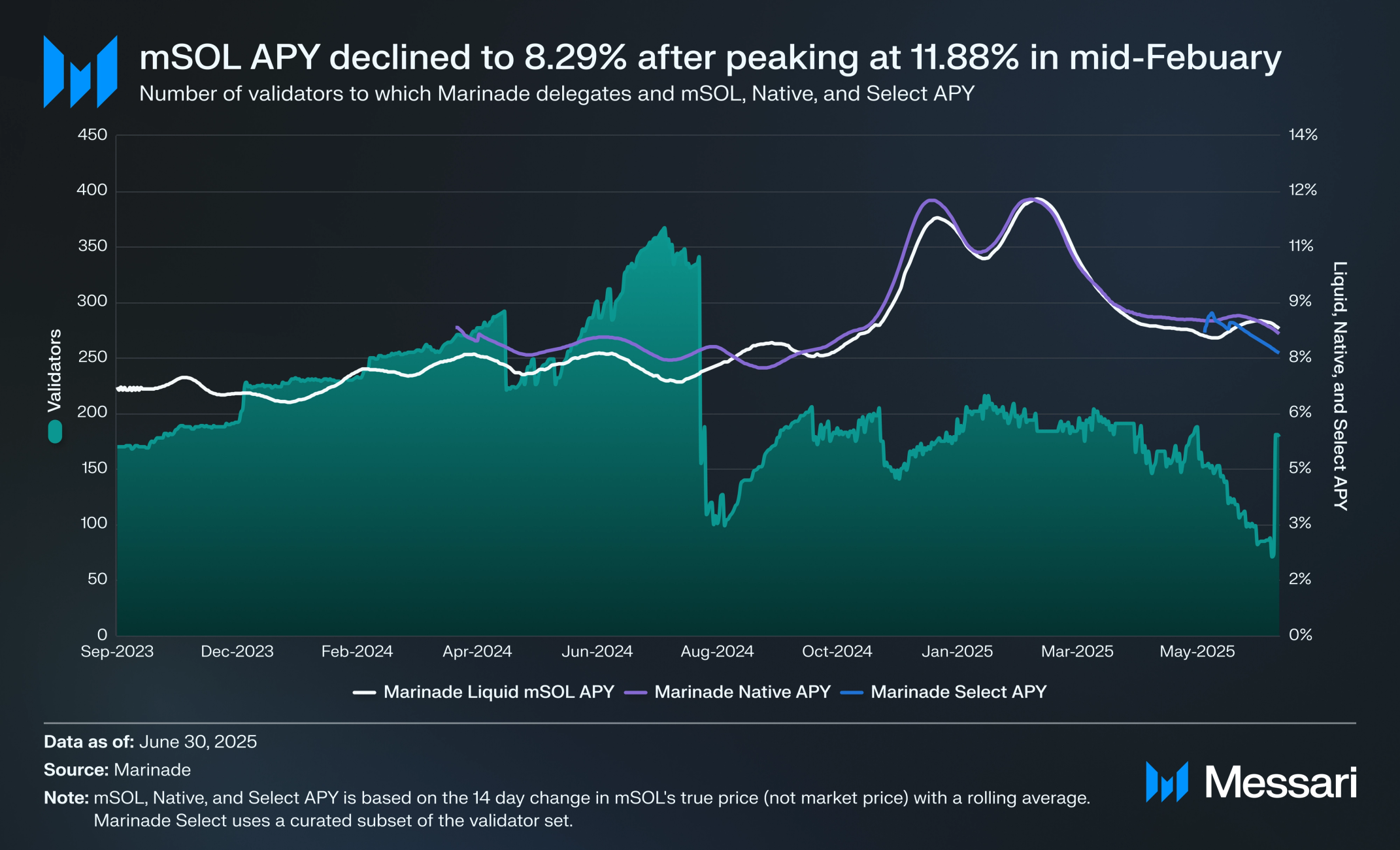
As of the end of Q2’25, Marinade delegated SOL to 179 active validators on Solana. All validators receiving delegation must maintain a maximum 7% commission rate and are required to participate in the Protected Staking Rewards (PSR), a bonding program where validators post a SOL-denominated bond that can be slashed for misbehavior, extended downtime, or commission manipulation. This bond serves as an economic safeguard to promote validator performance and reliability.
Following the approval of MIP-3 in November 2024, Marinade transitioned all stake allocation to the Stake Auction Marketplace (SAM), replacing its previous hybrid delegation model. Under the SAM, validators bid for SOL delegation by offering custom yield terms, competing against other validators to offer the most attractive terms. Marinade applies a performance fee of up to 9.5% on validator bids, which is captured as protocol revenue.
The SAM incentivizes validator competition and yield optimization, while PSR enforces minimum performance standards, forming a dual-incentive structure that balances decentralization with staking efficiency. In Q1’25, governance approved MIP-5 to introduce MNDE-enhanced staking, which will allow MNDE holders to delegate MNDE to specific validators and earn a share of SAM-derived performance fees when implemented. In Q2’ 25, the Marinade DAO approvedMIP-11 to further advance alignment by allocating a portion of protocol fees toward MNDE buybacks. As of June 30, 2025, these approved proposals have not yet been implemented.
Early in Q3’25, an additional proposal, MIP-13, was created, which modifies both MIP-5 and MIP-11. MIP-13 proposes to increase the MNDE buyback allocation from 40% to 50% of SAM fees and remove the 10% MNDE-enhanced staking share introduced in MIP-5. In place of the staking allocation, MIP-13 establishes a new Active Staking Rewards program funded by 25 million MNDE. This program plans to reward MNDE holders who participate in governance by distributing MNDE at the end of 2025 based on voting activity throughout the year. As of July 23, 2025, a governance vote has not been conducted on MIP-13.
Validators and APY
Marinade’s staking products, including liquid staking through mSOL, native staking, and the newly launched Marinade Select, continued to offer competitive returns in Q2’25, although yields declined from their Q1 Highs. Staking yields are influenced by Solana network activity, validator performance, and the distribution of priority fees.
Marinade Liquid (mSOL)
The mSOL APY ended Q2’25 at approximately 8.29%, compared to 8.90% at the end of Q1’25. mSOL yields are calculated using Marinade’s true price metric, which measures the ratio of SOL backing each mSOL token. These yields remain sensitive to validator uptime, network transaction volumes, and priority fee generation.
Marinade Native
Native staking APRs ranged between 8.15% and 8.95% during the quarter, driven by validator bidding activity in the SAM and the proportion of priority fees passed through to stakers. Native staking typically offers slightly higher yields than mSOL because it avoids liquidity-related fees. Historically, native staking required users to observe a 2–3 day unstaking cooldown period, but Marinade introduced native instant unstake in beta during Q2’25. This feature enables users to exit native staking positions instantly without waiting for the unstaking cooldown period. As of June 30, 2025, native instant unstake currently operates with limited liquidity per epoch, with plans to scale capacity for larger institutional flows. Marinade Native also serves as the staking provider for the live Bitwise Solana Staking ETP, reinforcing its position as a preferred solution for regulated, institutionally oriented products.
Marinade Select
Marinade Select, launched in June 2025, is an institutional-grade staking solution built on a curated validator set that enforces KYC verification, ethical MEV practices, and high uptime standards. Validator accountability is reinforced through Marinade’s Protected Staking Rewards. Since launch, Marinade Select has delivered yields in the range of 7.63% to 8.71% APY, supported by reliable validator performance and priority fee distribution. The product is structured to meet institutional and regulatory requirements, serving as the exclusive staking provider in Canary Capital’s Canary Marinade Solana ETF application. Its curated design positions Marinade Select as a secure and compliant option for institutional stakers.
Adoption
Adoption of Marinade’s staking products accelerated in Q2’25, driven by growing demand across both DeFi and institutional channels. mSOL usage in DeFi protocols increased to 1.2 million mSOL (+6.2% QoQ), maintaining its position as a preferred collateral asset in lending and liquidity markets. Marinade Native experienced the strongest growth, surpassing mSOL to become Marinade’s largest staking product with 5.3 million SOL in TVL by the end of the quarter. The launch of Marinade Select further expanded Marinade’s institutional reach, with its curated validator set featured in Canary Capital’s Solana ETF application and the Bitwise Solana Staking ETP.
mSOL in DeFi
mSOL remained a core staking asset across Solana DeFi in Q2’25, with total deposits increasing 6.2% QoQ to 1.2 million mSOL. This growth signals mSOL’s entrenched role as a yield-bearing collateral asset, with increased adoption across lending markets, structured yield strategies, and liquidity venues indicating sustained demand for staking derivatives within Solana DeFi.
Kamino strengthened its position as the leading protocol for mSOL usage, with mSOL TVL rising 47.7% QoQ to 642,000 mSOL, now accounting for over half of mSOL deployed in DeFi. This increase was driven by strong demand for Kamino’s Multiply vaults, which enable leveraged exposure to yield-bearing assets like mSOL by looping SOL borrow positions through eMode and flash loans. Multiply’s design allows users to amplify staking yields, with mSOL consistently offering one of the highest SOL loop APYs on the platform.
Save remained the second-largest protocol for mSOL with 245,900 mSOL in TVL, down 5.6% QoQ, reducing its market share from 23.1% to 19.9% as capital shifted toward Kamino. Drift saw the sharpest decline, with mSOL deposits falling 54.1% to 117,100 mSOL, cutting its market share from 22.6% to 9.5%. MarginFi also contracted slightly, with TVL decreasing 6.9% QoQ to 60,100 mSOL, while its share slipped from 5.7% to 4.9%. Meteora posted a mild rebound, growing 4.8% to 29,600 mSOL, while Raydium surged 47.5% to 29,500 mSOL, lifting its share from 1.8% to 2.4%.
Competitive Landscape
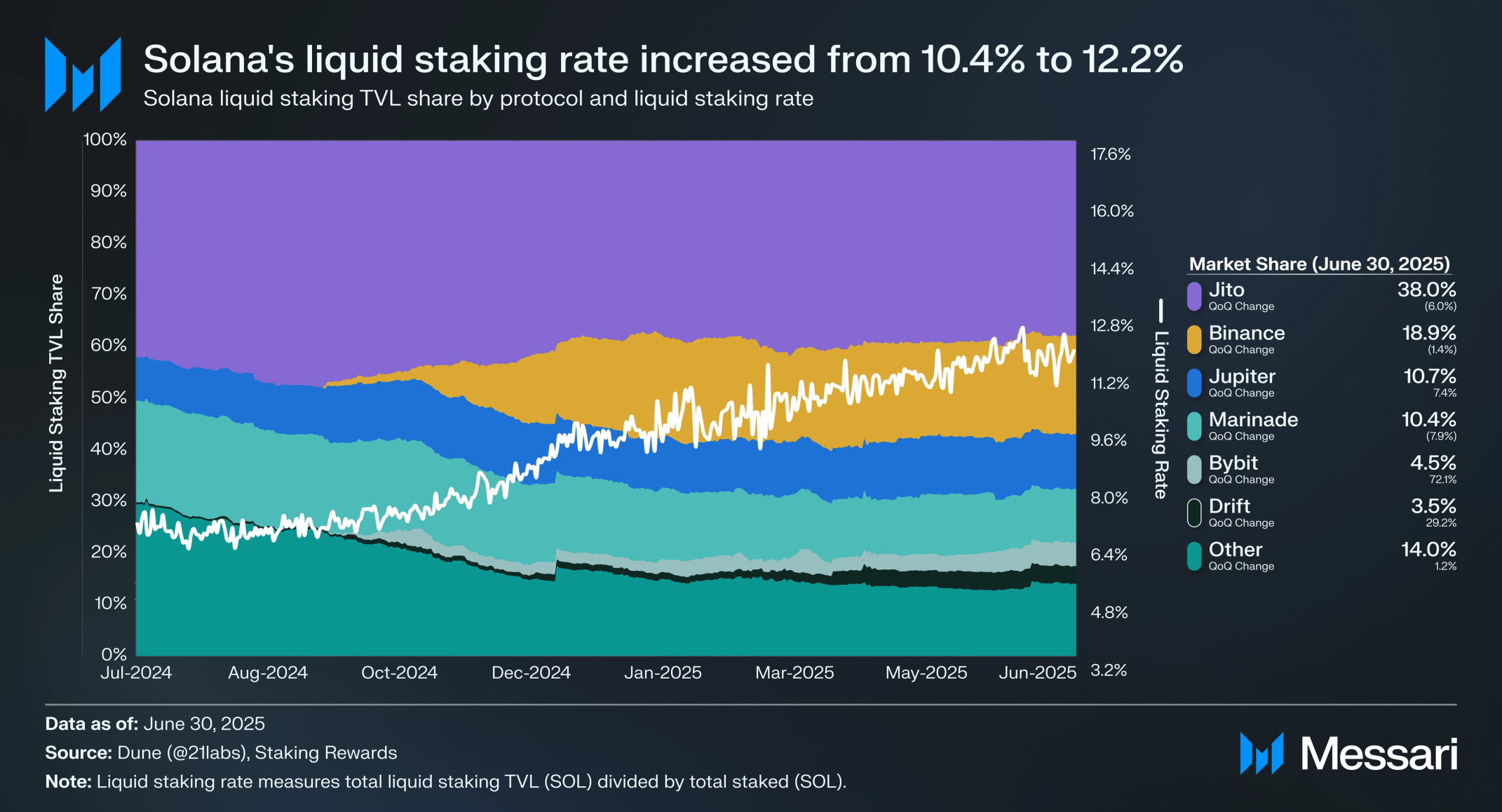
Solana’s liquid staking sector grew significantly in Q2’25, with the network’s liquid staking rate increasing from 10.4% to 12.2% of total staked SOL. Jito’sjitoSOL maintained its market leadership with a 38.0% share, holding a substantial lead through its competitive staking yields and deep integrations across Solana DeFi. Binance’sbnSOL followed as the second-largest provider, with an 18.9% market share, benefiting from centralized exchange liquidity and retail onramps.
Jupiter’sjupSOL climbed to 10.7% market share, overtaking Marinade’s mSOL at 10.4% to become the third-largest SOL liquid staking provider. While Marinade’s liquid staking growth was steady, the protocol’s focus in Q2 shifted toward institutional adoption through Marinade Native and the launch of Marinade Select, its curated validator solution tailored for ETF and enterprise-grade staking. Despite this strategic shift, mSOL remained one of the most widely integrated liquid staking tokens in Solana DeFi, serving as a foundational asset across lending markets, structured yield products, and liquidity protocols.
Bybit’sbbSOL and Drift’sdSOL showed meaningful gains, with their market shares reaching 4.5% and 3.5%, respectively. Drift’s recent push into DeFi-native yield strategies, combined with its staking vaults, contributed to its 29.2% QoQ growth in share. Other SOL liquid staking providers accounted for 14.0% of the market.
Qualitative Analysis
Governance
Marinade’s governance framework continued to serve as the foundation for protocol development in Q2’25. The DAO introduced and approved several MIPs focused on infrastructure, emissions, staking design, and validator protections. These proposals reflect the community’s ongoing effort to refine Marinade’s staking architecture, enhance the utility of MNDE, and strengthen the protocol’s position within the Solana ecosystem.
MIP-8 and MIP-8.1: Sunset of Delayed Unstake Tickets
In Q1’25, the Marinade DAO unanimously approvedMIP-8 with 100% support, implementing upgrades to the delayed unstake mechanism for mSOL. The proposal transitions the existing “claim ticket” model to a stake account holding SOL, aligning better with native Solana staking mechanics and reducing protocol complexity. It also introduced a 10 basis point (bps) fee on delayed unstake transactions to discourage rapid mint-and-redeem cycles that could deplete onchain liquidity. Additionally, a minimum threshold of 1 SOL for delayed unstakes was enforced, with smaller amounts automatically routed through instant unstake services such as Jupiter.
While MIP-8 was approved, implementation was delayed due to low voter turnout on Realms. To address this, MIP-8.1 was reintroduced on April 24, 2025, with clearer communication and a shorter voting cycle. The proposal maintained the same core changes as MIP-8. MIP-8.1 was successfully approved and implemented on May 18, 2025, finalizing the transition to stake accounts and the 10 bps fee structure.
MIP-11: MNDE Buyback Allocation
Introduced on April 18, 2025, MIP-11 proposes allocating 40% of performance fees generated by the Stake Auction Marketplace (SAM) to buy back MNDE tokens on the open market. This initiative is intended to enhance MNDE’s value proposition by introducing sustained protocol-driven buy pressure, complementing the MNDE-Enhanced Staking rewards approved under MIP-5. Under the new structure, 50% of SAM performance fees will be allocated to the DAO treasury, 10% to MNDE stakers, and 40% to MNDE buybacks.
MIP-11 was voted on and approved through a MetaDAO futarchy based vote in Q2’25, and implementation is planned for Q3. Once active, the buyback mechanism is expected to reduce MNDE’s circulating supply and strengthen long-term tokenholder alignment, following a model similar to protocols such as JUP, RAY, and MPLX.
MIP-12, was introduced on June 25, 2025, and proposed allocating 25M MNDE from the DAO treasury to fund the Marinade’s Migrate Campaign. The initiative targets 2.5M SOL of new TVL for Marinade Native by incentivizing stake migration from competing validators and platforms.
The campaign is divided into three tracks:
Institutional Track (10M MNDE): Targets existing and prospective clients of custodians such as BitGo, offering SOC 2-compliant, non-custodial staking access through Marinade Native.
Retail Track (10M MNDE): Designed for individual stakers currently using third-party validators, with a 3-month campaign window.
Additional Prospect Track (5M MNDE): Reserved for high-value institutional clients and strategic partners requiring tailored deal terms.
Participants in all tracks receive MNDE rewards at a 1 SOL = 10 MNDE rate, with staking commitment periods ranging from three to six months, depending on the track. Any unused allocations automatically return to the treasury, ensuring efficient capital deployment aligned with measurable protocol growth. MIP-12 was approved on July 25, 2025.
MIP-13: Introduction of Active Staking Rewards Program
Introduced on July 17, 2025, MIP-13 refines both MIP-5 and MIP-11 during their implementation phases. The proposal increases MNDE buybacks from 40% to 50% of total protocol fees and replaces the 10% MNDE-Enhanced Staking allocation with a new Active Staking Rewards program, funded with 25M MNDE tokens. This program is designed to reward MNDE holders who participate in governance by distributing rewards at the end of 2025 based on voting activity.
The proposed allocation structure shifts the use of total protocol fees from:
50% treasury
40% buybacks
10% MNDE-Enhanced Staking
To:
50% treasury
50% buybacks
Governance rewards through a 25M MNDE budget.
As of July 25, 2025, MIP-13 remains under review and has not yet advanced to a Realms vote or implementation.
Roadmap and Looking Ahead
Marinade’s focus for the second half of 2025 is on validator accountability, institutional staking, and expanded DeFi utility. To protect stakers, the protocol has begun slashing validator bonds to offset the cost of redelegating from malicious actors. A new reputation system is in development to limit stake allocations to unverified validators, raising the cost of predatory behavior. These initiatives align with planned upgrades to the Stake Auction Marketplace (SAM), including a more efficient auction mechanism, seamless redelegation between validators, and stronger resistance to MEV and extractive strategies.
Marinade is strengthening its institutional staking infrastructure across both Marinade Native and Marinade Select. Priorities include improving validator transparency, enhancing operational oversight, and supporting compliance needs. Development also continues on Native Instant Unstake, now in beta, which enables users to exit native staking positions immediately while retaining full custody. Marinade Select has been named as the staking provider for Canary Capital’s proposed U.S. Solana ETF, marking its growing role in delivering non-custodial, regulatory-aligned solutions for institutional users.
In parallel, Marinade is expanding mSOL’s role in DeFi by deepening integrations across Solana’s lending, leverage, and restaking protocols. Following the launch of an isolated lending market on Kamino and the introduction of structured yield incentives for Orca LPs, ongoing efforts will extend mSOL utility through products such as restaking with btcSOL by Zeus Network and institutional lending integrations with Maple Finance.
Closing Summary
Marinade ended Q2 2025 with 11.1 million SOL staked across its three products, up from 9.3 million in Q1. Marinade Native became the largest by SOL TVL, reaching 5.3 million SOL, an increase of 21.0% QoQ, while mSOL grew modestly to 5.0 million SOL. Marinade Select, launched in June 2025 and reached 844,700 SOL in TVL. The launch of Marinade Select introduced a native staking product tailored to enterprise clients, consisting of a curated, KYC-verified validator set. The launch aligned with growing enterprise interest in Solana, driven by proposed Solana ETF applications, including the Canary Marinade Solana ETF application, in which Marinade Select was named as the staking provider. Marinade also achieved SOC 2 Type 2 compliance, offers integrations with trusted custodians, and enables access to instant liquidity through the beta release of Native Instant Unstake.
While protocol revenue declined 50.5% QoQ to $1.78 million due to lower validator bidding activity in the Stake Auction Marketplace (SAM), governance remained active. The Marinade DAO advanced MIP-11 (MNDE buybacks), MIP-12 (25M MNDE migration incentives), and introduced MIP-13 (Active Staking Rewards tied to governance). Together with ongoing SAM upgrades and validator accountability reforms, these efforts aim to strengthen protocol economics, align stakeholder incentives, and support Marinade’s dual focus on DeFi-native growth and institutional adoption in the second half of 2025.
This report was commissioned by Sous Vide Ltd. All content was produced independently by the author(s) and does not necessarily reflect the opinions of Messari, Inc. or the organization that requested the report. The commissioning organization may have input on the content of the report, but Messari maintains editorial control over the final report to retain data accuracy and objectivity. Author(s) may hold cryptocurrencies named in this report. This report is meant for informational purposes only. It is not meant to serve as investment advice. You should conduct your own research and consult an independent financial, tax, or legal advisor before making any investment decisions. Past performance of any asset is not indicative of future results. Please see our Terms of Service for more information.
No part of this report may be (a) copied, photocopied, duplicated in any form by any means or (b) redistributed without the prior written consent of Messari®.
Hayden is a Research Analyst specializing in the intersection of crypto-economic incentive mechanisms and their role in DeFi, DePIN, and AI ecosystems. Prior to joining Messari, Hayden worked as a Research Analyst at The Block and as a Venture Associate at a crypto-native venture capital fund.
Hayden is a Research Analyst specializing in the intersection of crypto-economic incentive mechanisms and their role in DeFi, DePIN, and AI ecosystems. Prior to joining Messari, Hayden worked as a Research Analyst at The Block and as a Venture Associate at a crypto-native venture capital fund.