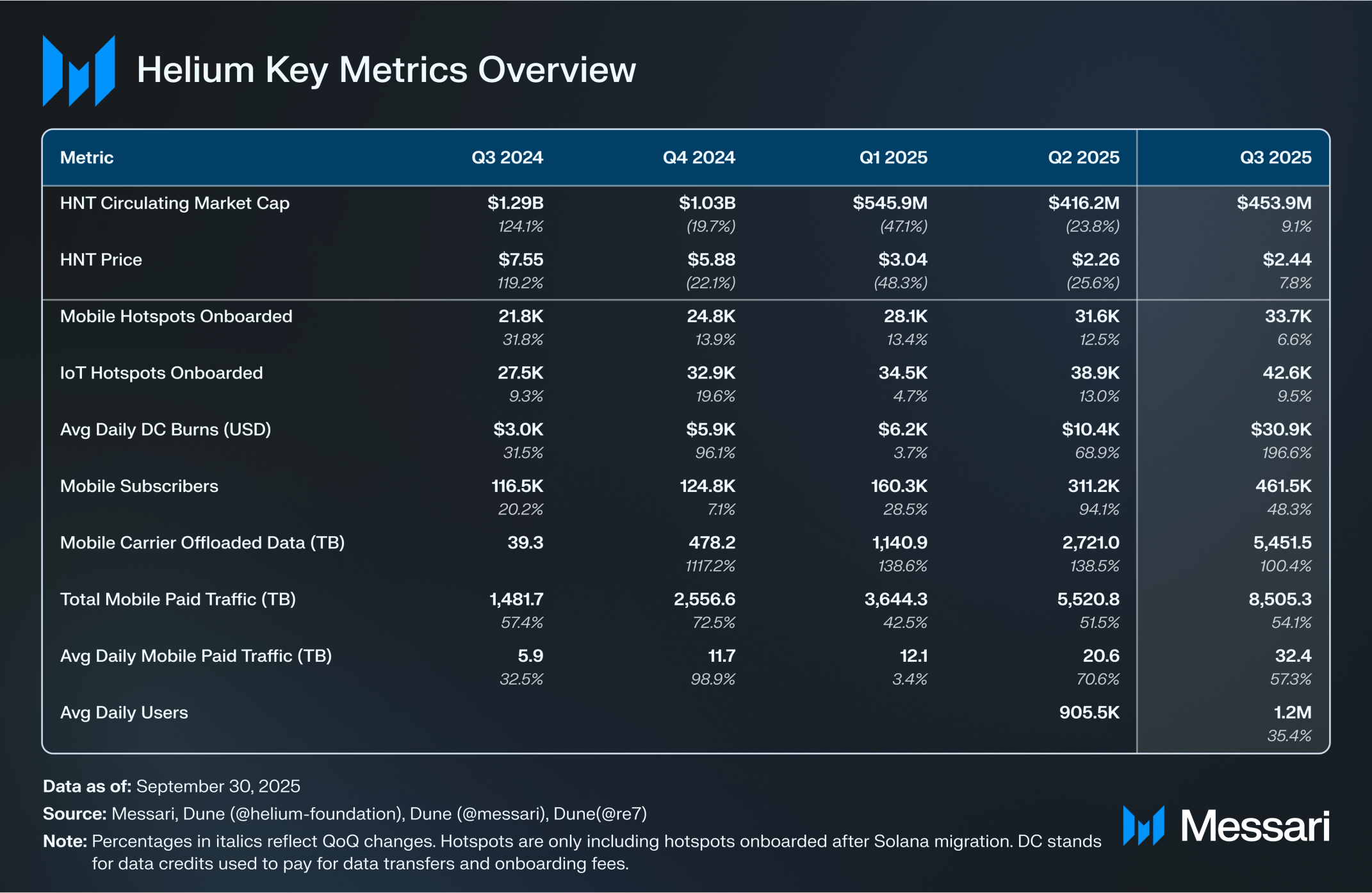
Helium’s annualized revenue reached $18.3 million, as Helium transitioned to burning 100% of its revenue. Average daily data credit (DC) burns grew 196.6% QoQ to $30,920.
By the end of Q3 2025, the Helium Network had transferred over 5,452 TB of data offloaded from major U.S. mobile carriers (100.4% QoQ increase), and over 8,505 TB of total mobile data since inception.
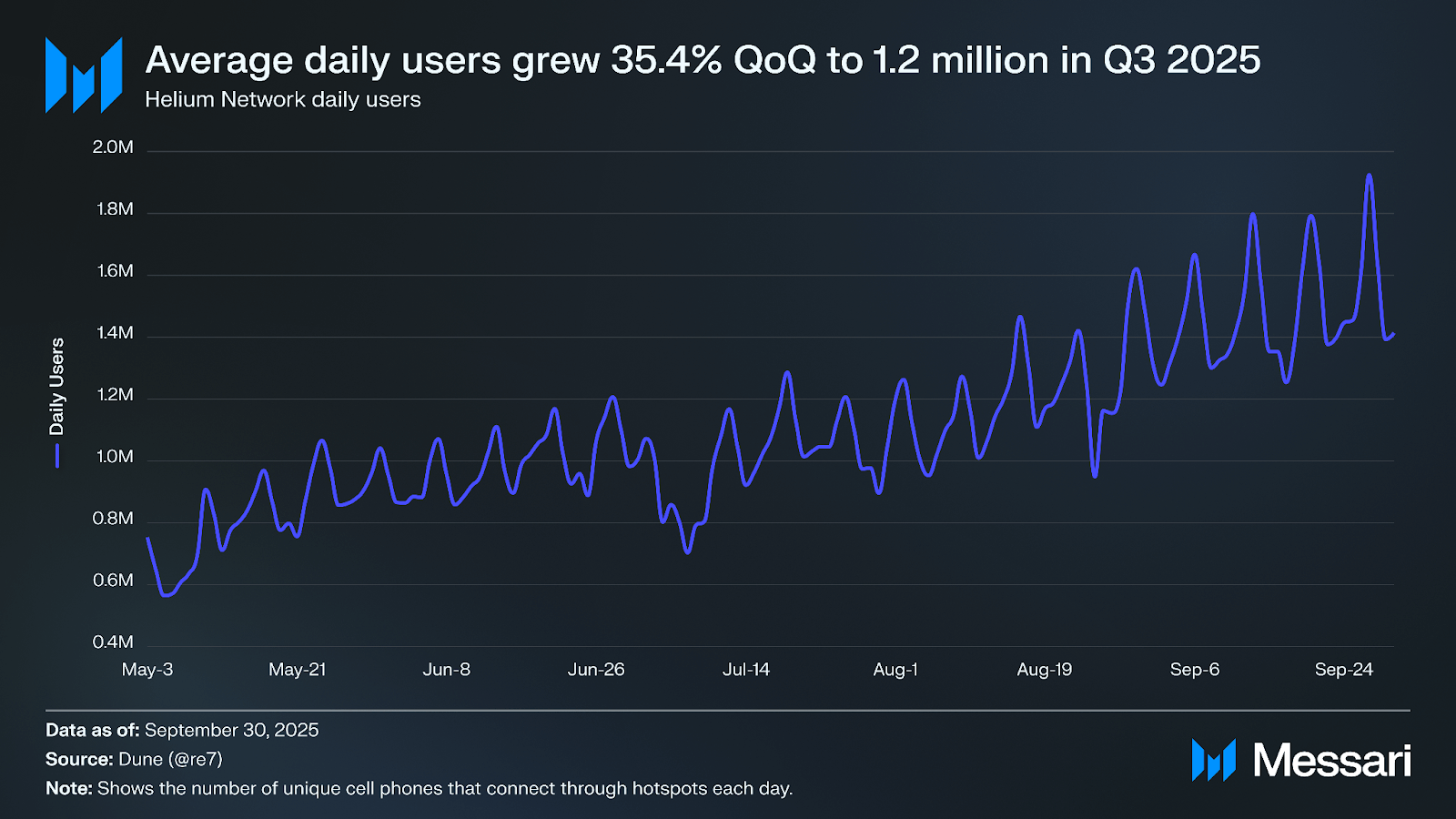
Over 461,500 total accounts have signed up for Helium Mobile as of Sept 30th, a 48.3% QoQ increase. Average daily users of the network grew 35.4% QoQ to 1.2 million. This growth trend continues in October, which will be featured in our next report.
Helium Plus soft-launched in Q2 and was formally announced on July 31, 2025. It allows businesses and public WiFi providers to join the network by updating their existing routers.
Helium continued its partnership with Telefónica in Mexico, bringing Helium Network to more U.S. users and now, Movistar subscribers. Helium also partnered with LongFi, a deployment specialist, to address identified expanded coverage areas.
Primer
Helium (HNT) is a decentralized wireless network that provides both cellular (Mobile) and low-power Internet of Things (IoT) connectivity. It is the world’s first “people-built” wireless network.
Helium Mobile is a Mobile Virtual Network Operator (MVNO) that provides its service by blending two sources of coverage: the community-powered network of Helium Mobile Hotspots and T-Mobile’s nationwide 5G network. This unique model is driven by incentives in which individuals who deploy hotspots are rewarded with HNT tokens for expanding the network.
The Helium Network launched in 2019 with an IoT network on its purpose-built Layer-1 blockchain for peer-to-peer wireless infrastructure. Users could send data to and from the Internet, and protocol miners were rewarded with HNT tokens for providing wireless network coverage. What began as a purpose-built IoT network has since expanded into a broader wireless ecosystem, with Helium’s Mobile Network as the flagship offering, with several enterprise carriers actively utilizing Helium for mobile offload.
After the approval of a governance proposal (HIP-70) in August 2022, Helium sunset its Layer-1 blockchain and migrated operations to Solana on April 18, 2023.
A primary growth driver for the Helium Network has been its Carrier Offload Program, which establishes partnerships with telecom companies. The program allows mobile customers of legacy telecom companies such as AT&T and Telefónica’s Movistar to connect to Helium Hotspots in areas where the community network provides sufficient coverage, helping the carriers extend their service. For Helium’s end users, a phone on the Helium Mobile plan can seamlessly connect to either a nearby community-deployed Hotspot (which acts like a mini cell tower) or T-Mobile’s network, ensuring consistent coverage across the United States.
Demand for the Helium Network was initially centered on IoT use cases, with notable examples including its use in flood detection in Portugal and in monitoring humidity and temperature for museums. Helium’s founding team has raised over $360 million to date, including $200 million in its latest round in March 2022. For a full primer on the Helium Network, refer to our Initiation of Coverage report.
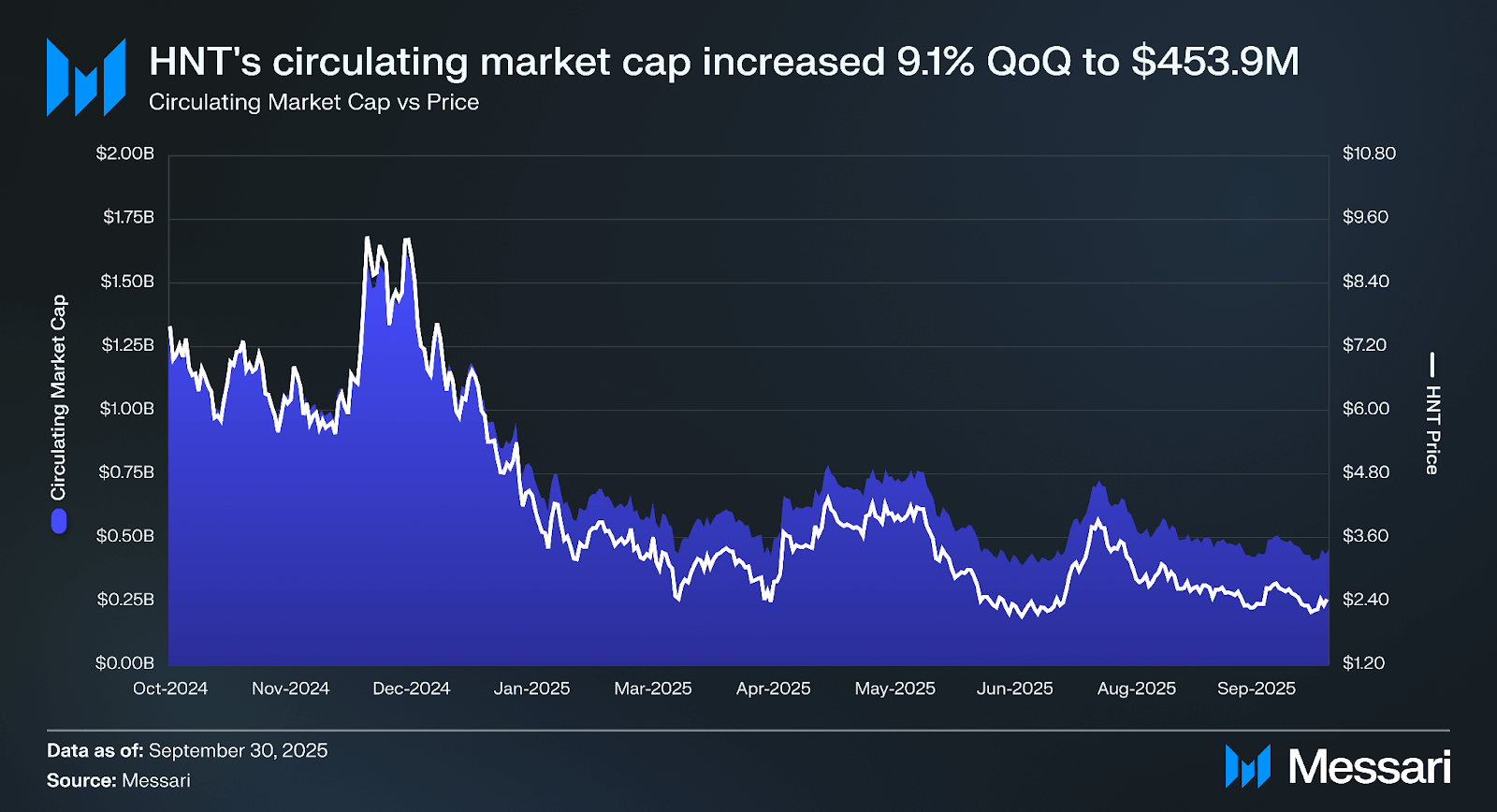
In Q3 2025, HNT’s circulating market cap (USD) increased 9.1% QoQ from $416.4 million to $453.9 million, as its market cap rank fell from 122nd to 128th. HNT’s price grew 7.8% QoQ from $2.26 to $2.44. The Helium Network token (HNT) is the network’s primary token. It is distributed from the Helium DAO, minted through inflationary emissions, then distributed to the network based on performance and engagement (i.e., Utility Score). There are two main functionalities for HNT:
Staketo receive veHNT and gain governance votes for the Helium DAO: Since the Helium Network acts as an overarching structure for its subnetworks, it requires its own governance mechanism. Members of the Helium DAO (i.e., HNT tokenholders) can participate in governance by staking HNT to receive veHNT. This veHNT provides proportional voting power to approve or reject proposals, such as Helium Release Proposals (HRPs) and Helium Improvement Proposals (HIPs), that shape the network’s future.
Notably, due to the implementation of HIP-138, the HNT token's value is now directly tied to network utility. Instead of being exchangeable for IOT or MOBILE tokens, HNT is essential for using the network. Users needing to transfer data must buy HNT and "burn" it to receive Data Credits (the network's payment method), which creates constant demand for HNT.
On Aug. 1, 2025, HNT emissions were cut by half. This is the third halving laid out in HIP-20, which cuts emissions by half every two years. Annual emissions decreased from 15 million HNT to 7.5 million HNT, or 20,548 HNT per day. Hotspot owners’ data rewards were not affected, as they are rewarded based on the amount of data their hotspot handles.
Data Credits
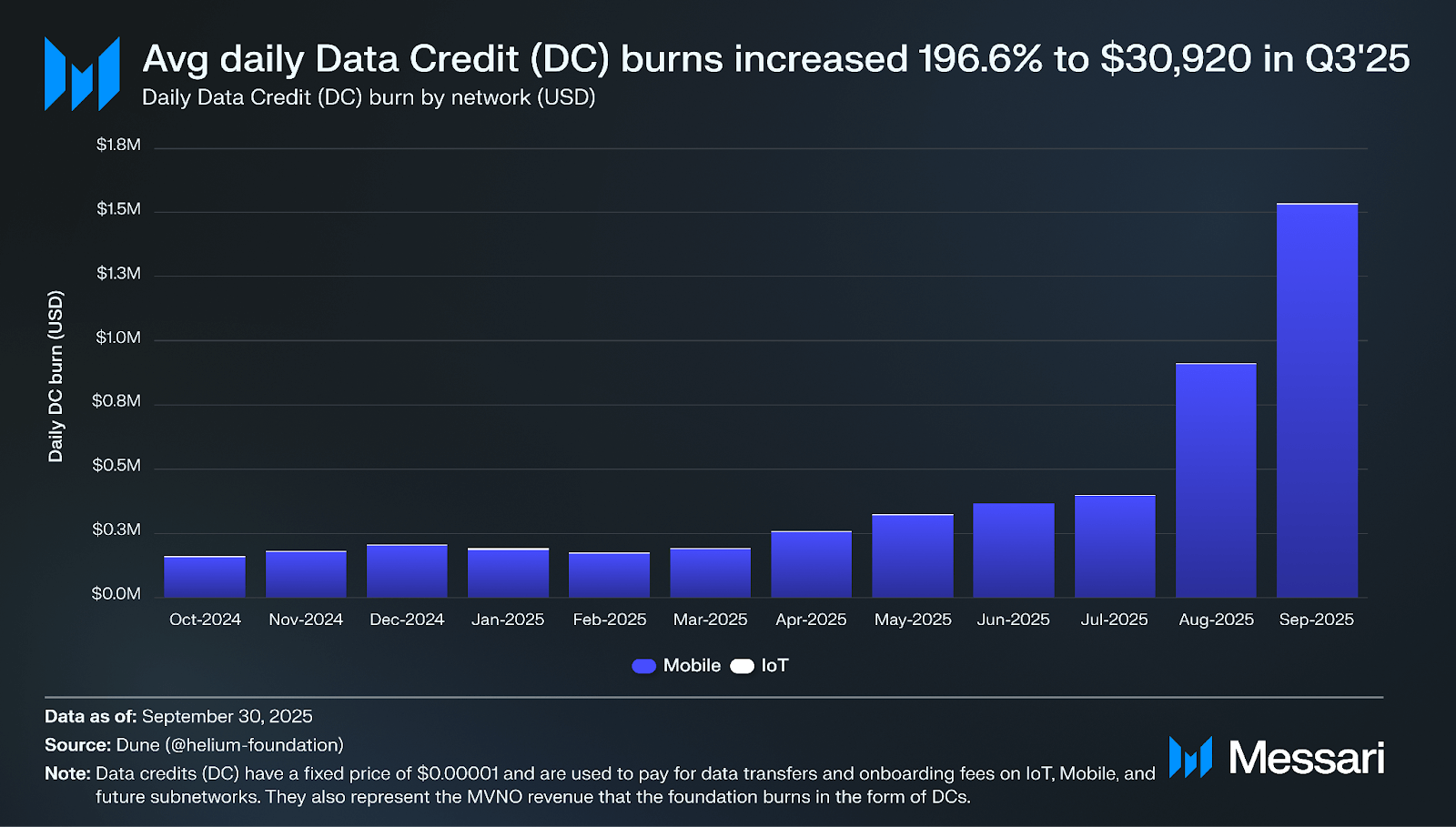
Data Credits (DC) have a fixed price of $0.00001 and are used to pay for data transfers and onboarding fees on IoT, Mobile, and future subnetworks. The cumulative total all-time DC burned by the end of Q3’25 was $6.2 million. Average daily DC burns increased 196.6% QoQ from $10,4203 to $30,920. The Mobile Network accounted for $30,8003 of the daily DC burns, representing 99.6% of the quarter's total, while the IoT subDAO contributed just $1132.98.
The growth can be attributed to Helium's decision to burn HNT tokens equivalent to 100% of the Helium Mobile subscriber revenue on Aug. 18, 2025. This led to Helium seeing record revenue of $1.5 million in September, with $1.5 million and an average daily DC burn of $50,2404 since Aug. 19, 2025. When annualized, this results in $18.3 million.
Network
Hotspots
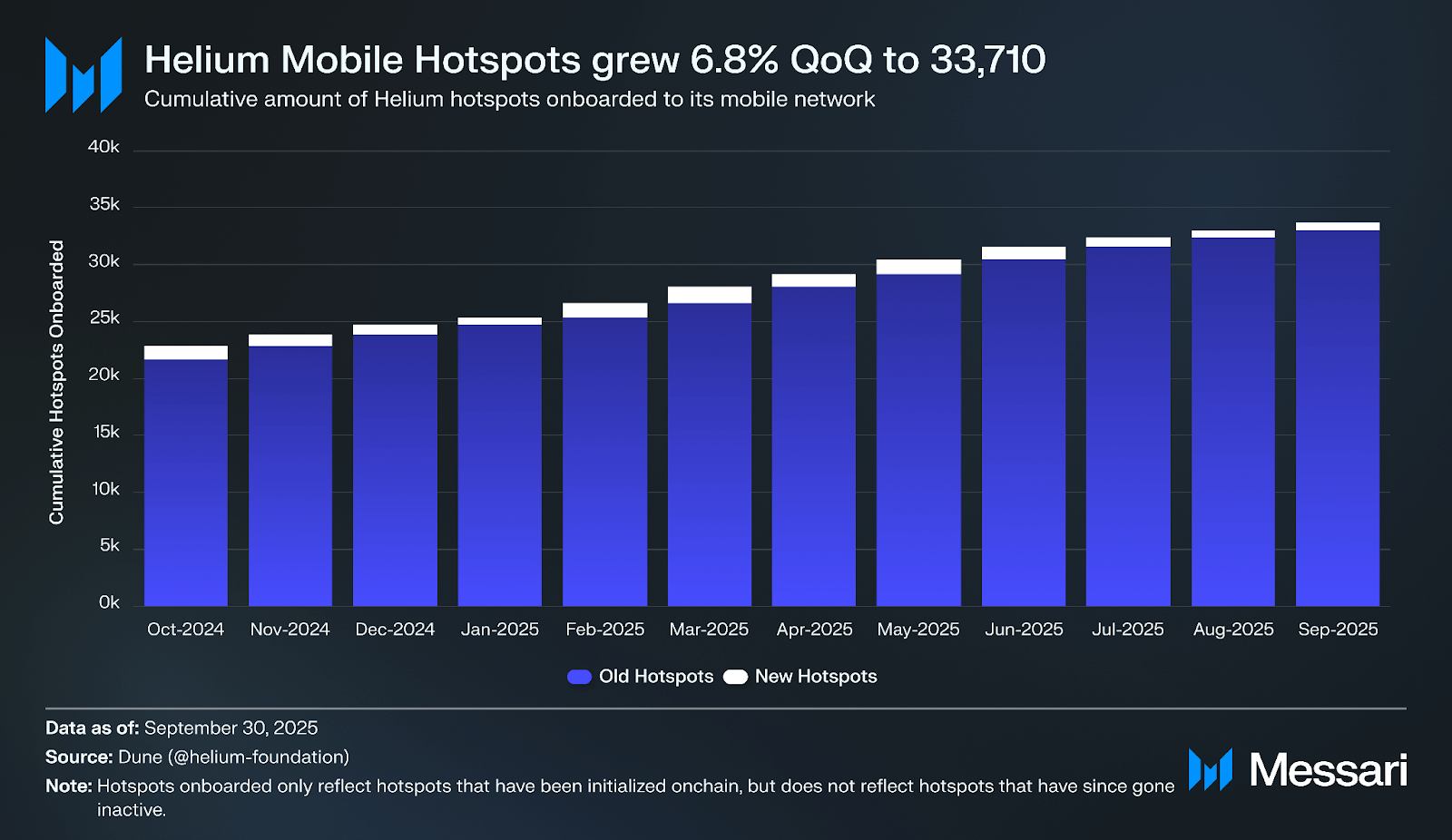
In Q3 2025, the number of new Helium Mobile Hotspots increased 6.8% QoQ from 31,630 to 33,710. This does not include converted hotspots, which are hotspots from non-Helium manufacturers. When included, the network ended the quarter with 115,750 hotspots, an 18% QoQ increase.
Helium Mobile’s unlimited plan ($30/month) costs considerably less than the average three-figure plans that categorize American telecom. Subscribers can lower their bill further by earning Cloud Points. Cloud Points are rewards Helium Mobile subscribers earn for sharing anonymized location data. This crowdsourced data empowers the Helium Network to identify coverage gaps, optimize hotspot deployment, and guide strategic network expansion across the U.S.
Users’ location data is anonymized and shared with the network to understand where coverage is needed most. Cloud Points can be redeemed for eGift cards or donated to nonprofit organizations. In addition to its ability to attract network coverage suppliers via hotspots, Helium Mobile seems primed to continue attracting new users to its telecom network, regardless of crypto-nativeness.
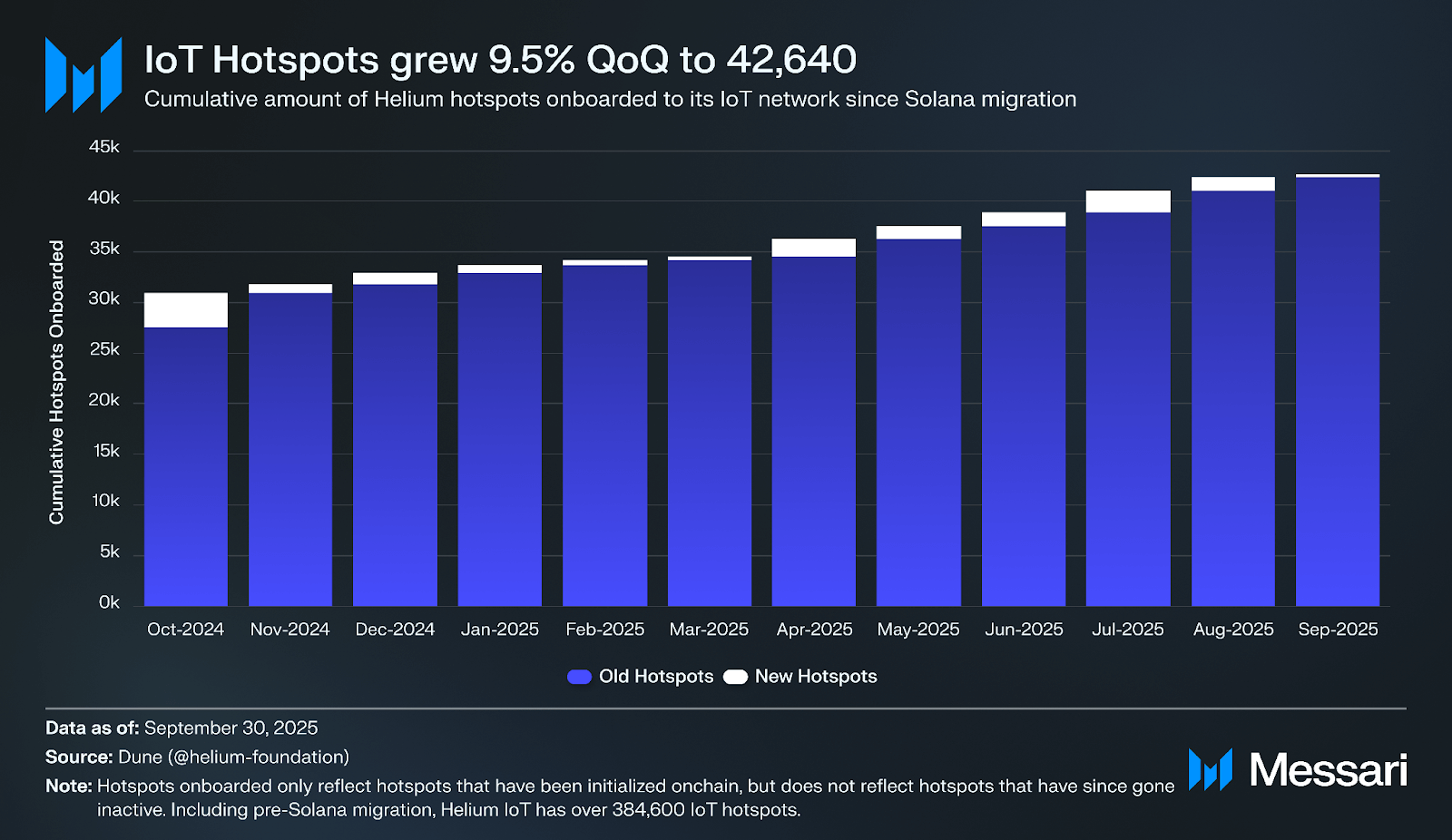
IoT Hotspots grew 9.5% QoQ, ending Q3’25 with 42,640 hotspots onboarded since the Solana migration in April 2023. Before the migration, Helium had over 342,000 active hotspots, bringing the network total to over 384,600.
To promote network growth in underserved geographies, the IoT Network's unique Proof-of-Coverage (PoC) model adjusts the rewards mechanism based on density to encourage more strategic deployments. As of Sept. 30, 2025, coverage is strongest in major cities across North America, Europe, and Southeast Asia.
Helium Mobile Signups
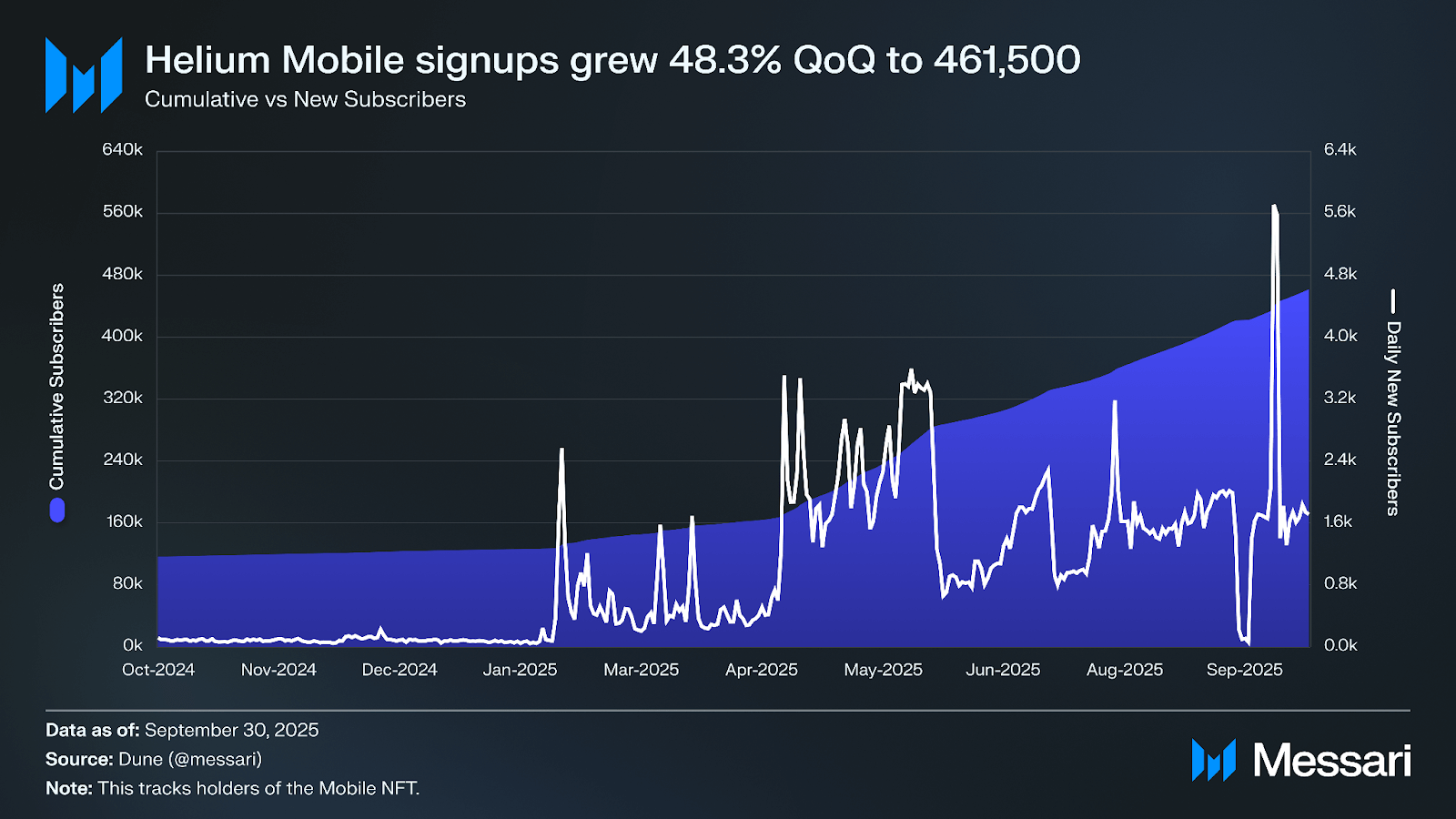
When onboarding to Helium Mobile, users are sent a Mobile NFT to their wallet, which is used to track Helium Mobile signups. In Q3’25, account signups grew 48.3% QoQ from 311,200 to 461,500.
Helium Mobile users automatically connect to Helium Hotspots when they are available and seamlessly switch to T-Mobile’s network when hotspot coverage isn't available.
Helium Mobile now offers four different tiers of plans:
Zero: $0/month with 3GB of data
Sprout (Kids Plan): $5/month with 3GB of data
Air: $15/month with 10GB of data
Infinity: $30/month with unlimited data
All of these plans are eligible to earn Cloud Points.
Some of the August and September signups can be attributed to Solana Seeker users claiming three free months of the Air plan, which was a part of the Solana Seeker Season promotion and began shipping Aug. 4, 2025.
Carrier Offloading
On June 18, 2024, Helium began allowing telecom companies to use the Helium Network to provide coverage for their users. Helium has partnered with several carriers to offload user data, including T-Mobile, Movistar, AT&T, Google Orion, and Wefi. The most recent came in April 2025, when Helium announced a partnership with AT&T, making it the latest carrier to join the offloading program.
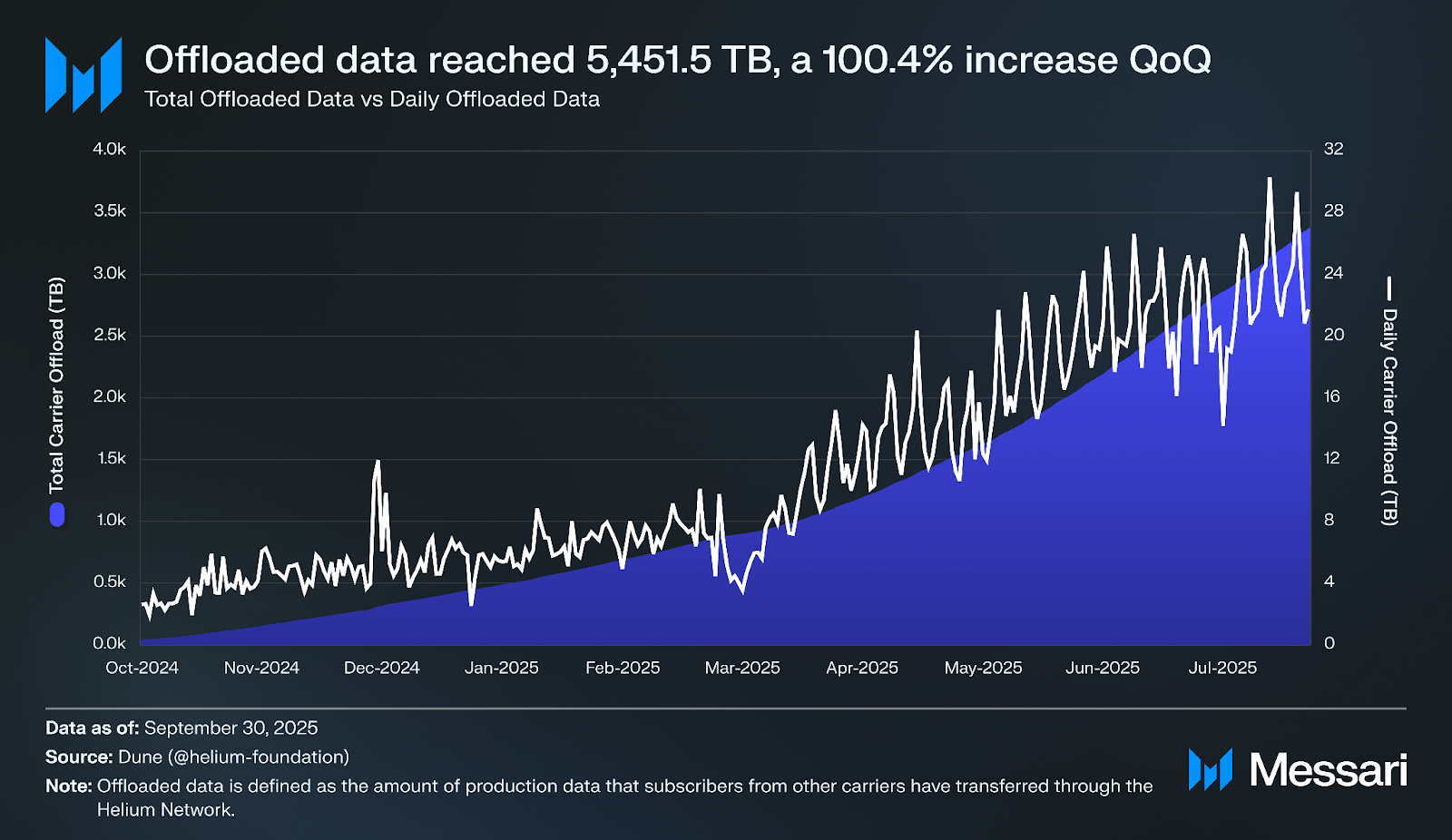
Offloaded data is the amount of production data users from other carriers have transferred through the Helium Network. In Q3’25, cumulative all-time data offloaded (TB) grew 100.4% QoQ from 2,721 TB to 5,451.5 TB. Up-to-date statistics can be viewed here.
Paid Traffic
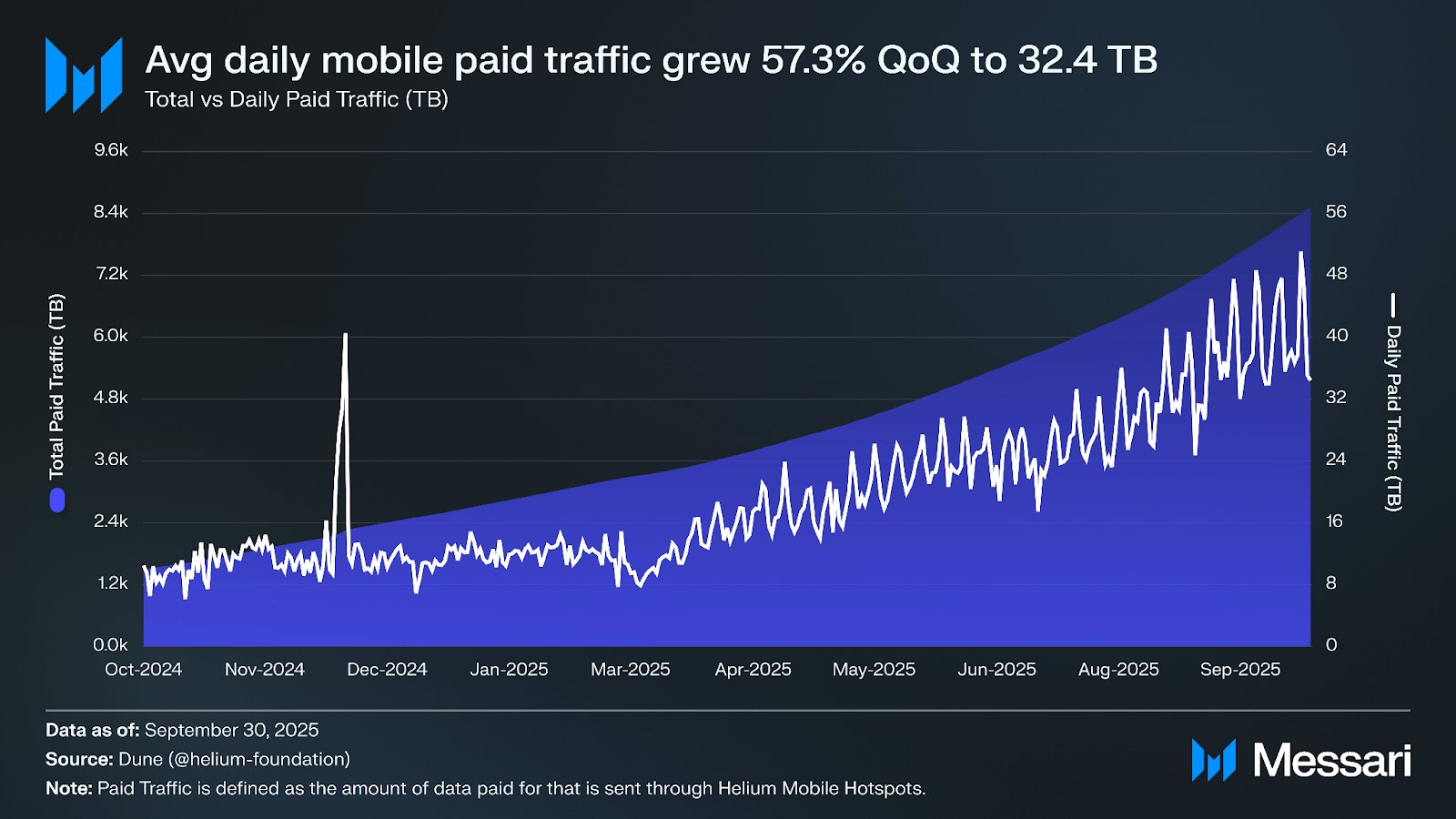
Paid traffic is the amount of paid data sent through Helium Hotspots. In Q3’25, average daily mobile paid traffic grew 57.3% QoQ from 20.6 TB to 32.4 TB. This growth brought the cumulative all-time paid traffic to 8,505.3 TB of data sent through hotspots, a 54.1% QoQ increase. As one of the main revenue drivers for the Helium Network, this metric is expected to continue growing as more users join the network and partnerships for carrier offloading expand.
Users
Due to the carrier offloading program, cell phones from multiple carriers can connect to the Helium Network. In Q3’25, the average daily users of the network grew 35.4% QoQ from 905,500 to 1.2 million. The network first surpassed 1 million users on May 24, 2025, and was above that mark except for 15 days in Q3.
Qualitative Analysis
HIP 147: Mobile Data Eats First
On Sept. 12, 2025, HIP 147: Mobile Data Eats First passed with 98.5% of the votes in favor. After being implemented on Sept. 13, 2025, the new model allocates up to 60% of the Mobile Network HNT emissions to rewards hotspots for actual data transfer on a pro-rata basis, with any remaining emissions distributed as Proof-of-Coverage (PoC) rewards. Before, 20% of HNT emissions were reserved for PoC rewards and only 40% for data transfer rewards.
Some of the other features that were implemented during this release were:
Retire the Pyth-sponsored price feed in favor of the client-side pull-based Pyth model.
Increase the allowed distance between the asserted and inferred Mobile Hotspot locations.
Reduce the number of coverage points in the outdoor Hotspot coverage template.
Token Management and Transparency
On Sept. 11, 2025, Helium CEO Amir Haleem announced that the Helium team had acquired 5.7 million HNT tokens (~$15.1 million and 3% of circulating supply at the time of purchase) from an early investor who was selling on Coinbase. Along with the token purchase announcement, Haleem also announced that the team will build a more transparent mechanism to show offchain revenue being used to buyback HNT and quelled any concerns about diluting supply and merging the company’s equity with the token.
Helium Plus
On Aug. 1, 2025, the team launched Helium Plus, lowering barriers to entry for businesses and public Wi-Fi providers. Helium Plus allows venues such as cafes, shopping centers, and hotels to contribute to the network using their existing Wi-Fi infrastructure without requiring additional hardware investments. The services compatible with major Wi-Fi equipment manufacturers include Unifi, Cisco Meraki, Aruba, Ruckus, Fortinet, and Extreme.
LongFi and Movistar Mexico Partnership
In Q3’25, Helium continued its partnership with Telefonica subsidiary, Movistar Mexico, through its announcement with a deployment specialist, LongFi Solutions. LongFi has a history of working in Texas and Latin America and is now working with Helium to bring mobile coverage in areas that Telefonica has identified as needing expanded coverage, such as Oaxaca.
Closing Summary
Q3 2025 marked a period of sustained demand-side growth across Helium’s MVNO carrier and MNOs. Helium’s total offloaded carrier data surpassed 5,451.5 TB, growing 100.4% QoQ as integration with major partners such as Telefónica’s Movistar expanded. Paid traffic and user engagement also increased, with an average of 1.2 million daily users and cumulative all-time paid data traffic exceeding 8,505 TB.
The network’s economic activity strengthened following the decision to burn 100% of Helium Mobile subscriber revenue, raising annualized burn-based revenue to $18.3 million. Governance and token management developments, including the approval of HIP-147 and the Helium team’s token acquisition, focused on refining emissions distribution and establishing greater transparency around offchain revenue.
Infrastructure accessibility improved through the launch of Helium Plus, which enables businesses and public Wi-Fi providers to contribute to the network using existing equipment. Expansion efforts through LongFi in Mexico extended the network’s presence into new coverage areas identified by Telefónica.
This report was commissioned by the Helium Foundation. All content was produced independently by the author(s) and does not necessarily reflect the opinions of Messari, Inc. or the organization that requested the report. The commissioning organization may have input on the content of the report, but Messari maintains editorial control over the final report to retain data accuracy and objectivity. Author(s) may hold cryptocurrencies named in this report. This report is meant for informational purposes only. It is not meant to serve as investment advice. You should conduct your own research and consult an independent financial, tax, or legal advisor before making any investment decisions. Past performance of any asset is not indicative of future results. Please see our Terms of Service for more information.
No part of this report may be (a) copied, photocopied, duplicated in any form by any means or (b) redistributed without the prior written consent of Messari®.
Matthew is a Research Analyst in Protocol Research. He graduated from MIT with a Master's and Bachelor's in Comp Sci, Economics, and Data Science where he wrote his thesis on DeSoc. Matthew also has previous experience as an Analyst at Goldentree's crypto fund.
Matthew is a Research Analyst in Protocol Research. He graduated from MIT with a Master's and Bachelor's in Comp Sci, Economics, and Data Science where he wrote his thesis on DeSoc. Matthew also has previous experience as an Analyst at Goldentree's crypto fund.