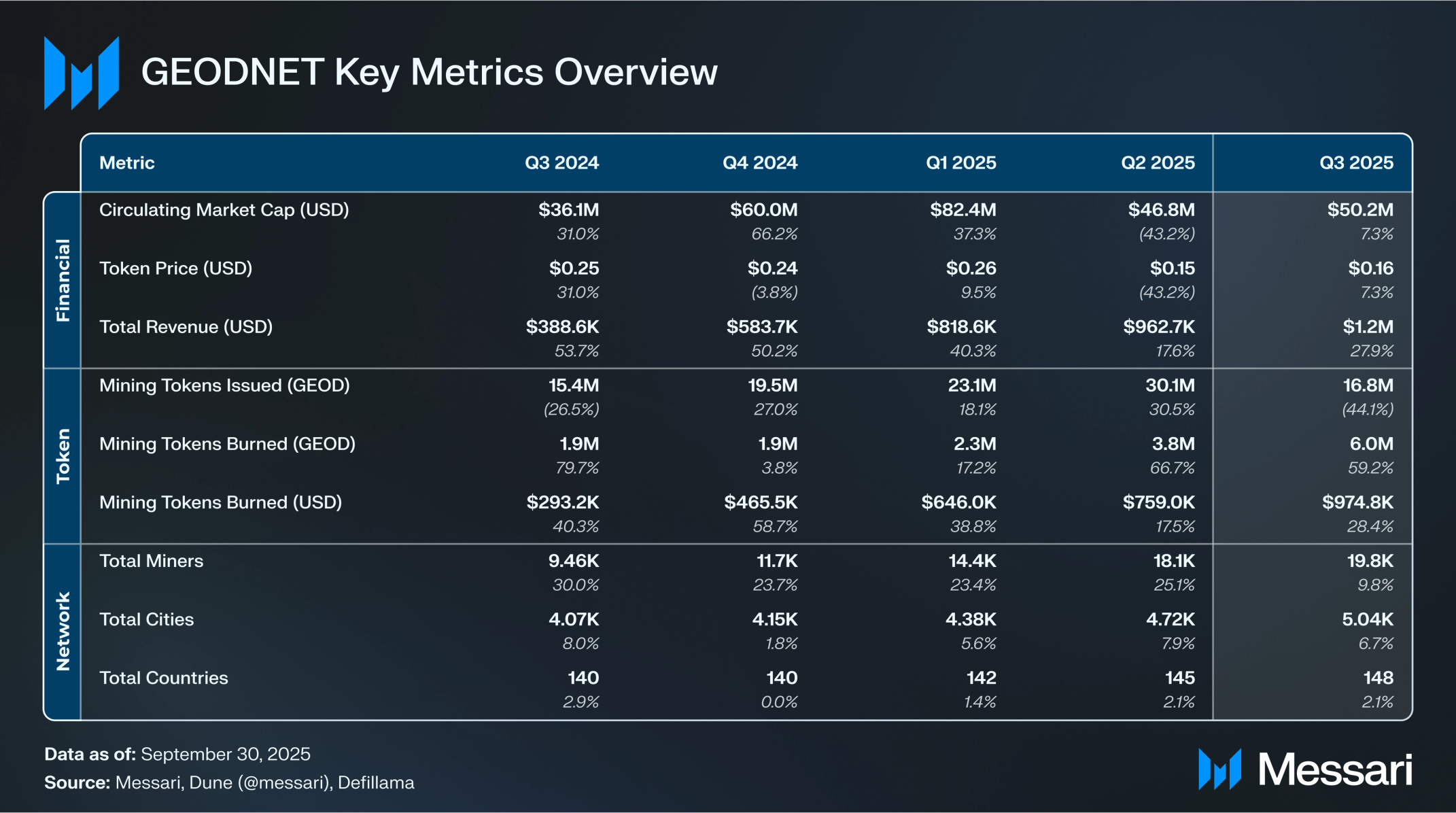
GEODNET’s RTK data services generated over $1.2 million in revenue, up 27.9% QoQ, bringing annualized revenue to approximately $5 million.
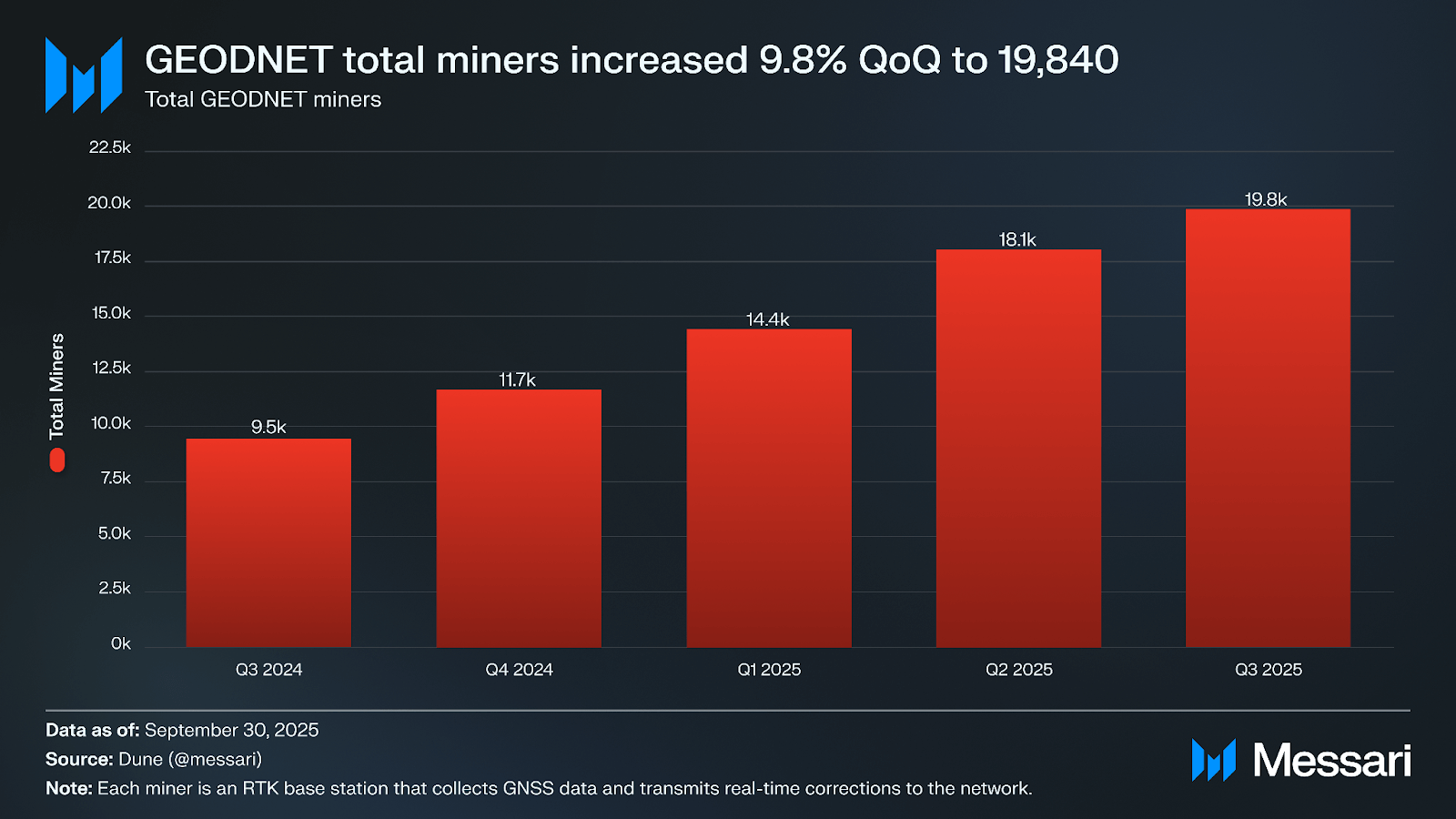
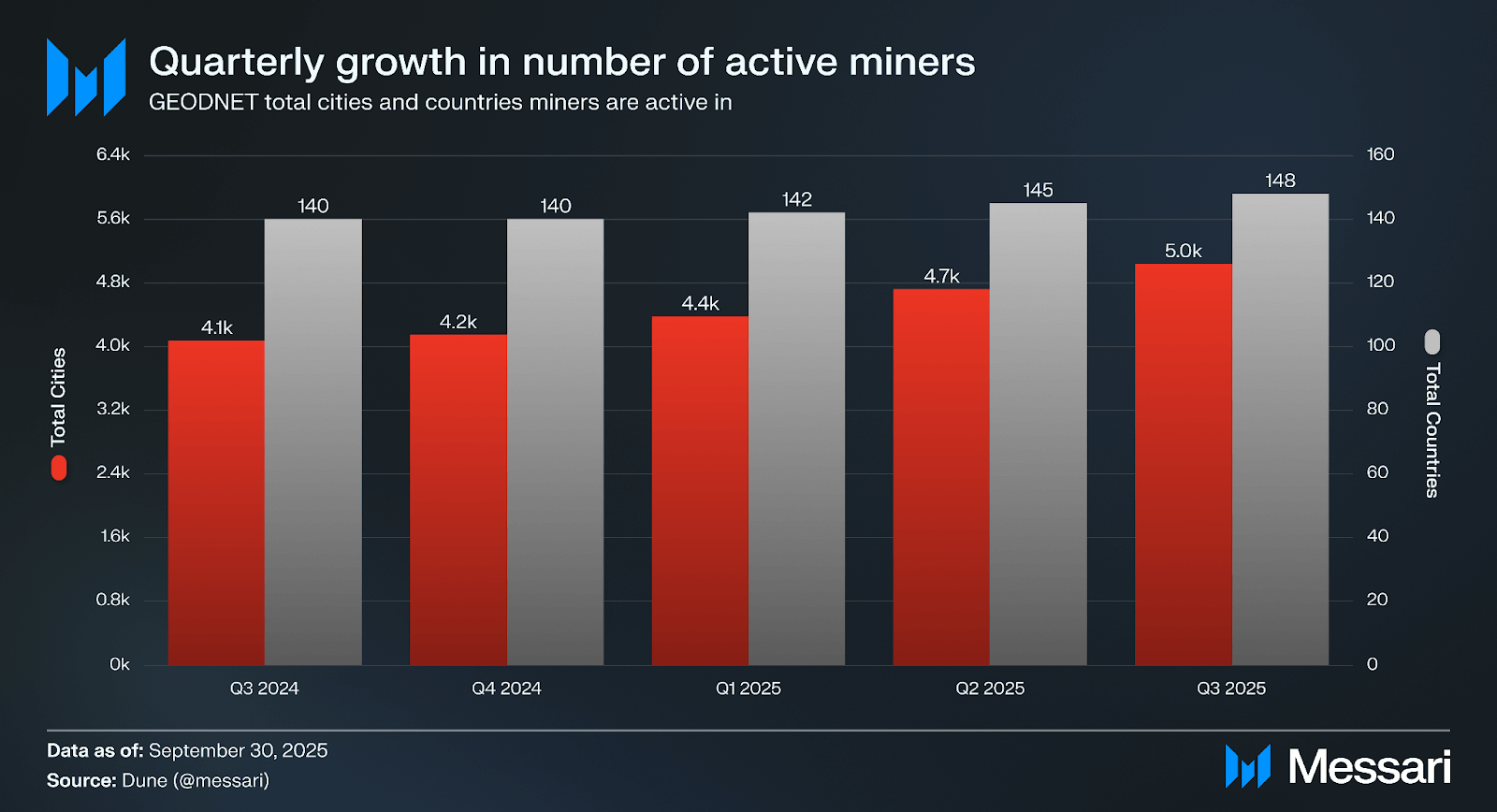
The network added 1,778 new Satellite Miners during the quarter, expanding to 5,037 cities and maintaining its status as the world’s largest RTK network.
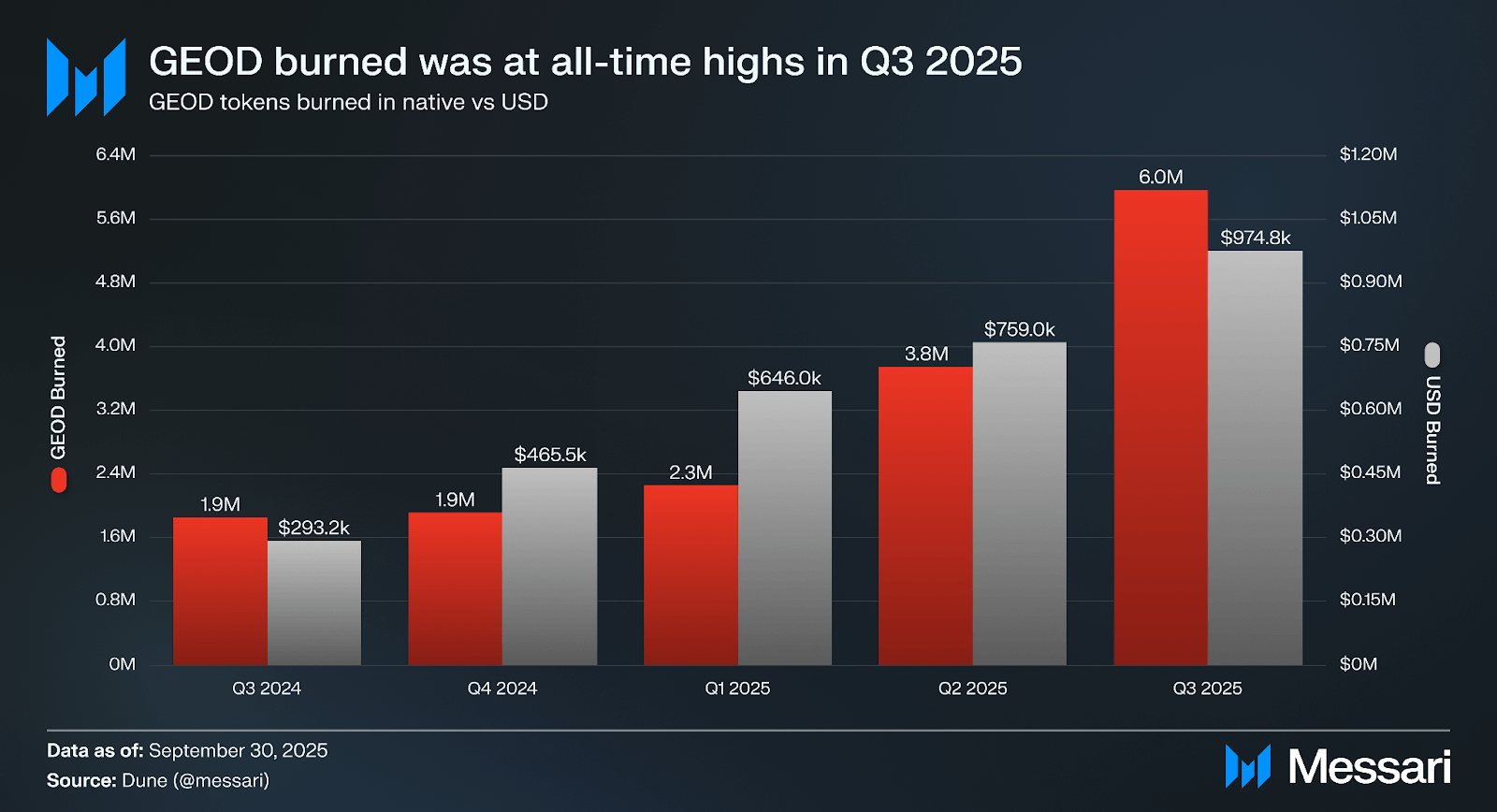
A total of 6.0 million GEOD tokens were burned in Q3 2025, up 59% QoQ, representing nearly $975,000 in value. The increase in burn activity indicates consistent RTK data usage and reinforces the protocol’s deflationary token model.
Implementation of GIP-7 finalized the network’s transition from Polygon to Solana. The move consolidated liquidity, introduced performance staking for SPL GEOD, and aligned the network with Solana’s DePIN ecosystem.
GEODNET achieved official RTK-compliant certification from NRCAN, and combined with partnerships with RTKsub, ROVR Network, and the AI Unbundled Alliance, GEODNET expanded its reach into regulated and enterprise-grade geospatial applications.
Primer
Global Earth Observation Decentralized Network (GEODNET) is a Decentralized Physical Infrastructure Network (DePIN) project that delivers high-precision geospatial data and positioning through a decentralized Real-Time Kinematics (RTK) network. The network operates on a community-driven model where individual operators install RTK Base Stations, also known as Satellite Miners, on their property. Satellite Miners receive Global Navigation Satellite System (GNSS) signals and provide real-time correction data with 1 cm accuracy, which is then transmitted to GEODNET's cloud platform.
GEOD is the utility token of the GEODNET network and is primarily deployed on Polygon, with multichain support recently extended to Solana via Wormhole. GEOD is used to reward satellite miner users, pay for RTK data, and enable participation in governance.
Since its launch in December 2021, GEODNET has expanded to over 20,500 RTK Base Stations globally, accounting for over $5 million in annualized revenue.
Since 2023, GEODNET has raised a total of $15 million to support its development, with the latest round being an $8 million strategic investment led by Multicoin Capital in February 2025.
For a full primer on GEODNET, refer to our Initiation of Coverage report.
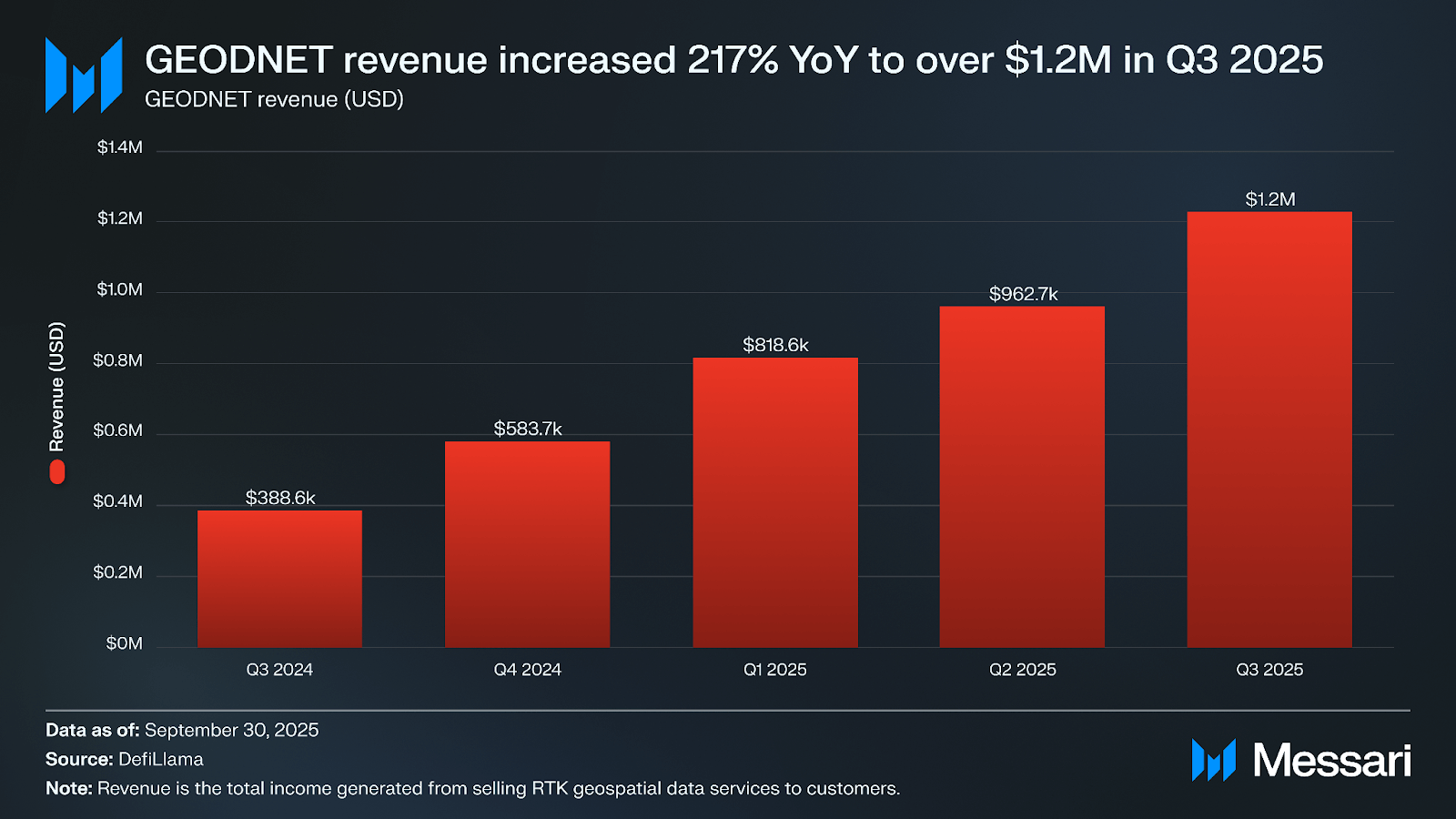
GEODNET generates revenue by selling high-precision RTK geospatial data services to customers. In Q3 2025, revenue grew 27.9% QoQ and has grown 216.9% YoY, rising from $388,600 to over $1.2 million, supported by the global expansion of its RTK station network. This brings GEODNET’s annualized revenue to approximately $5 million, placing it well above the sector median. According to Messari’s State of DePIN report, only 25 of 80 analyzed DePIN projects generate revenue, with median revenue for Physical Resource Networks (PRNs) at $730,000. GEODNET’s performance highlights its status as one of the top-earning DePIN protocols, particularly among hardware-driven networks.
Miners
GEODNET operates on a decentralized model where participants set up RTK Base Stations, called Satellite Miners, on their property. These stations capture satellite signals and produce real-time correction data with centimeter-level accuracy, which is sent to GEODNET’s cloud platform. In return, station operators earn daily GEOD token rewards. In Q3 2025, the network added 1,778 new active miners.
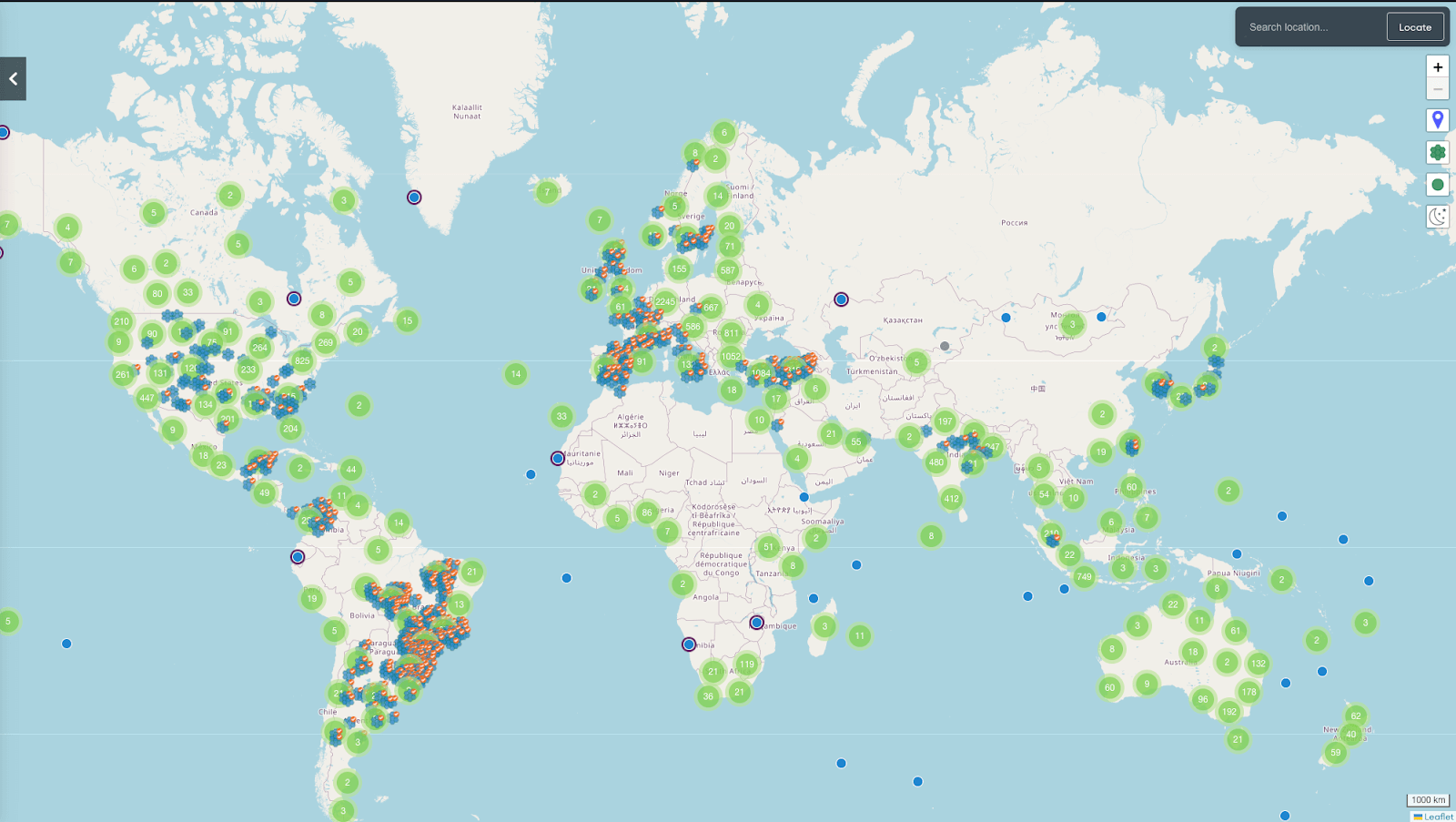
GEODNET's infrastructure spans more than 148 countries and over 5,037 cities. The highest concentration of miners is in the United States and Europe, with a significant presence in South America, Australia, and India. The network also has a growing presence in Japan, South Korea, and South Africa.
The number of cities with active Satellite Miners grew from 4,650 to 5,037, representing a 6.7% QoQ increase. Country-level distribution also grew, expanding from 145 to 148. The increase was likely driven by the continuation of the rollout of GIP-6, which shifted mining rewards to a performance-based model to encourage higher-quality station deployments. By tying rewards to performance metrics instead of boosting token emissions, the mechanism improves data reliability while supporting sustainable network growth and maintaining token supply discipline.
Token Metrics
The GEODNET Foundation monetizes correction data by selling it through multiple channels, with 80% of the revenue allocated to buying and burning GEOD tokens. GEOD tokens also serve as an indirect payment mechanism within the network. While most RTK data transactions are conducted in fiat currency, 80% of these payments are used to repurchase and burn GEOD tokens, while the remaining 20% is directed to the GEODNET Foundation.
In Q3 2025, the volume of GEOD tokens burned reached 6.0 million, a 59.2% QoQ increase, with a total value of over $974,800, up 28.4% QoQ. The continued rise in burn volume reflects steady revenue from RTK data sales and signals a transition toward more stable, recurring network usage.
The total supply of GEOD tokens is capped at 1 billion, with no plans for further issuance. Daily mining rewards are distributed to base station operators on a fixed schedule, while allocations for the team, investors, and ecosystem follow a multi-year vesting framework. By the end of Q3 2025, 62.3% of the total supply had been unlocked, up from 53.7% in the previous quarter. In Q3, 86.7 million tokens were unlocked, representing a 17.5% increase from 73.8 million in Q2.
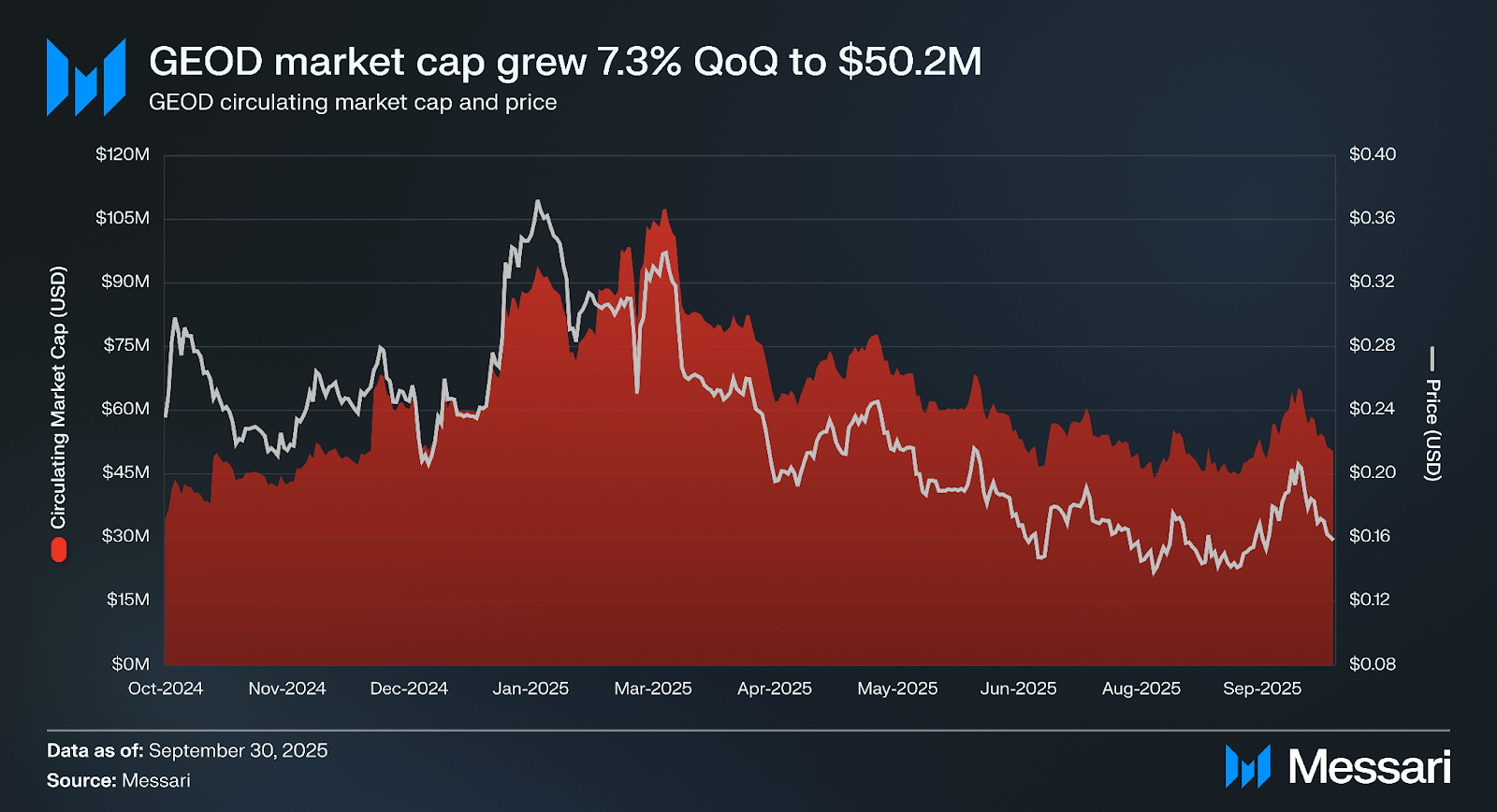
GEOD’s circulating market cap increased by 7.3%, growing from $46.8 million to $50.2 million in Q3 2025. GEOD price also grew 7.3% from $0.15 in Q2 2025 to $0.16.
Qualitative Analysis
GIP7 and Solana Migration
In Q3 2025, GEODNET implemented Governance Improvement Proposal 7 (GIP7). The proposal initiated a full migration of the GEOD token from Polygon to Solana. Key measures included temporarily limiting cross-chain transfers, launching an NFT station mint, and introducing performance staking for SPL GEOD. These steps were designed to consolidate liquidity and improve network reliability within the Solana ecosystem.
Following the vote’s conclusion, GEODNET launched a 30-day migration incentive program that distributed up to four million GEOD tokens to participants who migrated their holdings. This program aligned GEODNET with Solana’s broader DePIN environment, improving access to liquidity infrastructure and the developer community.
NRCAN RTK Compliance
On Sept. 19, 2025, GEODNET received official RTK-compliant recognition from Natural Resources Canada (NRCAN). The certification validated the network’s precision and reliability for Real-Time Kinematic (RTK) positioning across North America.
This compliance achievement established GEODNET within Canada’s national geodetic framework, bridging decentralized infrastructure with traditional geospatial standards. The validation also served as a foundation for enterprise adoption among surveying, agricultural technology, and autonomous vehicle sectors that require centimeter-level positioning accuracy.
Partnerships and Ecosystem Expansion
RTKsub Partnership
On Aug. 12, 2025, GEODNET partnered with RTKsub to expand access to subscription-based RTK data services. The collaboration leveraged GEODNET’s network of over 19,500 stations to support global precision positioning across industries such as robotics, surveying, agriculture, and infrastructure.
The integration provided a commercial distribution channel while maintaining the decentralized structure of the network.
AI Unbundled Alliance Membership
GEODNET continued participation in the AI Unbundled Alliance (with Aethir, IoTeX, and Biconomy) facilitated collaboration in Web3 AI infrastructure. The alliance’s quarterly hackathons and grant programs provided opportunities for cross-protocol development and integration.
Industry Presence and Recognition
GEODNET increased its visibility across several key conferences in Q3:
Esri User Conference (July 14–18, San Diego): Presented alongside ROVR Network to an audience of GIS professionals.
Commercial UAV Expo (September 2–4, Las Vegas): Demonstrated the drone-in-a-box prototype to enterprise drone operators.
ION GNSS+ 2025 (September 8–12, Baltimore): CEO Mike Horton presented GEODNET’s performance data and it highlighted its increasing daily usage in core applications segments such as agriculture, autonomous vehicles, drone and robotics usage. .
Korea Blockchain Week (September 22–28, Seoul): Highlighted GEODNET’s position in the DePIN and AI ecosystem, engaging with Asian enterprise and developer communities.
Closing Summary
In Q3 2025, GEODNET sustained its position as the largest decentralized RTK network globally, surpassing 19,800 active Satellite Miners across more than 5,000 cities and 148 countries. Market and token performance improved modestly, with GEOD’s circulating market cap rising 7.3% to $50.2 million and price appreciating from $0.15 to $0.16. These gains reflected growing on-chain activity and stable demand despite broader market volatility. Network revenue grew 27.9% QoQ to over $1.2 million, driven by continued station expansion. The network also recorded its highest-ever quarterly token burn, with 6.0 million GEOD removed from supply(valued at $974,800)as RTK data demand and recurring usage strengthened.
The quarter marked a pivotal phase in governance and ecosystem evolution. The implementation of GIP-7 completed the network’s migration from Polygon to Solana, consolidating liquidity and aligning GEODNET with Solana’s broader DePIN ecosystem. Regulatory recognition by Natural Resources Canada (NRCAN) established GEODNET as an officially RTK-compliant service in North America, creating pathways for enterprise adoption in surveying, agriculture, and autonomous systems.
GEODNET expanded its ecosystem through collaborations with RTKsub, ROVR Network, and the AI Unbundled Alliance, enhancing access to precision data, autonomous mapping, and AI-driven infrastructure. Product development progressed with the introduction of the network’s drone-in-a-box prototype at the Commercial UAV Expo, demonstrating the protocol’s growing applicability in autonomous aerial operations.
This report was commissioned by the GEODNET Foundation. All content was produced independently by the author(s) and does not necessarily reflect the opinions of Messari, Inc. or the organization that requested the report. The commissioning organization may have input on the content of the report, but Messari maintains editorial control over the final report to retain data accuracy and objectivity. Author(s) may hold cryptocurrencies named in this report. This report is meant for informational purposes only. It is not meant to serve as investment advice. You should conduct your own research and consult an independent financial, tax, or legal advisor before making any investment decisions. Past performance of any asset is not indicative of future results. Please see our Terms of Service for more information.
No part of this report may be (a) copied, photocopied, duplicated in any form by any means or (b) redistributed without the prior written consent of Messari®.
Matthew is a Research Analyst in Protocol Research. He graduated from MIT with a Master's and Bachelor's in Comp Sci, Economics, and Data Science where he wrote his thesis on DeSoc. Matthew also has previous experience as an Analyst at Goldentree's crypto fund.
Matthew is a Research Analyst in Protocol Research. He graduated from MIT with a Master's and Bachelor's in Comp Sci, Economics, and Data Science where he wrote his thesis on DeSoc. Matthew also has previous experience as an Analyst at Goldentree's crypto fund.