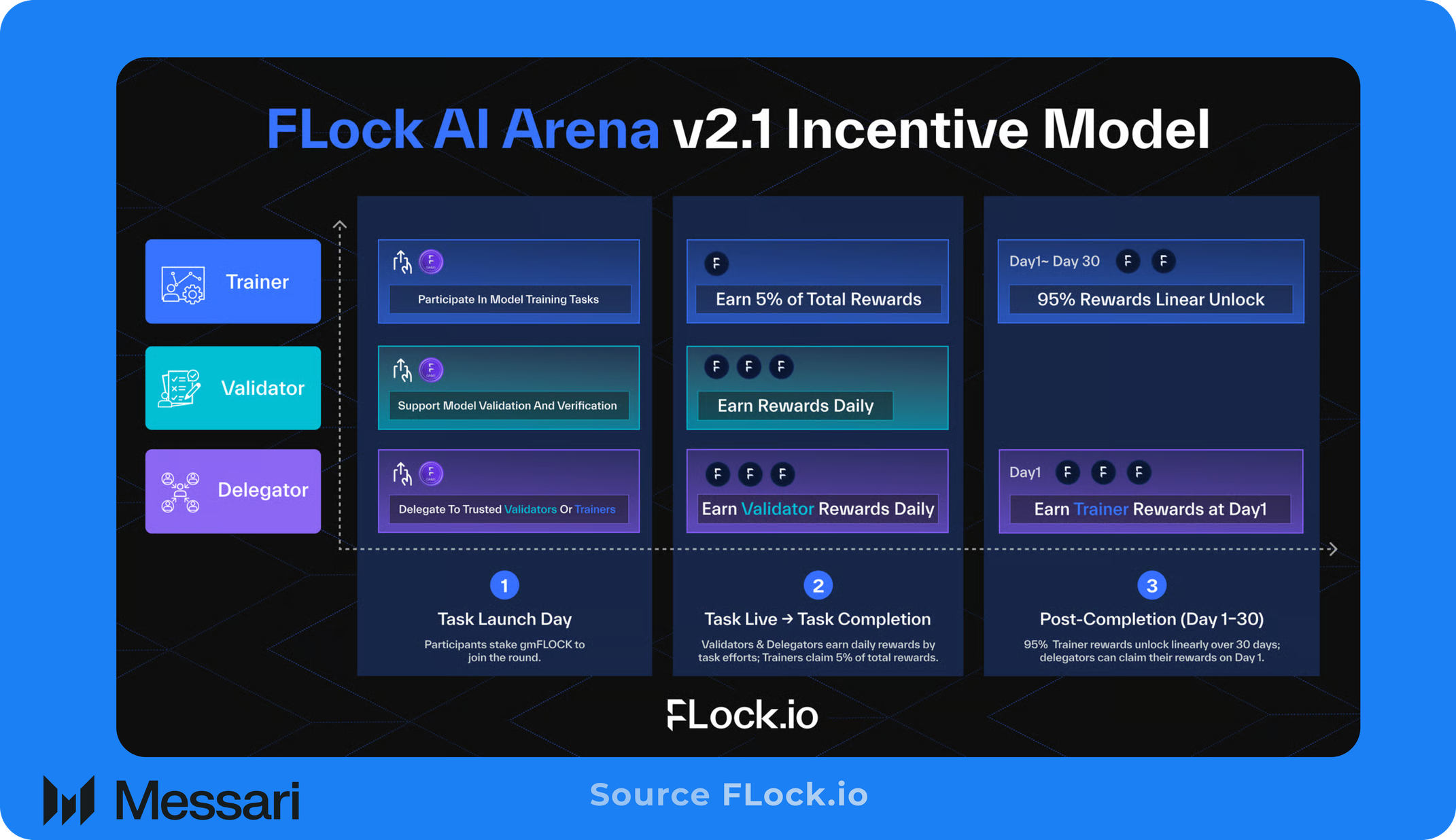
FLock shipped the AI Arena v2.1 update, which tightened incentive alignment by removing delegation-driven reward dilution for operators and smoothing the unlock schedule to minimize volatility.
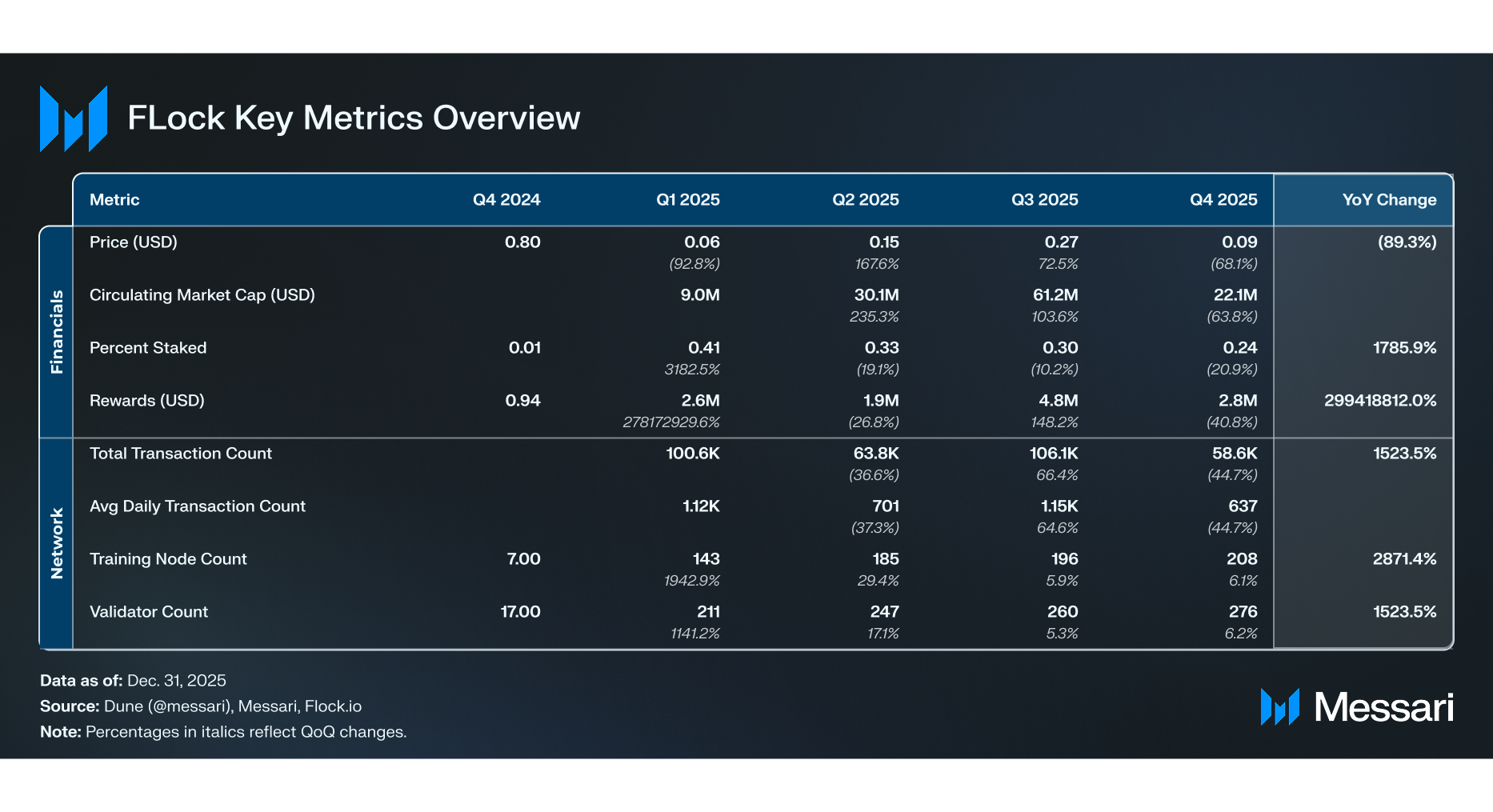
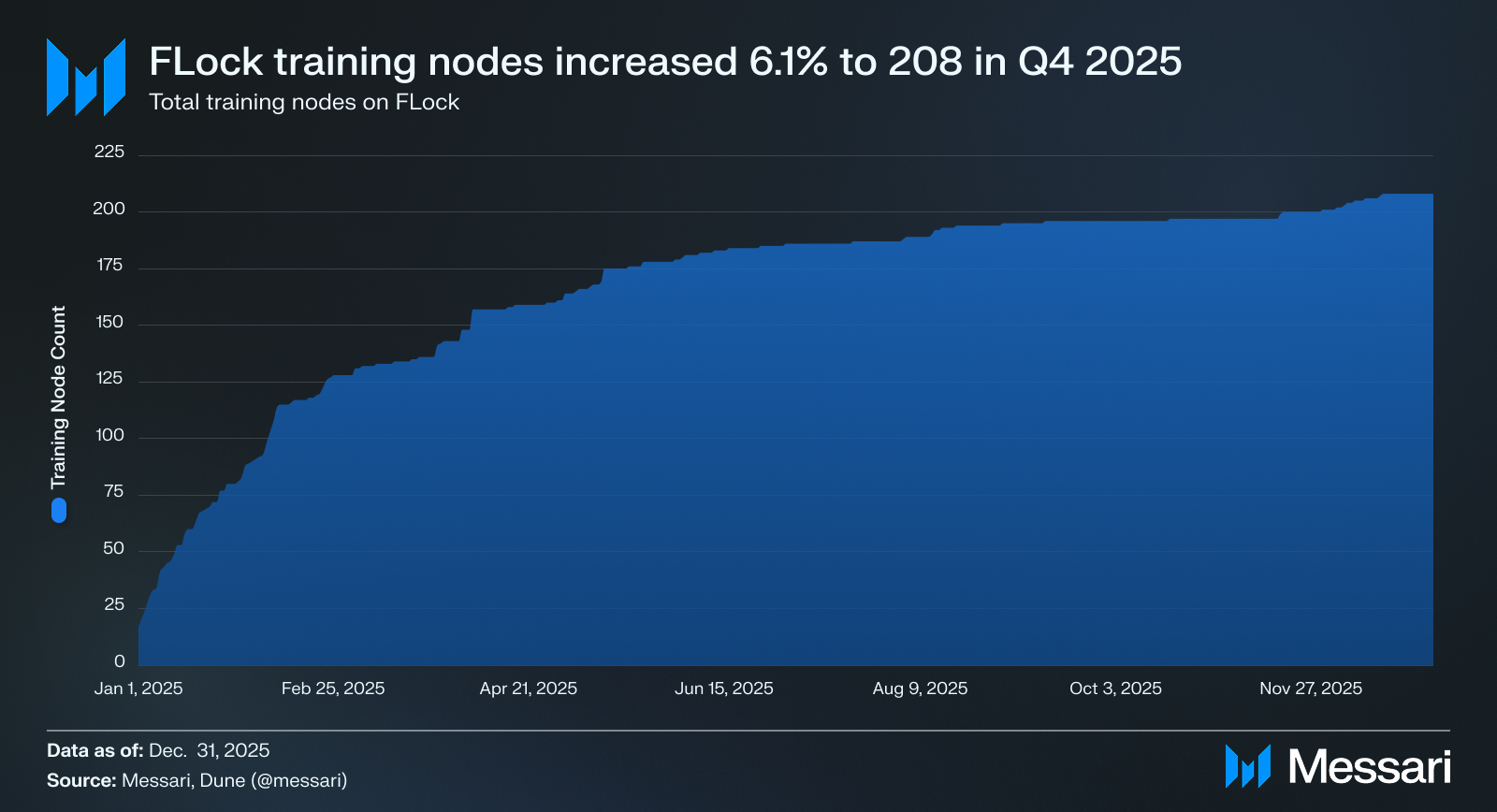
The number of training and validator nodes is up 2871.4% YoY and 1523.5%, respectively. The FLock network now has 208 training nodes and 276 validator nodes supporting the network
FLock assisted 7 finalists in the second cohort of the United Nations Development Programme’s Sustainable Development Goals Blockchain Accelerator in Q4 2025.
Training and validator nodes received $2.7 million in FLOCK for participating in the AI Arena.
FLock.io is integrating the x402 protocol to enable agentic commerce with onchain payments, micropayments, and autonomous economic capabilities for its decentralized AI agents
Primer
FLock.io (FLOCK) is a decentralized AI (deAI) development platform that combines blockchain infrastructure with privacy-preserving federated learning. Its architecture is built around three core components: AI Arena, where models are collaboratively trained; Moonbase, a marketplace for publishing and using models where creators earn a share of revenue; and FL Alliance, a federated learning framework that coordinates contributors with onchain incentives.
In traditional federated learning, models are sent to local devices for training, and only the updated parameters (not the raw data) are shared back. This preserves privacy but often relies on centralized servers, leaving challenges regarding incentives and security. FLock addresses these limitations by utilizing blockchain for decentralized coordination, verifiable governance, and transparent incentives, enabling communities to propose, train, and deploy AI models in a trust-minimized manner.
This design supports FLock’s broader vision to democratize the AI lifecycle from data sourcing and model design to training, validation, and deployment. The platform is anchored in ongoing academic research, with multiple peer-reviewed publications in venues such as IEEE journals and NeurIPS workshops. For a complete primer on FLock, refer to our Initiation of Coverage report.
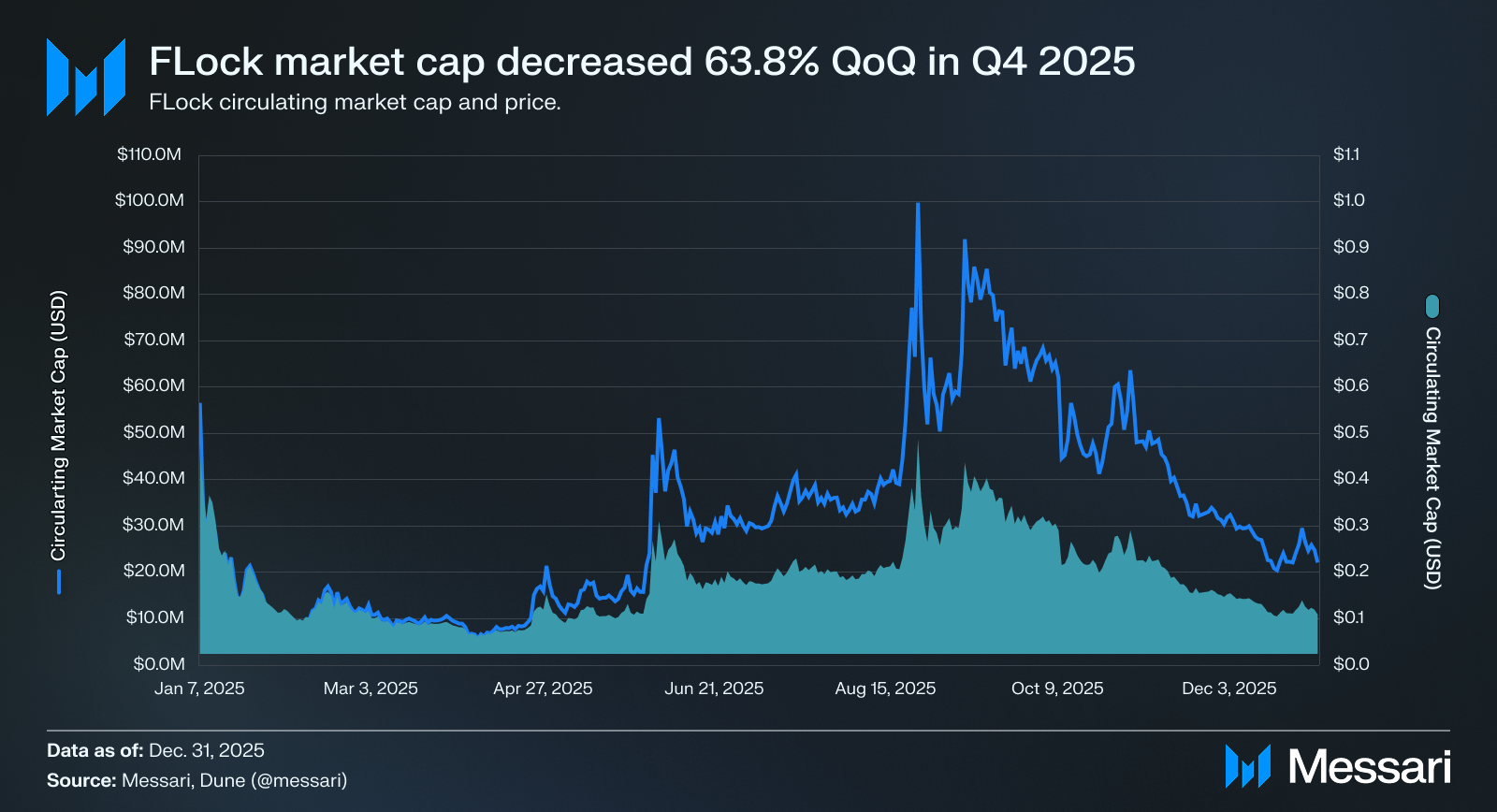
FLOCK’s Q4 2025 performance marked a sharp reversal from the exchange-driven expansion seen in Q3. After reaching local highs in the wake of major listings, FLOCK’s price fell 68.1% to end the quarter at $0.09, representing an 89.3% decline YoY. In parallel, the circulating market cap declined 63.8% QoQ from $61.2 million to $22.1 million, or roughly ~80% lower YoY. The market cap drawdown was slightly less severe than the price correction, consistent with the circulating supply continuing to expand through staking rewards, ecosystem incentives, and scheduled token releases. Overall, Q4 reflected a post-catalyst cooldown for price. It is worth noting that this drawdown occurred amid a 34.2% market-wide correction in crypto’s total market capitalization, which fell from a peak of $4.24 trillion on Oct. 6, 2025, to $2.79 trillion on Nov. 21, 2025.
Staked Percentage
FLock introduced game-FLOCK (gmFLOCK) in Q2 to improve long-term alignment, FLOCK’s price stability, and to discourage mining and dumping behaviors that persisted with the original staking mechanic. Originally, FLOCK stakers were rewarded daily or upon completing an AI Arena task in which models train collaboratively. The new gmFLOCK staking mechanic required users to stake and lock FLOCK for a user-defined period (0-365 days) via train.flock.io in exchange for soulbound gmFLOCK. Periods exceeding 30 days result in an additional 0.006 gmFLOCK per FLOCK staked per day, with 365-day lockups resulting in 3.01 gmFLOCK per FLOCK. Users then stake their gmFLOCK with training nodes, validators, or delegators to start earning yield. Once the lockup period is over, users can redeem their gmFLOCK for FLOCK, with a 5.1% withdrawal penalty applied to the transaction, regardless of the lockup period.
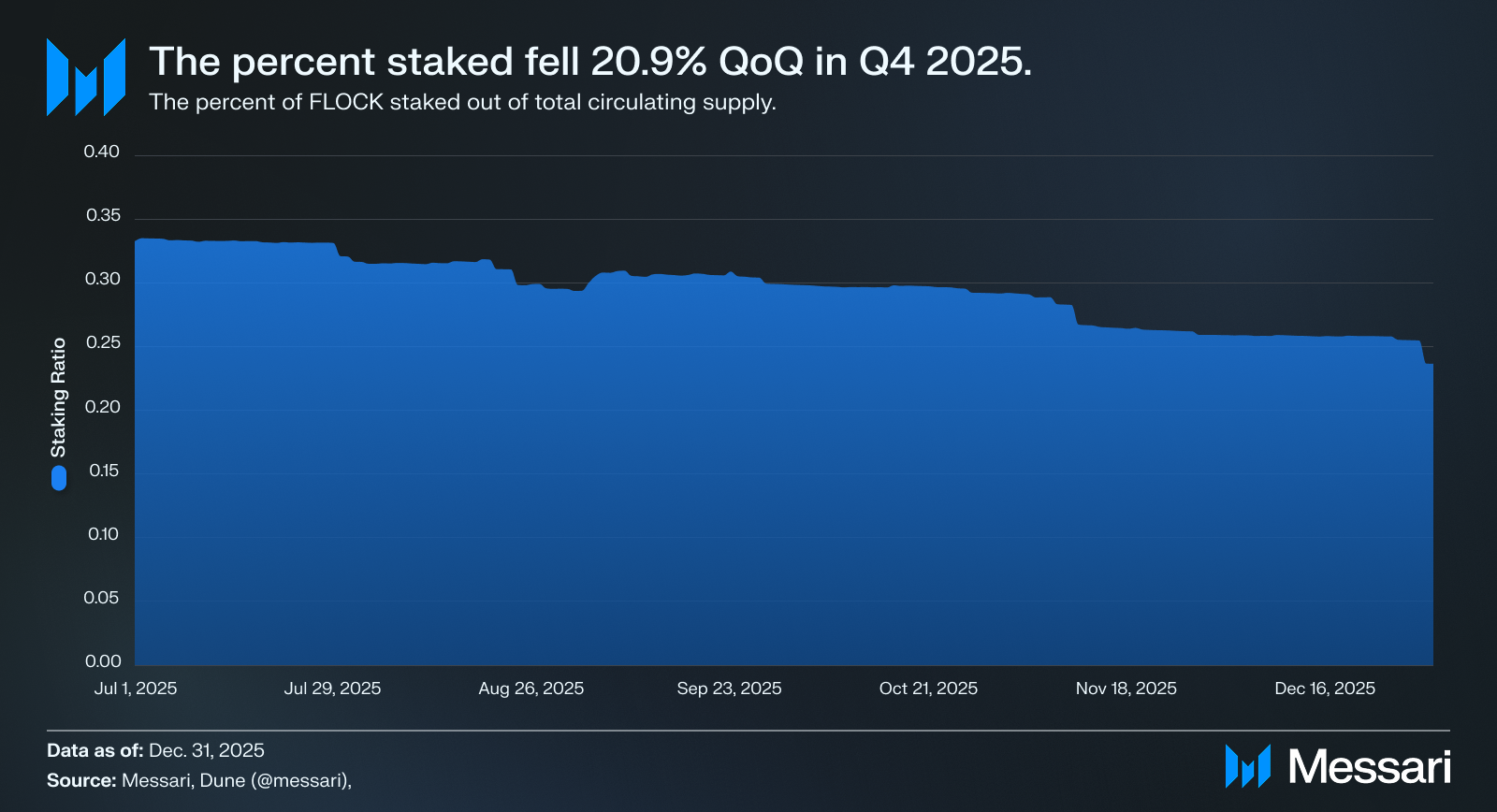
The percent of FLOCK staked relative to the circulating supply declined in Q4, down to 23.6% from 29.8% at the end of Q3. Due to the decreased training activity, FLOCK rewards also decreased QoQ. Denominated in FLOCK, overall rewards dropped 16.0%. Training rewards saw the largest decrease, down 58.6% in Q4. Validation rewards only dropped a slim 0.88%. Denominated in USD, staking rewards decreased by 40.6% from $3.8 million in Q3 to $2.8 million in Q4. As extended staking periods end, fewer users are opting to re-lock their FLOCK. Additionally, from Oct. 1, 2025, to Nov. 1, 2025, the FLOCK token was on average 300% above its April lows, when the gmFLOCK update took place. Naturally, some stakers likely realized those gains rather than relocking their FLOCK as the broader market continued to correct post Oct. 10.
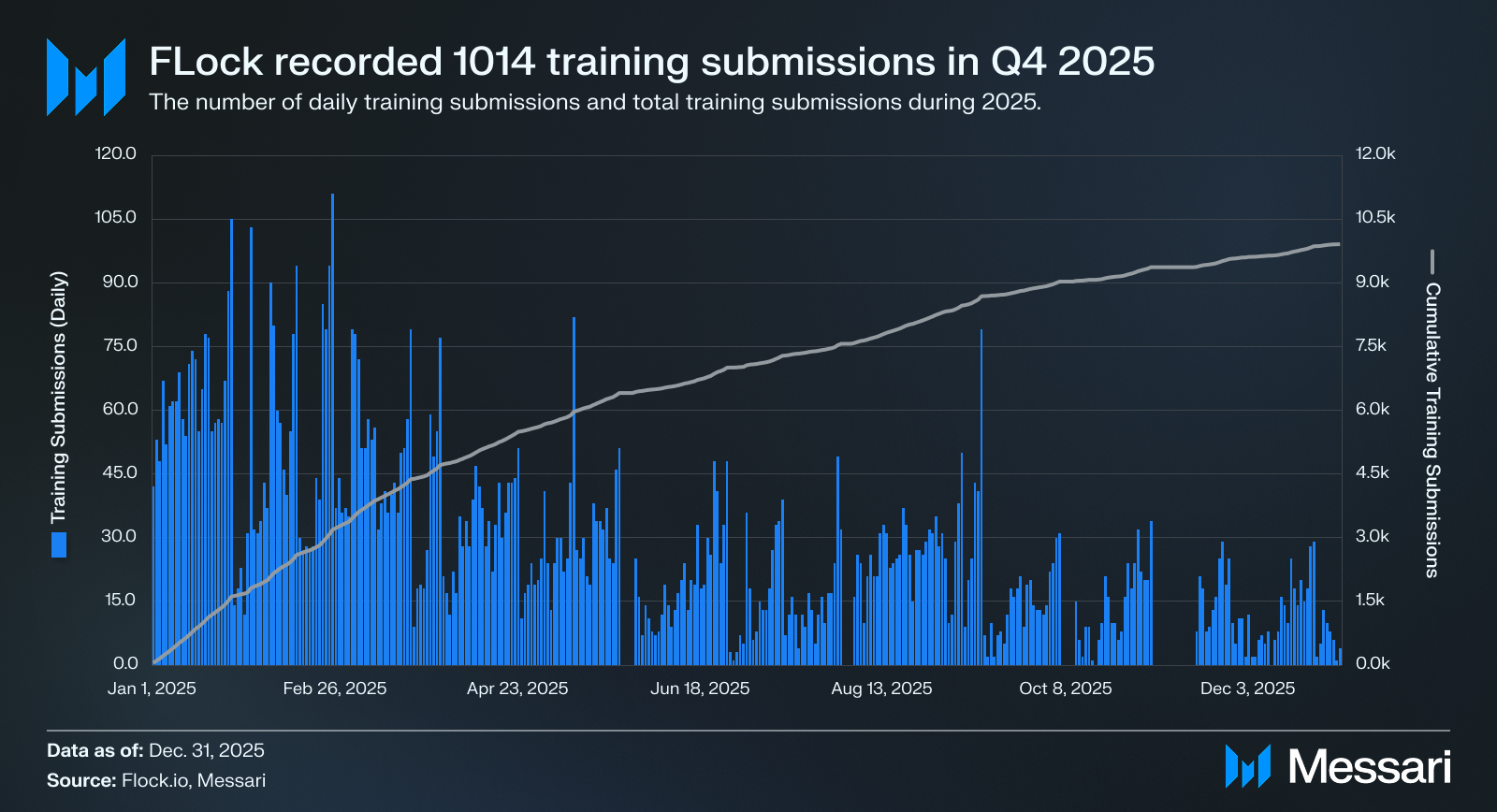
Training submissions track the number of model updates contributed by training nodes during a round. Each submission reflects local training on private data, and the quality and ranking of updates directly determine the distribution of rewards.
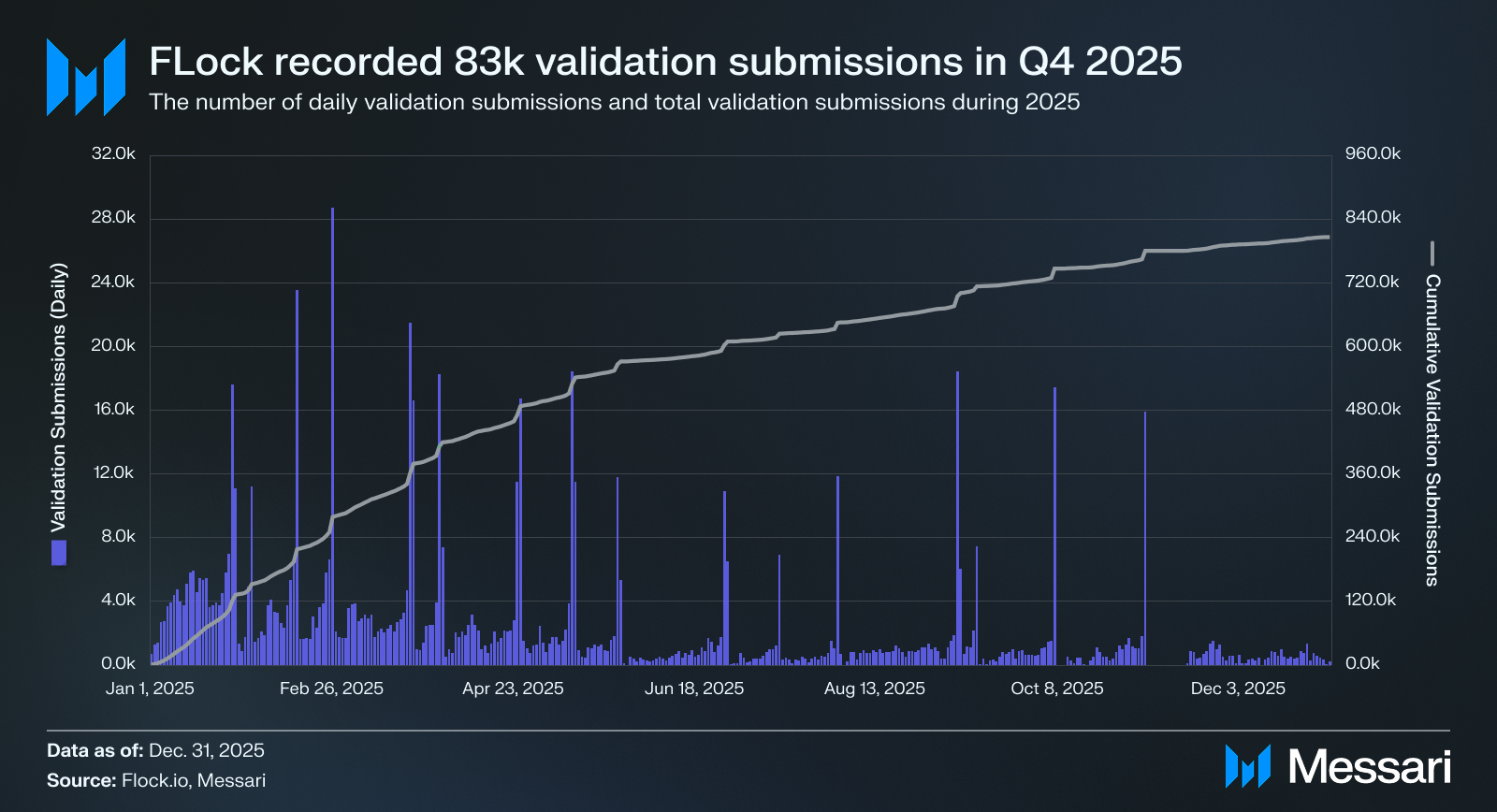
Validation submissions measure evaluations performed by validators, benchmarking submitted models against standardized datasets to ensure accuracy and fairness.
The training node count represents the number of unique participants actively developing or fine-tuning models.
Validator count refers to the number of participants who evaluate models.
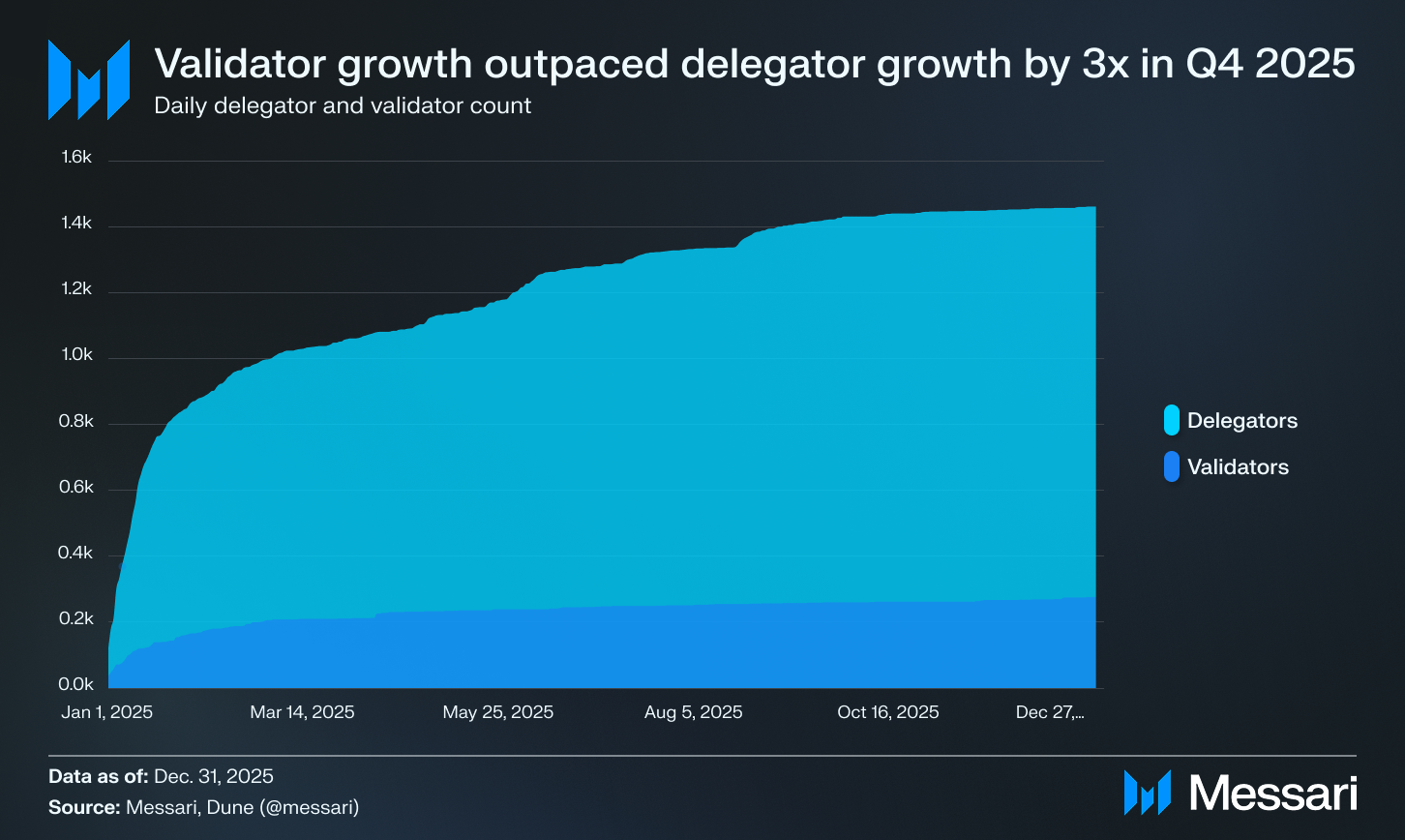
The delegator count indicates the number of token holders who lock FLOCK to generate gmFLOCK, which is then used to delegate support to training nodes or validators. Delegators share in the rewards without having to run the infrastructure themselves.
Validator and training rewards (USD) reflect the aggregate value of incentives distributed to active roles and serve as a measure of overall economic support for network activity.
Together, these metrics provide a view into FLock’s decentralization, activity levels, and incentive alignment.
Training Activity
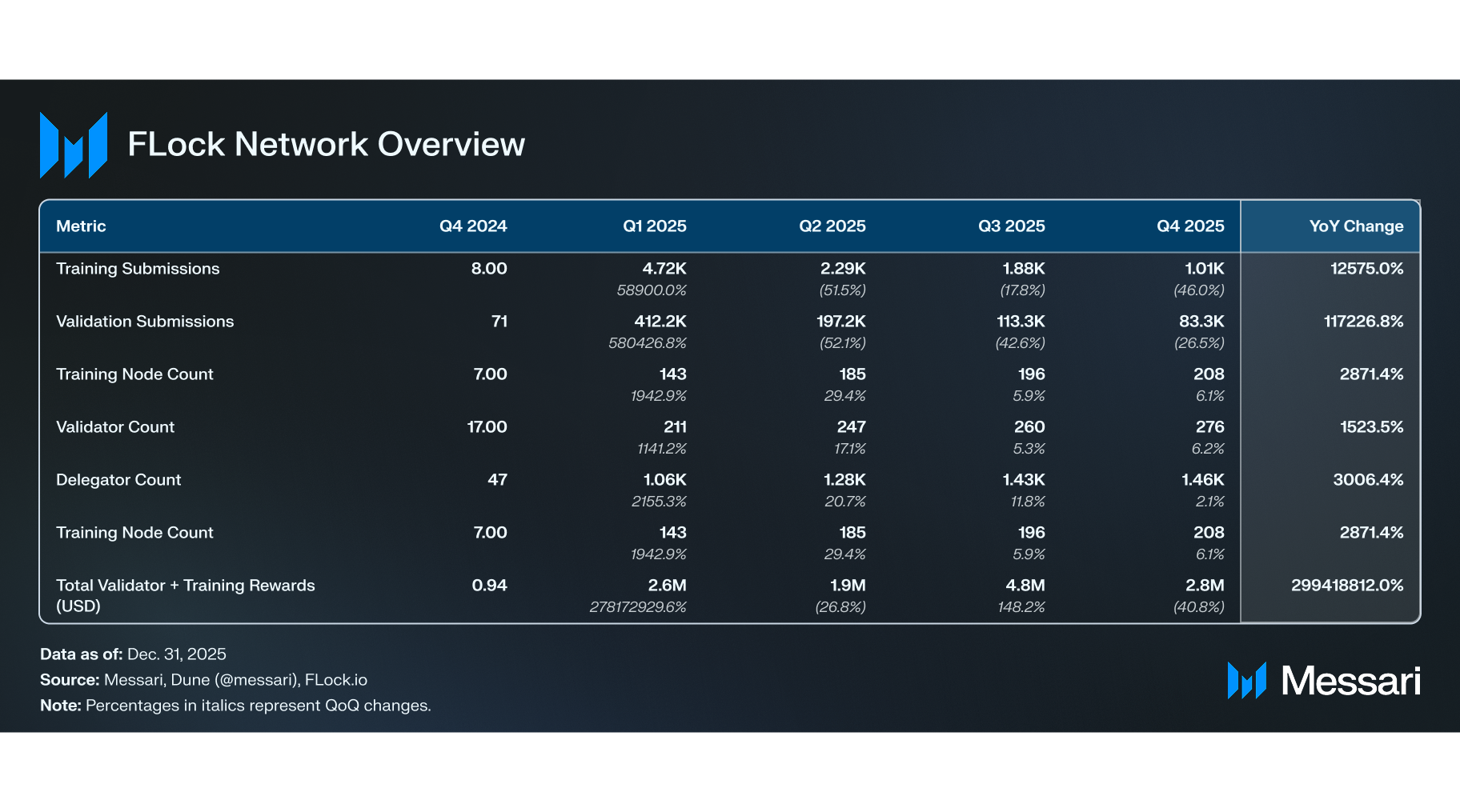
Training nodes grew 6.1% QoQ from 196 at the end of Q3 2025 to 208 at the end of Q4 2025. On a YoY basis, training nodes are up 2871.4% from just 7 training nodes on Jan. 1, 2025. Training node count increased rapidly at the beginning of the year, but normalized to around a 6% QoQ rate starting in Q3. The introduction of gmFLOCK and the AI Arena V2 upgrade reinforced incentives for node operators and delegators, as training nodes play a crucial role in the FLock ecosystem by training and fine-tuning AI tasks initiated by task creators.
Reported training submissions decreased 46.0% QoQ in Q4, down to 1014, with average daily volume down 46.0%. Cumulative training submissions were up 11.4% QoQ with a total of 9908 lifetime training submissions as of Dec. 31, 2025. The decline in training submissions is largely due to the lack of models trained between Oct. 8-10 and Nov. 7-16. However, starting on Nov. 17, FLock trained JustParse. This model was trained on 4.1 billion parameters over 55 days, making it one of the largest training efforts on the platform to date. JustParse is a legal AI agent specialized in detecting potentially unfair, predatory, or one-sided clauses within legal documents. The objective is to not only flag problematic language but also to provide clear, plain language explanations for why a clause may be considered unbalanced.
Validator Activity
Validation submissions on FLock fell 26.5% QoQ, with 83,302 submissions in Q4 2025. Daily submissions have yet to surpass the all-time high of ~29k in Q1 2025, but continue to see sustained participation. Abnormal spikes in the data are related to events such as the Q4 high of 17,447 submissions on Oct. 7, 2025. As of Dec. 31, 2025, there have been a cumulative 806,084 validation submissions.
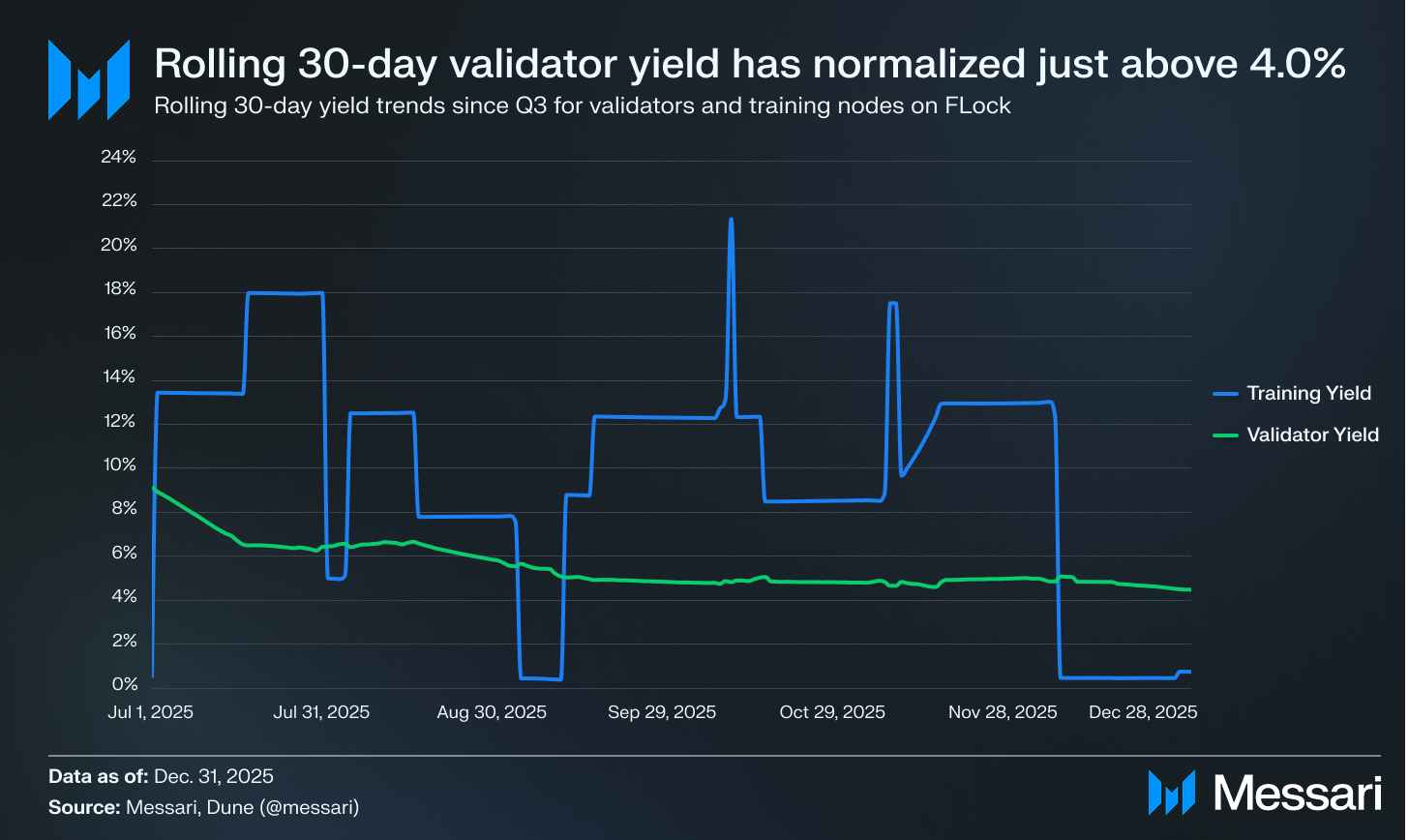
The rolling 30-day yield measures average rewards for training nodes and validators over the prior 30 days, smoothing short-term fluctuations to show incentive trends. In Q3, training yields ranged from a low of 0.38% on Sep. 10, 2025, to a peak of 18.0% on Jul. 22, 2025. The validator yield declined gradually, from a peak of 9.7% to 5.0% by quarter's end. In Q4, training yields maintained their wide range, with a low of 0.44% on Dec. 18, 2025, and a peak of 21.3% on Oct. 11, 2025. Validator yields continued to gradually decline from 9.7% to 5.0% by quarter’s end.
Network Dynamics
The increase in validator and delegator participation, without a corresponding increase in submissions, led to a decline in yield rates. Despite the declining submission rates, validator and delegator participation continued its uptrend in Q4. The number of validators in Q4 increased by 6.2% to 276, compared to a 5.9% rise in Q3. Delegators increased by 2.1% in Q4 to 1,460, compared to an 11.8% increase in Q3. Validator growth outpaced delegator growth by 3x this quarter, which could be the remodeled incentive structure. To further support this claim, the delegator-to-validator ratio decreased to 5.3:1 from the previous quarter’s 5.5:1.
Qualitative Analysis
FLock AI Arena v2.1
FLock updated their AI arena to AI Arena v2.1 on Nov. 14, 2025, updating reward distribution mechanics to improve delegation fairness and reduce end-of-task unlock concentration. There are now two different reward percentages. One for participants with delegation and one for those without. Training node and validator rewards are no longer diluted when accepting delegated stake. Additionally, v2.1 changes the timing of the final reward. Instead of unlocking 95% at task completion, 95% now vests over 30 days, smoothing reward realization over time. This approach can improve incentives for node operators while potentially reducing delegator rewards under the revised accounting, without requiring user migration since staking and delegation flows remain unchanged.
Year-to-date, the AI Arena has completed 16 consecutive training tasks. 11.6 million FLOCK tokens were distributed as rewards from a total of 9062 training submissions and 784,137 validation submissions. This sums to $819,000 at the time of writing, but $2.7 million at the time of the audit report in October.
United Nations Development Programme Update
FLock was selected as the UNDP’s strategic partner for its Sustainable Development Goals (SDG) Blockchain Accelerator in Q3 2025. As a mentor organization, FLock supported categories focused on challenges ranging from climate risk modeling and inclusive energy planning to social protection and supply-chain transparency. At the Sustainable Development Group’s hackathon in September, Flock mentored 15 institutions to develop solutions to challenges posed by UNDP.
Following the original hackathon, 30 winning teams formed the second cohort of the SDG blockchain accelerator. This cohort participated in a four-month program focused on refining and scaling their winning solutions for real-world implementation.
FLock co-led seven of these initiatives in Q4 that apply blockchain-enabled deAI and federated learning to public-impact use cases in developing regions, including:
Rwanda’s Wildlife Economy
Rwanda’s gorilla conservation faced a sharp funding shortfall after COVID-19 cut tourism by roughly 70%, putting both habitat protection and local livelihoods under strain. The project proposes an alternative revenue model, with an NFT-based conservation platform built with academic partners (including University of Cambridge researchers) that pairs digital collectibles with immersive/VR content and game-like participation to drive recurring support. The stated intent is to reduce reliance on tourism, route benefits more directly to nearby communities, and establish a Pan-African blueprint that could be replicated in other conservation contexts.
Inclusive Climate and Gender Finance in Latin America
The initiative targets climate and financial vulnerability in the Dominican Republic and Peru by building a single blockchain-based platform that combines parametric climate micro-insurance, gender-responsive credit, and micro-savings. The design emphasizes transparency and digital identity to speed execution and reduce friction for underserved users, especially women, youth, and informal workers. The platform is intended to trigger insurance payouts within 72 hours after qualifying climate events, provide AI-supported financing for women entrepreneurs, and strengthen longer-term resilience for unbanked and underbanked participants. The pilot scope is 500 to 1,000 farmers, with participation targets of at least 40% women and at least 20% youth, and it aims to reduce income loss by 20% while deploying at least 30% idle reserves to help lower premiums.
Patient-Centered Governance
The project proposes a blockchain-based health data system for Mauritius, with relevance to Seychelles, designed to give patients clearer and more enforceable control over how their medical data is shared. It targets a core adoption barrier in digital health, namely gaps in consent, transparency, and compliance that can erode patient trust and expose providers to legal risk. Working with researchers from Lingnan University in Hong Kong, the team is developing patient-controlled sharing workflows and audit trails that use blockchain plus federated learning to support real-time consent management and align with the Mauritius Data Protection Act. The system is described as providing patient notifications, preventing unauthorized access, and enabling continuous audit visibility for data access and sharing activity.
Indian Rice Farmers
The initiative targets a key bottleneck for smallholder rice farmers in India. High-cost, slow, and intermediary-driven verification that keeps them out of carbon markets and limits their ability to monetize emissions reductions from climate-smart practices. In partnership with NovaChat for UNDP India, FLock supported the development of a blockchain-based Measurement, Recording, and Verification (MRV) system that automates monitoring of field activities, calculates emissions impacts, and streamlines reporting and evidence submission. By reducing manual verification overhead and improving data transparency, the system is positioned to help farmers access carbon credit revenue more directly and treat sustainable farming practices as a recurring source of income. The program scope is 3,000 farmers across 2,500 hectares, with a stated goal of 30% emissions reduction, and the approach is presented as extensible across India’s roughly 44 million hectares of rice paddy.
Moroccan Crafts
The initiative focuses on improving incomes and market access for Moroccan artisans by building an AI/Web3 commerce stack that supports provenance, direct selling, and digital distribution. Working with MesuAI, the team is developing an onchain platform where artisans can authenticate goods using NFT-based verification, present the story and origin of their work, and sell directly to a global customer base through a digital marketplace. The proposal also includes multi-modal AI tools that generate marketing assets such as text, images, and video for artisans who lack digital skills, alongside omnichannel integrations intended to syndicate listings across eCommerce platforms, social channels, and Web3-native marketplaces.
Sierra Leone Carbon Ledger Initiative
The project targets Sierra Leone’s constraints in climate-finance participation by proposing a national carbon registry that improves data integrity, access, and oversight for voluntary carbon market activity. The team built a custom registry on Avalanche intended to support national emissions tracking, implement MRV processes, and enforce clearer benefit-sharing for carbon projects. The design emphasizes transparency and auditability to reduce exclusion and strengthen confidence in how climate proceeds are allocated, with the stated goal of aligning with the Paris Agreement and improving Sierra Leone’s standing in regional climate action.
Separately, the concept includes a distribution system for community payouts that uses smart contracts to disburse USD-pegged stablecoins and relies on immutable records to reduce fraud risks, such as ghost beneficiaries, with real-time monitoring. It proposes multiple access rails to reach different user segments, including a mobile app, Unstructured Supplementary Service Data (USSD) support for basic phones, and paper vouchers for participants without phones. Participant onboarding is framed around one-time KYC with face-photo verification, and the system is described as offline-first to support nationwide rollout and potential West Africa expansion. The program parameters include distributing 20% of verified project proceeds to communities and an estimate of $6 million to $15 million in addressable historical profit tied to private voluntary carbon market projects.
Liberia’s Daily Subsistence Allowance Problem
The project proposes a blockchain-based payments workflow for Liberia to address persistent delays in disbursing Daily Subsistence Allowances (DSA) to workshop and training participants. Today, payouts are described as slow and manual, often taking days and relying on paper verification. The new system intends to reduce those delays from as long as a week to near real-time by using smart contracts to release USD-pegged stablecoin payments.
Co-designed with Korea University, the architecture is built to work across different access conditions, including a smartphone app, USSD support for feature phones, and paper vouchers for participants without phones. Attendance and eligibility can be verified via QR code check-ins, biometrics, or USSD, with offline-capable options for low-connectivity areas. The design also emphasizes accountability through immutable records intended to reduce fraud, such as ghost beneficiaries, and enable faster detection of irregularities.
Peer Review
FLock believes that presenting its infrastructure for academic review is necessary for maintaining the DeAI ethos. It is paramount that the effort aligns with the mission, and FLock is always seeking feedback to maintain an open, proven, and robust real-world application. In Q4, the FLock team presented its work at two significant events:
Distributed AI Conference: FLock presented their paper, AI Arena: A Blockchain-Based Decentralized AI Training Platform, at the Distributed AI Conference hosted by King’s College. At the conference, the team shared its thesis on the necessity for a decentralized AI training platform, progress on FLock, and its performance as the leading decentralized AI training platform throughout 2025, including its cumulative validation and training submissions.
Coinbase launched the x402 protocol in May 2025 in collaboration with Cloudflare. x402 enables blockchain-based payments without external authentication. This is monumental for enabling agentic commerce because it removes the middleman and has 0 additional fees for either the customer or the merchant. Settlement is now T + blockchain’s_TPS and is blockchain-agnostic. Beyond making payments frictionless for agents, x402 is also privacy-preserving, fitting for FLock.
FLock presented x402 as a proxy layer for AI model inference and agent middleware at the first official x402 conference cohosted by Google Cloud and Base Korea. FLock explained that x402, complemented by a blockchain’s auditable ledger, solves authentication bottlenecks for payments and remedies trust assumptions. This pairing enables verifiable, agentic commerce and can bring optimized pay-per-usage pricing models for Software-as-a-Service (SaaS) businesses.
FLock is one of the early adopters of this technology, and is solving the payment problem for onchain, autonomous AI agents. FLock agents will be able to financially interact amongst each other, autonomously, and FLOCK will be their currency. Once the payment is completed, no further questions are asked, and the agent is free to proceed with its objective.
Looking Ahead
If centralized compute capacity and costs increasingly bottleneck frontier labs, the marginal value shifts toward extracting more useful models per unit of compute and sourcing training signal from places that do not require data centralization. FLock’s emphasis on competitive training and federated learning with data locality constraints is aligned with that. The infrastructure can support training or fine-tuning where data already lives, rather than forcing consolidation into a single lab’s data center. In parallel, as enterprises face tighter privacy expectations and legal exposure, privacy-preserving training becomes a differentiator. FLock is already benefiting from this with its partnership with the Hong Kong Generative AI, as its infrastructure keeps sensitive government data safe.
A second-order consequence of centralized compute competition is that developers and startups may prioritize smaller, domain-specific models and shorter iteration loops over frontier-scale training. FLock’s stack is built to connect training output to deployment and usage via its OpenAI-compatible API Platform, and it explicitly describes a “train → deploy → use → reward” feedback loop. This is structurally better suited for iterating on models that can ship and earn usage rather than purely scaling parameters. If the industry moves from “who can train the biggest model” toward “who can reliably deploy useful models with accountable incentives,” then Moonbase and the planned FOMO module align with that shift by linking model ownership and incentives to deployment and consumption rather than to centralized corporate capture.
Finally, if the AI buildout overcorrects and leaves some capacity underutilized, an ecosystem that can flexibly route demand to a broader set of model suppliers and hosting configurations could benefit. There is no tail risk of wasted resources in data center buildouts because of the nature of DeAI. Admittedly, that is not currently a concern as more compute continues to drive significant improvements. Where FLock looks well-positioned is in serving the long tail of builders who do not need a frontier-scale pretraining run, but do need a way to improve models, do it with constrained budgets, and avoid centralized data movement. FLock’s positioning here is less about owning compute and more about coordinating a marketplace and incentive rails around training, verification, deployment, and usage. On that framing, the tailwinds would come from volatility and constraints in centralized supply, as well as rising demand for privacy-preserving, governable AI workflows.
Closing Summary
On the market side, the token price retraced its Q3 listing-driven expansion, with price and circulating market cap contracting sharply alongside a broader risk-off move across crypto. At the same time, the protocol continued to add infrastructure participants, with training node count up modestly QoQ and validator and delegator participation remaining structurally intact. The primary headwind for a decrease in other network metrics was throughput. Training and validation submissions declined, driven in part by an extended lull in tasks during October and early November.
From a protocol design standpoint, the most consequential change was the launch of AI Arena v2.1, which refined incentive mechanics by separating reward curves for delegated versus non-delegated participation and introducing a 30-day vesting schedule for the majority of final rewards. Together, these changes aim to better align operator incentives and reduce end-of-task unlock concentration, even if the revised accounting potentially compresses delegator returns. If successful, v2.1 can improve the sustainability of participation by reducing dilution concerns for operators and smoothing the realization of rewards over time.
Qualitatively, FLock also strengthened its external positioning through UNDP’s SDG Blockchain Accelerator Cohort 2, where it co-led seven initiatives spanning conservation finance, climate insurance and gender-responsive lending, patient-controlled health data governance, MRV systems for agricultural carbon credits, artisan commerce enablement, a national carbon registry architecture, and a DSA disbursement system for Liberia. While many of these programs remain early, they reinforce FLock’s narrative fit for second-order AI tailwinds. The demand for privacy-preserving model development, data-local training constraints, and accountable incentive rails that can coordinate contributors outside centralized AI lab ecosystems. The central question for 2026 is whether the recently implemented incentive enhancements and real-world pilot programs will successfully lead to a sustained, organic activity.
This report was commissioned by FLock.io. All content was produced independently by the author(s) and does not necessarily reflect the opinions of Messari, Inc. or the organization that requested the report. The commissioning organization may have input on the content of the report, but Messari maintains editorial control over the final report to retain data accuracy and objectivity. Author(s) may hold cryptocurrencies named in this report. This report is meant for informational purposes only. It is not meant to serve as investment advice. You should conduct your own research and consult an independent financial, tax, or legal advisor before making any investment decisions. Past performance of any asset is not indicative of future results. Please see our Terms of Service for more information.
No part of this report may be (a) copied, photocopied, duplicated in any form by any means or (b) redistributed without the prior written consent of Messari®.
Dillon is a Research Analyst on the Protocol Research team. He previously worked as an Automation/Mechatronics Engineer at Flex, Nike, and Target after graduating with a BSE in Mechanical Engineering from the University of Michigan - Ann Arbor. While he has maintained an interest in robotics, his interests lie in DeAI, privacy, prediction markets, and, more recently, quantum computing.
Dillon is a Research Analyst on the Protocol Research team. He previously worked as an Automation/Mechatronics Engineer at Flex, Nike, and Target after graduating with a BSE in Mechanical Engineering from the University of Michigan - Ann Arbor. While he has maintained an interest in robotics, his interests lie in DeAI, privacy, prediction markets, and, more recently, quantum computing.