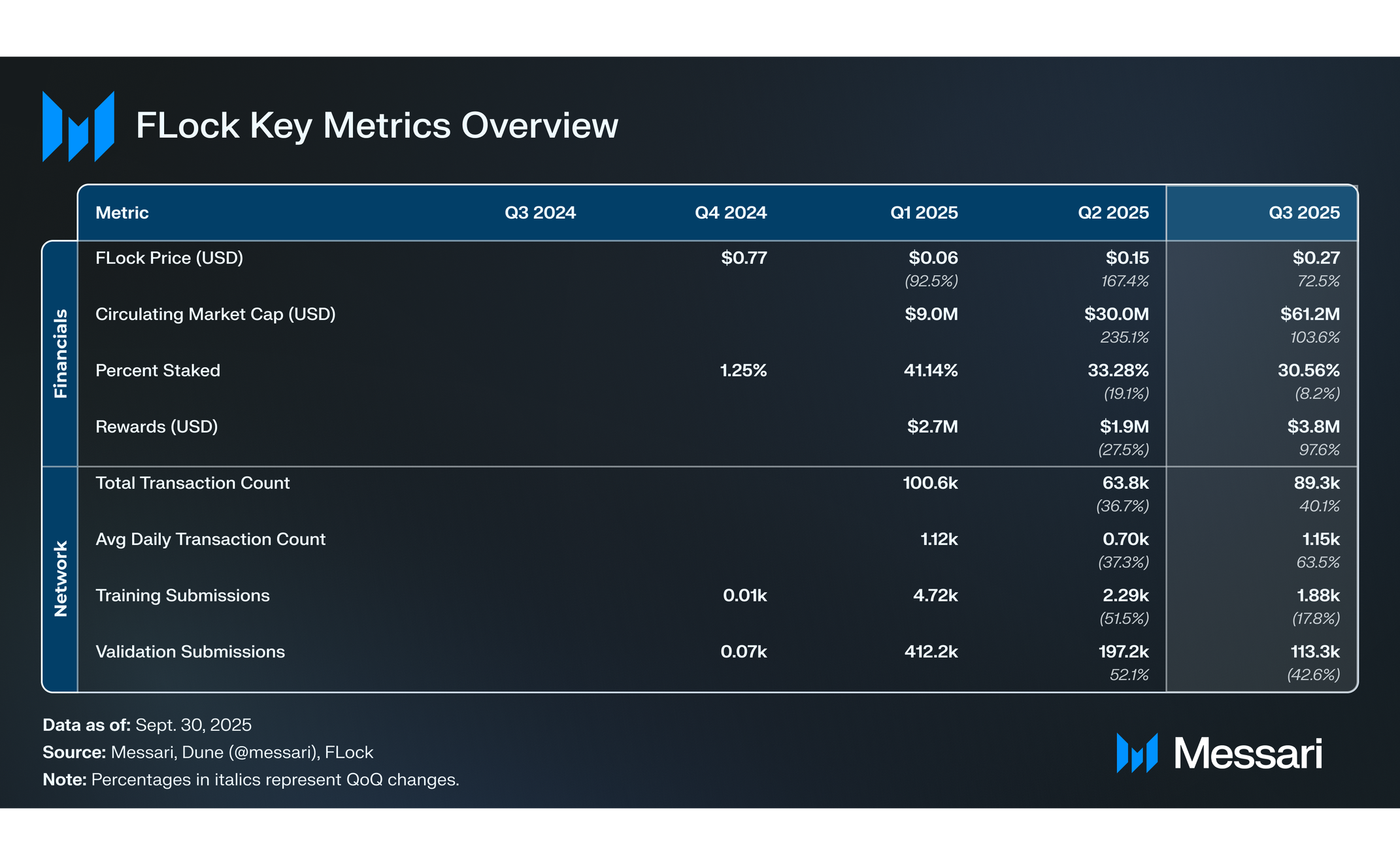
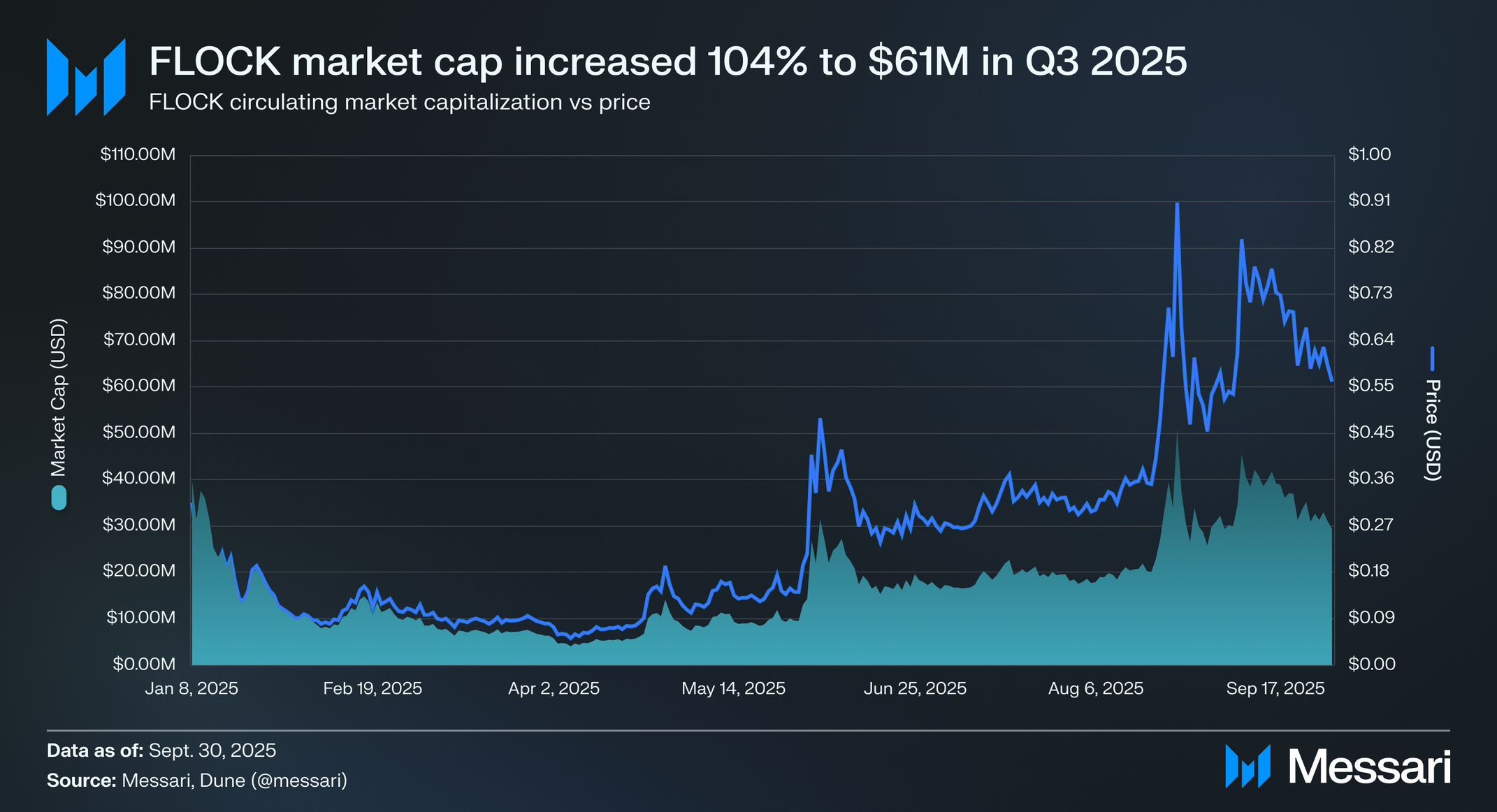
Circulating market capitalization increased 104% QoQ to $61 million, while FLOCK’s price rose from 72.5% from $0.15 to $0.27.
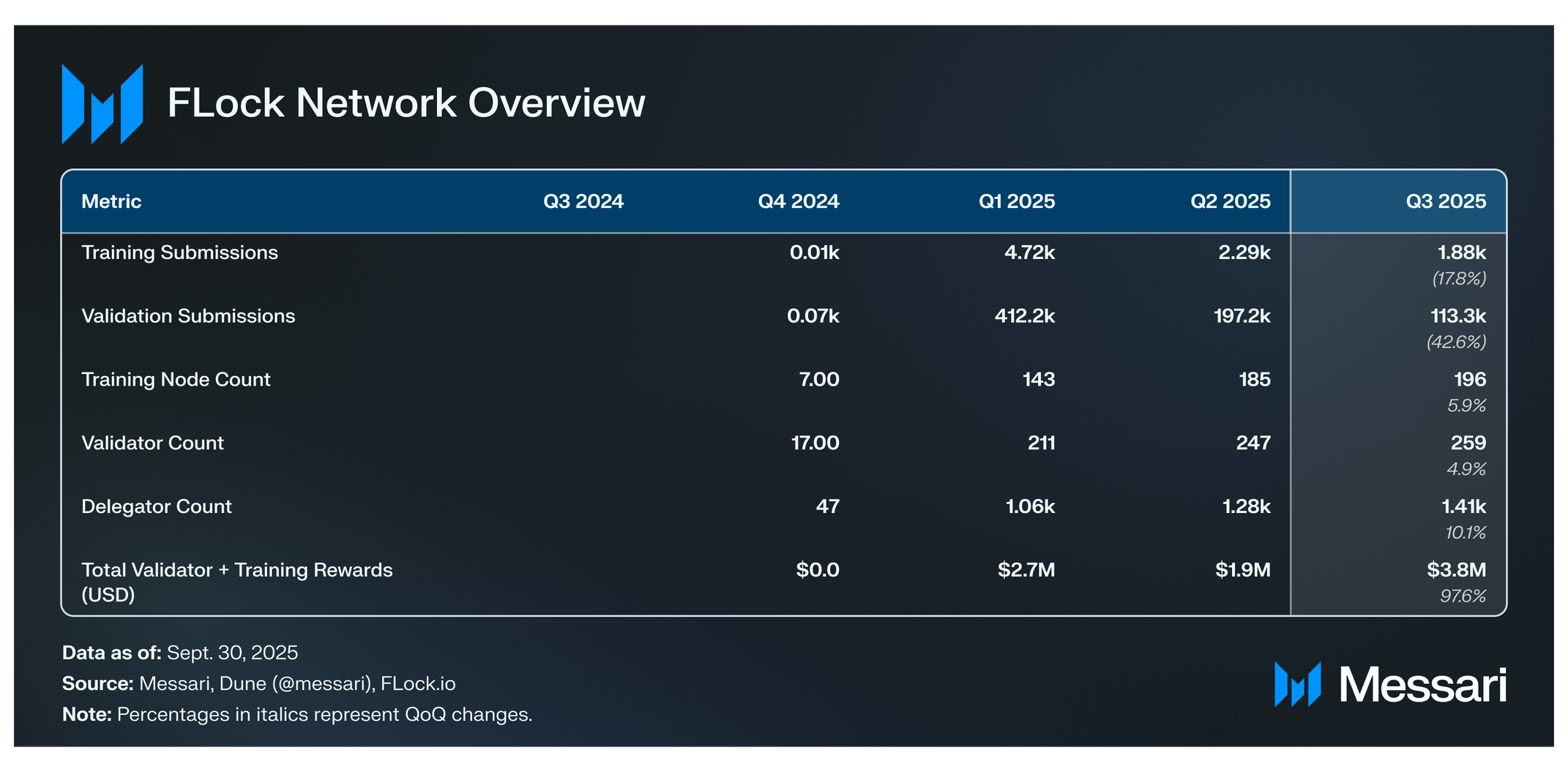
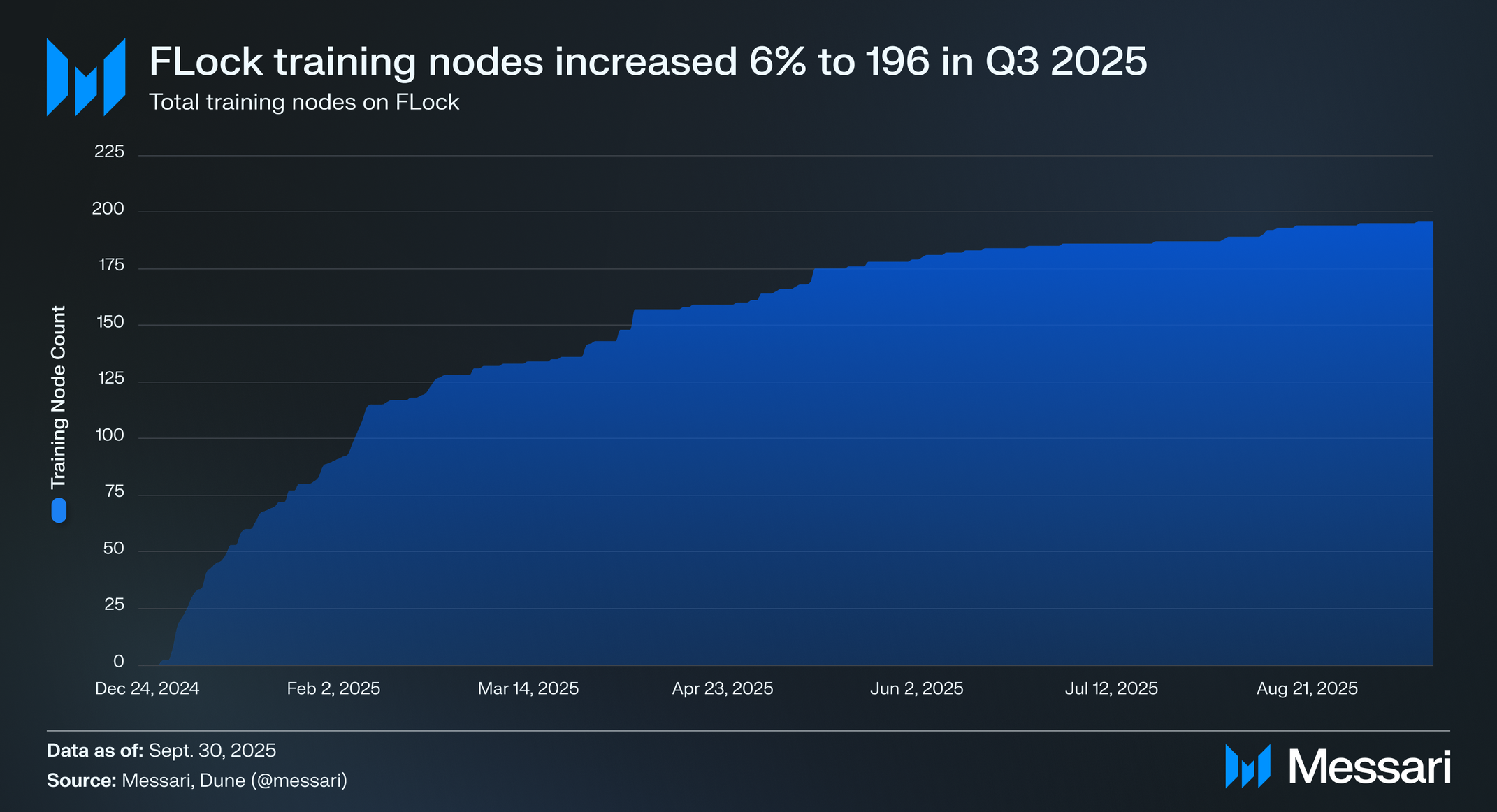
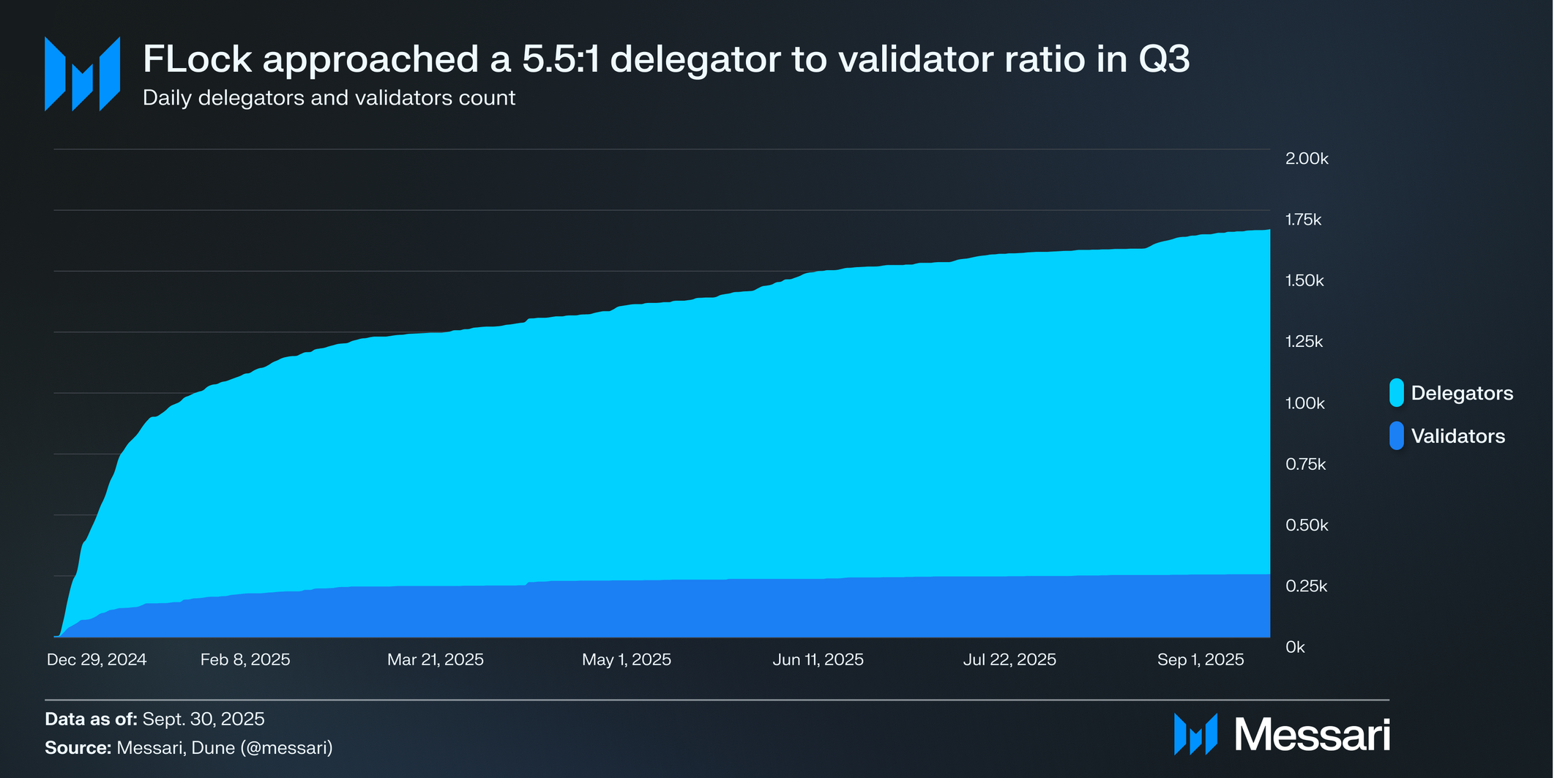
Training nodes and delegators increased in Q3 2025, with training nodes up 5.9% QoQ to 196 and delegators up 10.4% to 1,412.
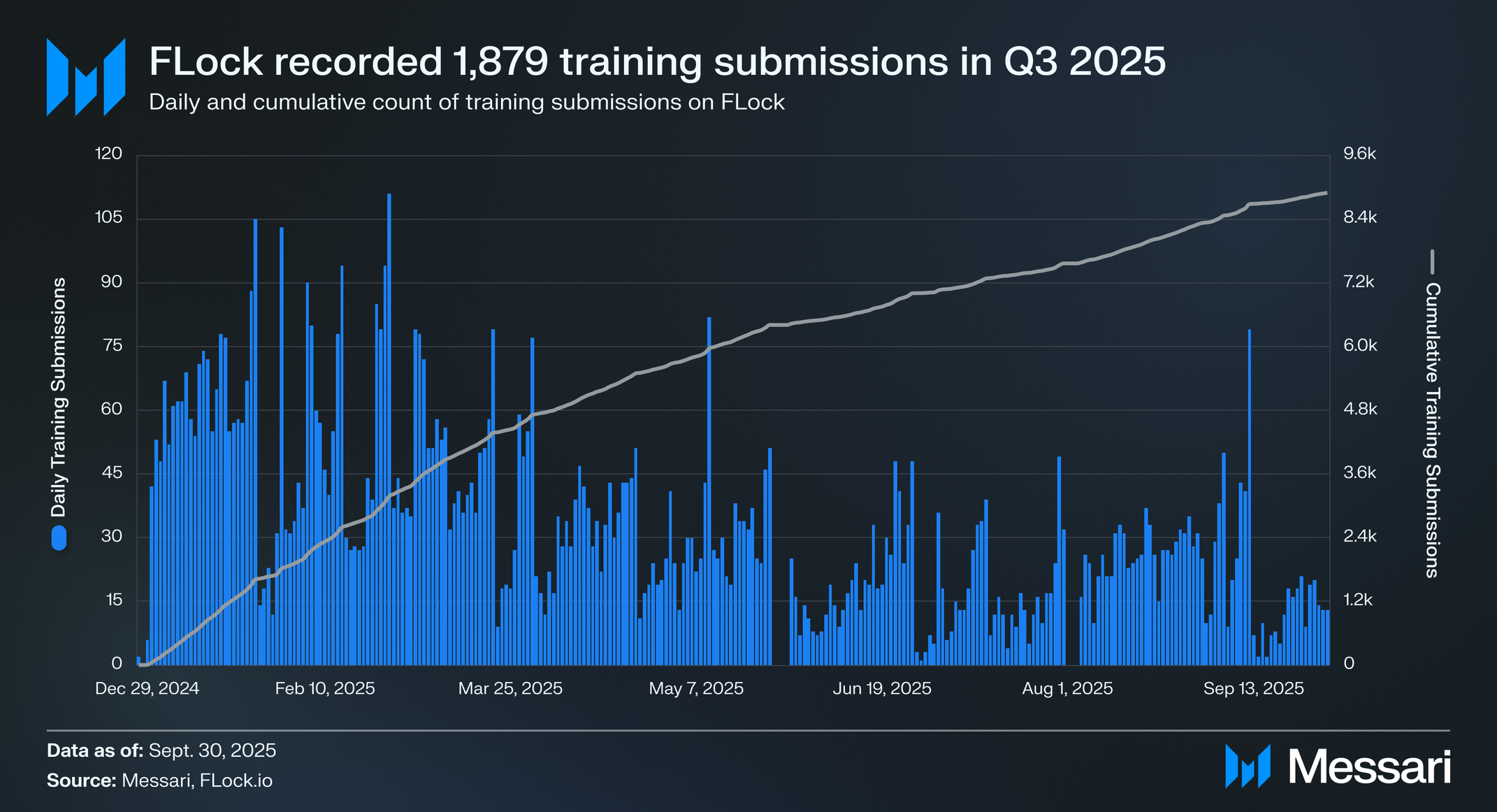
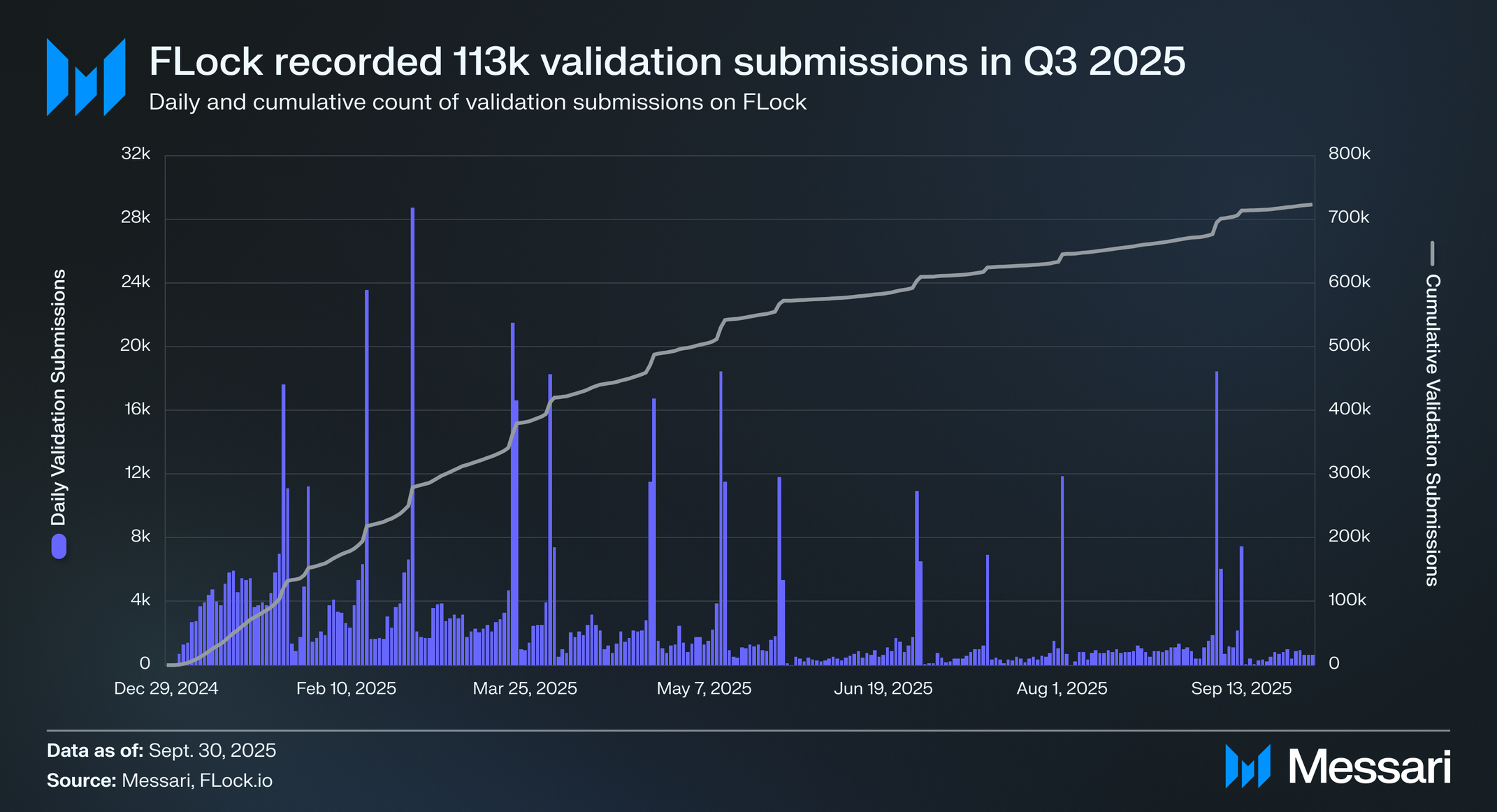
The number of active validators grew 4.9% QoQ to 259, while training submissions declined 17.8% to 1879, and validation submissions declined 42.6% to 113k.
Hong Kong AI and FLock.io announced a strategic partnership on Aug. 25, 2025, to develop decentralized, domain-specific AI models for use by the government and public sector, with the goal of boosting public sector efficiency.
FLock introduced revenue-sharing for developers with the launch of its API platform on Sept. 18, 2025.
Primer
FLock.io (FLOCK) is a decentralized AI (DeAI) development platform that combines blockchain infrastructure with privacy-preserving federated learning. Its architecture is built around three core components: AI Arena, where models are collaboratively trained; Moonbase, a marketplace for publishing and using models where creators earn a share of revenue; and FL Alliance, a federated learning framework that coordinates contributors with onchain incentives.
In traditional federated learning, models are sent to local devices for training, and only the updated parameters (not the raw data) are shared back. This preserves privacy but often relies on centralized servers, leaving challenges regarding incentives and security. FLock addresses these limitations by utilizing blockchain for decentralized coordination, verifiable governance, and transparent incentives, enabling communities to propose, train, and deploy AI models in a trust-minimized manner.
This design supports FLock’s broader vision to democratize the AI lifecycle from data sourcing and model design to training, validation, and deployment. The platform is anchored in ongoing academic research, with multiple peer-reviewed publications in venues such as IEEE journals and NeurIPS workshops. For a full primer on FLock, refer to our Initiation of Coverage report.
The market capitalization of FLOCK outpaced price in Q3 as the circulating supply increased due to staking rewards, ecosystem incentives, and scheduled token releases. FLOCK’s circulating market capitalization increased 103.6% in Q3 2025, rising from $30.1 million to $61.2 million, while the price rose 72.5%, from $0.15 to $0.27. Market expansion, price, and trading volume experienced significant upticks following major exchange listings from Coinbase and Upbit. The Coinbase announcement on Aug. 21 caused a 36.84% surge in FLOCK’s price, followed by the official listing on Sept. 9, when FLOCK’s price reached a peak of $0.67. These major exchange listings were likely large catalysts to FLOCK’s notable ~$3.0 billion (230.7% QoQ increase) in traded volume, as Coinbase and Upbit have a combined ~120 million verified users.
Staked Percentage
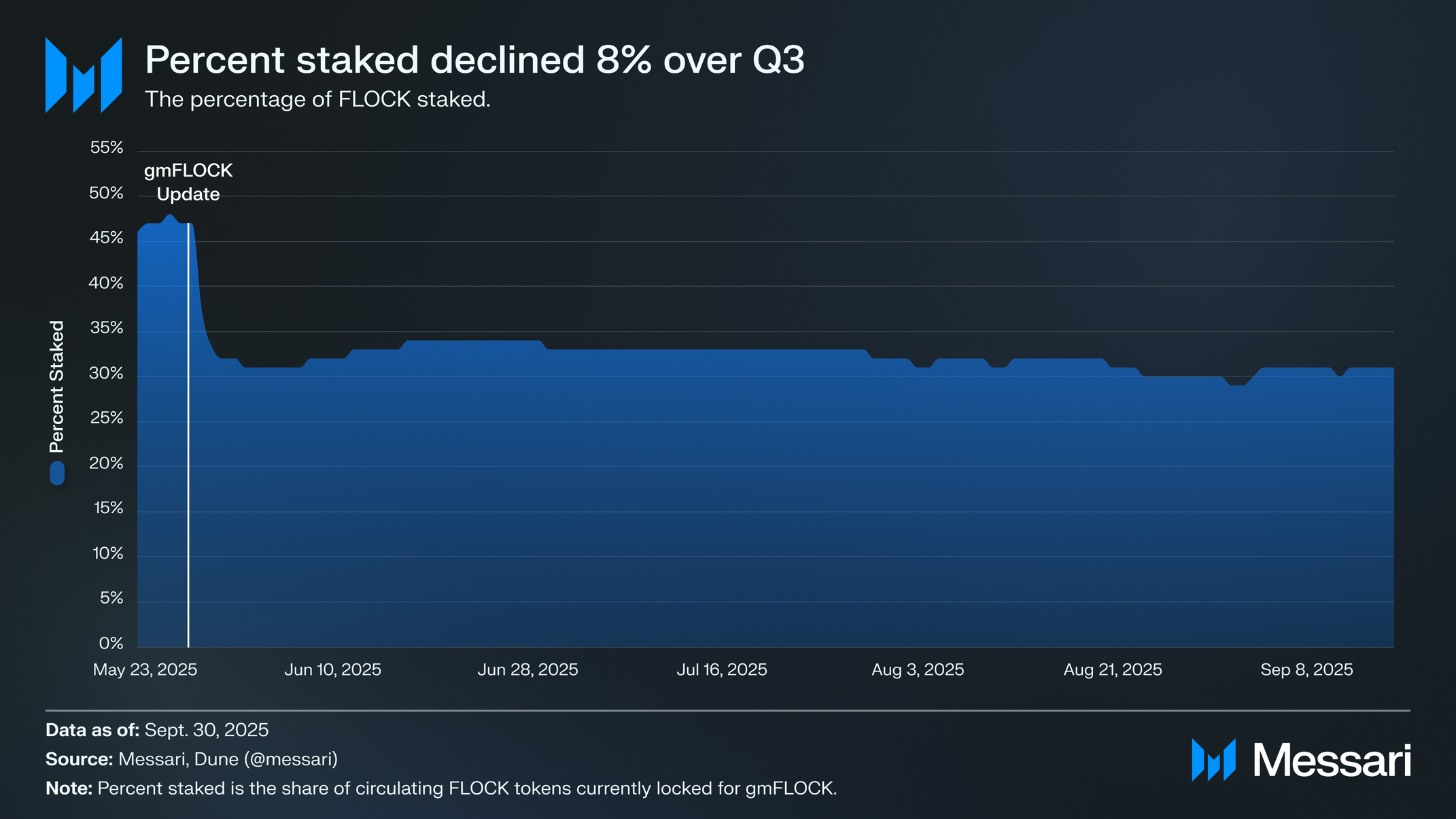
FLock introduced game-FLOCK (gmFLOCK) in Q2 to improve long-term alignment, FLOCK’s price stability, and to discourage mining and dumping behaviors that persisted with the original staking mechanic. Originally, FLOCK stakers were rewarded daily or upon completing an AI Arena task, where models train collaboratively. The new gmFLOCK staking mechanic requires users to stake and lock FLOCK for a user-defined period, ranging from 0 to 365 days, via train.flock.io, in exchange for soulbound gmFLOCK. Periods exceeding 30 days result in an additional 0.006 gmFLOCK per FLOCK staked per day, with 365-day lockups resulting in 3.01 gmFLOCK per FLOCK. Users then stake their gmFLOCK with training nodes, validators, or delegators to start earning yield. Once the lockup period is over, users can redeem their gmFLOCK for FLOCK, with a 5.1% withdrawal penalty applied to the transaction, regardless of the lockup period.
The transition to this new strategy contributed to a sharp decline in the staking percentage during Q2, as users who were mining and dumping could no longer exploit the staking mechanism. Previously staked tokens had to be re-locked under the new system.
The percent staked has continued to trend lower in Q3, with staked FLOCK sliding from 33.3% to 30.6%. Another element that could have contributed to this decline is the 72.5% QoQ increase in FLOCK’s price, as some stakers likely realized their gains instead of re-staking recently unlocked FLOCK.
Staking rewards increased by 97.6% from $1.9 million in Q2 to $3.8 million in Q3. Higher rewards, despite fewer submissions, stem from an increase in FLOCK’s price as well as incentives for longer lockup periods. Users can earn up to 3.01x yield by staking 1 FLOCK for 3.01 gmFLOCK when locked for a year.
Training submissions track the number of model updates contributed by Training Nodes during a round. Each submission reflects local training on private data, and the quality and ranking of updates directly determine reward distribution.
Validation submissions measure evaluations performed by Validators, benchmarking submitted models against standardized datasets to ensure accuracy and fairness.
The training node count represents the number of unique participants actively developing or fine-tuning models.
Validator count refers to the number of participants involved in evaluating models.
The delegator count indicates the number of token holders who lock FLOCK to generate gmFLOCK, which is then used to delegate support to Training Nodes or Validators. Delegators share in the rewards without having to run the infrastructure themselves.
Validator and Training rewards (USD) reflect the aggregate value of incentives distributed to active roles, serving as a measure of overall economic support for network activity.
Together, these metrics provide a view into FLock’s decentralization, activity levels, and incentive alignment.
Training Activity
Training nodes grew from 185 at the end of Q2 2025 to 196 at the end of Q3 2025, a 5.9% QoQ increase. Training nodes have continued to trend upwards since the introduction of gmFLOCK and the AI Arena V2 upgrade, which reinforced incentives for node operators and delegators. Training nodes play a crucial role in the FLock ecosystem by training and fine-tuning AI tasks initiated by task creators.
Training submissions decreased 17.8% QoQ in Q3, down to 1880, with average daily volume down ~18.7%. Cumulative training submissions are up 26% QoQ with a total of 8894 lifetime training submissions as of Sept. 30, 2025.
Validator Activity
Validation submissions on FLock fell 42.6% QoQ, with 113,290 submissions in Q3 2025. Daily submissions have yet to surpass the all-time high of ~29k in Q1 2025, but continue to see sustained participation. Abnormal spikes in the data are related to events such as the Q3 high of 18,421 submissions on Sept. 7, 2025, during the UNDP accelerator hackathon finale, and 11,862 submissions on Aug. 1, 2025, during the QWEN x Alibaba Hackathon. As of Sept. 30, 2025, there have been a cumulative 722,782 validation submissions.
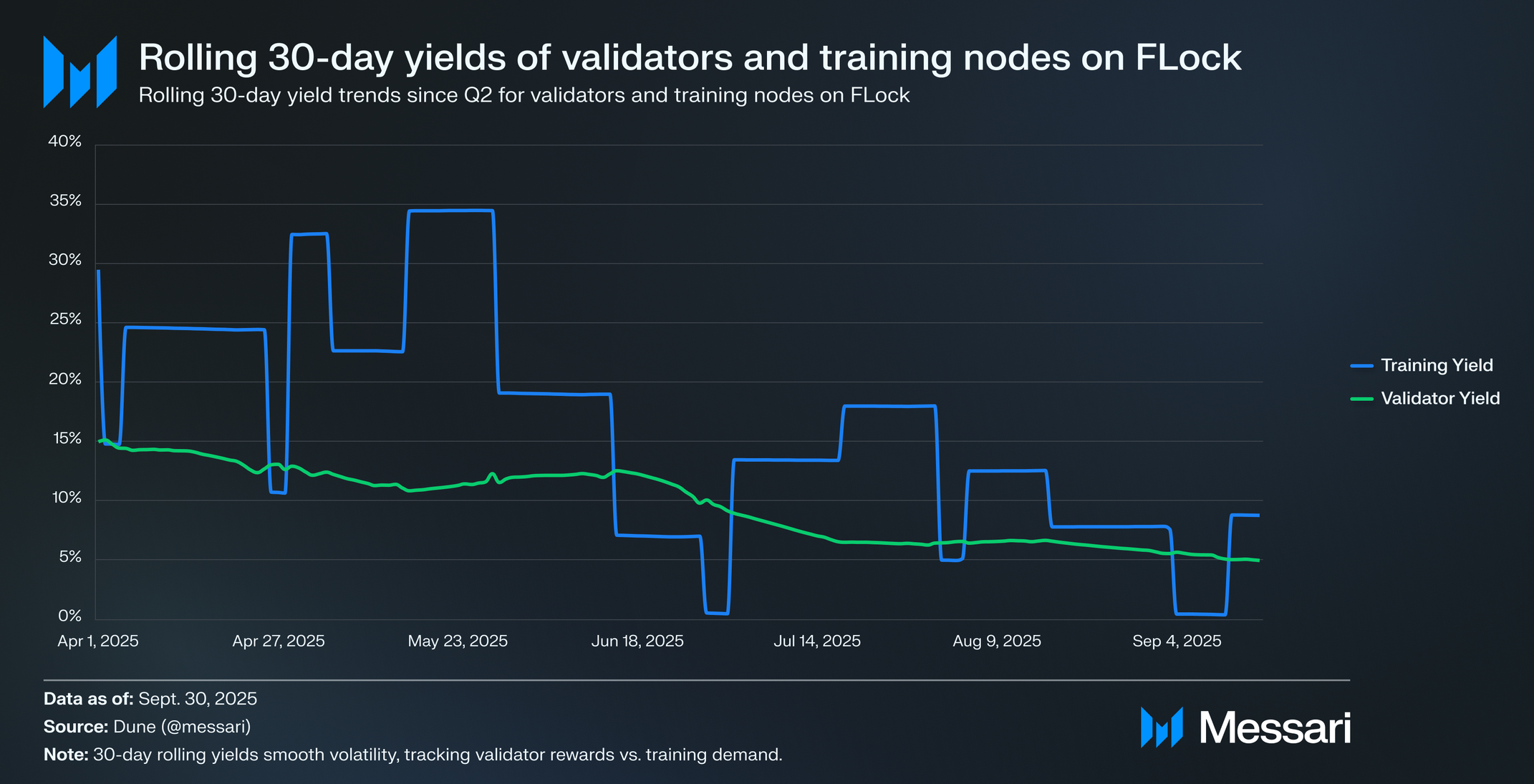
The rolling 30-day yield measures average rewards for training nodes and validators over the prior 30 days, smoothing short-term fluctuations to show incentive trends. In Q2, training yields ranged from a low of 10.6% on April 28, 2025, to a peak of 34.5% on May 26, 2025. The validator yield gradually declined from a peak of 15.1% to a low of 9.7% by quarter's end. In Q3, training yields maintained their wide range, with a low of 0.4% on Sept. 10, 2025, and a peak of 18.0% on July 22, 2025. Validator yields continued to gradually decline from 9.7% to 5.0% by quarter’s end.
Network Dynamics
The increase in validator and delegator participation, without a corresponding increase in submissions, resulted in a decline in yield rates. Despite the declining submission rates, validator and delegator participation continued its uptrend in Q3. The number of validators increased by 4.9% to 259, compared to a 17.1% rise in Q2. Delegators increased by 10.1% to 1,412 delegators, compared to a 20.7% increase in Q2. The delegator-to-validator ratio increased to 5.5:1 from the previous quarter’s 5.2:1, emphasizing that delegation remains the preferred form of participation for token holders. Flock’s metrics demonstrated healthy growth throughout Q3 2025, with expanding community engagement, developer adoption, and ecosystem partnerships supporting long-term sustainability.
Qualitative Analysis
Technology and Protocol Developments
FLock API and Developer Incentives
FLock launched its API Platform on Sept. 18, 2025. The platform is designed to make AI model access, integration, and monetization more transparent and interoperable, while incentivizing developers to choose FLock through revenue-sharing rewards. If a developer’s model is chosen for the Arena, the developer receives a portion of the revenue generated. The platform is compatible with OpenAI's SDK, enabling developers to seamlessly integrate FLock's AI models into existing applications by switching their base URL to the FLock endpoint. The API is designed for developers who want to build AI-powered applications, and its OpenAI compatibility helps mitigate the learning curve.
The API Platform features a native AI arena that offers low-code experimentation to speed up iteration, a built-in analytics dashboard to monitor performance and demand, and a credit-based billing system supported by Stripe and Base. This development marks FLock's evolution from a research-focused protocol to a commercially viable platform capable of generating revenue for ecosystem participants.
The API Platform launch coincided with an increase in developer engagement through hackathons and educational initiatives. The AliBaba Qwen x FLock AI Hackathon, sponsored by Base and partnering with leading Korean universities, demonstrated FLock's commitment to fostering developer adoption. Additionally, documentation and developer resources expanded significantly, with comprehensive API documentation available at docs.flock.io. This investment in developer experience reduces onboarding friction and supports the platform's commercial objectives. These initiatives create a pipeline of developers familiar with FLock's capabilities, supporting long-term ecosystem growth.
Moonbase
Moonbase is FLock’s rewards layer that launched with the API platform. Top-performing models from the AI Arena are hosted on Moonbase, and receive proportional revenue shares based on the usage of their models through the API Platform. This creates a direct incentive loop where high-quality model training leads to API deployment, which generates revenue that flows back to contributors, encouraging continued participation and model improvement.
FLock's future monetization strategies will focus on deploying top-performing AI Arena models, expanding into image generation, and improving the Moonbase revenue distribution system. These initiatives will diversify revenue streams while upholding the decentralized principles that distinguish FLock from centralized AI providers.
Partnerships and Ecosystem Expansion
Questflow
FLock’s partnership with Questflow connects decentralized training and decentralized deployment. Questflow is a decentralized workflow-automation platform for building and automating complex workflows using multiple AI agents, or swarms. Questflow uses Multi-Agent Orchestration (MAO) to deploy groups of AI agents to collaborate and take actions on behalf of users.
Users can build and run no-code workflows with Questflow to automate repetitive tasks. Together, FLock and Questflow create an ecosystem that facilitates a “full lifecycle of decentralized AI.” With FLock, users enter their models in FLock’s AI Arena, stake the data in the federated learning alliance, and host on Moonbase to earn rewards. With the Questflow integration, those agents can now be instantiated as an agent in a Questflow swarm and used elsewhere in DeFi strategies, decentralized governance, content and research automation, and cross-protocol coordination, amongst other use cases.
Walrus Integration
The quarter saw improvements to FLock's underlying infrastructure and cross-chain expansion with Walrus. Walrus is a protocol on Sui that is positioning itself as a foundational data infrastructure layer for AI. It enhances privacy-preserving capabilities through SEAL encryption, a decentralized secrets management service, and decentralized storage, addressing enterprise concerns about data security and compliance. This enhancement is particularly valuable for government and corporate clients who require strict data protection guarantees.
This collaboration integrates Walrus's robust, decentralized infrastructure, which encompasses data storage, availability, programmability, and access controls, with FLock’s innovative AI development platform. FLock leverages federated learning and blockchain to empower communities to build, train, and own AI models without centralizing sensitive data. Together, these elements form a complete, end-to-end stack for open, community-governed AI development, with the end goal being a “Copilot for the Sui Blockchain.”
Qwen Hackathon
FLock and Alibaba Cloud co-hosted the Qwen x SKYST Hackathon in South Korea, a two-phase student datathon from July 28 to Aug 2, 2025. The hackathon used FLock’s AI Arena on Base to fine-tune Quen LLMs for real-world tasks, then build AI applications. The hackathon had 150 participants, along with professors joining as mentors to the teams.
United Nations Development Programme (UNDP)
FLock was selected as the UNDP’s strategic partner for its Sustainable Development Goals (SDG) Blockchain Accelerator. As a mentor organization, FLock will support five pilot projects focused on challenges ranging from climate risk modeling and inclusive energy planning to social protection and supply-chain transparency. In the most recent hackathon in September, Flock mentored fifteen different institutions to develop solutions to challenges issued by the UNDP. This partnership means FLock’s privacy-preserving onchain AI infrastructure will be applied to real-world use cases where sensitive data must remain secure and local.
Commercial International Management Group (CIMG)
CIMG is a digital health and sales development business based in Hong Kong. On Aug. 26, 2025, CIMG signed a non-binding Memorandum of Understanding with FLock to use FLock as its privacy-preserving AI provider. CIMG intends to leverage FLock to help it develop its product, LifeNode. LifeNode is an AI-assisted wellness monitoring platform specifically targeting the elderly population to simplify their healthcare experience. In addition to the technical partnership, CIMG is considering adding FLOCK to its treasury.
Research and Educational Initiatives
AgentaNet
FLock published a research paper on July 29, 2025, illustrating their vision for autonomous agents to collaborate in a decentralized swarm without central control. The work argues that instead of improving isolated agents, the next frontier is enabling agents to discover, trust, and coordinate with each other securely across a distributed network.
The solution, referred to as AgentaNet, proposes infrastructural building blocks for standardized agent profiles and benchmarks for trust, as well as encrypted gossip protocols for communication, decentralized task allocation, and onchain incentive mechanisms to encourage good behavior. By combining verifiable agent identities with privacy-preserving communication and smart contract-based coordination, the framework enables AI agents to “swarm” co-evolving and self-organizing to tackle tasks that exceed the capabilities of any single agent.
Multi-Continental Glucose Prediction
In an award-winning multi-continental case study, FLock highlighted how blockchain-enabled federated learning (BCFL) can revolutionize healthcare by breaking down data silos while preserving patient privacy. FLock’s team demonstrated a framework for hospitals across Europe, North America, and Asia to collaboratively train an AI model for blood glucose prediction without sharing sensitive data.
Combining FLock’s immutable ledger and smart contracts with federated learning ensured transparent, trustless coordination of model updates, addressing the incentive and security challenges of traditional federated learning. This work not only earned FLock recognition (Best Application Award at IEEE’s Global Blockchain Conference) but also solidified its role as a pioneer in privacy-preserving AI, demonstrating the real-world viability of decentralized approaches in critical sectors such as healthcare. For FLock, the BCFL success underscores its core thesis, that decentralized, onchain coordination can unlock AI innovation in sensitive domains that have been stymied by data privacy concerns, positioning the project at the forefront of “AI for good” initiatives in healthcare.
Closing Summary
FLock’s Q3 2025 results reinforced its position as one of the most advanced projects at the intersection of decentralized infrastructure and artificial intelligence. The quarter marked a clear transition from experimental phase to commercial readiness, driven by the launch of the FLock API Platform, new institutional partnerships with the UNDP and HKGAI, and multiple tier-one exchange listings. These milestones collectively signal that FLock is evolving from a research-focused protocol into a revenue-generating platform capable of competing with centralized AI providers on both performance and accessibility.
These partnerships collectively demonstrate FLock's unique positioning at the intersection of privacy-preserving AI, government applications, and commercial utility. The diversity of partnership types, from UN-level institutional validation to technical integrations with leading blockchain protocols, establishes FLock as a versatile platform capable of addressing varied use cases across different sectors.
The government partnerships, in particular, provide a significant competitive moat. Few DeAI protocols have achieved this level of institutional recognition, and the trust required for government applications creates substantial barriers to entry for competitors. These partnerships also provide a pathway to sustainable revenue generation through long-term service contracts and licensing agreements.
Looking ahead, FLock’s roadmap emphasizes the expansion of multi-tier partnerships, deeper enterprise integrations, and continued enhancements to its AI federation architecture. The protocol’s combination of technical defensibility, institutional alignment, and commercial traction positions it for sustained growth into Q4 2025 and beyond.
This report was commissioned by FLock. All content was produced independently by the author(s) and does not necessarily reflect the opinions of Messari, Inc. or the organization that requested the report. The commissioning organization may have input on the content of the report, but Messari maintains editorial control over the final report to retain data accuracy and objectivity. Author(s) may hold cryptocurrencies named in this report. This report is meant for informational purposes only. It is not meant to serve as investment advice. You should conduct your own research and consult an independent financial, tax, or legal advisor before making any investment decisions. Past performance of any asset is not indicative of future results. Please see our Terms of Service for more information.
No part of this report may be (a) copied, photocopied, duplicated in any form by any means or (b) redistributed without the prior written consent of Messari®.
Dillon is a Research Analyst on the Protocol Research team. He previously worked as an Automation/Mechatronics Engineer at Flex, Nike, and Target after graduating with a BSE in Mechanical Engineering from the University of Michigan - Ann Arbor. While he has maintained an interest in robotics, his interests lie in DeAI, privacy, prediction markets, and, more recently, quantum computing.
Dillon is a Research Analyst on the Protocol Research team. He previously worked as an Automation/Mechatronics Engineer at Flex, Nike, and Target after graduating with a BSE in Mechanical Engineering from the University of Michigan - Ann Arbor. While he has maintained an interest in robotics, his interests lie in DeAI, privacy, prediction markets, and, more recently, quantum computing.