edgeX's V2 upgrade enables edgeX to expand its product offering into spot and prediction markets. edgeX V2 is built on the EDGE stack, an execution layer optimized for high-performance onchain trading.
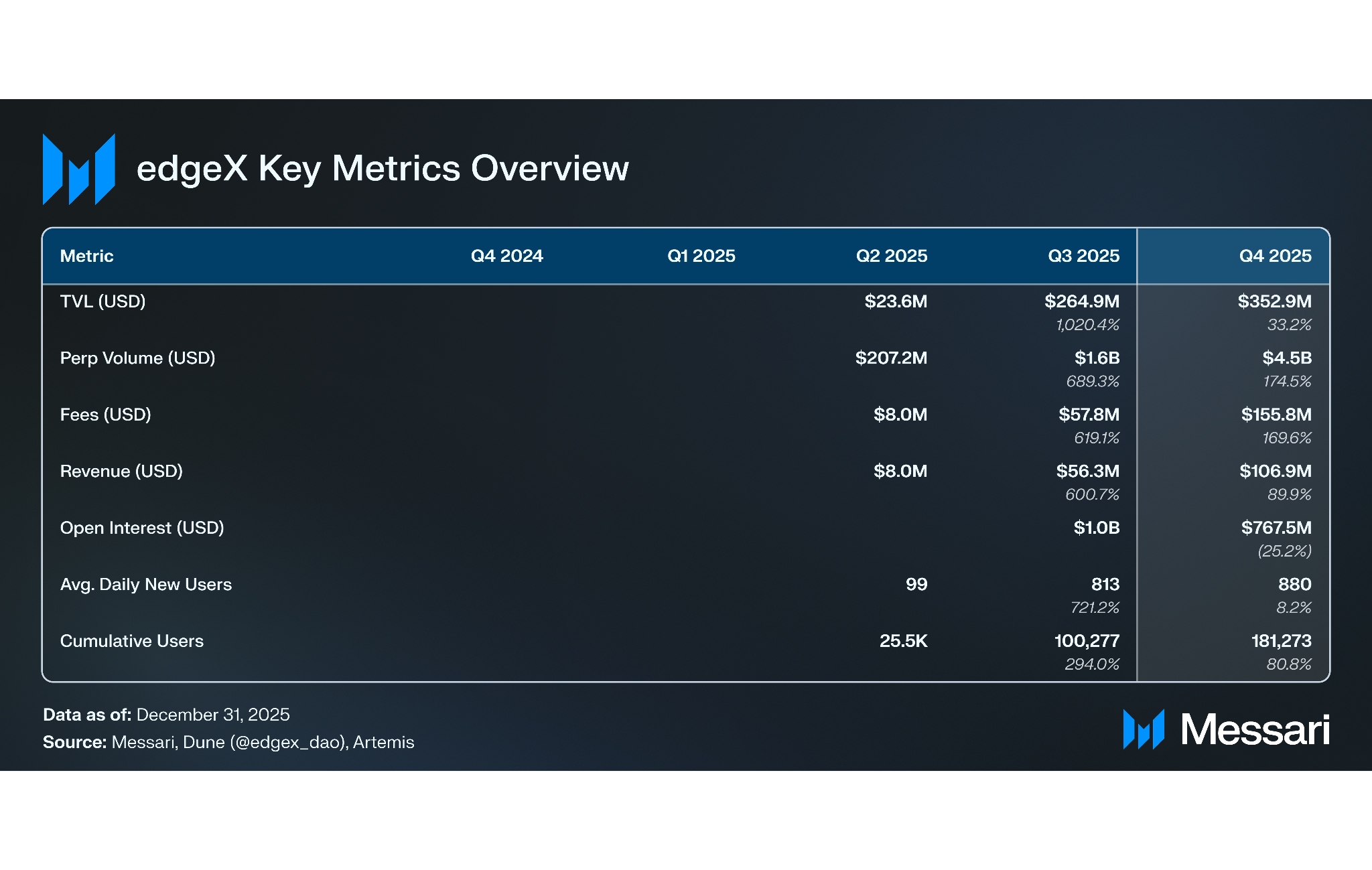
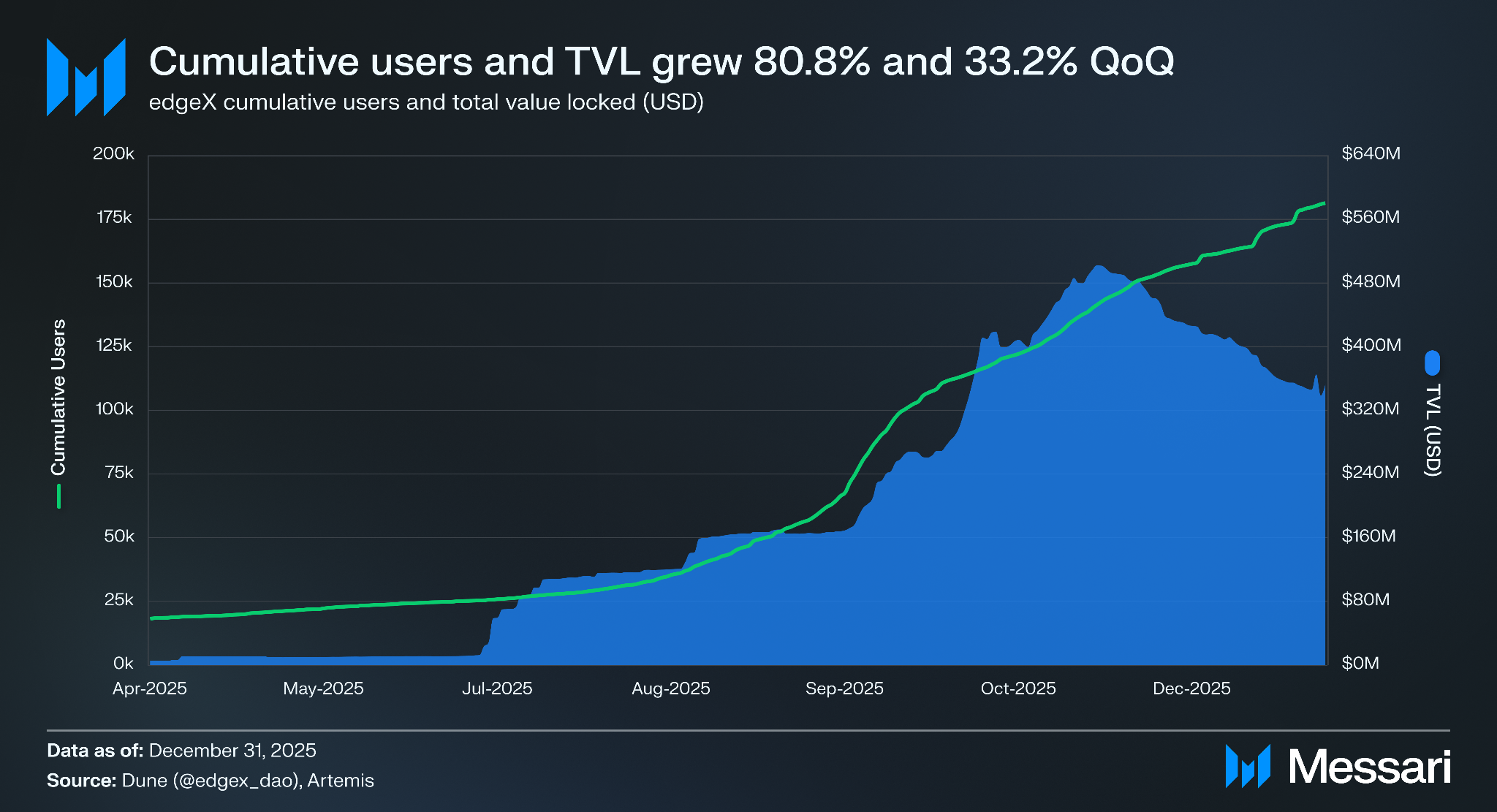
By year-end, edgeX reached 181,270 cumulative users and $352.9 million in TVL, indicating sustained platform growth even after the Oct. 10, 2025, crypto crash that liquidated $19 billion in leveraged positions.
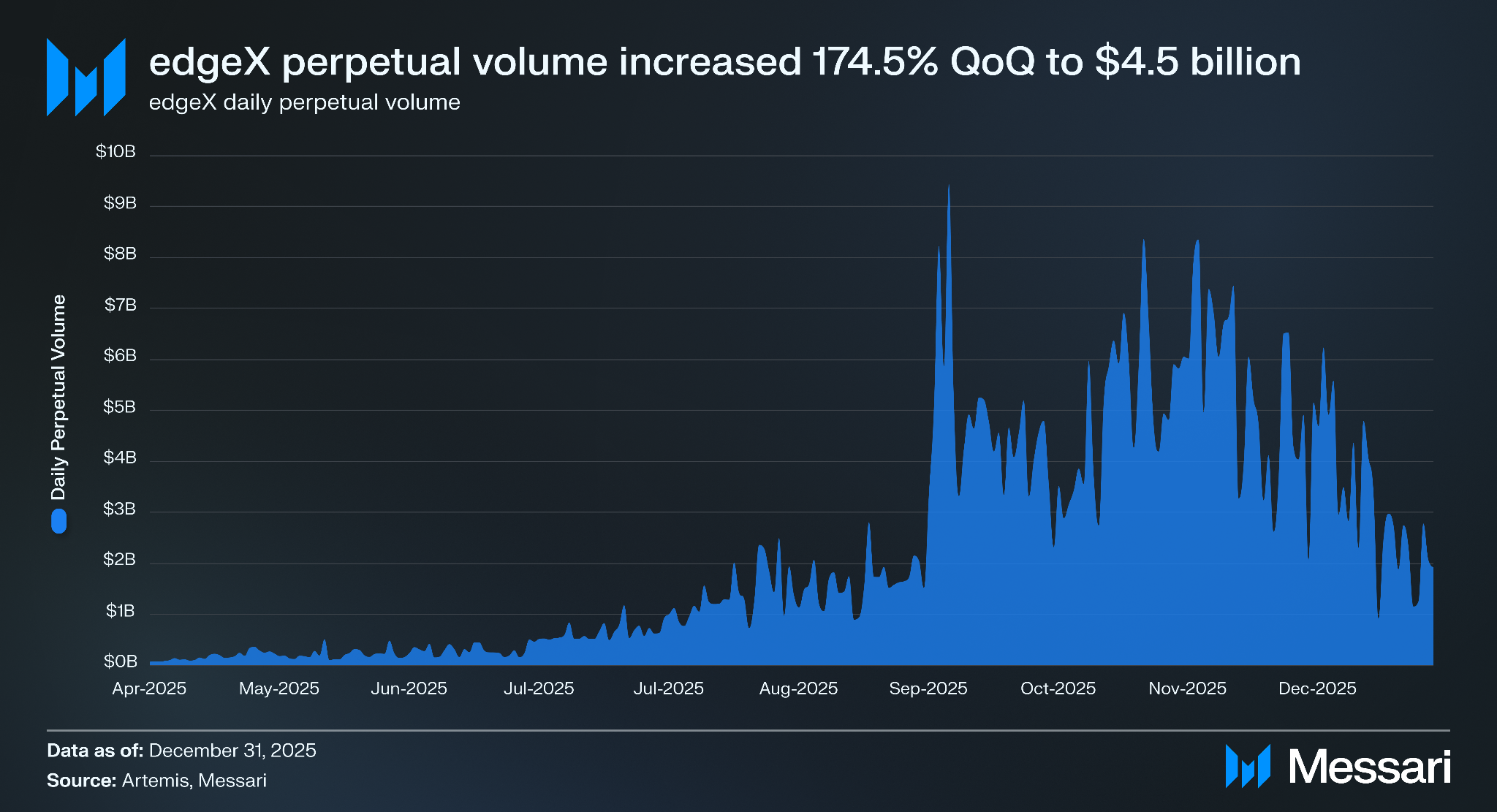
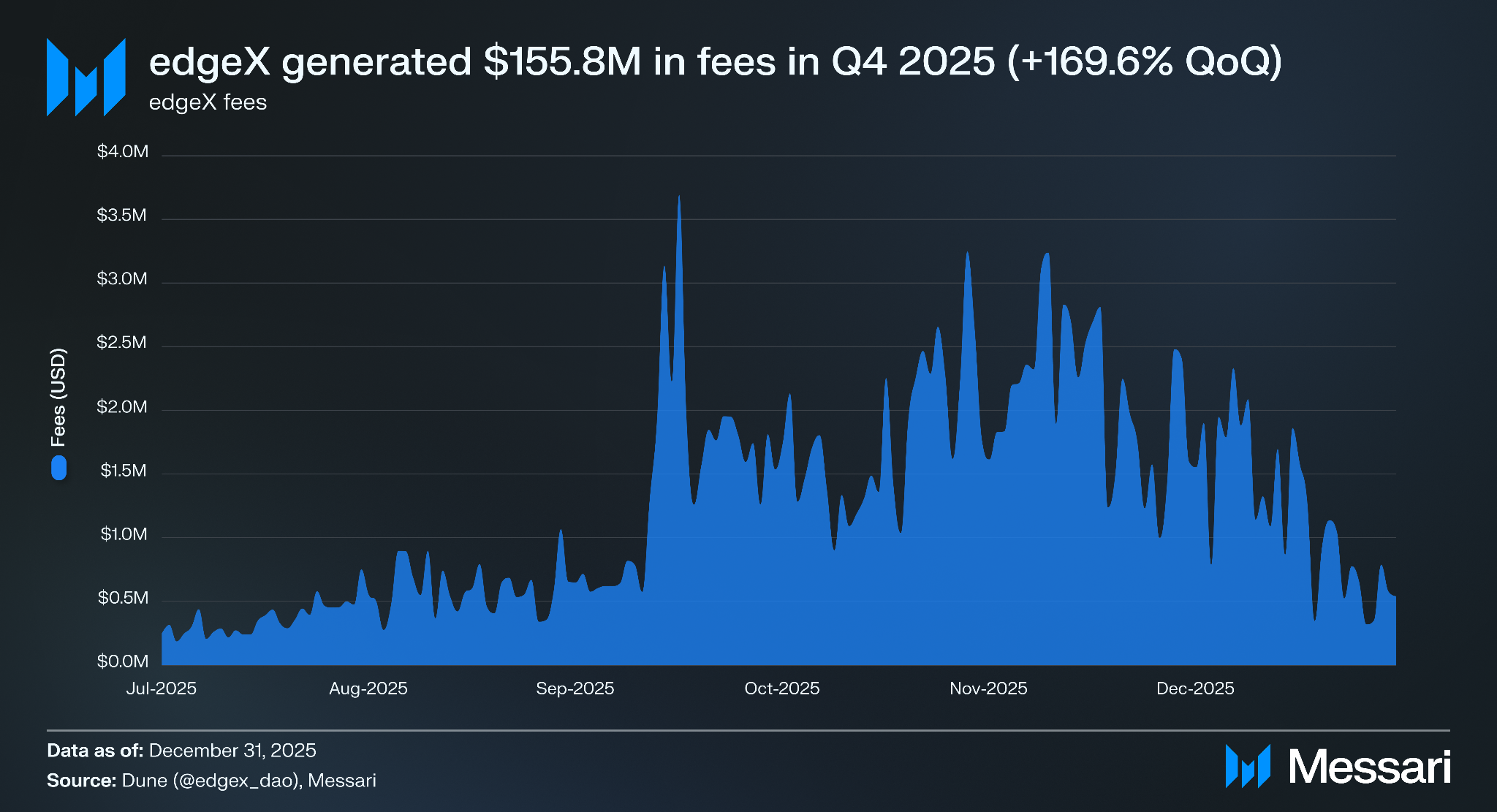
Perpetual trading volume increased 174.5% QoQ to $4.5 billion, contributing to a 169.9% QoQ increase in fees, which reached $155.8 million in Q4 2025. Trading activity on edgeX remained resilient even as the broader crypto market declined.
edgeX launched spot trading on Dec. 11, 2025. edgeX attracted early speculative interest through the launch of MARU, a team-sponsored memecoin that reached a $400 million fully diluted valuation (FDV) by year-end.
edgeX will continue its V2 rollout in Q1 2026, adding U.S. equity perpetuals, additional RWA markets, and prediction markets via Polymarket. The launch of edgeX’s EDGE token is expected by the end of Q1 2026.
Primer
edgeX is a high-performance perpetual decentralized exchange (perp DEX) built by a team of experienced derivatives traders, liquidity operators, and engineers with deep backgrounds in centralized trading systems and blockchain infrastructure. The protocol is designed to deliver centralized-exchange-like execution quality onchain, with a focus on deep liquidity, low latency, and capital efficiency for perpetual futures trading.
edgeX launched V1 in November 2024, offering access to perpetual futures via desktop and mobile applications. During its initial rollout, edgeX concentrated on validating its trading engine by demonstrating reliable order matching, risk management, and execution performance under live conditions while targeting user adoption specifically in the Asia-Pacific (APAC) region. edgeX V2 upgrades the platform from a single-product perpetual DEX into a multi-market trading platform offering perpetuals, spot assets, and prediction markets. edgeX V2 is made possible by the EDGE Stack, an execution layer optimized for high-performance onchain trading. The EDGE Stack is designed to support latency-sensitive financial workloads while inheriting Ethereum-level security and verifiability.
The EDGE Stack consists of three core components: a modular multi-VM architecture that isolates execution environments; Parallel Transaction Execution (PTE), which enables concurrent processing of non-conflicting orderbooks across independent market shards; and FlashLane routing, which prioritizes latency-sensitive trading actions. Together, these features enable edgeX to support and expand across spot, perpetual, prediction, and real-world asset markets on shared infrastructure while maintaining high-performance execution, backed by Ethereum-level security and verifiability.
Key Metrics
Financial Analysis
Monthly Net Flows
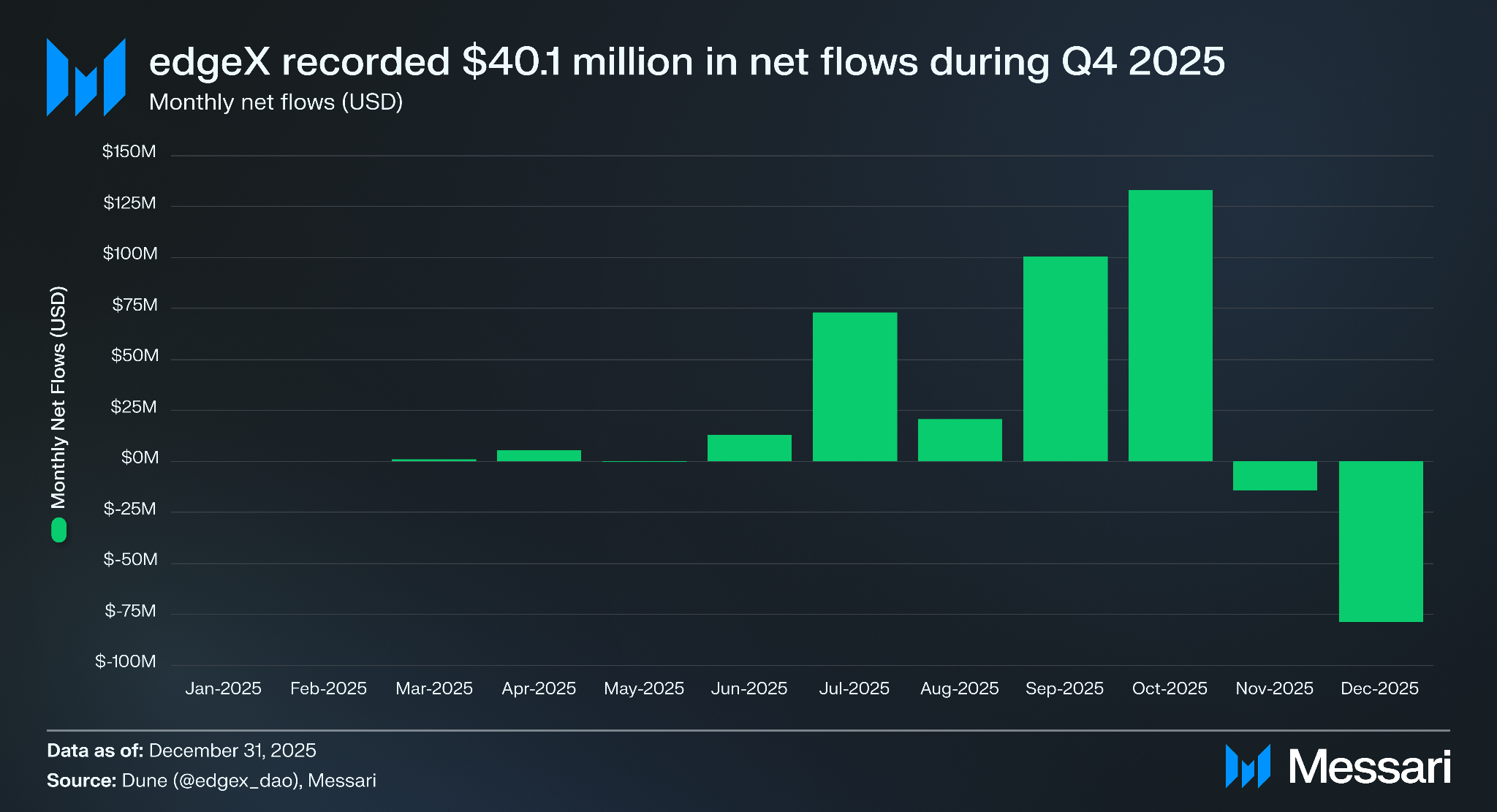
edgeX recorded $40.1 million in net inflows in Q4 2025, down 79.4% QoQ from $194.4 million in Q3, as flows normalized following a period of incentive-driven growth. October accounted for the majority of Q4 inflows, with $133.1 million in net deposits, before flows reversed in November and December. The shift occurred following the Oct. 10, 2025, liquidation-driven volatility, which triggered widespread deleveraging across the crypto market.
November recorded $14.0 million in net outflows, while December had $79 million in net withdrawals, driven by the conclusion of edgeX’s Open Season campaign, which ended on Dec. 3, 2025.
Total Value Locked and User Growth
Despite late-quarter outflows following the end of the Open Season incentive program, edgeX closed 2025 with $352.9 million in total value locked (TVL), a QoQ increase of 33.2%. Cumulative users surpassed 181,270 by year-end, with user growth increasing 8.2% QoQ in Q4. Average daily new users rose 8.2% QoQ to 880 in Q4, even as perpetual trading demand weakened post Oct. 10, 2025. One factor supporting user retention and capital concentration on edgeX is the platform’s orderbook liquidity depth, which directly improves execution outcomes by narrowing effective spreads. A point-in-time Artemis snapshot from Nov. 7, 2025, shows edgeX supporting 126 BTC of depth within 1 basis point of mid-price, 212 BTC at 2 basis points, and 300 BTC at 3 basis points, exceeding Hyperliquid’s 44 BTC, 79 BTC, and 125 BTC at the same depth bands.
Perpetual Trading Volume
Perpetual trading volume on edgeX increased 174.5% QoQ to $4.5 billion in Q4 2025, up from $1.6 billion in Q3, with average daily volume rising 179.8% QoQ to $401 million. Volume declined in the latter half of Q4 following the conclusion of the Open Season points program on Dec. 3, 2025, which allocated 60% of edgeX points based on trading volume.
Fees
edgeX captured $155.8 million in fees during Q4 2025, representing a 169.9% QoQ increase. On average, the protocol generated $52 million in fees per month, indicating sustained fee capture even as trading activity declined toward year-end. All fees accrue directly to the edgeX protocol treasury. edgeX employs a tiered maker–taker fee model based on a trader’s rolling 30-day trading volume, with fee tiers updating daily. Maker orders, which add liquidity to the order book, are charged lower fees than taker orders, which remove liquidity. Trading volume across sub-accounts is aggregated at the account level, allowing active users to benefit from lower fees as their trade volume increases. Perpetual trading fees range from 0.018% for makers and 0.038% for takers for non-VIP users to 0.000% makers and 0.024% takers at the highest volume tier. Spot trading fees range from 0.040% for makers and 0.070% for takers for non-VIP users to 0.000% makers and 0.025% takers at the highest volume tier. In addition, edgeX covers gas costs for trade settlement in V1, reducing friction for active traders and improving effective fee efficiency.
Open Interest
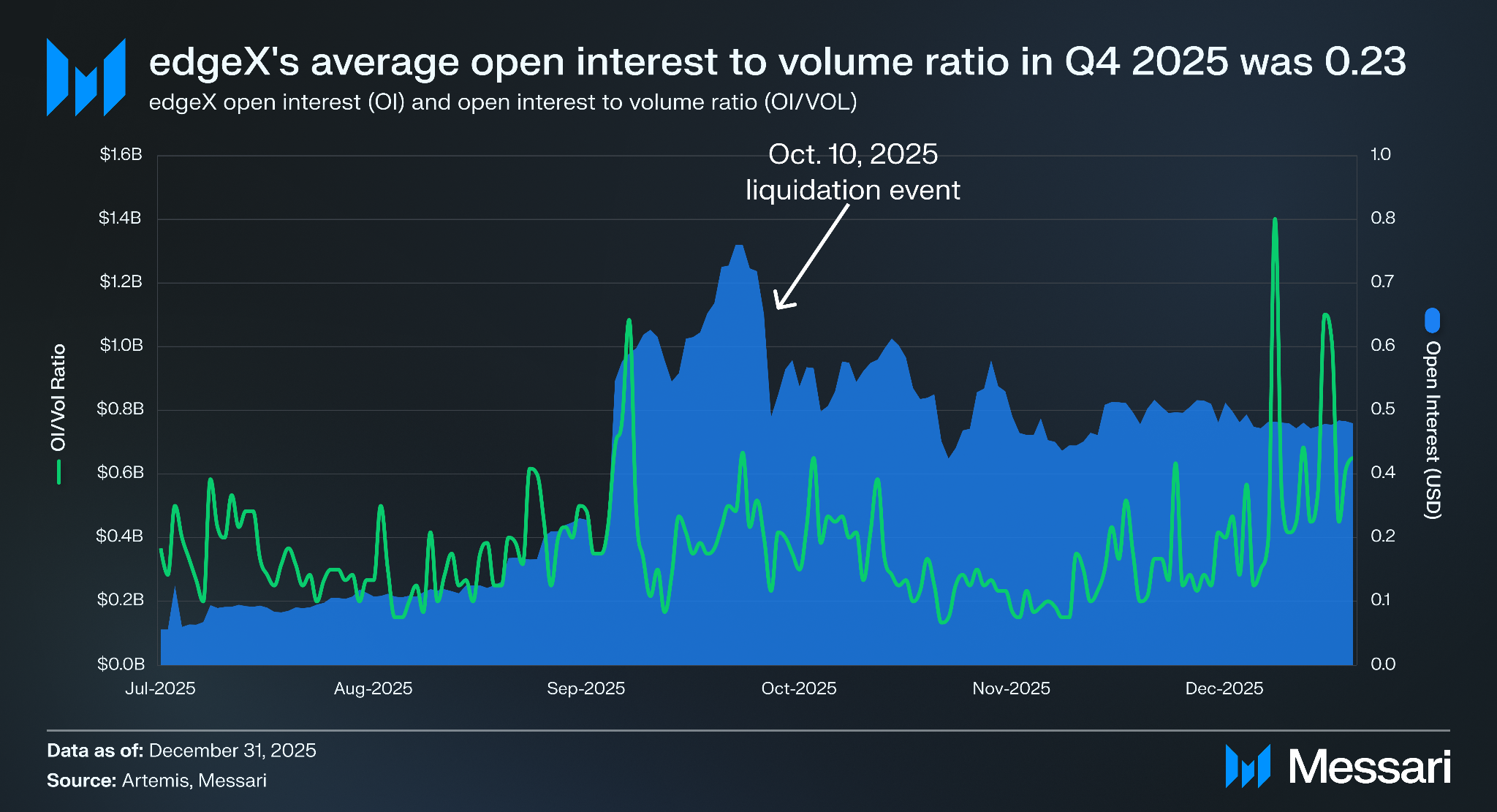
edgeX Open interest (OI) declined 31.2% QoQ, from $1 billion on Sept. 30, 2025, to $767.5 million by year-end. OI peaked at $1.3 billion on Oct. 6, 2025, before declining sharply following market volatility occurring on Oct. 10, 2025, which caused OI to fall 29.2%, indicating a rapid unwind of leverage across the platform. Following Oct. 10, 2025, OI stabilized in a lower range, bottoming at $648.6 million on Nov. 4, 2025, and remaining anchored in the mid-$700 million range through December 2025.
While absolute open interest declined, the OI-to-volume (OI/Vol) ratio increased across the quarter, rising 87.8% from 0.21 at the start of October 2025 to 0.4 by year's end. During Q4 2025, edgeX maintained an average OI/Vol ratio of 0.23. The increase was driven by lower trading volume rather than renewed leverage accumulation, with elevated November volumes compressing OI/Vol below 0.10 and signaling rapid position turnover. By late December, the OI/Vol ratio spiked to 0.84, indicating the persistence of open positions amid reduced volume. Overall, positioning on edgeX moved from high-turnover leverage early in the quarter to more stable exposure by year-end.
EDGE Stack Updates
edgeX’s V2 rollout is a transition to the EDGE stack, an app-specific execution layer designed to support multiple market types on shared, high-performance infrastructure. Built to deliver centralized exchange-like execution with cryptographic verifiability, the EDGE stack combines a modular multi-VM architecture with deterministic parallel execution, allowing latency-sensitive trading logic to run independently from generalized smart contract activity. FlashLane, a native dual-tier prioritization mechanism, reduces execution latency by bypassing standard mempool dynamics, while parallel Merkleization enables state updates to be computed concurrently across isolated market shards. This architecture allows spot and prediction markets to be added to edgeX without compromising execution quality. By separating unrelated onchain activity from order matching, the EDGE Stack delivers predictable performance across both spot and derivative markets.
Spot Markets and MARU Launch
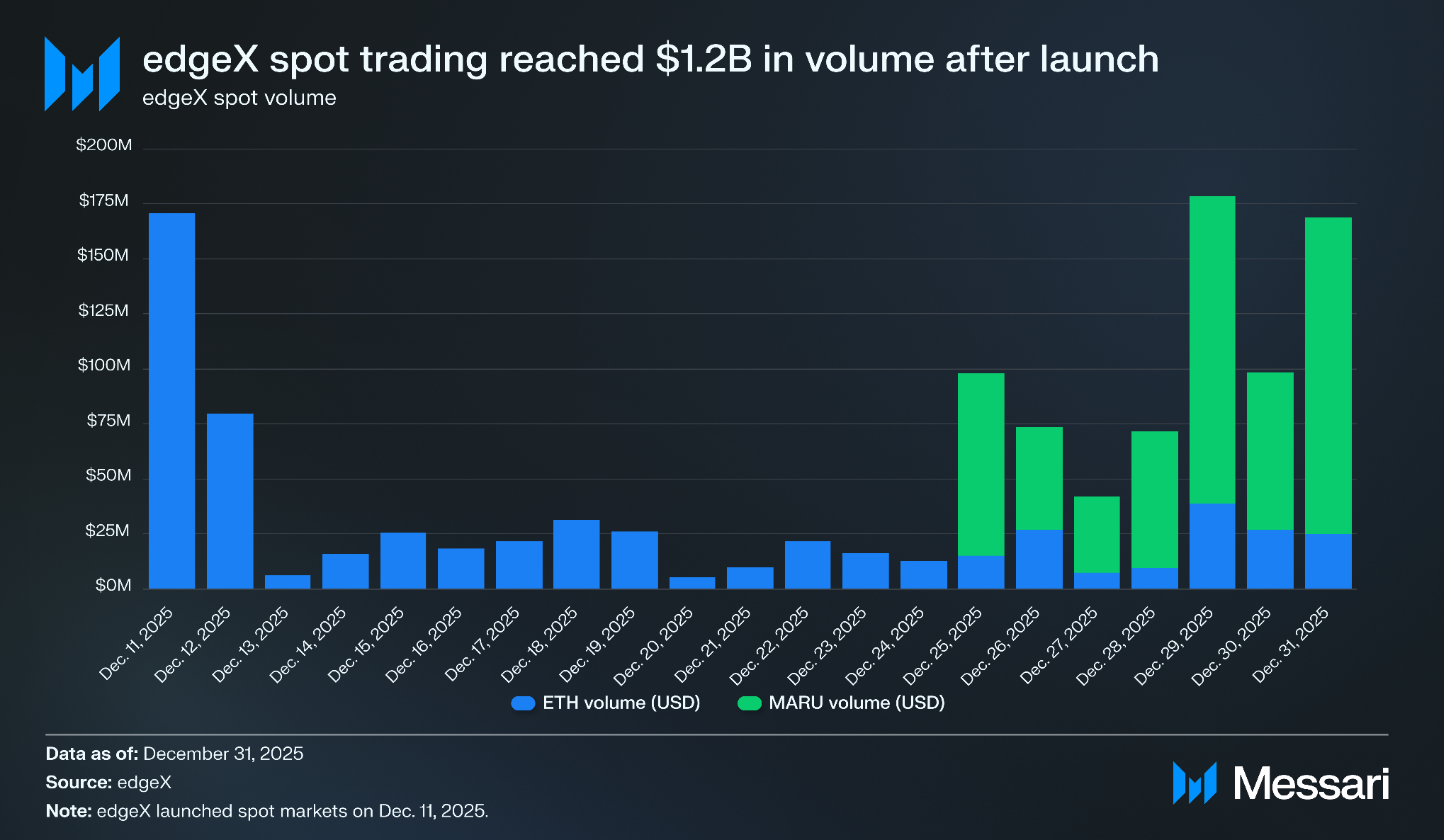
edgeX launched spot markets on Dec. 11, 2025, marking the first production deployment of the EDGE stack. Spot trading reached $1.2 billion in cumulative volume through year-end, initially driven by ETH markets before shifting toward MARU, edgeX’s own memecoin, following its Dec. 24 launch. ETH spot volume totaled $609.5 million, while MARU generated $582.1 million in volume despite trading for only the final week of the year.
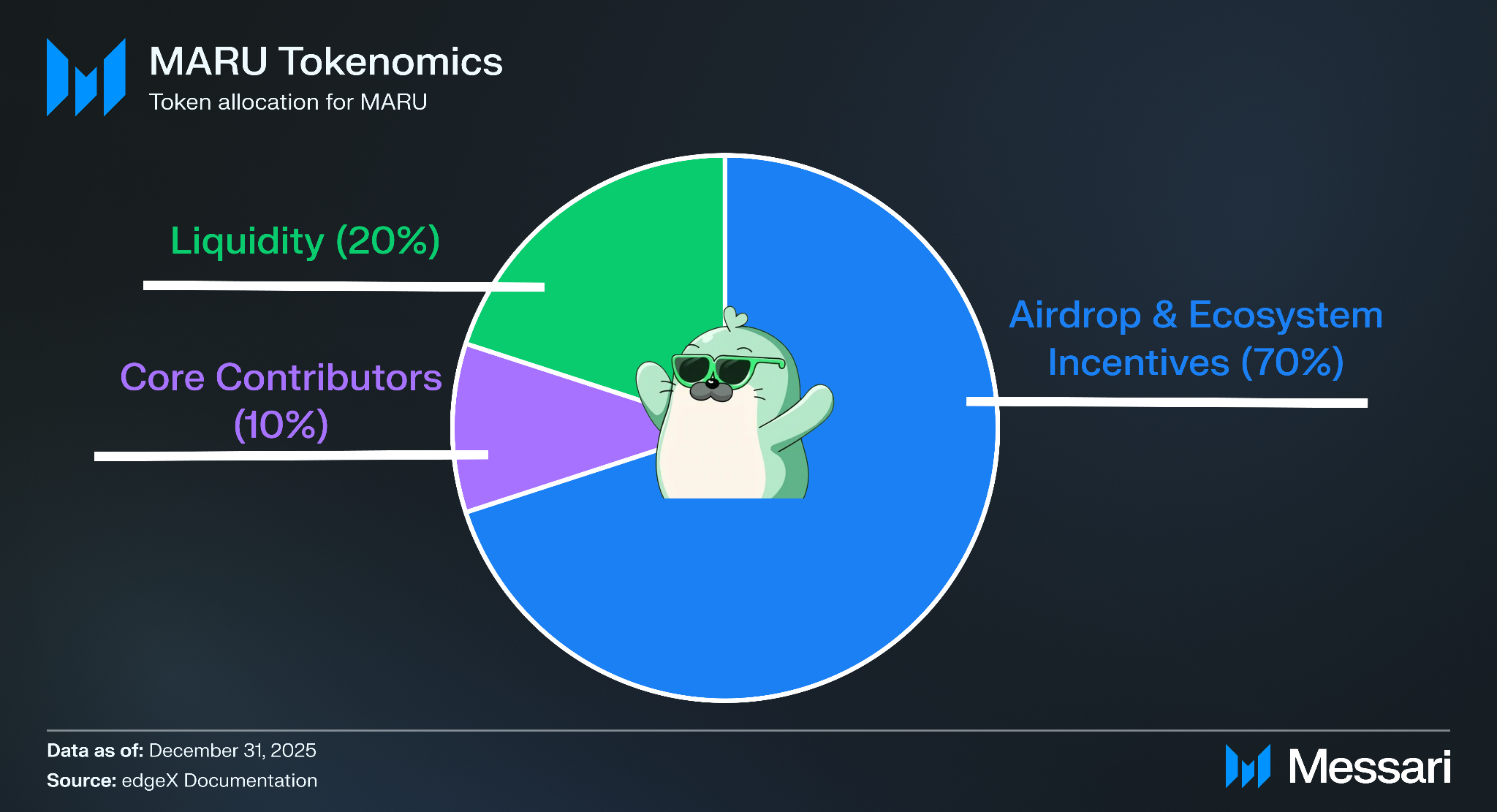
MARU was introduced as a community memecoin designed to represent the “everyday trader.” This positioning was reinforced through the token design and distribution. MARU has a fixed supply of 10 billion tokens, allocated as follows:
70% - Airdrops and ecosystem incentives (multi-round distribution to the community)
20% - Initial liquidity
10% - Core contributors (2-year lockup with 2 years of linear vesting)
The launch was paired with a Pre-TGE contribution program distributing 100 million MARU and 20 limited-edition EpicSer NFTs to recognize early and long-term edgeX community members. Eligibility criteria prioritized users with realized trading losses, active traders, high-engagement addresses, community messengers, and existing EpicSer holders.
Community Engagement
edgeX expanded its community presence and engagement throughout Q4 2025 through a combination of direct communication, social activation, in-person events, and contributor programs.
Community Call (Oct. 30, 2025): A Telegram-hosted community call providing product updates and roadmap context, allowing community members to engage directly with the edgeX team.
.edge Campaign (Nov. 3, 2025 - Dec. 3, 2025): A month-long social campaign designed to promote community loyalty and increase brand visibility. Participants completed social tasks such as adding “.edge” to usernames, following official edgeX accounts, and publishing original edgeX content across social platforms.
ETH Perpswick Trading Event (Nov. 4, 2025): An edgeX-sponsored trading competition held in New York, showcasing trading as an esports-style experience. The event served as an early proof of concept for live, competitive trading formats, with additional events planned.
Messenger Program Evolution (Nov. 13, 2025): The Messenger Program is edgeX’s community advocacy initiative that incentivizes high-impact users to promote the platform through referrals, education, and engagement. In November, the program evolved to include tiered rebase incentives and enhanced point accrual during incentive campaigns. Eligibility requires more than $80 million in trading volume and at least 50 verified referrals, aligning rewards with the most active and influential community contributors.
Japan Community Meetup (Dec. 7, 2025): A community-led meetup in Japan reflecting edgeX’s growing presence in key Asian markets. The event enabled local traders and users to connect and engage offline.
EDGE Ahead Community Call (Dec. 29, 2025): A year-end community call outlining upcoming developments, including new tradable assets, prediction markets, and progress towards the EDGE token launch.
Roadmap
Spot markets were the first step in the V2 transition into the EDGE stack open beta. With infrastructure for spot and derivative markets in production, the roadmap focuses on expanding to new asset classes and markets, which include:
RWA Perpetual markets: Expansion into real-world asset (RWA) perpetuals, including U.S. equities, commodities, and indices, enabling leveraged exposure to traditional financial markets using aggregated oracle pricing and derivatives-native settlement.
Third-Party Market Integrations: Support for externally launched markets deployed under defined risk parameters and oracle requirements, allowing developers and partners to introduce new products on edgeX’s execution infrastructure.
Prediction Markets: Native integration with Polymarket, enabling users to trade event-based markets alongside spot and perpetual products within a unified trading interface.
EDGE Token Distribution
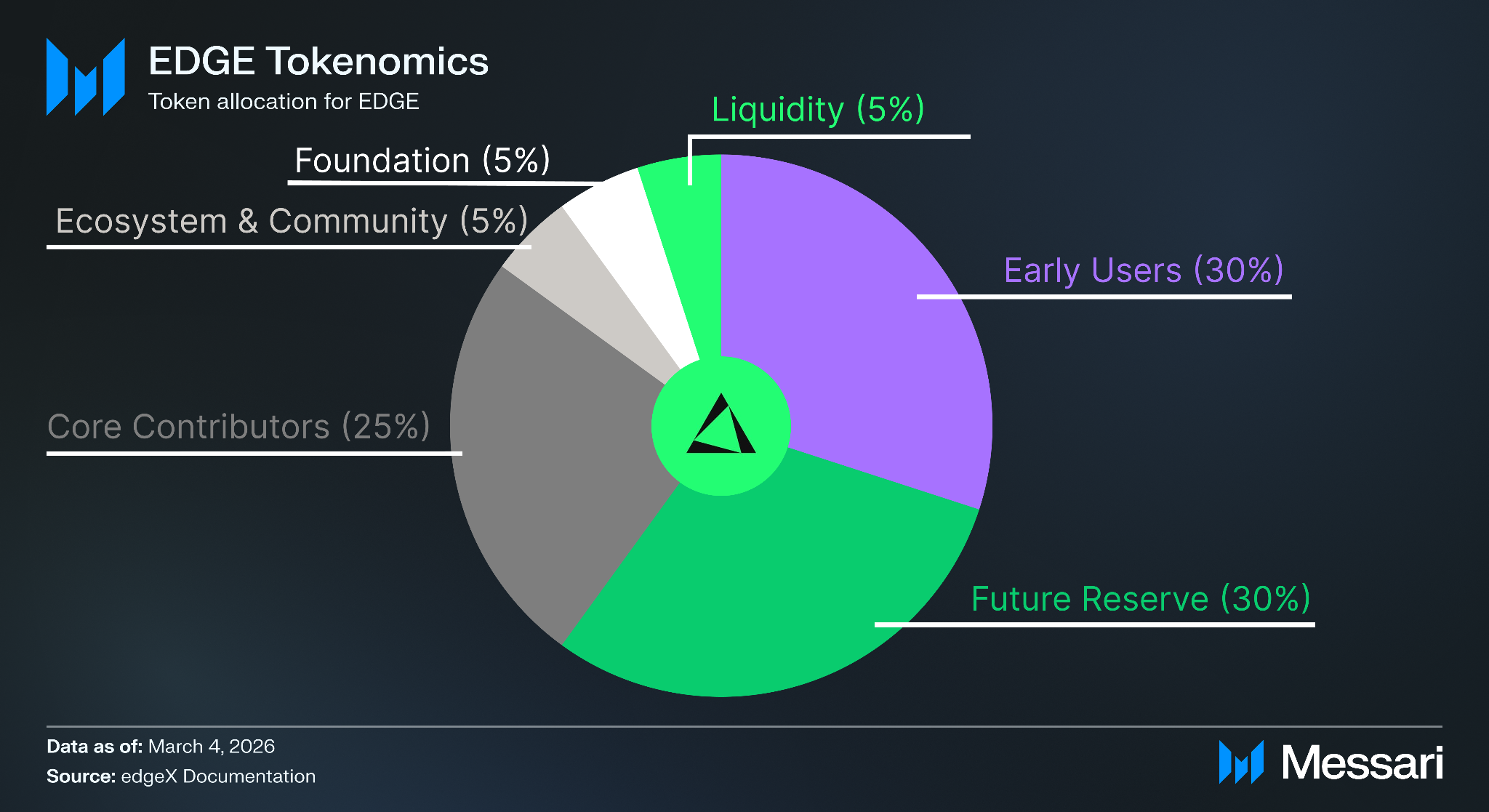
edgeX is targeting the end of Q1 2026 for the token generation event (TGE) of the EDGE token. EDGE will have a fixed total supply of 1 billion tokens, allocated as follows:
30% - Early Users: 25% comes from the genesis distribution that is fully unlocked at TGE, and 5% from the Pre-TGE Season (unlocked 24 hours after TGE).
30% - Future Reserve: Locked for 18 months after TGE, followed by 24 months of linear monthly vesting.
25% - Core Contributors: Locked for 24 months after TGE, followed by 24 months of linear vesting.
5% - Liquidity: Initial liquidity at TGE.
5% - Ecosystem & Community: Locked for 12 months after TGE, followed by 24 months of linear monthly vesting.
5% - Foundation: Locked for 12 months after TGE, followed by 24 months of linear monthly vesting.
The Pre-TGE season went live on Jan. 8, 2026, and is the primary incentive mechanism ahead of the EDGE TGE. The program replaces the Open Season campaign and is designed to reward organic platform usage. Participants earn XP each week, which determines eligibility for the Pre-TGE allocation. XP is distributed based on trading activity, vault and TVL participation, referrals, and community engagement, with multipliers favoring spot trading, mobile usage, MARU holders, and active community contributors.
Closing Summary
edgeX closed Q4 2025, having demonstrated resilience through one of the most disruptive periods for onchain derivatives in the past year. Despite a $19 billion market-wide liquidation event in October 2025 and the normalization of incentive-driven capital flows, the platform continued to scale across key metrics. TVL grew 33.2% QoQ to $352.9 million, cumulative users surpassed 181,270, and perpetual trading volume rose 174.5% QoQ to $4.5 billion, driving $155.8 million in fees that accrued directly to the treasury. Importantly, these results were achieved alongside a normalization in open interest and trading activity, signaling healthier positioning dynamics rather than excess leverage. Deep orderbook liquidity remained a consistent differentiator, supporting execution quality and capital retention even as broader risk appetite declined across the perp DEX sector.
edgeX enters its next growth phase with the EDGE Stack live in open beta, servicing active spot markets. The transition to a multi-market trading platform is underway, with upcoming expansion into real-world asset perpetuals, prediction markets, and third-party integrations built on shared execution infrastructure. At the same time, the launch of the Pre-TGE Season XP campaign promotes engagement ahead of the EDGE token generation event. These developments position edgeX to deliver high-quality execution across multiple market types within an increasingly competitive perp DEX landscape.
This report was commissioned by edgeX. All content was produced independently by the author(s) and does not necessarily reflect the opinions of Messari, Inc. or the organization that requested the report. The commissioning organization may have input on the content of the report, but Messari maintains editorial control over the final report to retain data accuracy and objectivity. Author(s) may hold cryptocurrencies named in this report. This report is meant for informational purposes only. It is not meant to serve as investment advice. You should conduct your own research and consult an independent financial, tax, or legal advisor before making any investment decisions. Past performance of any asset is not indicative of future results. Please see our Terms of Service for more information.
No part of this report may be (a) copied, photocopied, duplicated in any form by any means or (b) redistributed without the prior written consent of Messari®.
Eric is a research analyst at Messari and an ambassador for Maple Finance. He previously was a Product Manager for FINTRX and is passionate about DeFi and AI.
Eric is a research analyst at Messari and an ambassador for Maple Finance. He previously was a Product Manager for FINTRX and is passionate about DeFi and AI.