The Pentad alliance established a ₳70.0 million Critical Integrations fund to secure institutional infrastructure. This formal coordination between five core entities focuses on onboarding tier-one stablecoins, oracles, and custodians to expand the network’s institutional footprint.
The Cardano Card launched via Wirex, enabling ADA payments at 100 million merchants in 190 countries. The integration enables consumer payments on the Cardano blockchain, increasing the network's utility. Beyond ADA, the platform supports BTC, ETH, SOL, and various stablecoins.
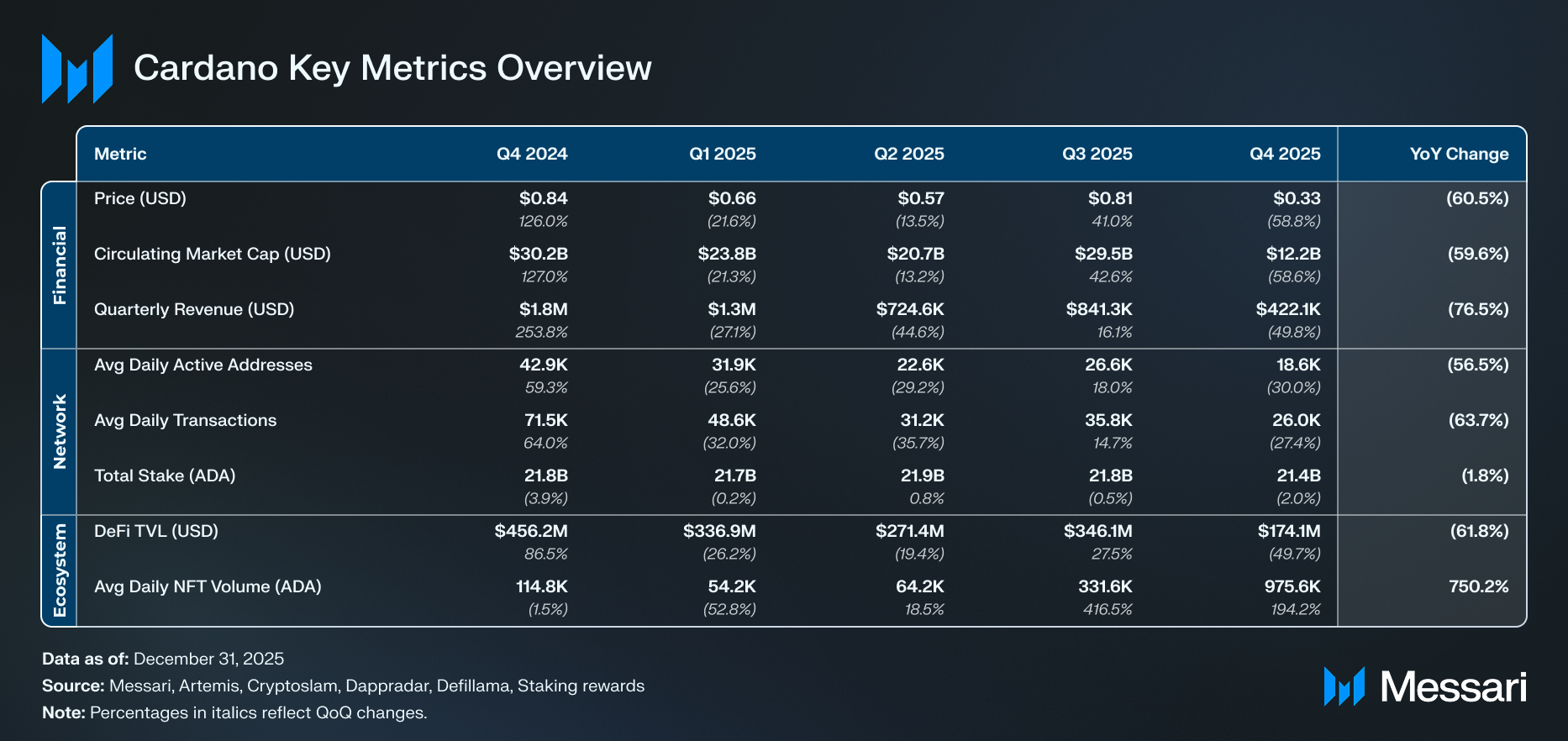
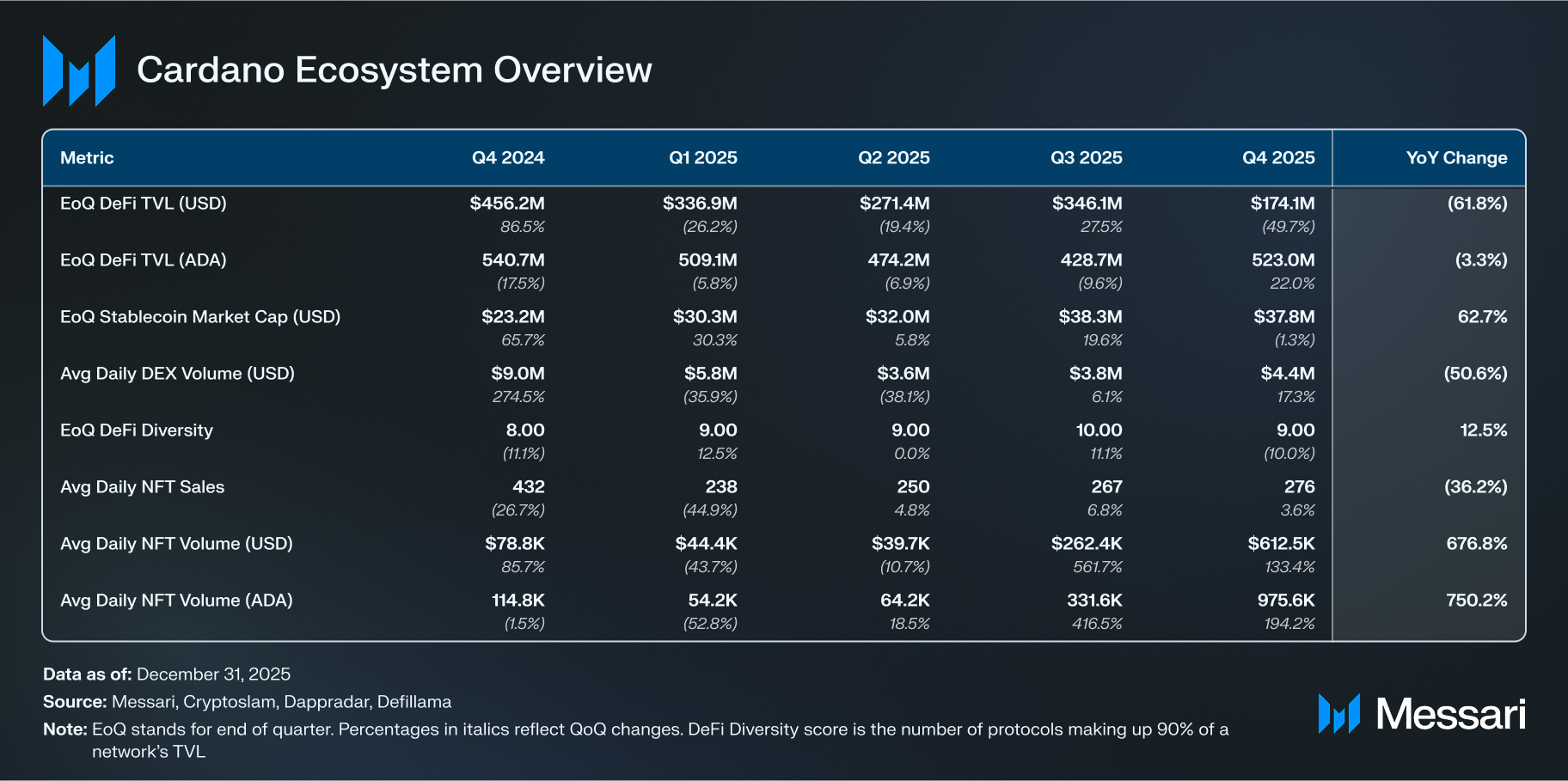
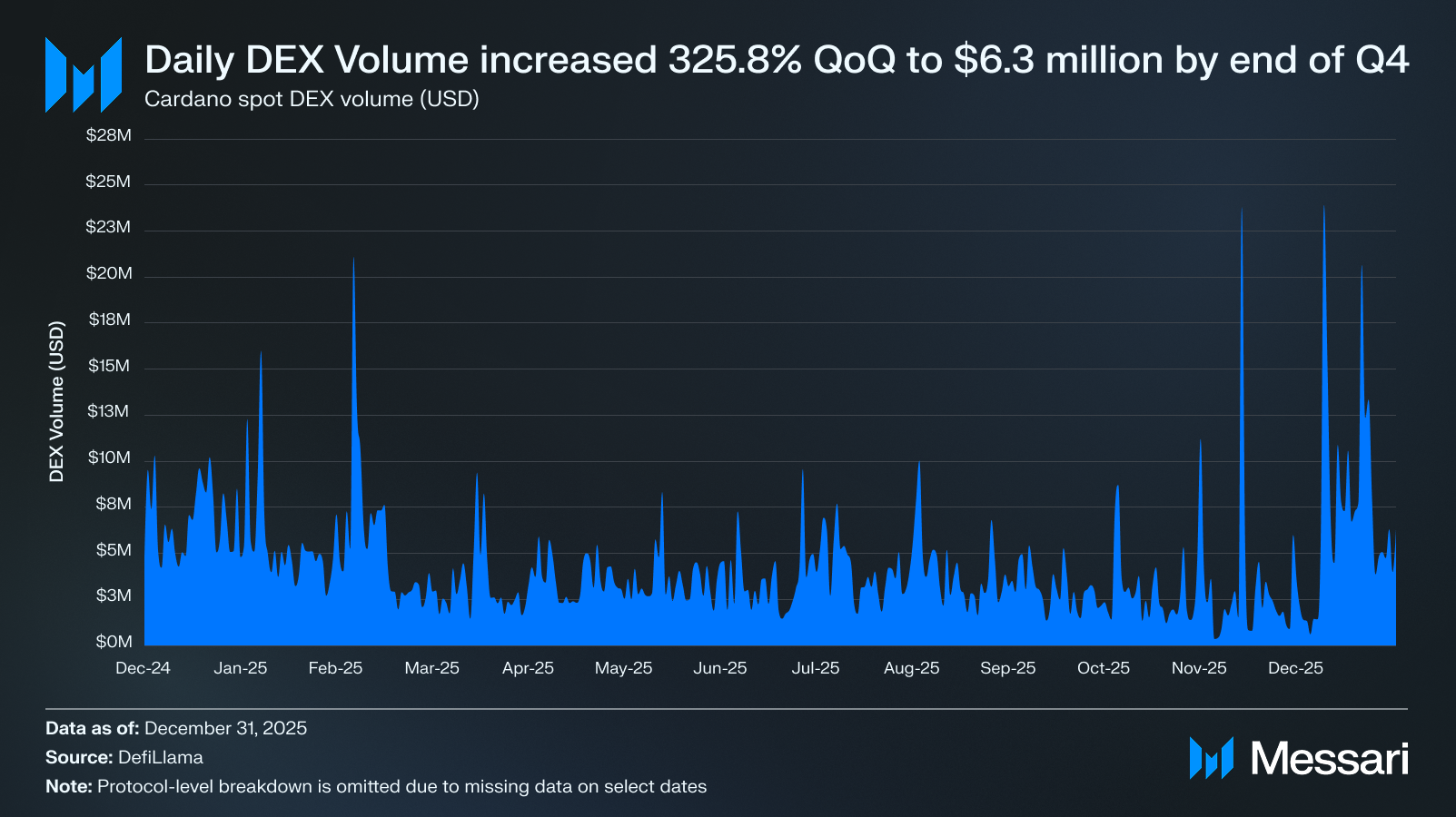
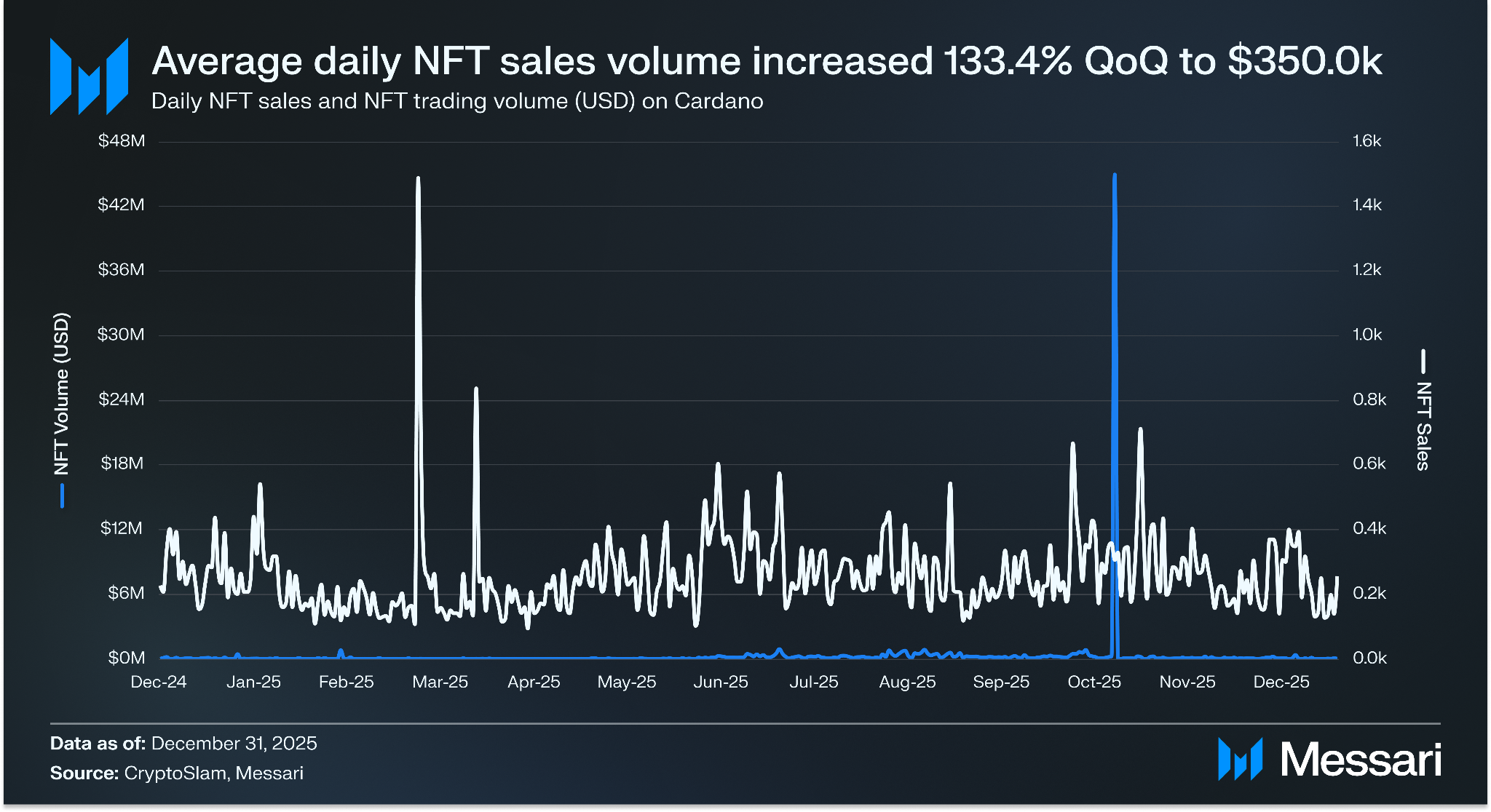
Average daily NFT trading volume surged 133.4% QoQ, while average daily DEX volume grew 17.3% to $4.4 million. Minswap remains the dominant DEX, capturing 72.4% of the network's volume.
On Nov. 21, 2025, a malformed transaction exploited a 2022 deserialization bug, resulting in a network partition. This caused newer nodes to accept invalid data while older nodes correctly rejected the malformed hash. Within 14.5 hours, the network converged back to a single canonical chain.
A snap election restored the Constitutional Committee following the Cardano Atlantic Council’s resignation. The vote maintained the onchain ratification threshold, demonstrating the resilience of its governance mechanics under pressure.
Primer
Cardano (ADA) is a Proof-of-Stake (PoS) Layer-1 blockchain launched in 2017. Cardano aims to provide security, scalability, and functionality to decentralized applications and systems building atop the network. In addition to its community of developers, node operators, and projects, entities like Input | Output, Cardano Foundation, Intersect, EMURGO, Pragma, and others support the network’s development, adoption, and finances. Enacted through the Voltaire (Governance) phase of its roadmap, Cardano has transitioned to a community-driven network, where each ADA holder can influence the future roadmap, network rules, funding, and protocol upgrades via onchain voting and elected committees. As of December 2025, Cardano governance is fully decentralized, supported by a tripartite ‘government’ comprising the Constitutional Committee, delegated representatives (DReps), and Stake Pool Operators (SPOs).
With a dedicated community of users and developers, Cardano has demonstrated staying power. After the launch of smart contract support via the Alonzo hard fork in 2021, Cardano began to compete in more traditional crypto markets, such as DeFi and NFTs. For a full primer on Cardano, refer to our Initiation of Coverage report.
ADA is the native currency of Cardano that is used as the primary medium of exchange when transacting on the network. ADA has three primary network-level use cases:
To stake as a stake pool operator or delegator to help secure the network, earn token rewards, and participate in protocol governance.
In Cardano's liquid democracy model, ADA holders delegate their voting power to Delegated Representatives (DReps), who then vote on governance proposals on behalf of the delegators. A DRep's influence is proportional to the total ADA delegated to them. Additionally, the Cardano community allocates treasury funds through onchain governance proposals approved by delegated representatives (DReps) and the Constitutional Committee. In 2025, these votes directed ADA from the Treasury to fundProject Catalyst and other initiatives.
ADA’s circulating token supply inflates until it reaches its maximum supply of 45 billion tokens. After each five-day epoch, 0.3% of ADA reserves (i.e., the ADA not in circulation) are distributed as SPO rewards, allocated in proportion to each pool’s total delegated stake and adjusted for pool performance (uptime and blocks produced) and the operator’s pledged ADA. Inflation trends towards zero as the reserves deplete and the circulating supply approaches 45 billion.
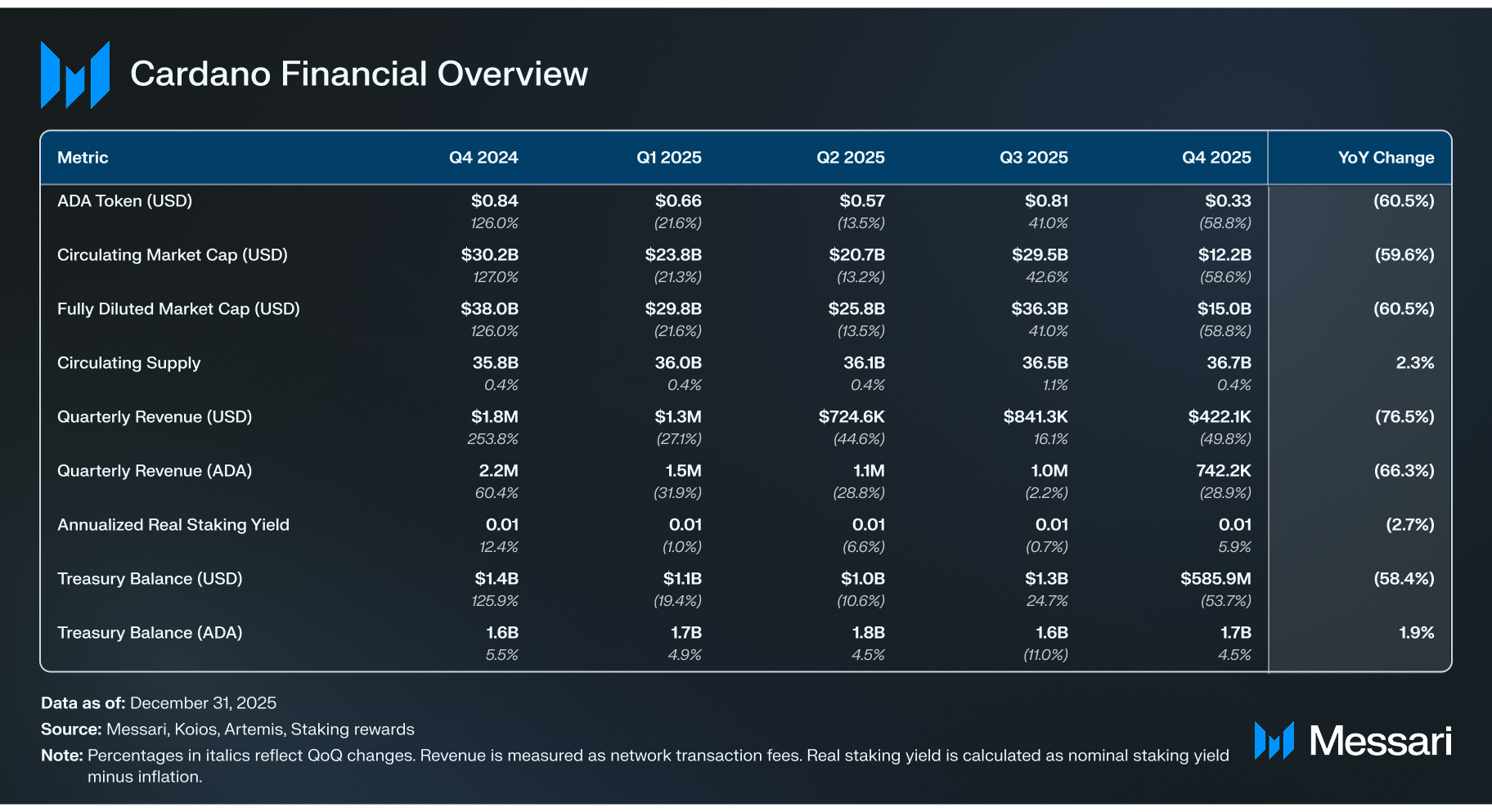
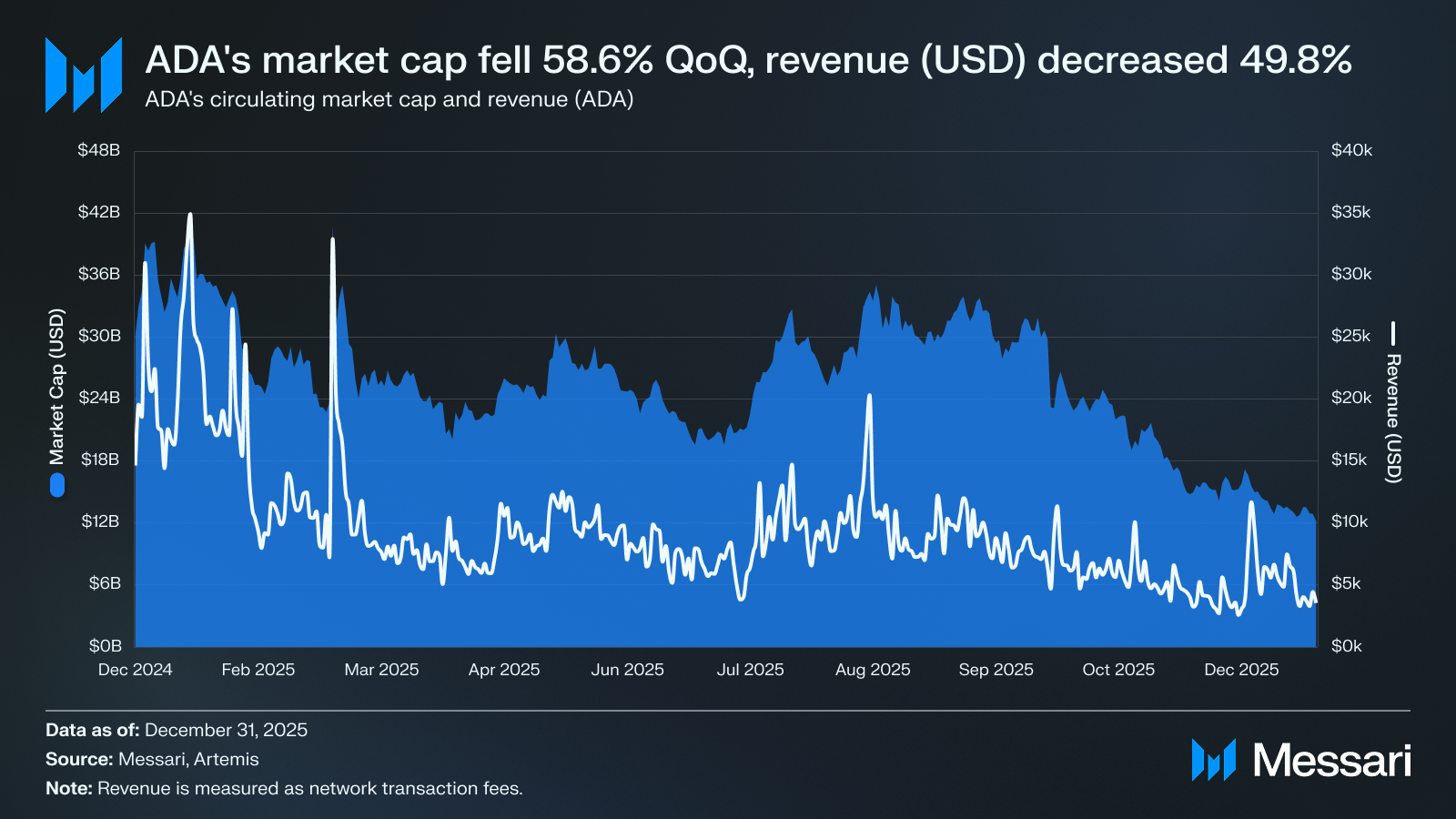
ADA’s price fell 58.6% QoQ to $0.33 at the end of Q4, lowering its circulating market cap from $29.5 billion to $12.2 billion. At quarter’s end, ADA’s circulating market cap rank was 11th, down one spot QoQ from 10th at Q3-end.
Each transaction on Cardano incurs a network transaction fee to cover processing and storage costs. Fees are calculated by a minimum fee plus a variable fee based on transaction size. Fees (USD) decreased 38.0% QoQ to $524,202, while fees (ADA) declined 28.9% QoQ to 742,242 ADA.
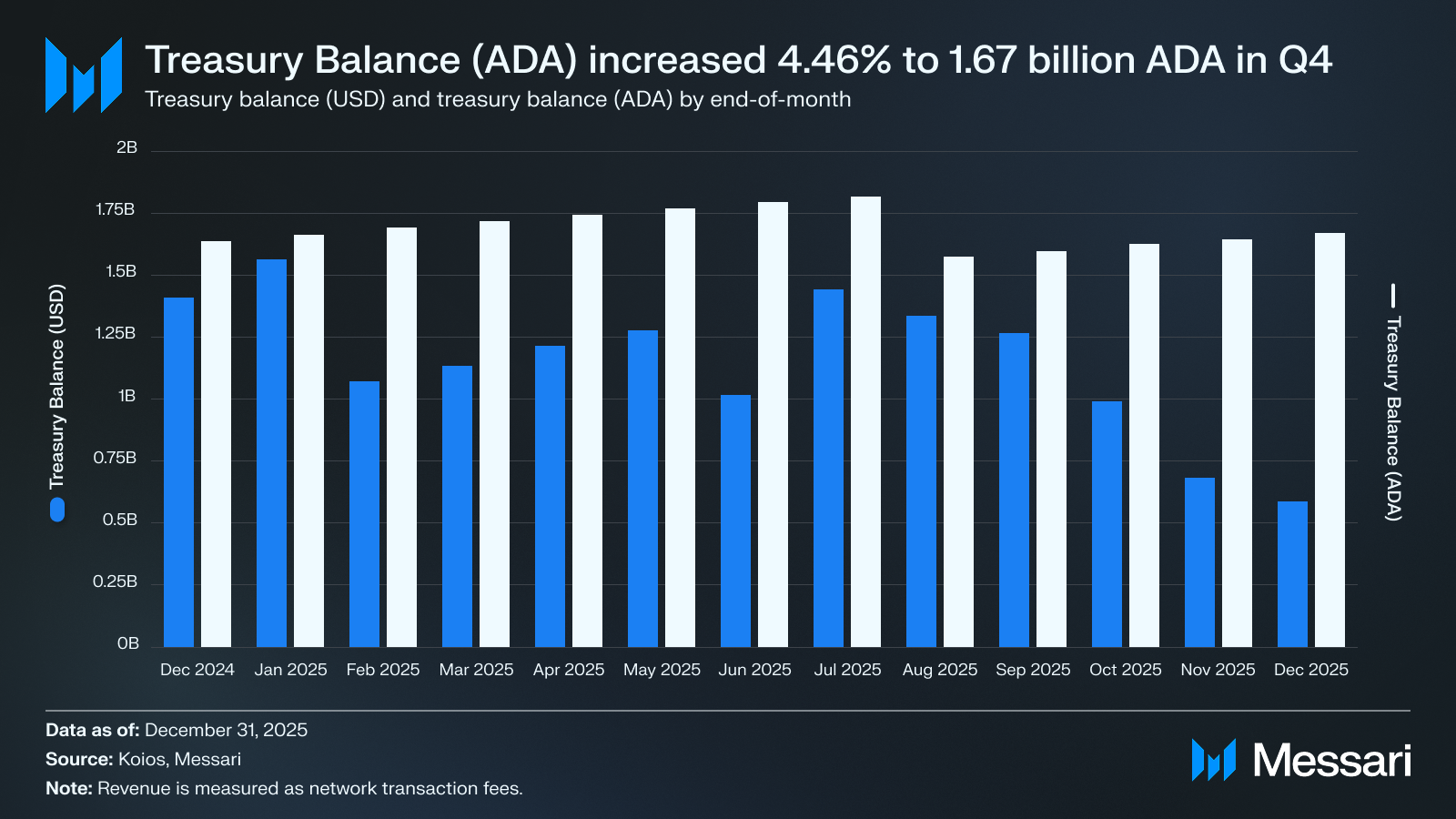
Cardano’s treasury balance (ADA) increased 4.46% QoQ to 1.67 billion ADA, up 1.9% YoY. Its USD value decreased 53.7% QoQ to $585.9 million, down 58.4% YoY. The treasury provides funds to maintain and develop Cardano, with resources deployed through community governance following the Plomin hard fork on Jan. 29, 2025. Currently, 20% of Cardano’s transaction fees are allocated to the treasury, which can be adjusted through governance.
Network Analysis
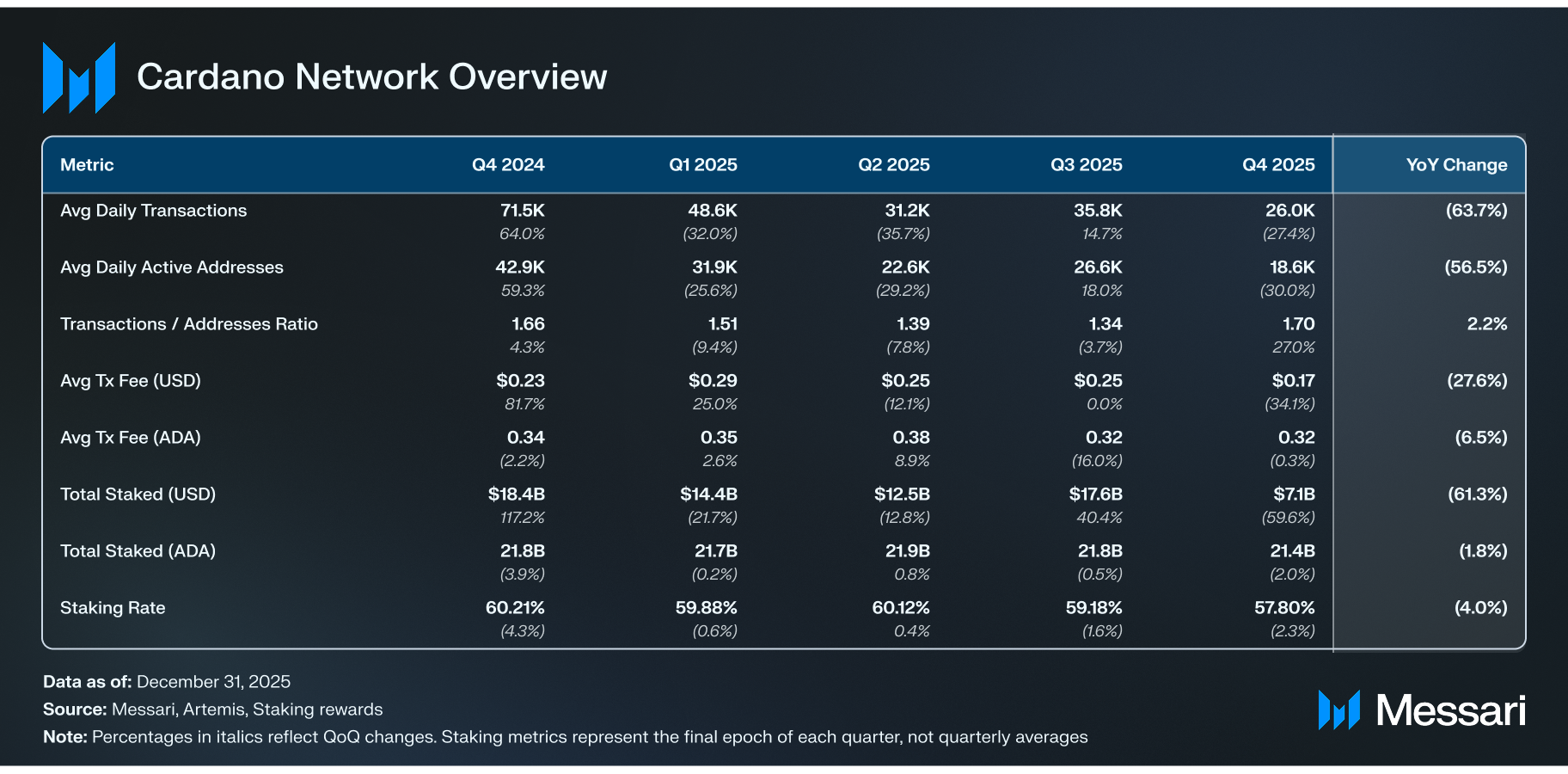
Cardano’s average daily transactions fell 27.4% QoQ to 25,970, while average daily active addresses fell 30.0% QoQ to 18,641. The transactions-to-addresses ratio rose 27.0% QoQ to 1.70, reflecting higher activity per user despite the drop in total addresses.
Cardano’s average transaction fee (ADA) was flat at 0.32, while the average transaction fee (USD) fell 34.1% QoQ to $0.17, reflecting ADA’s depreciation during the quarter.
Total staked ADA declined 2.0% QoQ to 21.4 billion, and the staking rate decreased 2.3% QoQ to 57.80%. In USD terms, total stake fell 59.6% QoQ to $7.1 billion, driven by lower ADA prices alongside the decline in staked supply.
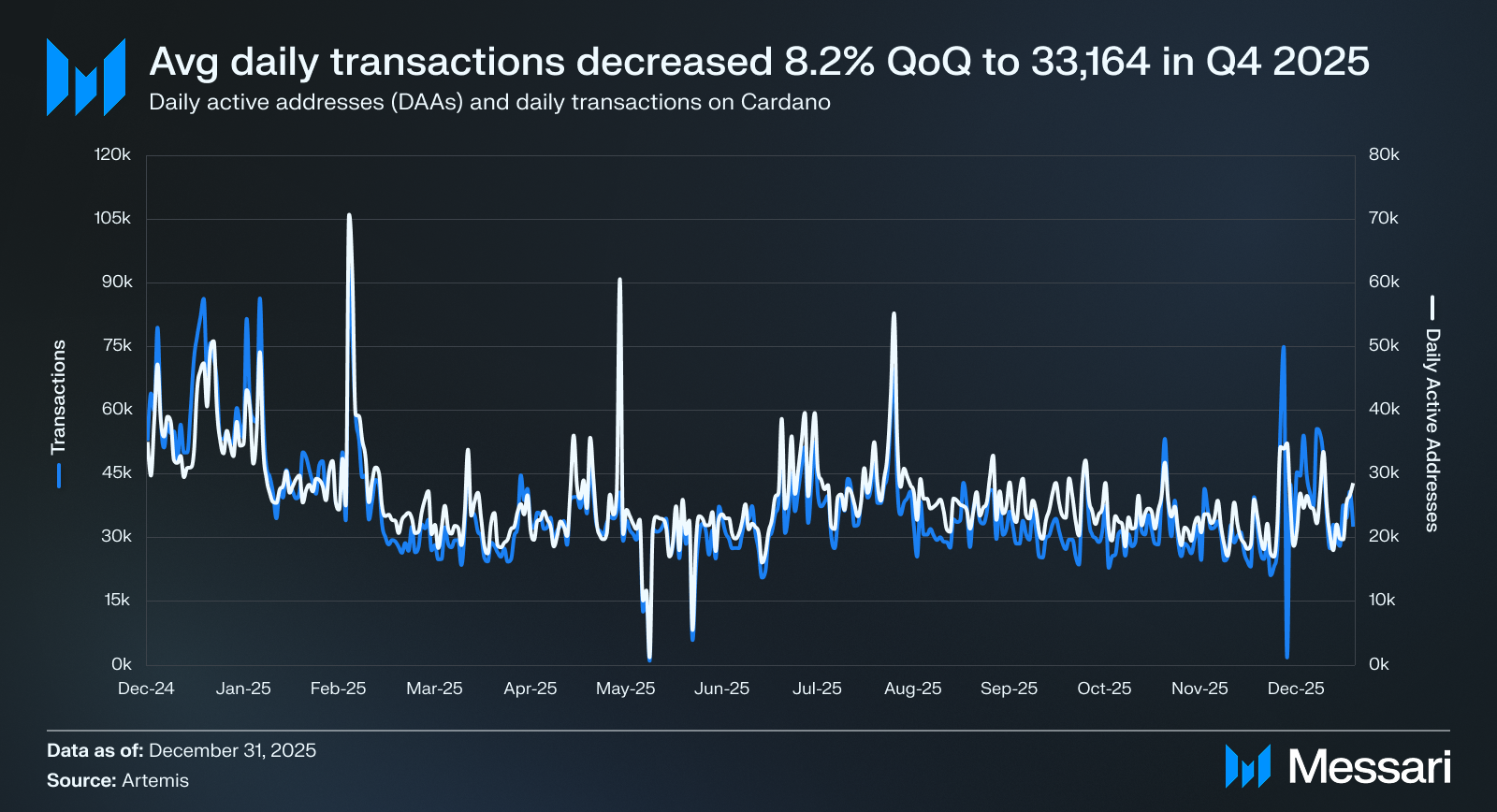
Cardano’s average daily transactions fell 8.2% QoQ to 33,164, while daily active addresses fell 12.4% QoQ to 23,566. The transactions-per-address ratio rose 4.9% QoQ to 1.41, indicating slightly higher activity per address.
Governance Updates
Constitutional Committee Snap Election
Cardano’s governance continuity was tested in November 2025 following the resignation of the Cardano Atlantic Council from the Constitutional Committee (CC), effective Nov. 25, 2025. This departure reduced the committee to six members, dropping it below the protocol-mandated minimum of seven required to validate onchain governance actions. To prevent disruption to the ratification process, Intersect facilitated a snap election to restore the committee’s operational threshold.
The election process was fast-tracked, with candidate registration opening on Nov. 17, 2025, and a voting window for Delegated Representatives (DReps) held from Dec. 1 to Dec. 5, 2025. The race was highly competitive, centering on two primary candidates: Cardano Curia and Christina Gianelloni. The final results highlighted a nuance in Cardano’s liquid democracy. Christina Gianelloni received more individual DRep votes (44 vs. 33). However, Cardano Curia secured the victory based on ADA voting power, commanding approximately 1.68 billion ADA in delegated stake compared to Gianelloni’s 1.4 billion ADA.
The Civics Committee ratified the result to restore the CC to seven members immediately, with the governance action to seat Cardano Curia being enacted on Dec. 15, 2025. To acknowledge the high level of community support for the runner-up and to bolster future resilience, the committee proposed a follow-up action to add Gianelloni as an "alternate" or eighth member. This ensures that future vacancies will not immediately trigger a governance crisis, providing a buffer against the minimum size requirement.
Net Change Limit (NCL) Extension
As 2025 drew to a close, the community addressed a time-sensitive fiscal hurdle related to the Net Change Limit (NCL), the constitutional safeguard that caps total treasury withdrawals over a specific period to ensure long-term sustainability. The original 2025 NCL, which set a ceiling of 350 million ADA, was slated to expire at the conclusion of Epoch 604 (Jan. 4, 2026).
The expiration posed a technical risk to treasury operations. Because treasury withdrawals require a one-epoch delay for enactment, any withdrawal proposal ratified in the final epoch of 2025 would not have been paid out until after the limit had expired, potentially rendering it unconstitutional. To maintain continuity, a governance action was submitted in late November to extend the 2025 NCL by eight epochs, pushing the expiration to Feb. 8, 2026 (the end of Epoch 612).
This extension preserved the existing 350 million ADA cap while providing the necessary "bridge" for the community to finalize the 2026 Budget Framework. The action was ratified with support from 83.8% of active DRep voting stake, successfully preventing a "spending cliff" and ensuring that critical ecosystem maintenance and development projects remained funded during the transition into the new fiscal year.
Ecosystem Analysis
DEXs
Average daily DEX volume on Cardano increased 17.3% QoQ to $4.44 million in Q4. The Cardano network is home to several DEXs, such as:
Minswap remains Cardano's dominant DEX, capturing 72.4% of the network's total swap volume. In Q4, the protocol achieved two major milestones: its first major exchange listing on KuCoin (Dec. 18), which introduced a 3 million MIN incentive campaign, and the activation of its first buyback-and-burn mechanism (Dec 21), using protocol fees to reduce token supply. Its average daily volume grew 13.3% QoQ to $3.22 million.
Splash is a DEX launched in July 2024 after a token sale for SPLASH raised 17.2 million ADA in May. Splash also worked to develop snek.fun, a protocol similar to pump.fun on Solana that allows users to launch and trade tokens easily. The protocol's average daily volume fell 72.7% QoQ to $116,393 as trading activity shifted toward newer protocols like Danogo.
WingRiders is a DEX designed to provide automated market-making (AMM) for token swaps, liquidity provision, ADA auto-staking, and yield farming. The WRT token, with a total supply of 100 million, enables governance, yield boosting, discounted NFT and crypto purchases, and collateral use. WingRiders' average daily volume grew 84.9% to $546,092. The platform continues to differentiate itself through features like ADA auto-staking.
Danogo was the standout performer of the quarter. The protocol's daily volume at quarter-end increased 44.8% QoQ to $85,010, driven by its fixed and flexible rate pools and leveraged trading features.
MuesliSwap, Cardano’s first operational DEX, focused on infrastructure development in Q4 via Project Catalyst proposals, including the DevX Wallet pilot and a Decentralized Batcher Framework. Despite these technical strides, its average daily volume decreased 78.6% QoQ to $4,469.
DeFi
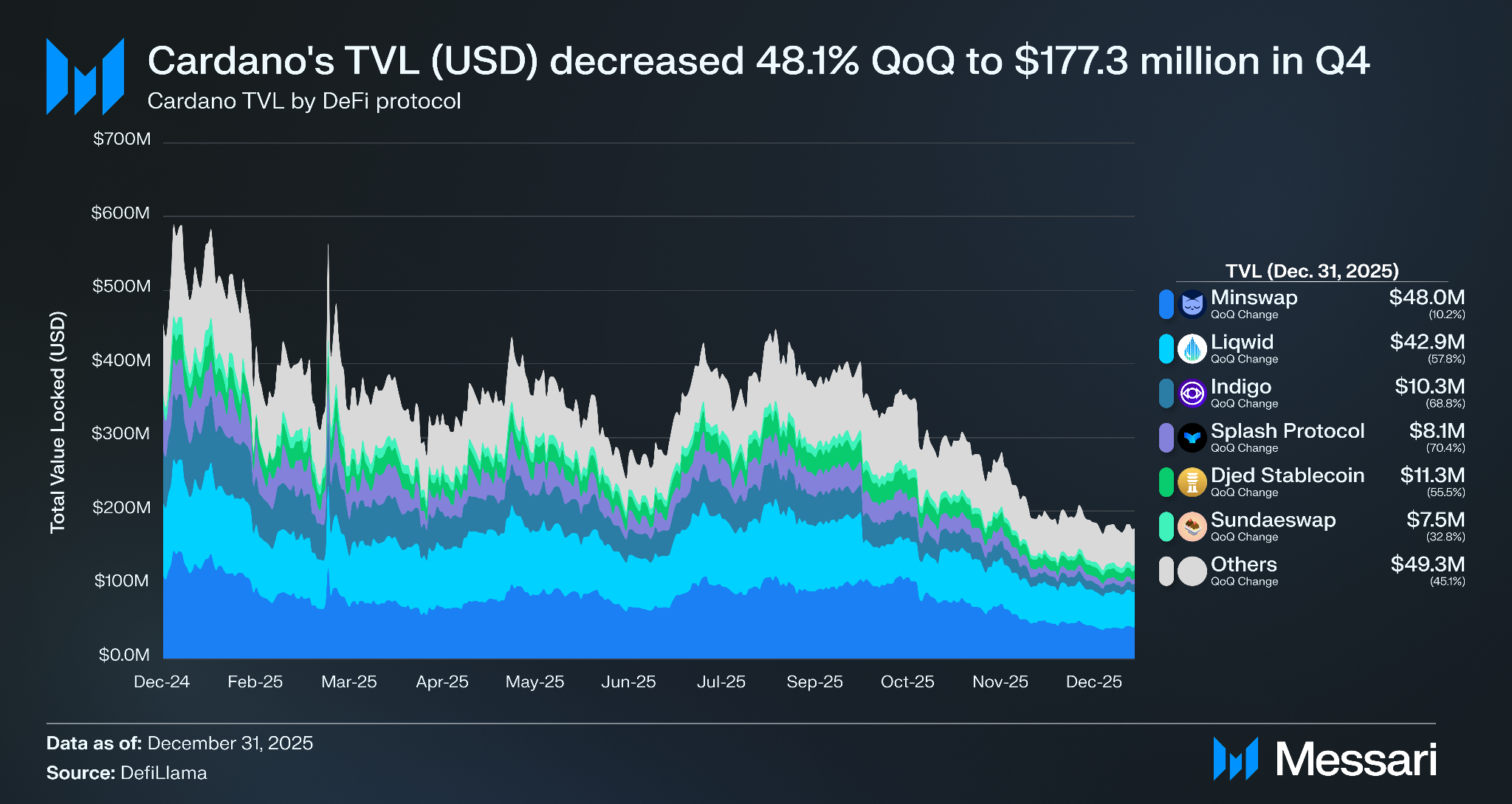
Cardano’s DeFi TVL decreased 48.1% QoQ to $177.3 million in Q4, compared to an industry-wide DeFi TVL decrease of 25.2%. Cardano’s DeFi diversity score (i.e., the number of protocols making up 90% of a network's TVL) decreased from 10 back to 9, meaning TVL slightly consolidated across top protocols.
The TVL of Minswap, the most popular DEX on Cardano by volume, decreased by 10.2% QoQ to $48.0 million, but its market share increased to 27.0%. By outperforming the broader market, Minswap reclaimed its status as the largest protocol on the network.
Liqwid is a lending and borrowing protocol on Cardano built for Cardano-native assets. The protocol introduced qTokens, which are interest-bearing tokens representing collateral in lending pools. Liqwid’s TVL fell 57.8% QoQ to $42.9 million, resulting in its TVL share decreasing to 24.2% and losing its position as the network's top protocol.
Indigo is a synthetics platform that offers iUSD, iBTC, iETH, and iSOL. Governance and fee distribution run through the INDY token and the Indigo DAO. Indigo’s TVL decreased by 68.8% QoQ, reaching $10.3 million with a market share of 5.8%. The protocol faced significant headwinds in Q4 amid cooling demand for synthetic assets.
Splash is a DEX launched in July 2024 after a token sale for SPLASH raised 17.2 million ADA in May. Splash also worked to develop snek.fun, a protocol similar to pump.fun on Solana that allows users to launch and trade tokens easily. TVL on Splash Protocol fell 70.4% QoQ to $8.1 million, reflecting a retreat from the growth seen in previous quarters.
Sundaeswap is one of the earliest decentralized exchanges on Cardano, providing liquidity and facilitating token swaps. In Q4, Sundaeswap’s TVL decreased 32.8% to $7.5 million, yet its market share improved slightly to 4.2%. This performance indicates that Sundaeswap remains a stable pillar of the ecosystem.
Infrastructure
In Q4 2025, Cardano’s core development entities focused on hardening the network’s performance, security, and cross-chain utility to support the next generation of decentralized applications.
In October 2025, Input Output Global (IOG) transitioned the Ouroboros Leios protocol from research (IOR) to active engineering (IOE). This milestone marked the start of implementing a multi-layered block architecture comprising Input, Endorsement, and Ranking blocks, aimed at dramatically increasing throughput while maintaining the network’s decentralized security model. Input Blocks carry transaction data, Endorsement Blocks verify that data through node voting, and Ranking Blocks reference these endorsements to establish the final, official order of the ledger. A dedicated tracking website, introduced in December 2025, allows the community to follow development progress in near real-time.
In November 2025, during the UPLC 2025 conference, IOG's formal methods team demonstrated Blaster, a new toolset for certified UPLC compilation. Blaster is designed to verify Cardano smart contracts, specifically to check the correctness of Untyped Plutus Core (UPLC) programs. By ensuring that the machine-level code executed on the blockchain matches the developer's source intent, it eliminates a class of smart contract vulnerabilities.
In December 2025, Intersect formally proposed the Protocol Version 11 (PV11) "Intra-Era" hard fork. Targeted for early 2026, this proposal focuses on enforcing VRF uniqueness for stake pools, unifying built-in Plutus functions, and introducing native support for BLS12-381 and multi-scalar multiplication (MSM) to accelerate Zero-Knowledge proof verification.
IOG introduced Cavefish, a light client designed for mobile and low-resource environments. Using intent-based signatures and privacy-preserving cryptography, the protocol enables users to interact with service providers securely without syncing the full blockchain or revealing their entire transaction history.
The Chain Partition Incident
On Nov. 21, 2025, a developer using AI tools to test code inadvertentlytriggered a network split on Cardano by replaying a malformed delegation transaction. This "poisoned" transaction exploited a legacy deserialization bug present in newer node versions, causing a 14-hour, partial network disruption. This split the network into a "poisoned" chain accepted by updated nodes and a "healthy" canonical chain maintained by older infrastructure, leading exchanges like Coinbase to suspend ADA deposits, swaps, and withdrawals. While block production continued and funds remained safe, Charles Hoskinson labeled the act a premeditated attack and engaged federal authorities, a move that prompted the resignation of a senior IOG developer in protest of criminalizing code exploits. The network eventually converged following the rapid deployment of node versions 10.5.2 and 10.5.3, which corrected the hash-validation logic.
Stablecoins
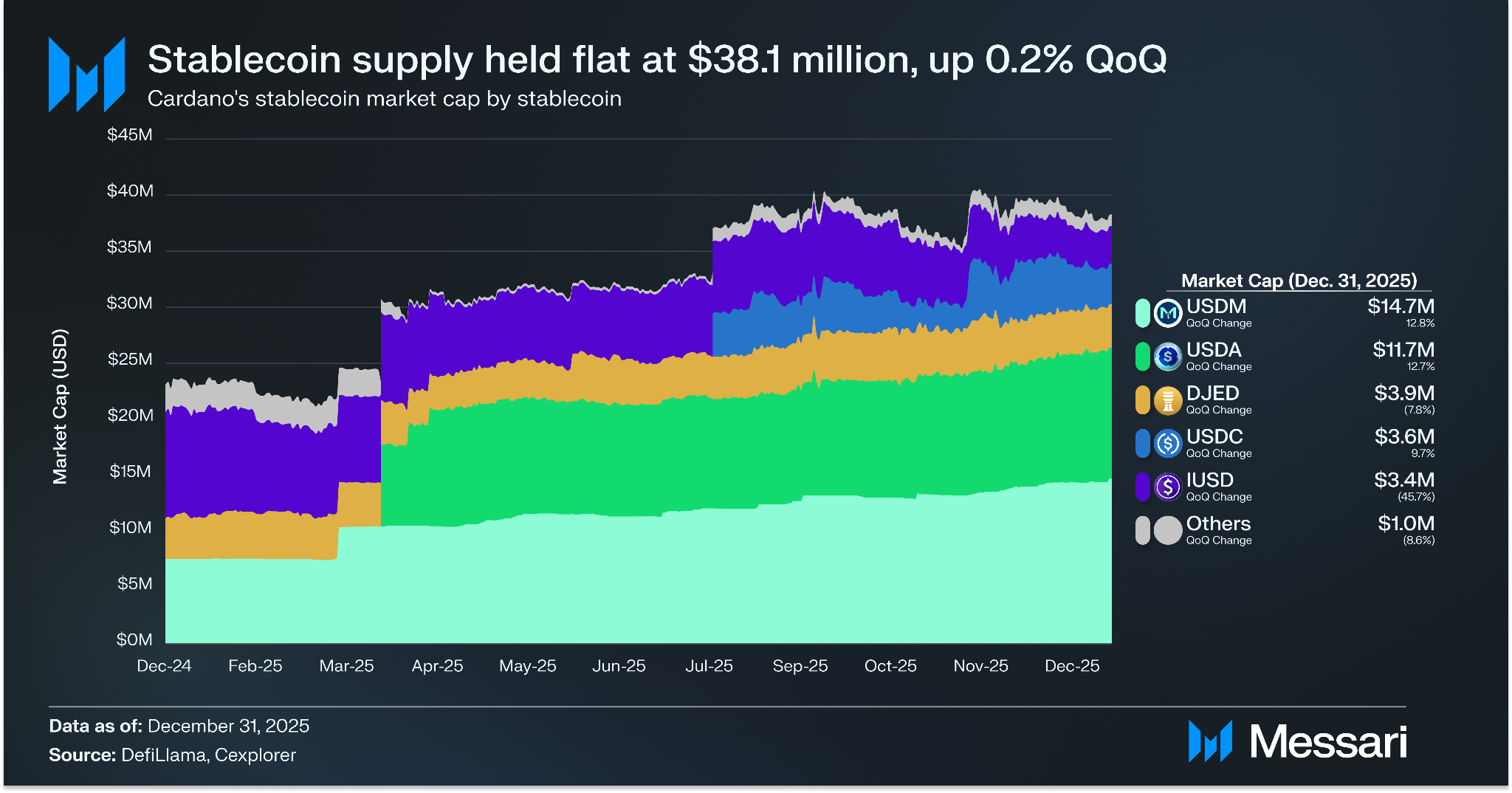
Cardano’s stablecoin market cap held effectively flat in Q4 2025, rising 0.2% QoQ to $38.1 million. USDM solidified its position as the market leader, up 12.8% QoQ to $14.7 million. USDA followed closely up 12.7% QoQ to $11.7 million. In contrast, IUSD declined 45.7% QoQ to $3.4 million, while DJED fell 7.8% QoQ to $3.9 million. USDC continued its growth, up 9.7% QoQ to $3.6 million.
The long tail of stablecoins, grouped under “Others”, saw a reversal of its Q3 trend, declining 8.6% QoQ to $1.0 million. This shift suggests a flight to the liquidity and regulatory certainty of the two largest fiat-backed assets as the ecosystem matured into the year-end.
Moneta’sUSDM launched on Mar. 16, 2024. Like USDA, USDM is collateralized 1:1 with the U.S. dollar and dollar equivalents. In Q4, Moneta’s Business Development Lead was elected as an Adoption DRep, empowering the issuer to represent stablecoin interests in decentralized decision-making. Throughout the quarter, Moneta focused on the final rollout of its MiCA-compliant infrastructure in Europe, positioning USDM as the optimal stablecoin on Cardano for institutional use cases in the region thanks to its regulated Norwegian partner, NBX.
USDA is a Cardano-native, U.S. dollar-pegged stablecoin issued by Anzens, with EMURGO providing technical expertise for Anzens’s operations. It is fully backed by U.S. dollar reserves and equivalents (e.g., U.S. government treasuries), and pegged 1:1 with the U.S. dollar. Building on its international presence in 48 countries, Anzens launched direct fiat off-ramps for the Argentine Peso (ARS) and Brazilian Real (BRL) in October, targeting Latin American markets. The quarter was also marked by a push for institutional trust, with BitGo Trust assuming custodial duties for USDA reserves.
DJED is an overcollateralized stablecoin developed by Input Output that uses SHEN as the reserve coin. Development focused on Private DJED, which leverages the COTI V2 infrastructure to shield transaction details.
IUSD is a synthetic, overcollateralized stablecoin issued by Indigo protocol. iUSD is minted when users lock ADA into Collateralized Debt Positions (CDPs), creating a pegged asset that tracks the median price of major stablecoins such as USDC and USDT. This allows iUSD to maintain its peg even if one external reference asset deviates. Following the implementation of its self-correcting interest model, the Indigo DAO approved the "iUSD Parameters Optimization Proposal" in December. This update reduced the Redemption Margin Ratio (RMR) from 185% to 150%, significantly improving capital efficiency for users minting iUSD.
NFTs
Average daily NFT sales on Cardano increased 3.6% QoQ to 276.1, while average daily trading volume (USD) rose 133.4% to $612,454.1 in Q4. jpg.store remained Cardano's top NFT marketplace based on transaction volume. The spike in NFT volumes on Oct. 23, 2025, is attributed to the $44.8 million sale of a one-off NFT collection entitled “GoodSamaritan”.
Development, Growth, and Community
EMURGO partners with Wirex to launch Cardano Card
In November 2025, EMURGO and Wirexpartnered to launch the Cardano Card, a global payment solution enabling ADA spending at 100 million merchants across 190 countries. Unveiled at the Cardano Summit in Berlin, the card serves as an all-in-one bridge between onchain finance and offchain retail purchases.
The platform supports ADA, BTC, ETH, SOL, and stablecoins, allowing users to stake for rewards, access airdrops, and borrow against their assets. To promote network sustainability, a portion of transaction fees is returned directly to the Cardano Treasury.
Pentad
In late 2025, the Pentad was established as a formal coordination framework between five key ecosystem entities: EMURGO, IOG, the Cardano Foundation, Intersect, and the Midnight Foundation. This strategic coalition was formed to streamline decision-making and execute a unified vision for Cardano’s commercial strategy heading into 2026. The Pentad’s first major milestone is the Critical Integrations Budget, a ₳70 million allocation for "Critical Integrations." This fund targets five pillars essential for 2026:
Tier-one stablecoins.
Institutional custody and wallets.
Cross-chain bridges.
Oracles
Analytics
This led to the initial integrations of Pyth Network and Dune Analytics. By aligning these five pillars, the Pentad aims to eliminate ecosystem fragmentation and provide the "missing pieces" required for institutional adoption.
Partner Chains
Partner Chains is an all-encompassing term that includes specialized, modular blockchains that run in parallel to the Cardano mainnet, utilizing its robust security, liquidity, and Stake Pool Operator (SPO) network. These networks include Wanchain, Midnight, and World Mobile.
Midnight is building a privacy-focused L1 to enable zero-knowledge (ZK) proofs and confidential smart contracts. Originally conceived by Input Output Global (IOG) and now under active development by Shielded Technologies, it introduces selective disclosure capabilities that let developers build applications where users can verify computations without exposing underlying data, a crucial feature for institutional and enterprise-grade use cases.
NIGHT Token Launch
In Q4 2025, Midnight officially entered Hilo, the first phase in its roadmap toward decentralization, with the Dec. 8, 2025 launch of NIGHT, its native utility token, as a Cardano native asset. The launch initiated distribution of NIGHT to the community based on allocations determined during the Glacier Drop, the largest token distributions in crypto history, which allocated approximately 4.5 billion tokens across over 8 million eligible addresses. In the days following the TGE, major exchanges, wallets, and custodians announced support for NIGHT, and Midnight surpassed a $1B market cap.
Under Midnight’s cooperative tokenomics architecture, NIGHT is not consumed for transaction fees; instead, it generates DUST, a shielded, non-transferable execution resource used to power shielded transactions with predictable fee markets.
Closing Summary
While network activity consolidated with average daily transactions decreasing 27.4% and active addresses dropping 30.0%, specific sectors within the ecosystem demonstrated notable growth. Average daily DEX volume increased 17.3% to $4.44 million, and NFT trading volume surged 133.4% QoQ, even as broader DeFi TVL contracted to $177.3 million.
The launch of the Midnight network (NIGHT) and the Cardano Card for global retail payments established the necessary rails for both privacy and real-world utility, expanding the addressable market of its ecosystem as a whole. Furthermore, the network’s rapid convergence following November’s 14-hour chain partition served as a critical stress test, validating the Ouroboros architecture's underlying resilience under extreme conditions.
Cardano enters 2026 as a governance-mature ecosystem, anchored by the Pentad’s new coordinated executive function. With a hardened technical foundation and a clear institutional focus, the network is positioned to increase its institutional footprint through strategic partnerships and a homogeneous protocol strategy.
This report was commissioned by Intersect. All content was produced independently by the author(s) and does not necessarily reflect the opinions of Messari, Inc. or the organization that requested the report. The commissioning organization may have input on the content of the report, but Messari maintains editorial control over the final report to retain data accuracy and objectivity. Author(s) may hold cryptocurrencies named in this report. This report is meant for informational purposes only. It is not meant to serve as investment advice. You should conduct your own research and consult an independent financial, tax, or legal advisor before making any investment decisions. Past performance of any asset is not indicative of future results. Please see our Terms of Service for more information.
No part of this report may be (a) copied, photocopied, duplicated in any form by any means or (b) redistributed without the prior written consent of Messari®.
Youssef is a Research Analyst on the Protocol Research team. Prior to joining Messari, Youssef was a Product Analyst at Fidelity Digital Assets. Youssef graduated from Northeastern University, where he led the Northeastern Blockchain club as President.
Youssef is a Research Analyst on the Protocol Research team. Prior to joining Messari, Youssef was a Product Analyst at Fidelity Digital Assets. Youssef graduated from Northeastern University, where he led the Northeastern Blockchain club as President.