Solana Ecosystem Update

Solana outperformed nearly every large cap crypto asset in 2023 despite the significant setback the network endured as a result of the FTX/Alameda fallout. A new wave of dApps have sprung up to challenge the incumbents on Solana who were stifled by parasitic early-backers and predatory token designs. We believe that Solana is well positioned to capture a large portion of retail flows as we near the next crypto bull market due to its low fees, palatable UX, unified liquidity, next generation applications, and ongoing network improvements such as the development of Firedancer, a highly performant validator client. Therefore, we believe the time to do homework on the Solana ecosystem is now, especially after the recent pullback in the SOL price. There could be value in comparing new Solana dApps to their leading counterparts deployed on EVM-based chains in order to get a sense of how large these application’s businesses and valuations could grow.
Solana Update
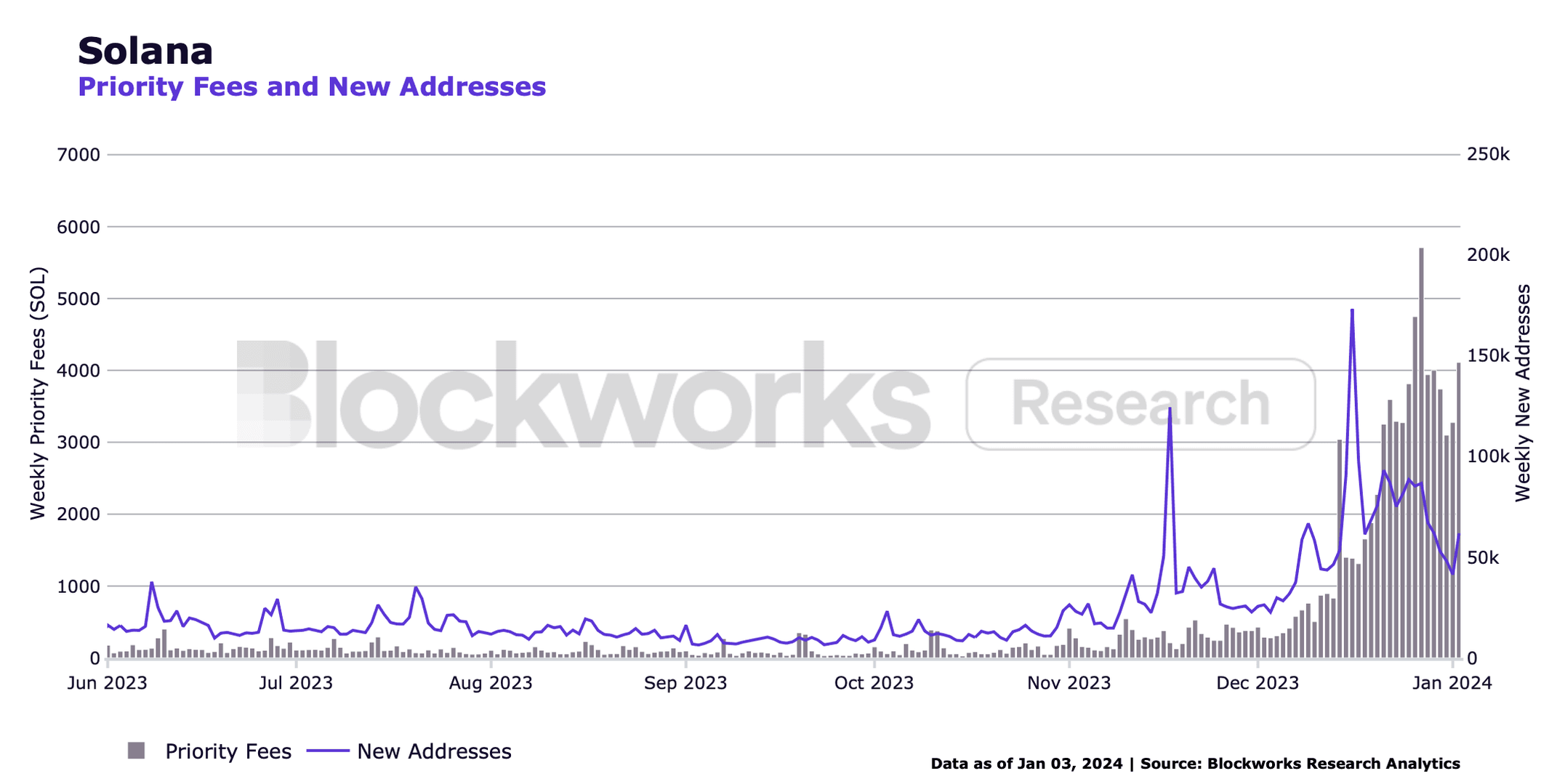
We last covered Solana in June before the massive rally in SOL’s price, which covered things like Firedancer, localized fee markets, QUIC, and leading dApps such as Jupiter. Our original thesis has played out thus far, with Solana’s fundamentals looking strong across various metrics. Solana DEXs saw the highest monthly volume over the past 2 years in November, stablecoin transfer volume exploded higher, new addresses picked up, and priority fees surged as demand for block space increased.
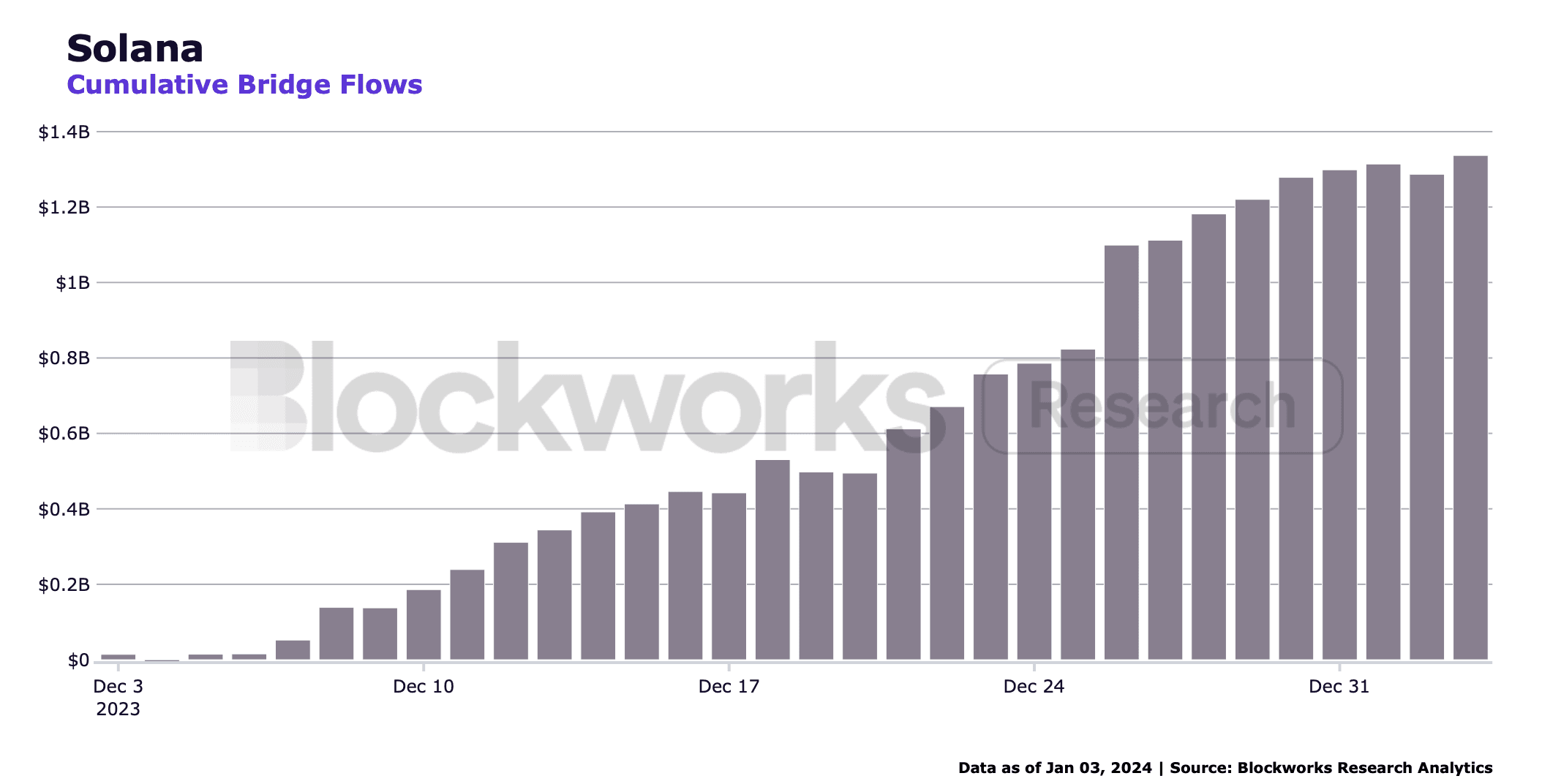
Solana has experienced a large influx of value bridged to the chain, with ~$1.3B of net bridge deposits over the past month. For added context, Solana began the month of December with just $1.65B of TVL in smart contracts, but has since increased to over $3B. This means that most of the capital entering the ecosystem is actively participating in DeFi/Web3. An overwhelming majority of these inflows came from CEXs, which is likely a result of the lack of bridging infrastructure with ample liquidity available between EVM-based ecosystems and Solana. We expect bridging infrastructure to improve if user demand remains constant, which could help improve the depth of liquidity on many Solana-based dapps. Additionally, if user demand remains strong we expect larger market makers to provide their services to the ecosystem by establishing the necessary infrastructure to enable liquidity provisioning for SOL and SPL-based assets.
The consensus trade throughout the bear market was “long ETH” for smart contract-enabled blockchain exposure, with many prominent industry participants claiming victory with Ethereum’s rollup-centric roadmap and deflationary tokenomics. The recent increase in demand for blockspace, however, has shown that Ethereum L2s are prone to higher mainnet gas fees, still require trust assumptions with inactive or whitelist only (permissioned) proving mechanisms, and fall victim to fragmented liquidity due to the lack of interoperability between rollups. On the gas fee side of things, L2 fees can spike due to an increase in mainnet gas fees, or because of an increase in blockspace demand on the L2 (such as during the ARB airdrop).

Sam leads coverage on Ethereum, L2s, Aave, Compound, as well as NFTs and gaming. Previously worked on a hedge desk at UGC.