Serum DEX: The Ambitious Case for DeFi

Serum is an ambitious attempt to deliver alternative DeFi infrastructure that will allow applications to focus on growth without being concerned with legacy layer 1 issues, most notably the scalability trilemma. At its core Serum is a decentralized exchange (DEX), but in the wider scope, it is an ecosystem that brings a high speed and low transaction costs to decentralized finance.
The Origins
Since the rise of DeFi last summer, operational demand on Ethereum has skyrocketed. Alongside the price increase of ETH, Ethereum gas fees have once again moved to the center of attention, even more so during the May 19th market crash. However, despite the astronomic growth in DeFi TVL, the argument can be made that the lack of scalability on the Ethereum base layer is keeping DeFi from becoming a trillion-dollar industry of its own.
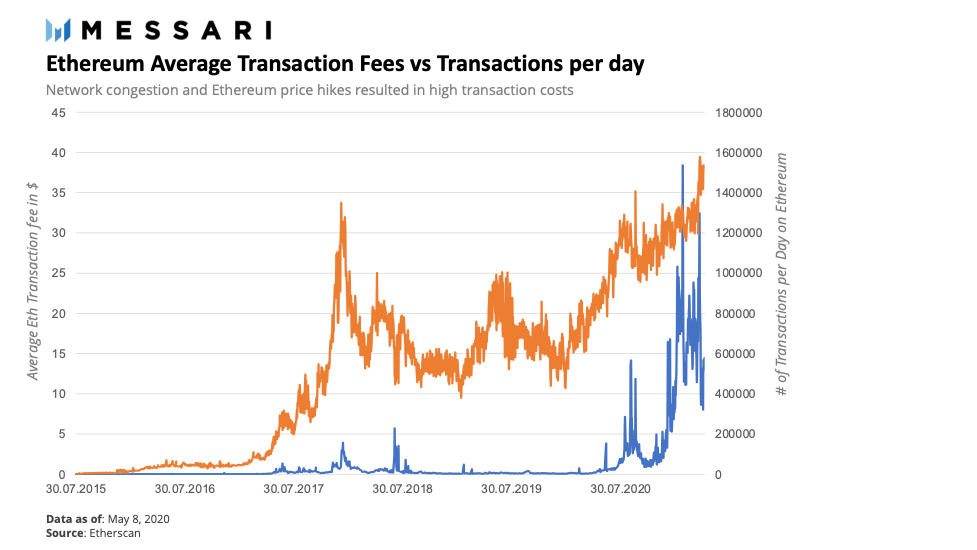
Project Serum was launched during the DeFi summer of 2020 to address this scalability challenge with a new decentralized exchange built on Solana. Serum DEX aims to scale DeFi through delivering on-chain limit order books and sub-second order/fund management with low fees while remaining fully trustless and decentralized. Serum claims to be “the first high-throughput low-latency exchange that has a fully on-chain order book and matching engine”. The goal is straightforward: bring CeFi quality trading experience to DeFi.
Setting the fundamentals right
The Serum Team elaborates on a greater vision of how Serum may be adopted by a billion users thanks to the key strengths of their product: composability, scalability, and low costs. To achieve these goals, Serum is built on Solana, which applies a set of novel approaches for scaling and low network fees, while remaining secure, decentralized, permissionless, andcensorship-resistant.
