Sequencers: The Key to The Rollup Investment Thesis

Layer 2s (L2s) atop Ethereum have seen significant traction over the past two years. Rollups like Arbitrum, Optimism, zkSync, Scroll, and Starknet/StarkEx are Ethereum’s primary hope for scaling to support billions of users, counteracting L1 block space constraints. These execution environments offer significant discounts (up to 95%) compared to transacting on Ethereum mainnet, with the hope for even greater future savings after Danksharding implementations that increase the efficiency of posting data to Ethereum.
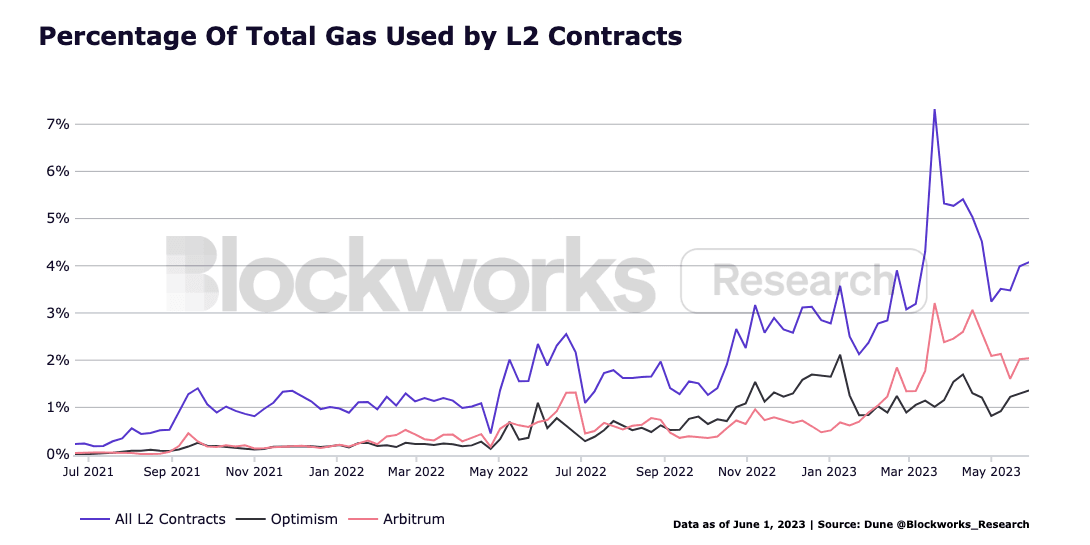
Most crypto market participants are familiar with L2s, but they may not know that one piece of critical centralized infrastructure known as the Sequencer powers these platforms today. Additionally, a Sequencer for a rollup processing many transactions can be considered an impressive driver for fundamental token value accrual, given its ability to generate revenue in multiple ways. Understanding the role and potential of sequencers can provide deeper insight into the dynamics of value creation for L2 tokens and ecosystems.
Intro to Rollups & The Sequencer
At a high level, rollups function by gathering a number of transactions, bundling their calldata (or state differentials) into a single transaction, and subsequently sending the transaction to Ethereum. Calldata constitutes only a minor portion of an L1 transaction. The batching of the data is the basis of the significant cost savings associated with rollups and the ability to reduce congestion at the base layer.
As it stands today, Sequencers serve as the critical operator behind this mechanism, fulfilling several essential functions:
- Collecting a number of transactions.

Matt leads coverage on DEXs, derivatives, governance, and the Avalanche ecosystem. Previously he worked as an Analyst at Ikigai Asset Management and Teller Finance.