Scaling Web Performance: Decentralized CDNs

Introduction
Content Delivery Networks (CDNs) represent low-hanging fruit in a massive market ripe for Web3-driven disruption. The global CDN market was valued at ~$28B in 2024, and is projected to surpass $140B by 2034, (18.75% CAGR) underscoring the immense demand for efficient content delivery. Decentralized CDNs (dCDNs) marshal resources from previously underrepresented network edges, aligning well with growing demand for performance, resilience, and efficiency. Current project diversity in the dCDN sector increases the odds of finding the right mix of technology and incentives to achieve PMF beyond the crypto niche. Given their potential, we anticipate increased enterprise experimentation, especially as performance claims are validated and legacy systems face escalating pressure.
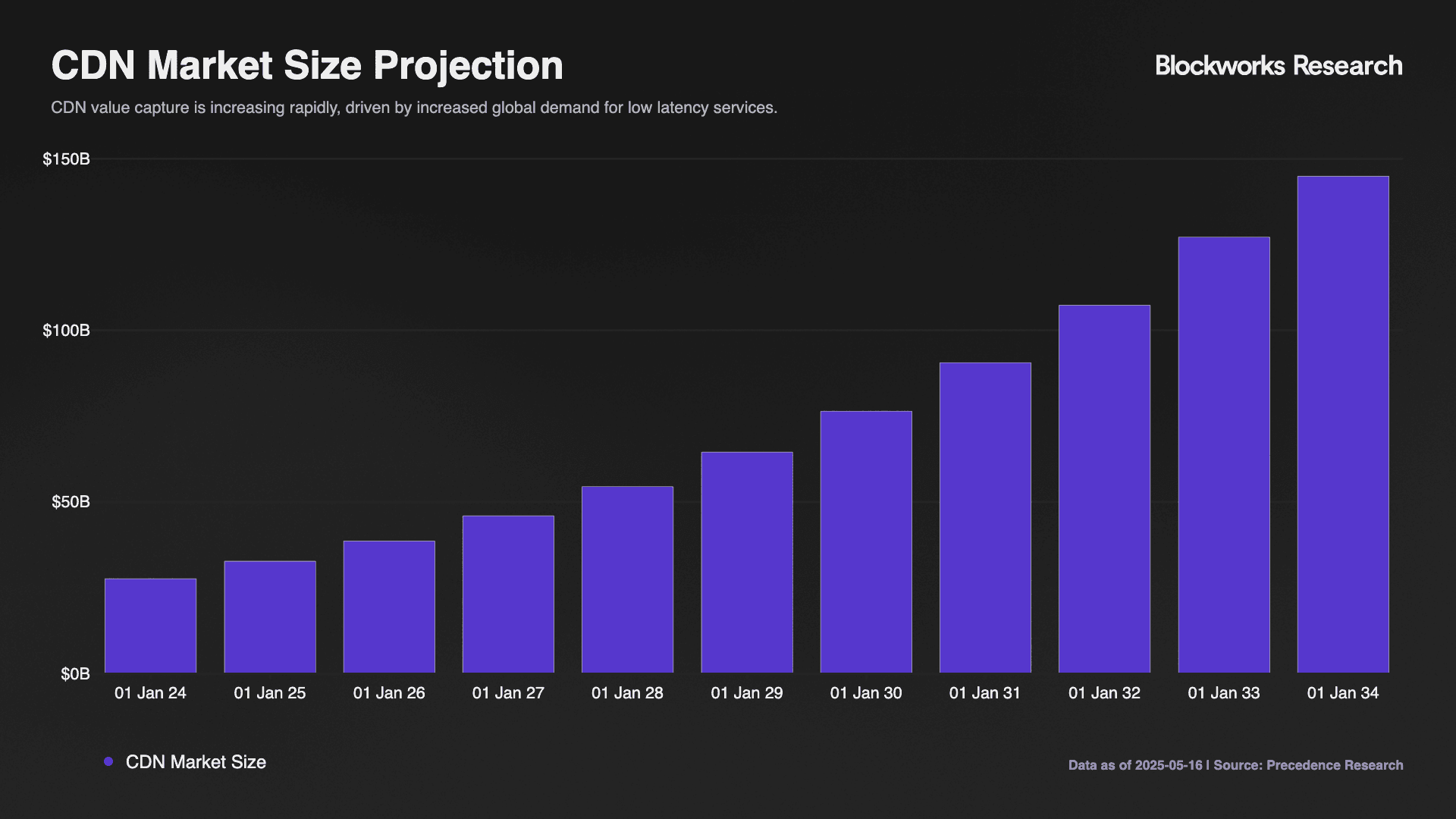
Critical catalysts for growth include major Web3 applications adopting dCDNs publicly, showcasing tangible improvements, and traditional CDN providers integrating hybrid models. However, security breaches or significant outages could set back adoption and increase skepticism. Decentralized CDNs embody the broader Web3 promise by harnessing community-driven networks to challenge incumbents, offering investors asymmetrical upside potential if executed effectively. Traditional CDNs have historically struggled with rigid billing, slow adoption of new protocols, and opaque, centralized operations, underscoring the need for architectures featuring real-time dynamic routing, adaptive economic models, and transparent, responsive infrastructure. The race to improve content delivery is unending, and dCDNs present a compelling approach that could redefine global data pipelines if thoughtfully executed.
Sector Overview
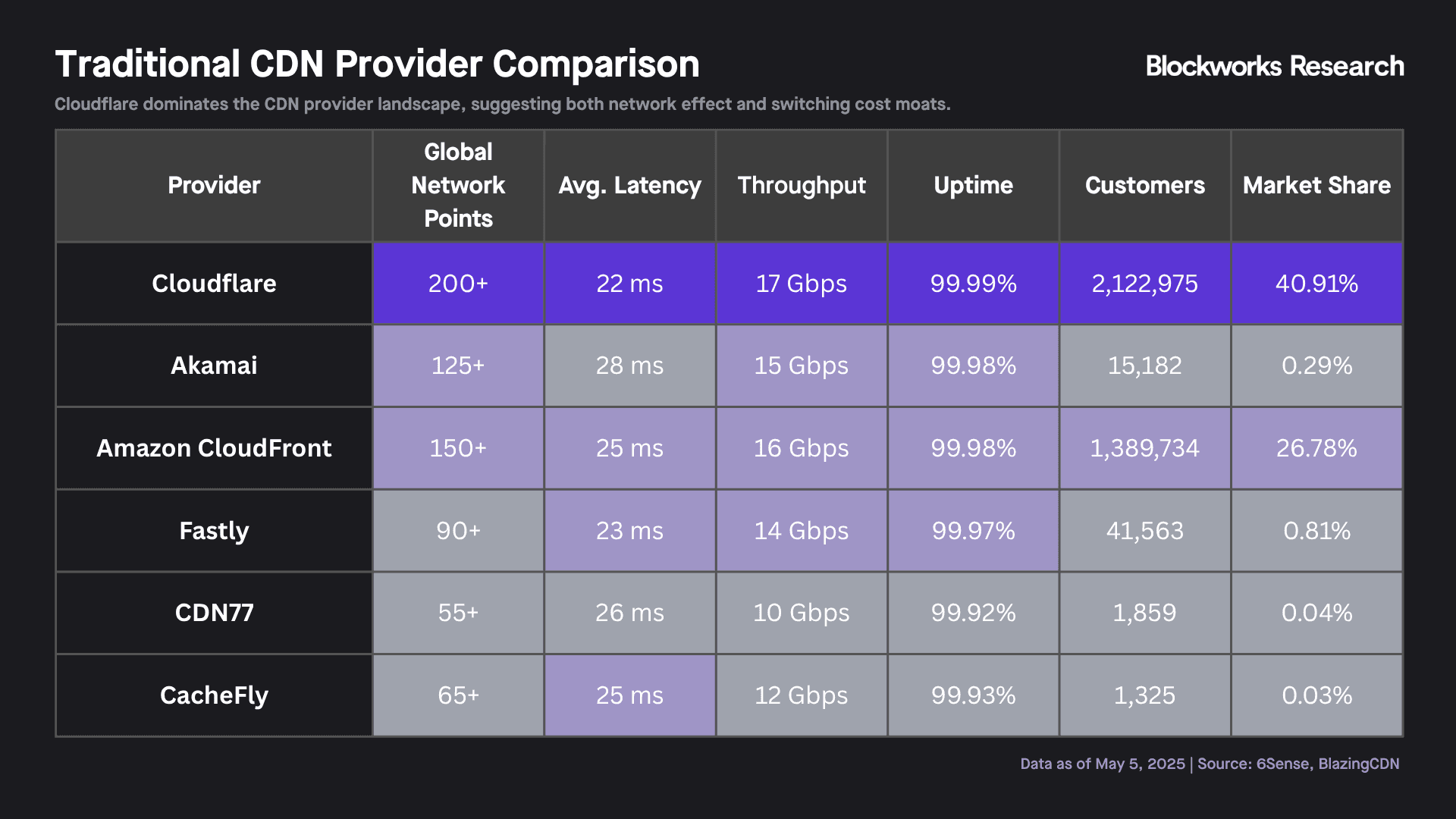
CDNs form the backbone of modern internet content distribution, responsible for caching and delivering web-based assets globally. However, traditional CDNs like Cloudflare rely on centralized data centers, typically distant from end-users, resulting in substantial latency and bandwidth constraints.

Nick leads coverage on the DePIN and Proof of Work sectors. Previously led research and engineering at a DePIN-focused accelerator.