Pipe Network: Mainnet Launch & TGE

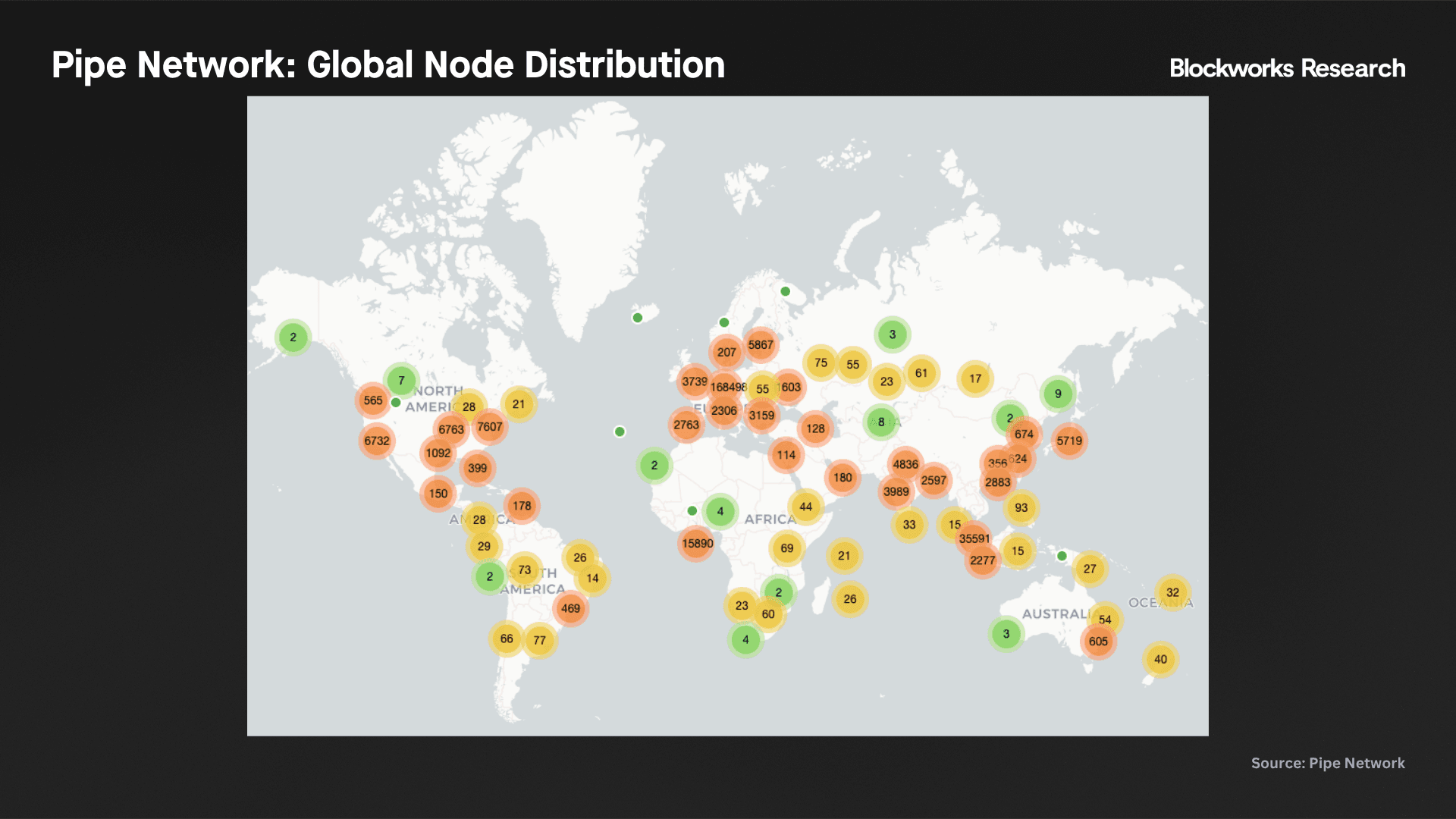
We are monitoring Pipe Network heading into its token launch, with heightened attention on execution milestones over the next 6-12 months. The protocol's ~290K node footprint at launch, validating supply-side momentum. Jito restaking integration provides economic security infrastructure without requiring Pipe to bootstrap its own validator set, materially decreasing time-to-market for staking functionality.
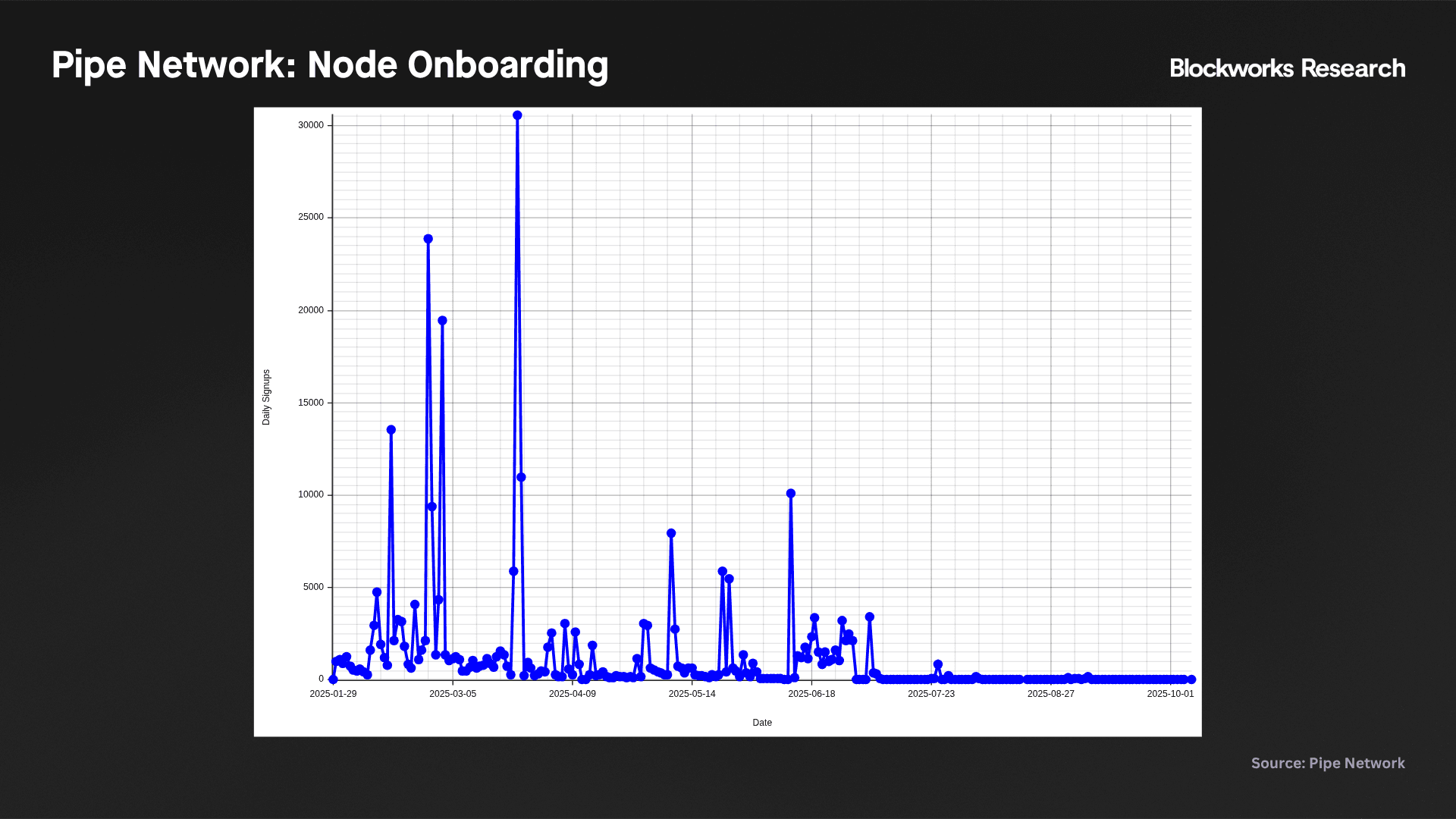
However, while Pipe’s number of serviceable routes has expanded since our last report, the network’s average global latency has increased from 151ms to 431ms. While it is unknown if this is a result of increased network scaling measures or mainnet migration hurdles, we expect latency across priority lanes to be meaningfully lower. Additionally, growth in node onboarding appears to have flatlined, and cumulative storage use figures on Pipe’s network dashboard appear to have stopped updating in early April 2025 at ~250 TB of cumulative usage. We anticipate renewed clarity in these metrics post-TGE
Key catalysts ahead include enterprise customer announcements converting pilots into production SLAs, latency compression < 100ms in priority geographies like India and Southeast Asia, early burn rate metrics establishing PIPE tokenomics balance, P1 overlay network launch expanding addressable market into premium routing services, and Edge Workers rollout for serverless compute at the edge. The combination of Firestarter Storage, core CDN infrastructure, and forthcoming P1 routing creates a multi-product platform that can capture workloads across the content delivery value chain.
However, significant execution risks remain. Token price stability is critical, a sharp PIPE decline could render node operations unprofitable overnight, causing operators to unplug capacity precisely when demand is accelerating, creating a negative feedback loop where fewer nodes drive higher latency, degrading customer experience and further reducing demand.
Competitive response from incumbents presents another risk vector. Cloudflare, Akamai, and AWS could cut egress pricing in bandwidth-expensive regions or bundle edge compute offerings, blunting Pipe's cost advantage. Hyperscalers possess sales reach and integrated security stacks that remain difficult for lean decentralized networks to replicate quickly. Pipe's switching costs will likely remain moderate until its edge compute roadmap crystallizes into differentiated service layers that incumbents struggle to match.

Nick leads coverage on the DePIN and Proof of Work sectors. Previously led research and engineering at a DePIN-focused accelerator.