PancakeSwap: Not Just Another Uniswap Fork

Early this year, yield farmers started to explore DeFi in search for capital gains and higher yields. The main playground for DeFi, the Ethereum network, witnessed explosive transactions growth. Simultaneously, competition increased and gas fees skyrocketed, pushing retail users towards alternative networks such as the Binance Smart Chain (BSC). PancakeSwap, a leading decentralized exchange on BSC, was a key beneficiary and stood out from other competitors due to its rewards mechanism and ease of use. This report introduces PancakeSwap’s rise, its product offering, token mechanism and risks.
The BSC Network
The BSC network was launched in September 2020 by Binance, the largest exchange in the world. It boasts smart contract functionality and Ethereum Virtual Machine (EVM) compatibility, which makes it easy for developers to port their projects from Ethereum to BSC. For users, it means that tools and applications they’re familiar with on Ethereum, such as the MetaMask wallet, can be easily configured to work with BSC.
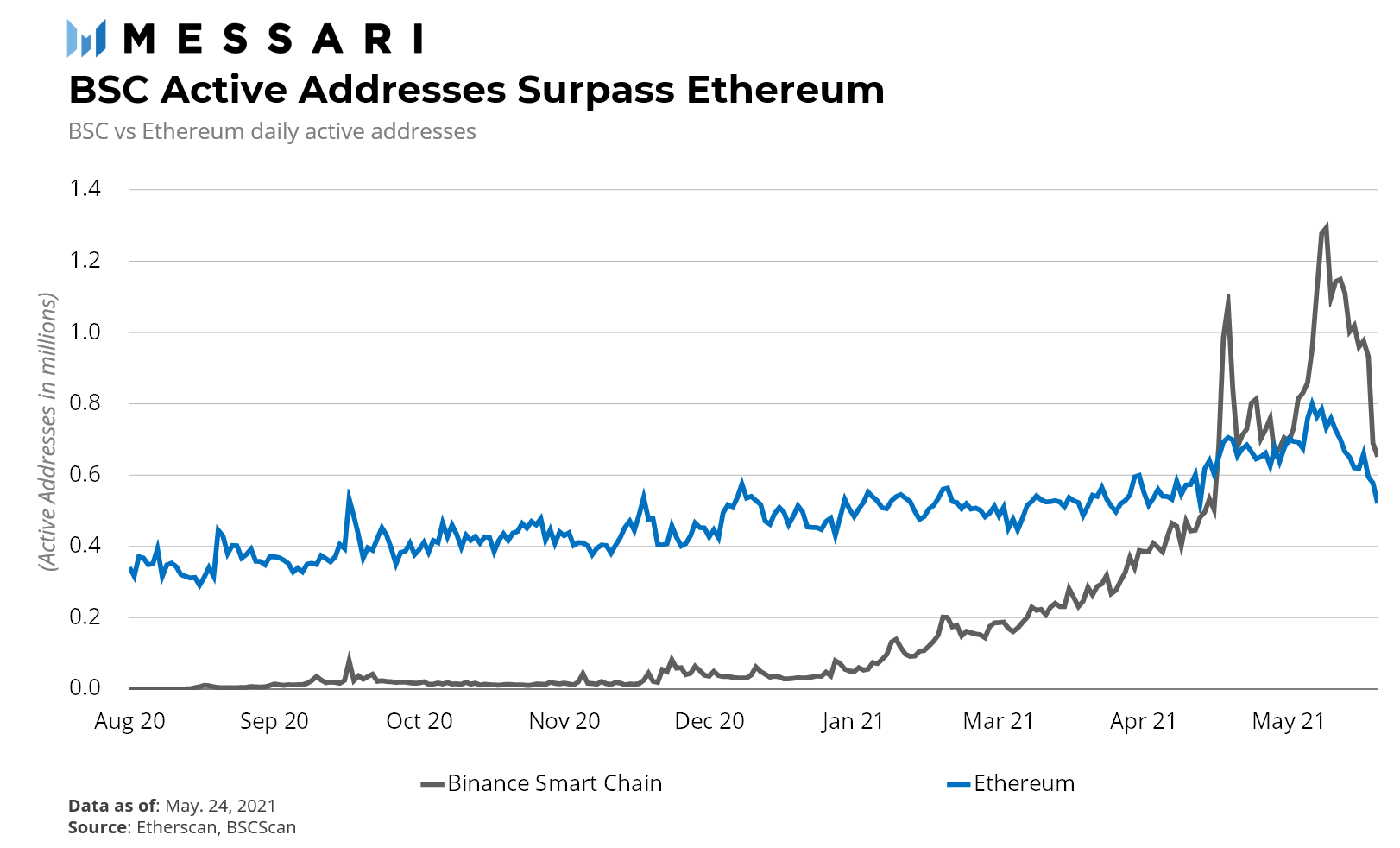
One of the biggest value propositions for BSC is its cheap gas fee model and fast execution. For example, on May 18th, the average cost to swap tokens was ~$40 on Ethereum compared to ~$0.2 on BSC. High gas fees had made trading prohibitively expensive to many retail users. As a result, the BSC network enjoyed a parabolic rise during the past several months on almost every key metric. The below table shows the BSC network’s daily active addresses, which measures the unique addresses that were active on the network as a sender or receiver, increased from less than 100 to more than 1 million in May 2021 and has even surpassed that of the Ethereum network.
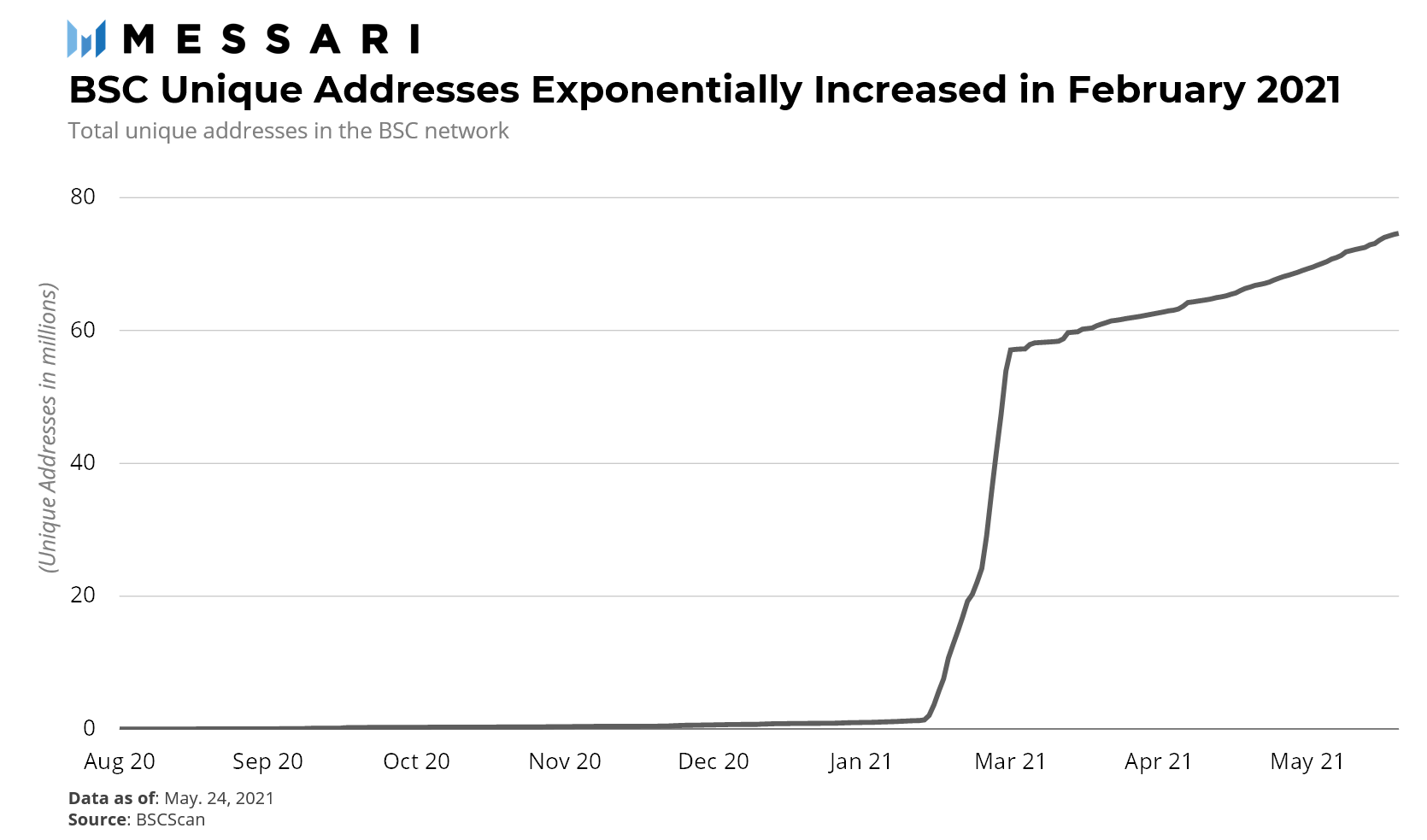
The cumulative unique address for the BSC network exponentially rose in 2021 and increased to more than 70 million during this May.