NFT Use Cases Beyond Digital Art

Top of Mind
NFTs are the first instance of verifiable digital uniqueness and scarcity. Oftentimes NFTs are solely associated with digital art and profile pictures; however, NFT use cases extend far beyond still images. NFTs have evolved into the realms of music, gaming, digital identity, social media, real-world assets, carbon markets, and Web3 applications in order to mitigate issues in the corresponding Web2 sectors.
Music and Streaming
Musicians typically make less than $0.01 per stream on Web2 streaming platforms like Spotify or Apple Music. And that’s just for those on a major record label. Web3 music platforms like Audius, Sound.xyz, and Catalog enable musicians to directly monetize their work. They can mint their audio content as an NFT, connect to their followers, and increase discoverability — all without an intermediary.
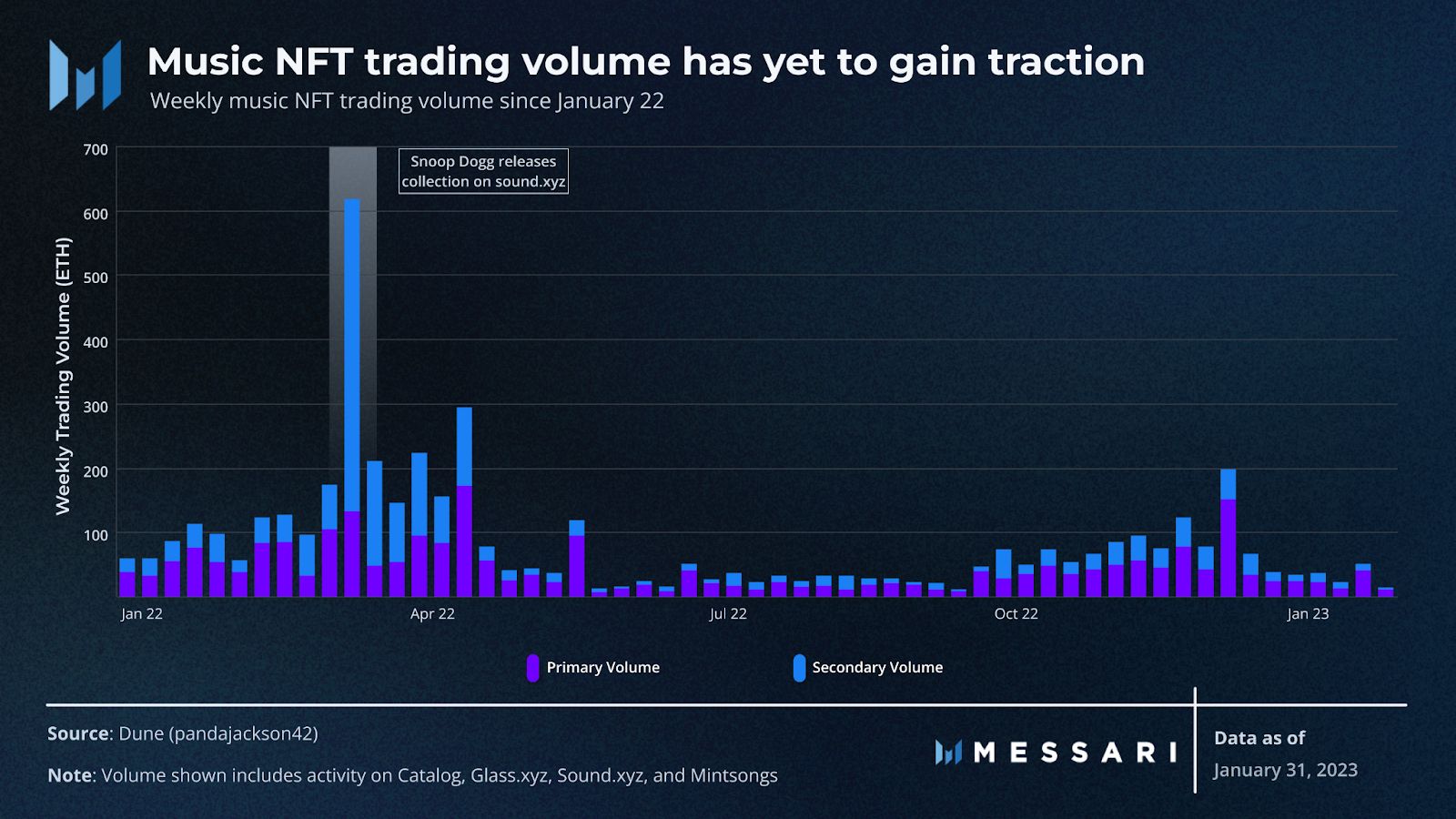
Music NFT platforms have yet to gain mainstream traction as the total weekly trading volume has remained under 100 ETH for the last 6 months. Furthermore, the total unique user count for these platforms stands at 11,000, less than 1% of the user base of the overall NFT market. Many of these platforms resemble the same basic NFT marketplace template and generally lack new built-in functionality that translates easily into streaming, organizing, or sharing music. For this reason, they have failed to attract a substantial user base. Music NFT platforms could boost adoption in the future by launching new product features, incentive programs, or attracting a major music icon.
Decentralized Social Media

Ally is a Research Analyst on the Enterprise team at Messari. Prior to joining the team, Ally worked as a Structural Engineer at Magnusson Klemencic Associates. Ally graduated from the University of Illinois in 2018 with a master’s degree in Civil and Structural Engineering.