Nexus Mutual – Is DeFi Finally Ready for Insurance?

In our Q3 outlook we focused on protocols that generated organic protocol revenue through platform fees in the absence of inflationary token incentives. In some cases, those fees may already accrue to token holders. In other cases, holders may expect some mechanism that could accrue value in the future, such as reinvestment into the protocol treasury, or the ability to turn on a fee switch or token burn. Protocols with clear product market fit (PMF) evidenced by user demand include Curve/Convex, MakerDAO, dYdX, GMX, Uniswap, SushiSwap and Frax.
Nexus Mutual has a large treasury and a business model that is a money-maker in TradFi, providing protection to DeFi users for a fee since 2020. Demand for its core product has been an issue, however. With so many protocol and CeFi failures, is it finally time for DeFi insurance to shine? If so, will Nexus Mutual lead the revival?
Nexus Mutual’s strong launch boded well for the space. But once liquidity mining events finished, TVL sank and never recovered. Growth in cover provided and premium income have disappointed ever since. Such metrics have been reflected in the token price, which had been “down only” in ETH terms through the 2021 bull market. The bear market of 2022 only added to selling pressure.
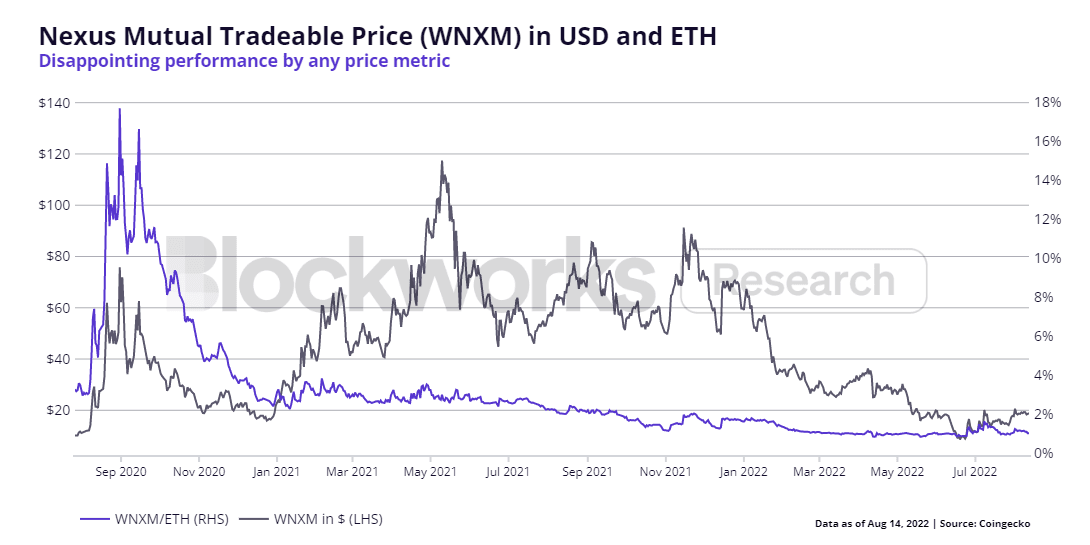
Due to complexities explained below, wrapped WNXM is the better indicator of market value than the native NXM token, as NXM cannot be sold at its so-called “market” price. The ETH price of WNXM has fallen 95% from all-time highs in the spring of 2021.
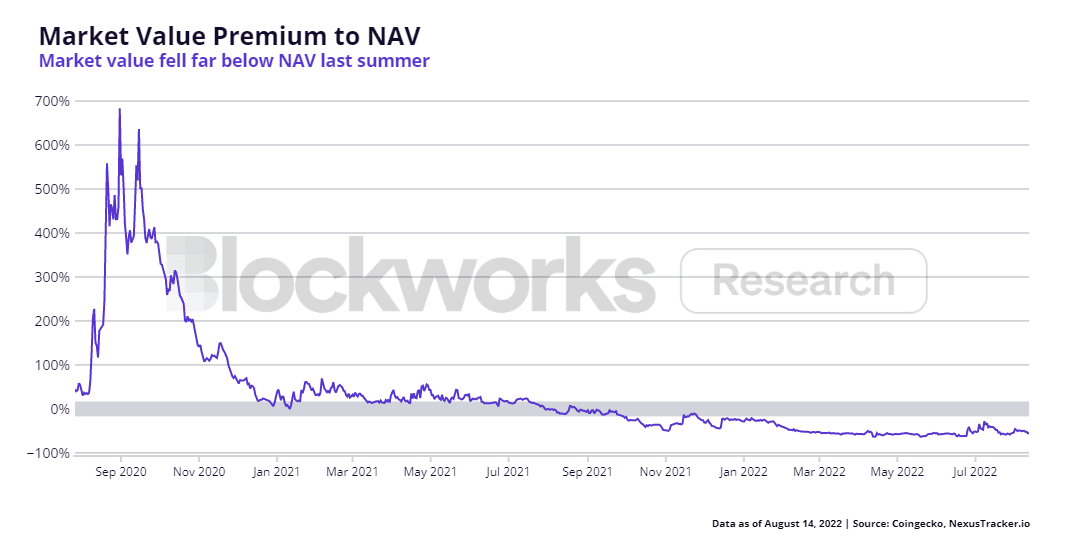
Worse still, the market capitalization has collapsed from a premium to net asset value (NAV) to a substantial discount. At -44% (of NAV before subtracting reserves), WNXM trades at a bigger discount than the notorious GBTC/BTC at -34%.