Money Laundering in Cryptocurrency: How Criminals Moved Billions in 2019

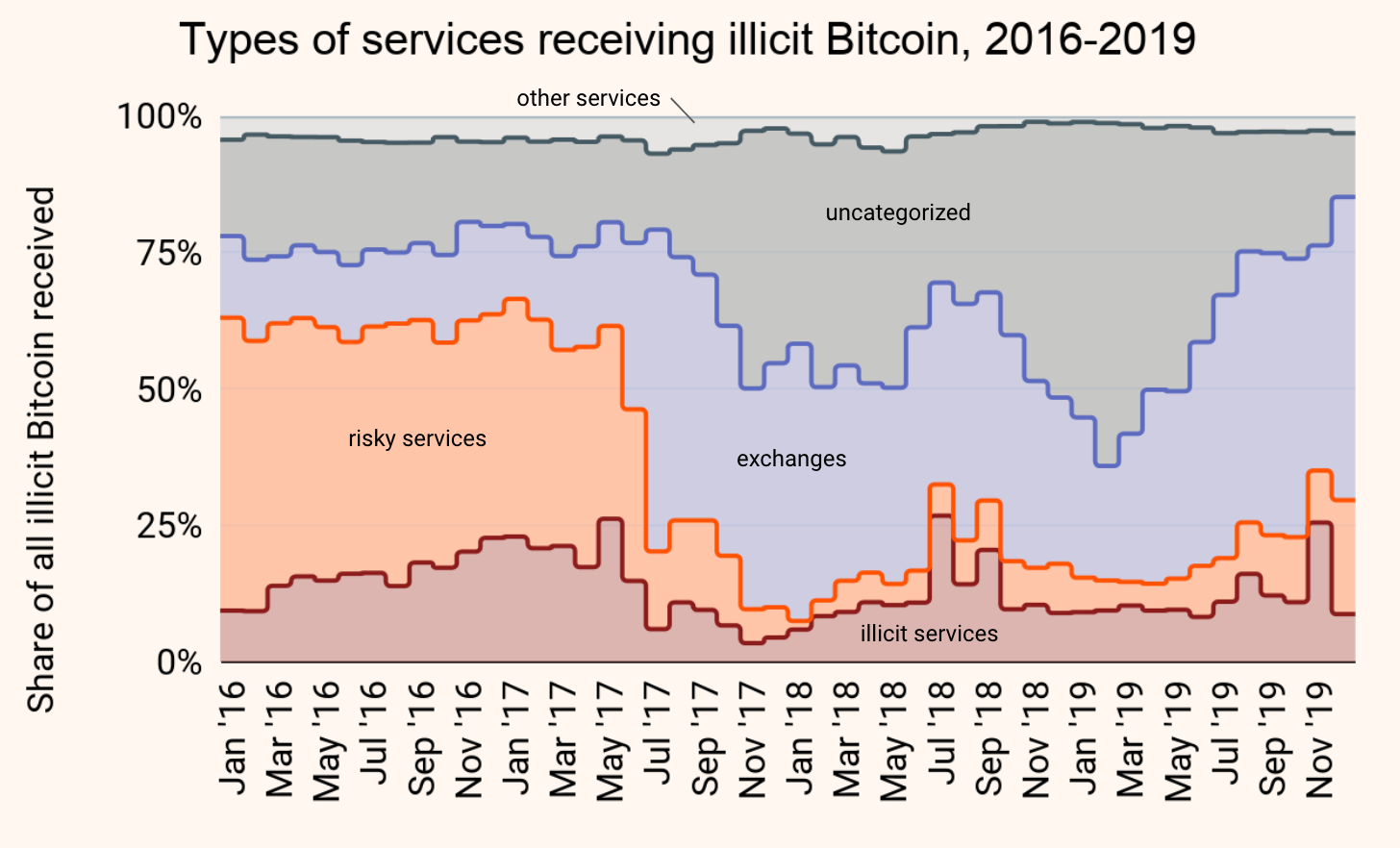
What do criminals do with illicitly-gained cryptocurrencies? In an excerpt from their latest Crypto Crime report, Chainalysis shows how criminals are laundering their cryptocurrency and cashing out into fiat. Looking at on-chain data, Chainalysis identified how exchanges have emerged as the leading destination for illicitly-gained cryptocurrencies through the use of their OTC desks.
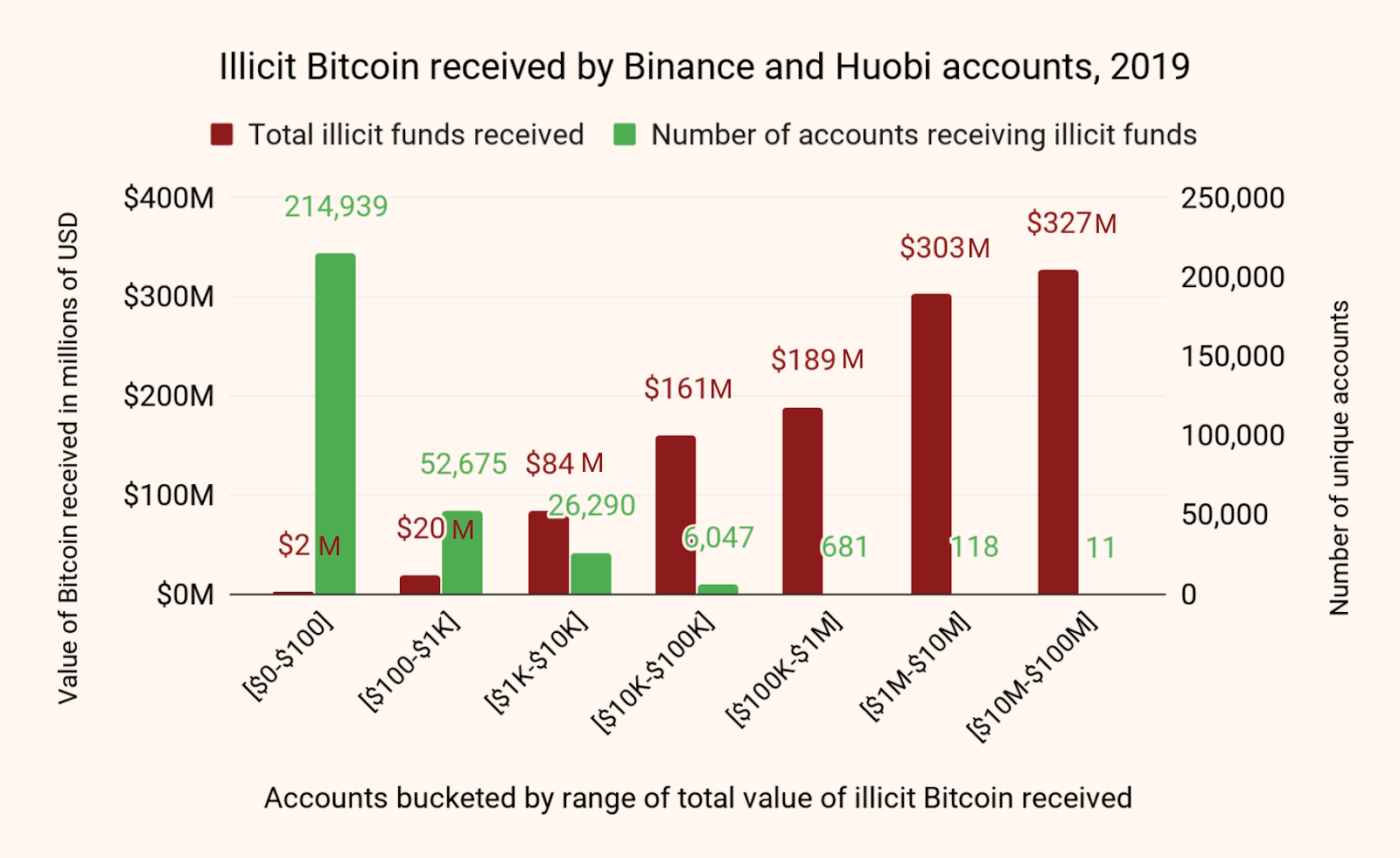
According to the report, Binance and Huobi, account for more than 50% of all the illicit Bitcoin received by exchanges, an amount totaling $1.4 billion. On these venues, a small segment of the total accounts are responsible for most of the illicit Bitcoin received. Chainalysis suggests that many of these accounts are OTC brokers.
OTC brokers facilitate the majority of all cryptocurrency trade volume, and are typically associated with exchanges despite operating independently. Many of these OTC brokers have substantially lower KYC requirements than the exchanges they operate on, creating the opportunity for illegitimate OTC brokers to emerge and service money laundering criminals. Chainalysis has identified 100 of these brokers, which it calls the “Rogue 100,” that Chainalysis believes provide money laundering services. The Rogue 100 are extremely active traders and received more than $3 billion worth of Bitcoin over the course of 2019.
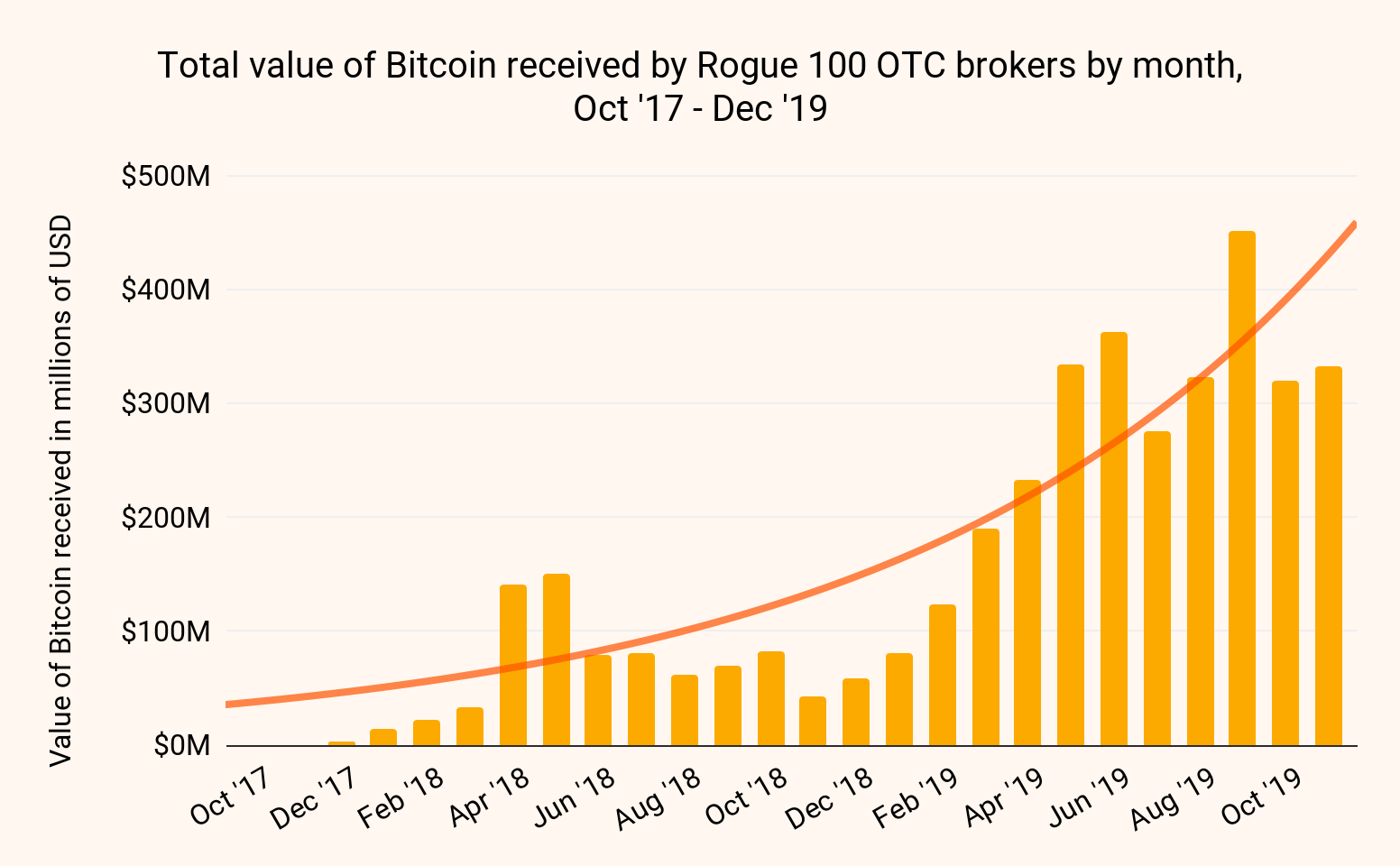
Chainalysis believes that these OTC brokers are a key enabler of every type of crime they cover in its report, by providing fiat offramps. To combat this practice they suggest that every exchange conduct more extensive due diligence on OTC brokers operating on their platforms, and ensure that their OTC desks have effective KYC processes in place.
Why it matters:
- Ever since Bitcoin first entered public consciousness through its fundamental role enabling the silk road, a formerly prominent darknet marketplace, Illicit activity has been a major stain on the cryptocurrency industry’s reputation. With increased regulatory scrutiny on the industry, its perplexing how some of the industry’s largest and most powerful organizations have emerged as the primary enablers of these money laundering activities. However, maybe it shouldn’t be so surprising considering the same dynamic exists in traditional financial services as well.
- Chainalysis’ report illustrates the inherent risks in conducting illicit financial activities on public blockchains. Public blockchains, despite their pseudonymous features are fully transparent by design given that every transaction is recorded on an open public ledger, shared among all network participants. Without stronger privacy at the base layer, cryptocurrencies will continue to provide unparalleled insights into the crypto-based money laundering economy to the delight of law enforcement and regulators.