Maverick Protocol: Dynamic Distribution Magic

While Uniswap and Curve continue to hold a strong lead in the DEX sector, several new protocols have entered the arena over the past few months, including Arbitrum’s Camelot DEX and Trader Joe’s Liquidity Book. Uniswap maintains its dominance through a strong brand moat and standard-setting innovation, evidenced through its concentrated liquidity feature in v3 and new hooks feature in v4. One drawback of Uniswap and the AMM model in general is that LPs seldom earn fair compensation for their risk exposure. More flexibility is needed to enable more controllable outcomes for both traders and LPs. This is something that Uniswap hooks enable for developers, but many protocols are attempting to create their own solutions.
Enter Maverick, which describes itself as a Dynamic Distribution AMM. Maverick raised $9M in June 2023 from Pantera Capital, Binance Labs, Jump Crypto, and Coinbase Ventures, among others. The protocol recently distributed an airdrop of MAV tokens to early users of the platform and plans to further distribute MAV over the coming year. Interestingly enough, Maverick has actually sat in the top five Ethereum DEXs by volume since launch, averaging ~$680M in monthly volume. Does Maverick fundamentally change the DEX landscape, or is it just a VC-funded wolf in sheep’s clothing?
Dynamic Distribution Magic
Maverick aims to facilitate capital efficient markets through the automation of concentrated liquidity provision as price moves, which can result in better prices for traders and more fees for LPs. This aims to drastically reduce the complexity and cost of managing a liquidity position. Further, Maverick lets LPs create liquidity positions while taking directional bets on market movement. While previous iterations of concentrated liquidity proved to be a game changer in the AMM landscape, Uniswap v3’s Range AMM optimized for sideways market movement within tight ranges, where LPs could face impermanent loss and miss out on fees due to prices falling out of range. Thus the capital efficiency enabled by concentrated liquidity could fall lower than even a constant product LP position if liquidity providers are not actively rebalancing.
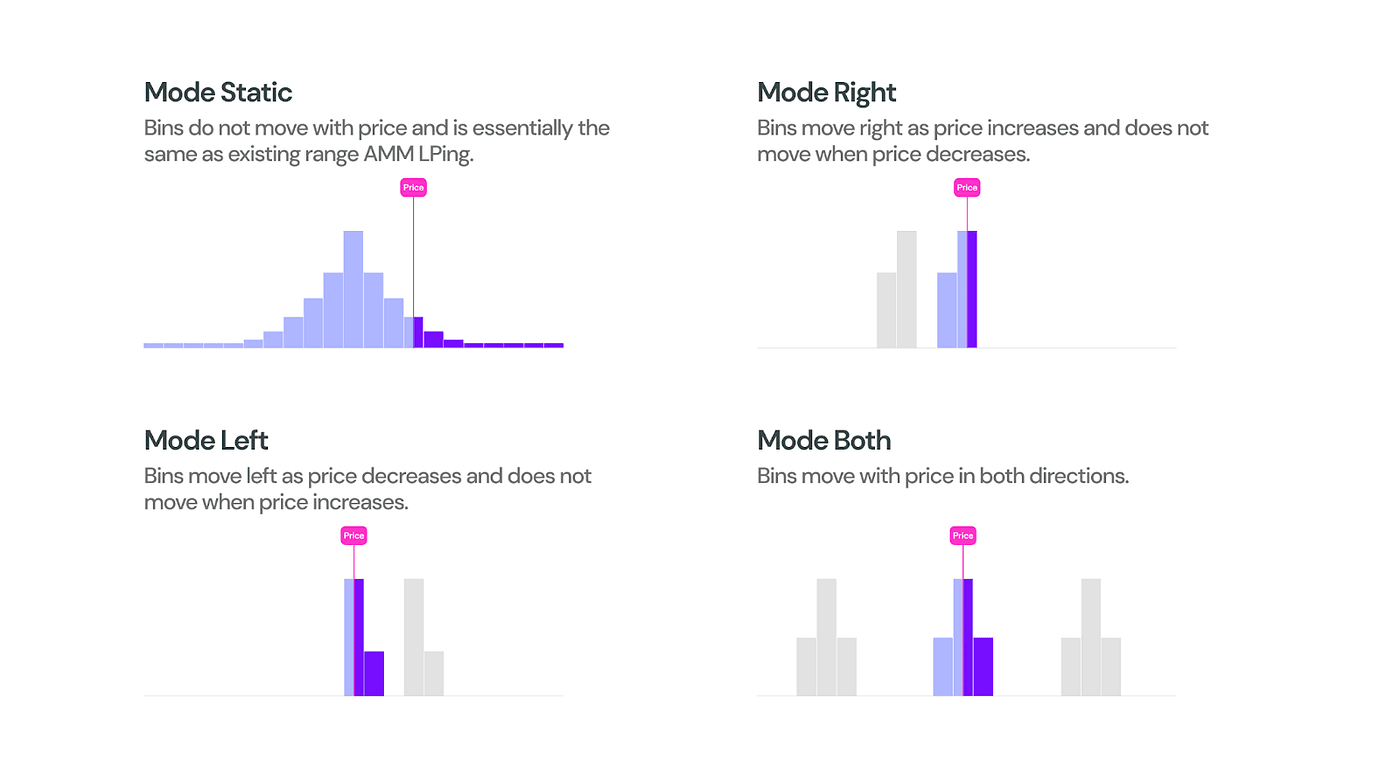
Maverick’s Dynamic Distribution AMM lets LPs create a position range and specify how that position should readjust itself as price moves. This simplifies the LP experience and enables users to utilize a “set-and-forget” strategy. LPs can select assets that they want to provide liquidity for and specify one or more price bins. The architecture seen in Maverick is very similar to Trader Joe’s liquidity book but differs in fee structure. The team recommends utilizing a 2% bin width on volatile assets, where the upper price of the range is 2% more than the bottom price of the range. When the price of the asset falls out of range, a new bin becomes active, and the user’s liquidity automatically moves into this new bin. Maverick also enables a user to distribute liquidity across price in a non-uniform manner to granularly control risk tolerance. For example, an LP who wants more fees can distribute liquidity narrowly around the current price, opening the position up for more impermanent loss while optimizing for fee collection.
The protocol lets users select from four presets for bins and liquidity movement:

Pibblez leads coverage on emerging L1s, infrastructure, and stablecoins. Previously worked as a Research Analyst at Kraken.