Mantle: BitDAO's Modular Ethereum L2

Ethereum L2s and sidechains present numerous security and performance issues in their current state. BitDAO, a group of crypto enthusiasts with the sole goal of supporting the growth of decentralized networks, announced its plans to build Mantle, an Ethereum L2 that circumvents the problems that hinder scaling solutions on mainnet today. This is accomplished by using an alternative solution for data availability, which would make Mantle one of the first modular Ethereum L2s brought to market.
BitDAO Overview
Established in August 2021 in partnership with Singapore based exchange ByBit, BitDAO is a capital allocator governed by BIT token holders. Any token holder can propose partnerships, protocol upgrades that do not impose their will upon DAO contributors, funding of hackathons or educational vehicles, and more. Proposals are first discussed on their forum, and with a minimum of 200k BIT tokens of backing are posted to snapshot for official vote off-chain. The quorum for a proposal to pass must be set at a minimum of 100M tokens. BIT token holders must delegate their holdings in order to participate in the governance process. Tokens can be delegated to their own wallet address or other recognized delegates.
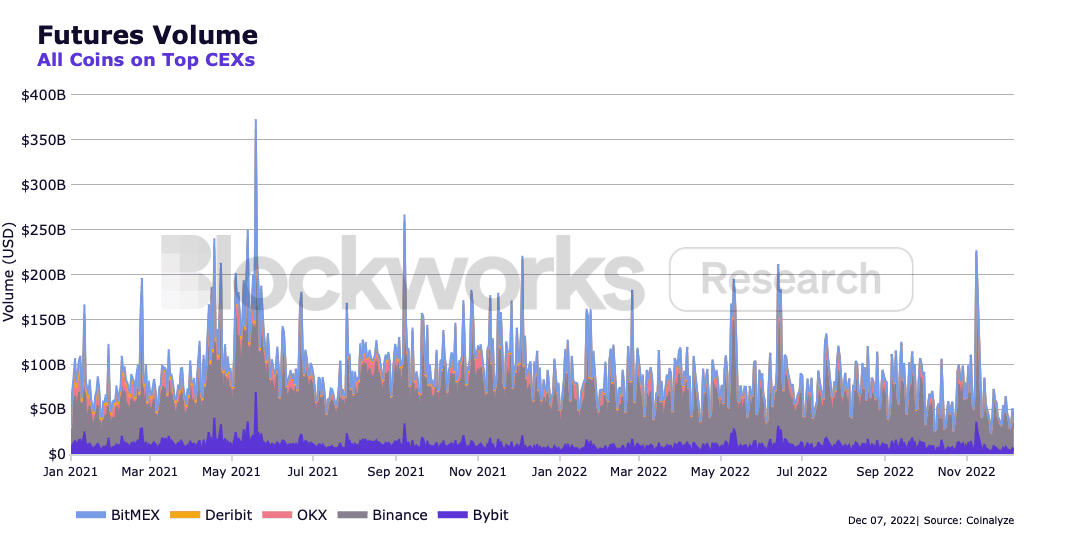
The DAO has entered into some notable partnerships, namely with the SushiSwap DAO by sending them 2.6% of the genesis supply. However, the partnership has failed to garner significant traction, with 240M of the BIT token allocation idle in the original gnosis multisig and the remaining 20M used in a BIT swap offering for the REAL token; a failed metaverse project. The most notable partnership that has proven successful is with ByBit. On July 15, 2021, the exchange pledged to contribute 2.5bps of all futures trading volume to the BitDAO treasury, paid out 50% in ETH, and 50% in USDC and USDT. This is notable considering ByBit has consistently ranked second or third in futures volume amongst CEXs.
The BitDAO treasury is controlled by a 3-of-6 multisig and, thanks to the aforementioned ByBit pledge, now holds over $730M of USDC, USDT, and ETH. This makes it the largest DAO treasury by a wide margin when excluding native token balances. This is one of the most significant revenue streams ever established by a DAO. It is worth noting that ByBit is not a US regulated entity and a 3-of-6 multisig with unknown signer(s) securing such a vast amount of funds poses a significant risk to the DAOs longevity. Additionally, the token allocation heavily leans towards ByBit and private investors over the community.
10B BIT
- Private Sale5%
- Launch Partner Rewards5%
- BitDAO Treasury30%
- Bybit Flexible15%
- Bybit Locked45%
Source: BitDAO
On September 16, 2022, BIP-14 went into effect whereby the 2.5bps of futures volume pledged by ByBit would instead be used to burn the company’s BIT token holdings. The DAO elected for ByBit to begin burning their token holdings in an effort to reduce the total supply while increasing the voting power of smaller token holders. Nearly 2% of the total supply has been sent to the burn address over the past few months, with an additional 220M BIT pledged to be sent as of December 7th. While seeing over 400M BIT tokens burned by the largest holder is encouraging, the concentration of the token distribution remains a valid concern.

Sam leads coverage on Ethereum, L2s, Aave, Compound, as well as NFTs and gaming. Previously worked on a hedge desk at UGC.