MakerDAO gets stress tested as ETH price plummets

In the midst of extreme market-wide turmoil, MakerDAO is facing one of its biggest challenges to date. The main form of collateral in the system, Ether, has dropped over 30% in a 24-hour timeframe marking one of the worst days in its short history. This has triggered an unprecedented wave of liquidations as loans quickly became undercollateralized.
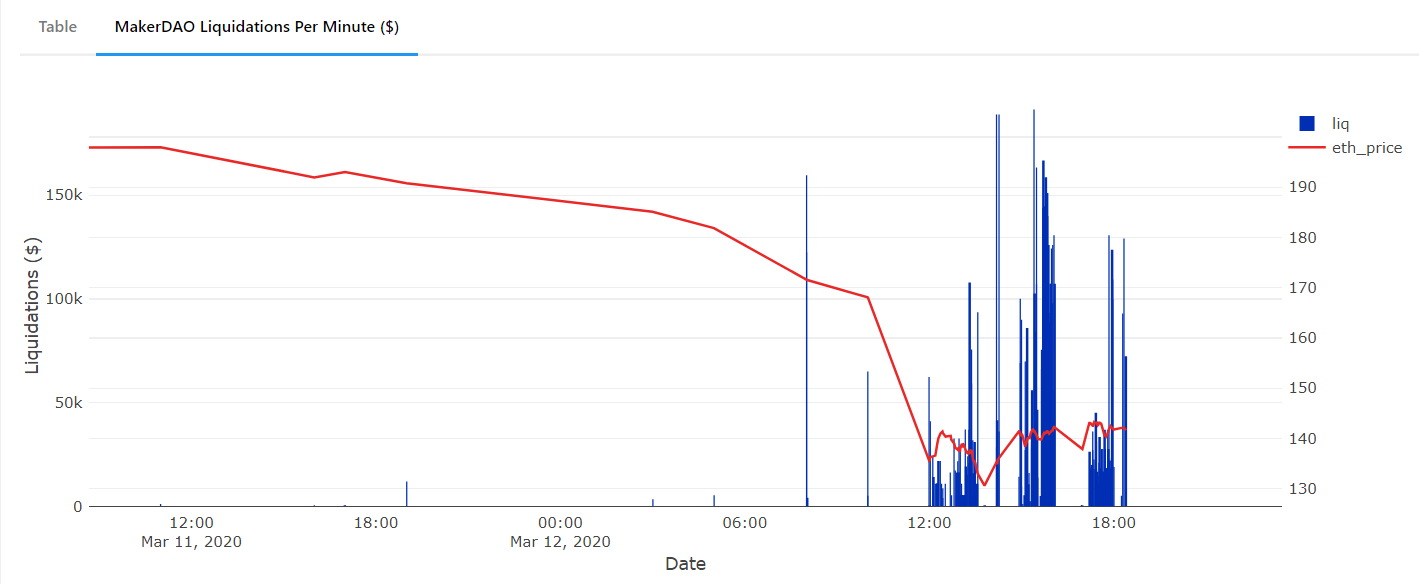
Source: Dune Analytic. Scripts created by Teo Leibowitz.
Normally when the price drops causing a position to fall below the 150% required collateralization ratio, third-party liquidation bots known as Keepers can bid Dai for the underlying collateral in return for a small fee. This ensures the system remains whole and the debt is fully paid back. However, things became complicated today as the Ethereum network became congested leading to oracle’s price updates not going through with the gas price they chose.
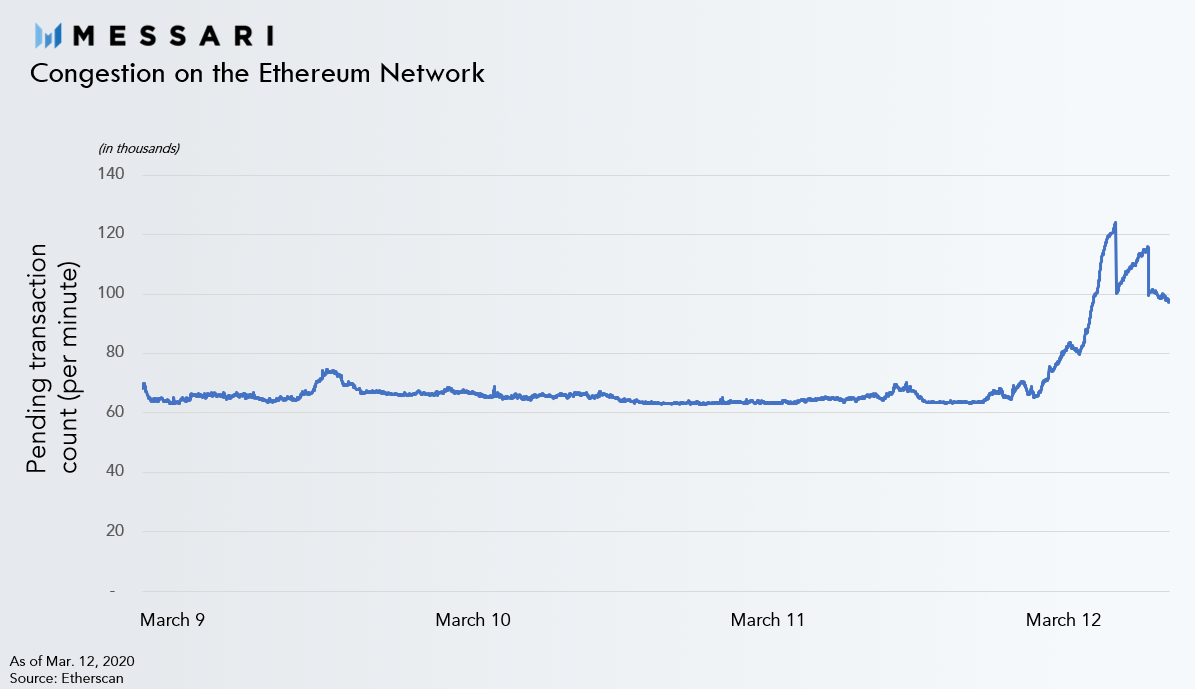
This means Maker was not receiving the correct price of ETH needed to ensure proper liquidations. At one point the price feeds were showing $166 while the real price was 15% lower. Not only did this affect oracles, but Keepers likely did not have their bots configured to bid up gas prices meaning the collateral bids were also not going through, allowing some lucky liquidators to escape with collateral for free. This put the system in a $4 million deficit since collateral was leaving the system without any debt being paid back.
Why it matters
- The value in stablecoins like Dai lies in the fact they can be redeemed for their underlying collateral. In circumstances such as this, when there isn’t adequate collateral to back the asset, it can break the system unless otherwise remedied. To prevent this, MakerDAO has a Debt Auction mechanism where the protocol can inflate the supply of MKR in order to make up for the losses. This amount to a system-wide bailout where MKR holders shoulder the burden by way of dilution in order to keep the network functioning.
- Another worst-case option being considered is an Emergency Shutdown. This would unwind the whole system returning collateral to Vault owners first and then to Dai holders who would be at risk of receiving a haircut. If this were to occur, it would likely erode faith in the idea of crypto-collateralized stablecoins, damaging one of the most essential components of Open Finance.
