LSTs, Sanctum, and Stake-Weighted QoS


Primer
Beginning in Q4 2023 and throughout Q1 2024, Solana witnessed a surge in trading and memecoin activity.
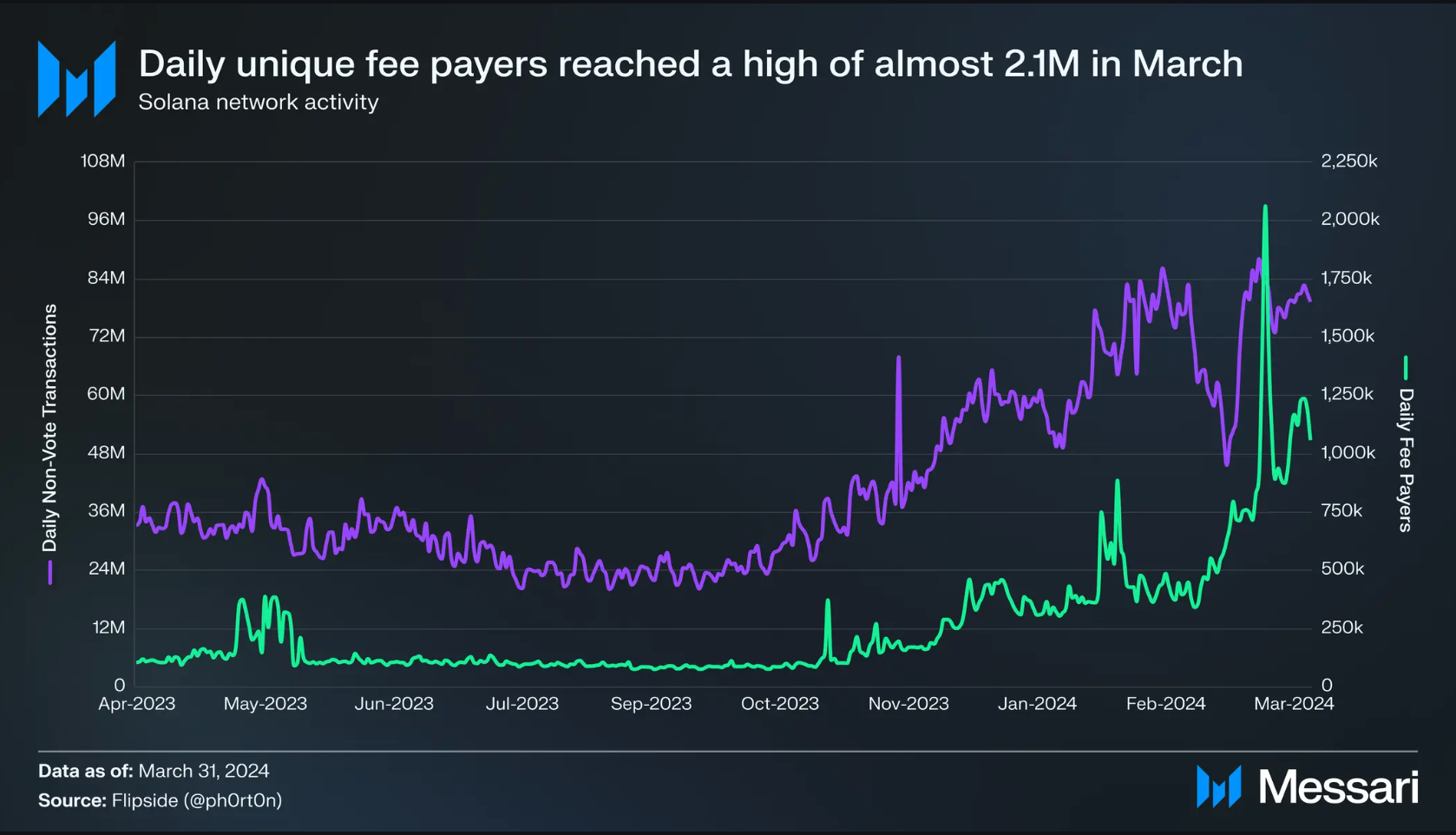
New tokens were being created daily at a massive clip, with Solana, in particular, being the platform of choice for new token deployments. Towards the most recent peak of activity, in March 2024, over 150,000 new tokens were launched across a variety of chains, with Solana consistently accounting for well over half of these new tokens.
The memecoin mania naturally led to increased onchain activity, with users competing to ensure their transactions landed onchain as quickly as possible. As can be the case with any blockchain, increased onchain activity brings to light scalability concerns that are simply not present during lower volume periods. For Solana, the concerns are largely associated with the transaction processing pipeline.
Relative to Ethereum and other EVM implementations, Solana transaction prioritization and processing differs in numerous ways, most notably is the absence of a native mempool.
Processing a Solana transaction involves sending transactions through an RPC server, and then a validator processes them via the transaction scheduler. The congestion issues are localized to both areas, each with different solutions to solve.

Dustin was previously the Enterprise research director at Messari. He has a broad focus across crypto with a particular interest in AI x Crypto, Consumer financialization, DeFi, and general infrastructure.

Prior to joining Messari, Seth worked in traditional finance software and services, and has a MSc in Applied Mathematics. Seth is a Senior Research Analyst on the Enterprise Research team, and focuses on infrastructure, verifiable compute, and the AI x Crypto intersection.