Index Co-Op and DeFi Pulse Index: A New Generation of Index Funds

Underneath the volatility in crypto prices is a growing enthusiasm in the ecosystem’s ability to improve our current financial infrastructure. Using the foundations laid out by blockchain networks like Ethereum, decentralized finance (DeFi) aims to create an inclusive system in a trustless, transparent manner. And institutions have begun embracing this possibility, evidenced by reports citing interest from hedge funds and other traditional players. Bolstered by this growth opportunity, investors continue to search for financial products that capture potential returns from this industry.
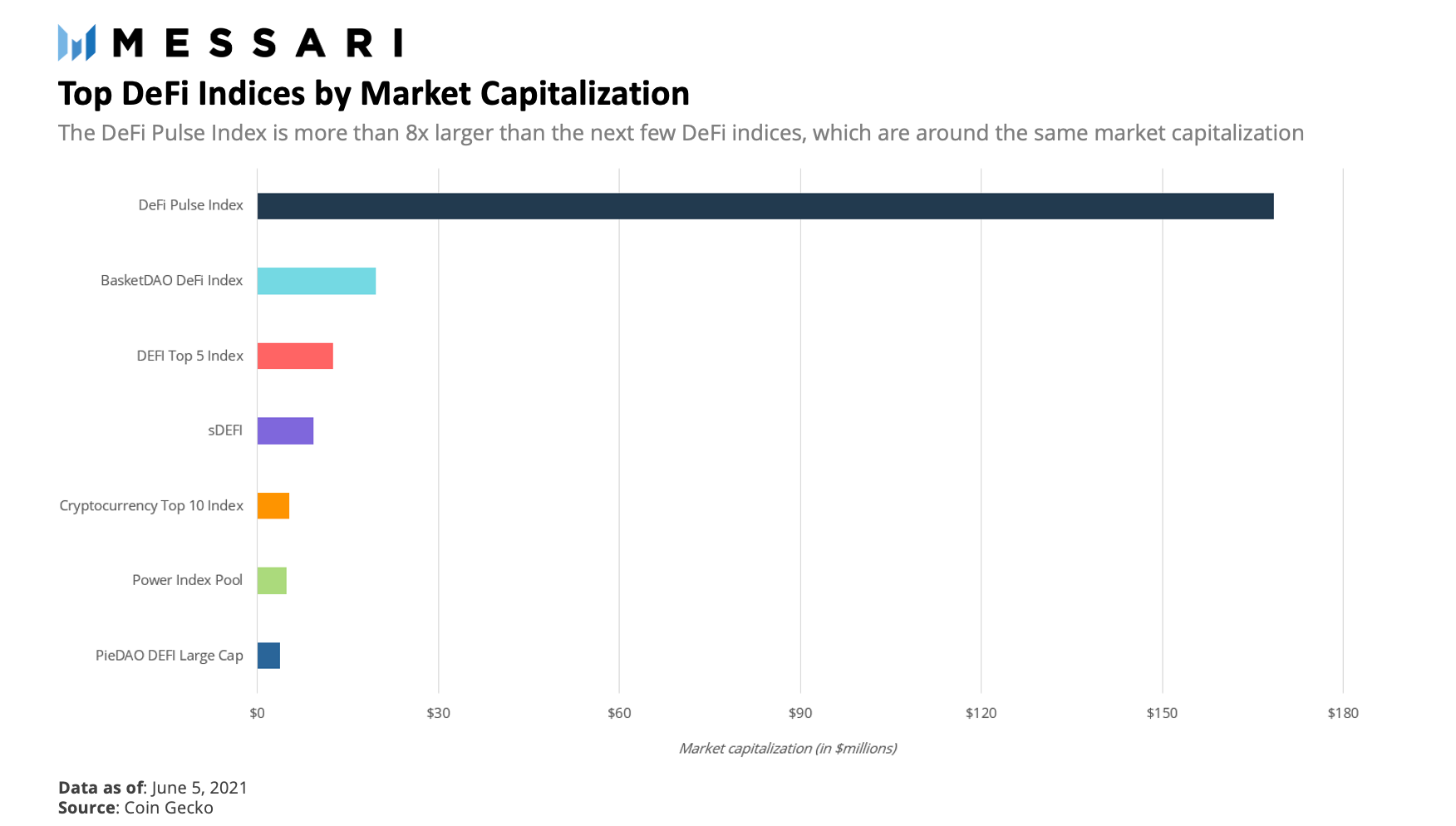
One of the most prominent projects to capitalize on this demand was Index Cooperative (Index Co-Op) with the launch of the DeFi Pulse Index ($DPI). Partnering with the popular analytics provider, DeFi Pulse, and the ERC-20 token bundling project, Set Protocol, this index was among the first of its kind to track the performance of blue-chip DeFi protocols and provide investor’s broad DeFi exposure in a single asset. In the months since its launch, DeFi Pulse Index has continued to be the leader among DeFi indices. It is significantly larger and enjoys higher liquidity across decentralized exchanges compared to its competitors.
Before analyzing Index Co-Op and the DeFi Pulse Index further, let’s start with a look at classic index funds. In traditional financial markets, baskets of securities like ETFs and other index funds provide investors trading flexibility, risk management, and portfolio diversification. As of March 31st, there are 2,466 actively listed ETFs trading in the United States worth roughly $5.9 trillion. Almost 2 billion shares totaling $151.5 billion exchange hands every day. Yet in spite of this liquidity, few alternatives exist in the DeFi market for the various tokens traded across exchanges like Coinbase and Uniswap. The space for crypto indices remains largely untapped with a limited – albeit growing – number of competitors.
Introduction to Index Co-Op
Established in October 2020, Index Co-Op is a decentralized autonomous organization (DAO) leading the race to solve that problem. The team is focused on developing the world’s largest crypto index primitives. The goal goes beyond providing broad exposure to a new asset class with the larger objective to create new instruments for hedging strategies and providing a simple way to own multiple tokens in a sector. In recent months, Index Co-Op has released several structured products for investors.
While the DeFi Pulse Index is the most popular among these products, the team has also explored tracking alternative trends in the cryptocurrency space. One example is the Flexible Leverage Index, a fully collateralized product designed to offer investors targeted 2x leverage exposure to bitcoin or ether. Index Co-Op initially created the index for ether and later established a second structured product for bitcoin. These indices are ERC-20 tokens designed for composability and risk management. A big draw of the Flexible Leverage Index compared to competitors supplied by FTX and Binance are its low streaming fees. Comparatively, these fees are at least 1% lower over an annualized basis. When millions of dollars are at stake, the difference in fees can be sizable.

Jerry joined Messari as a Research Analyst after working in management consulting. He graduated with a B.S. in finance and a minor in computer science from Indiana University's Kelley School of Business.