How Melon's Token Economic Overhaul Impacts its Future Earnings

Years before “DeFi” was in the lexicon of the crypto world, Melon was one of the first projects to raise money through a token sale with the goal of rearchitecting core pieces of the financial system. Despite building a working product and leading the charge in decentralizing governance, the project faced a brutal bear market with its native token, MLN, losing 99% of its value.
Now that DeFi is starting to heat up, the bull case for asset management platforms is becoming more clear and Melon is up 1,600% on the year. Even so, at a $60 million market cap it is still smaller than many other top DeFi projects. One main reason for this low valuation is that in its current state, its economics don’t allow for substantial value accrual to MLN. That is until several community members put together an improvement proposal, MIP7, that outlines a means to better tie platform growth with MLN value accrual.
Existing Economics
Before we get into MIP7 it is helpful to understand how Melon currently works. Melon allows prospective fund managers to spin up an investment vehicle according to a specific set of parameters without going through the numerous hurdles required in doing so the traditional way. This includes onerous administrative costs, legal hurdles, and operational burden to name a few.
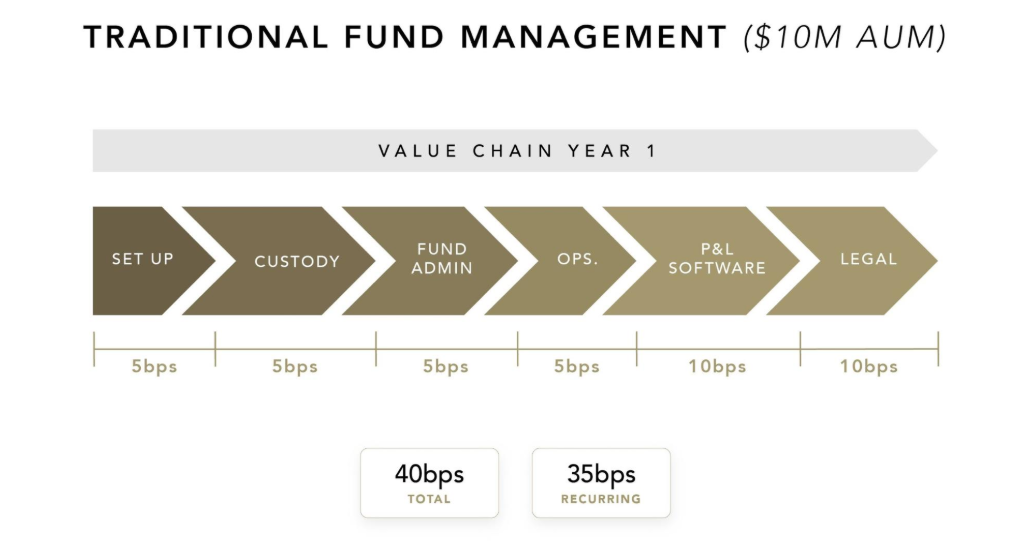
Source: Melon docs
On the other side, investors are then able to evaluate funds based on transparent on-chain reporting and allocate capital towards any fund that fits their preferences.
