Hop Protocol: Entering the Cross-Chain Messaging War

Hop protocol is a rollup-to-rollup general token bridge that facilitates rapid transferring between L1 and L2s. Since its launch in July 2021, it has captured a significant share of the cross-chain bridge TVL.
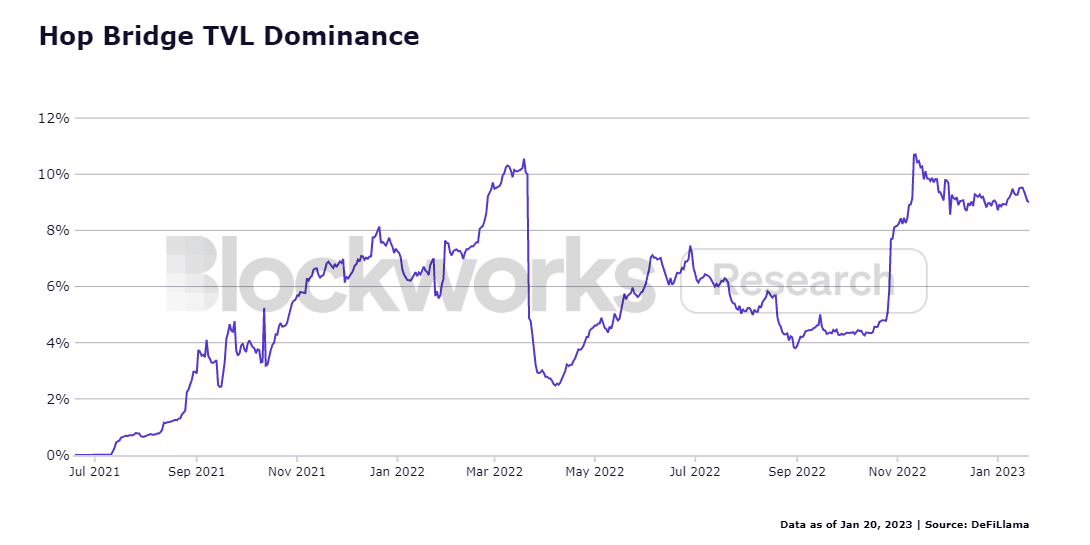
The sharp dip in April 2022 and subsequent recovery was due to Stargate’s launch, which accumulated $4B in TVL in a matter of weeks. As user activity has died down in the bearish market conditions, cross-chain bridging activity has decreased significantly across the board. In H1 2022, Hop averaged a monthly volume of $272.6M, but in H2 2022, Hop averaged a monthly volume of $128.5M, nothing surprising considering DeFi started 2022 with a TVL of $166.59B and ended it with $39.12B in TVL.
Hop Protocol Mechanisms
Hop protocol uses two mechanisms to facilitate the bridging of canonical tokens without the security concern of traditional lock and mint mechanisms. In most scenarios, the canonical version will be the token that the native token bridge mints upon bridging to the rollup of choice.
Hop Bridge Tokens
The first mechanism is the creation of hop bridge tokens. These “hTokens” (hETH, hUSDC, etc) can be minted and burned across various chains, which allows node operators and bonders to monitor bridge transactions and provide upfront liquidity. Importantly, hTokens are specialized L2 tokens that can be transferred rollup-to-rollup in batches and act as an intermediary bridging asset for the protocol.

Ren leads coverage on Options, Structured Products, Money Markets, and AMMs. Previously worked at a crypto hedge fund managing DeFi strategies.