Hold the CELObrations: Stablecoins on CELO

There are two sides to Celo’s stablecoin activity, USDT (Tether) and cUSD (Celo Dollar). We believe both USDT and cUSD activity is overstated, but by different measures.
The stablecoin supply for USDT has grown significantly over the past year, but the total supply of USDT on the Celo network is not representative of the organic onchain demand for USDT.
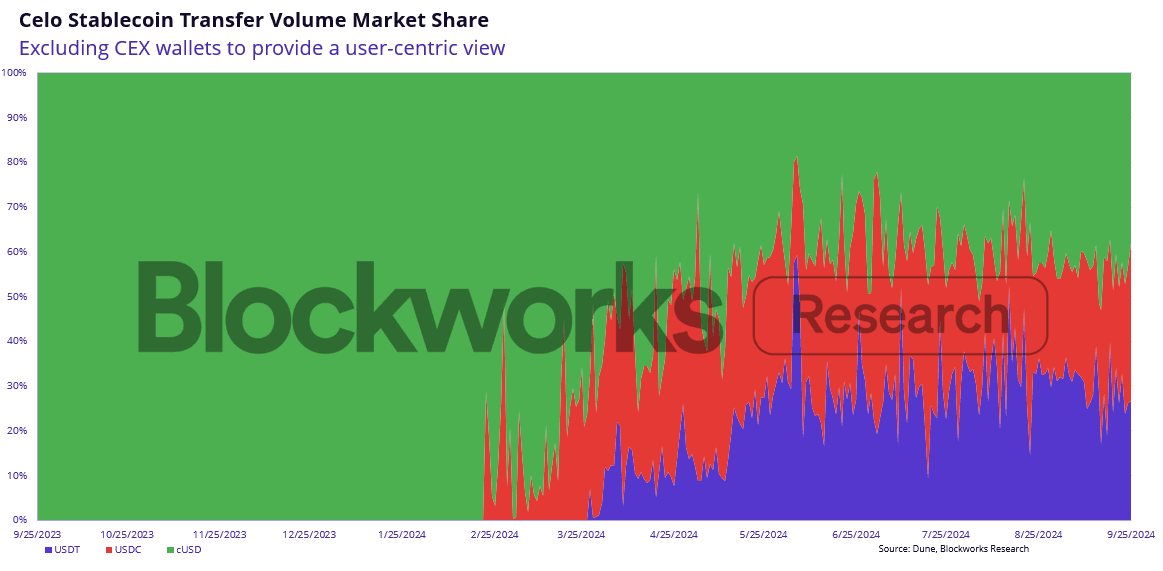
Tether and other organizations often retain a certain amount of stablecoins on the network for proper operational management. Furthermore, among the claims is that there is $470M USDT deployed in CELO with $262M in circulation. However, what we find appears to be different. After accounting for the treasury ($281M) and CEX wallets (~190M) only around ~$18.73M USDT remains in circulation between users, developers, etc. The remaining amount of USDT activity is situated between a small number of users. After taking this into account, we can find that the true stablecoin market share for Tether is actually 30% relative to other stables. We find that USDT activity pales in comparison to cUSD.
Celo’s cUSD stablecoin makes up the bulk of both transaction volume and transaction count. The stablecoin transfer volume market share is dominated by cUSD (43%), with Tether at a distant 2nd place (30%) with the remainder contributed by other stablecoins. The cUSD transaction count at this point in time is 60 times higher than the transaction count for USDT. These transactions are closely related to small payment apps or mini games like Blockscratch, Valora, and Minipay.
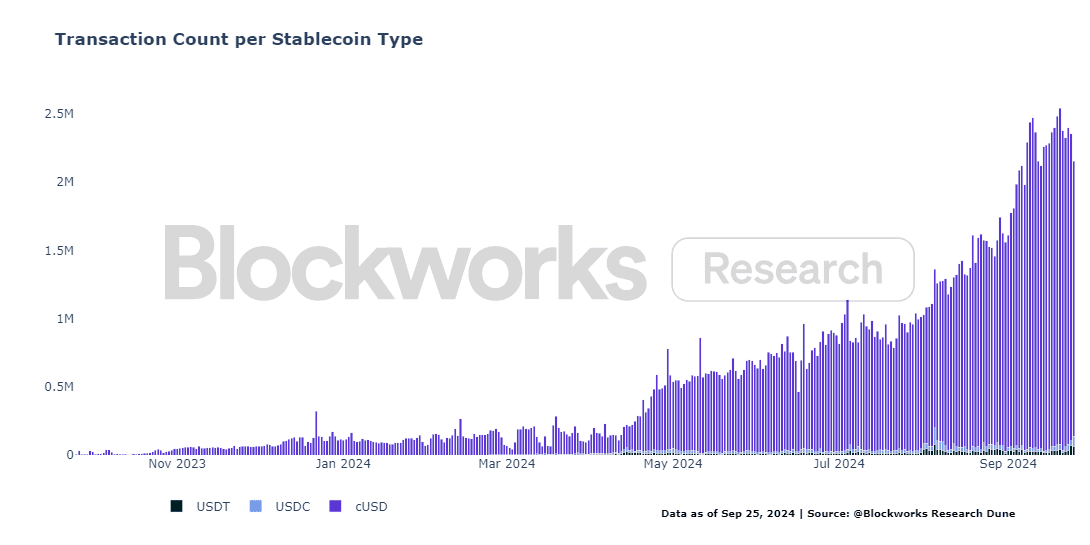
A closer look at the activity within these apps suggests it's unlikely to be driven by genuine users. These apps reward activity with extremely small payments in cUSD stablecoins or provide additional payment for reward streaks where users claim their rewards consistently, day-after-day.
