Governor Note: Neutron's Launch on Replicated Security

Key Insights
- A proposal seeking to onboard Neutron as the Cosmos Hub’s first Partner Chain secured via Replicated Security is expected to enter the Voting Period on April 12, 2023.
- Neutron may be the first permissionless CosmWasm-enabled chain to offer high levels of security since Terra’s collapse.
- Cosmos Hub governance will have to determine if the potential value Neutron can provide for ATOM stakers justifies the additional costs that will disproportionately impact smaller validators.
Introduction
On March 21, 2023, Neutron authored a proposal to onboard itself as the Cosmos Hub’s first Partner Chain (also known as Consumer Chain). Neutron is expected to be the first chain to use Replicated Security to tap into the high levels of security offered by the Cosmos Hub.
Of course, everything comes at a cost. With many smaller validators operating with slim profit margins, the additional costs associated with Replicated Security could have a centralizing effect on the Cosmos Hub’s active validator set. As the Cosmos Hub braces for Neutron’s launch, governance participants have questioned if Neutron’s potential value will justify its financial implications for validators.
Background
The Cosmos Hub
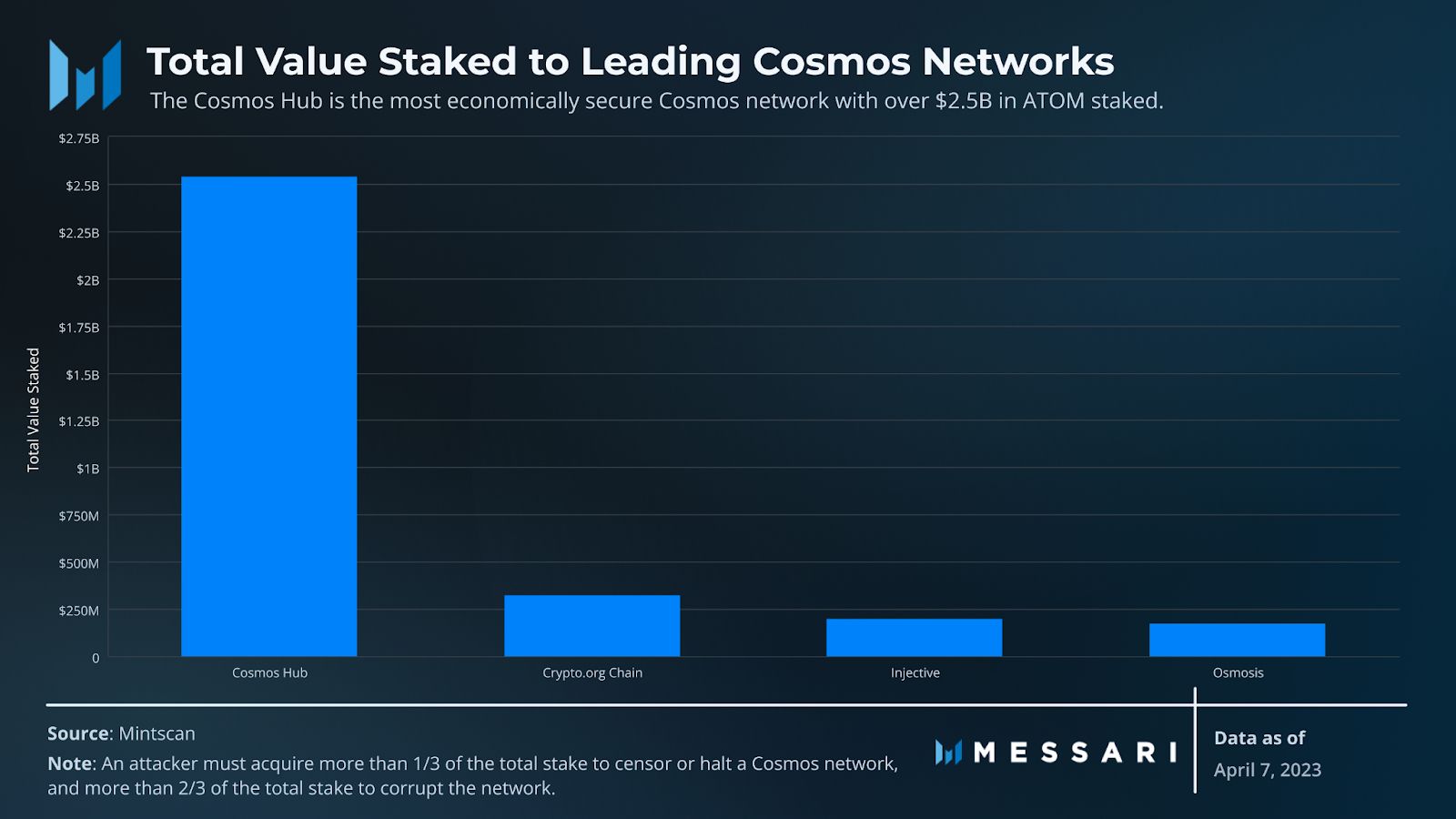
The Cosmos Hub is the first blockchain built within the Cosmos ecosystem, which now consists of over 50 sovereign and natively interconnected blockchains. The Cosmos Hub is by far the most economically secure Cosmos network. It currently has ~$2.5 billion worth of staked ATOM, Cosmos’ native asset.
The Cosmos Hub has a history of conservative governance practices. Cosmos Hub stakeholders have repeatedly demonstrated their preference for Hub Minimalism, the philosophy that a Hub should minimize features to mitigate potential vulnerabilities. In May 2022, Cosmos Hub Proposal 69 called for a permissioned instance of CosmWasm, a smart contract framework designed for the Cosmos ecosystem. Despite the proposal being backed by several Cosmos thought leaders, including Jack Zampolin and Zaki Manian, it was ultimately rejected with less than 14% of votes in favor.
At the time, Cosmos’ DeFi scene was hindered by the lack of IBC-enabled liquid staking derivatives (LSDs). The low-risk staking rates were discouraging the active use of Cosmos-native assets. Proposal 69 would have paved a path for liquid staking providers, like Lido, to issue LSDs on the Cosmos Hub.
Proposal 69’s failure led to Cosmos Proposal 72. It granted 150,000 ATOM (~$1.3 million at the time) from the community pool to fund projects looking to leverage Interchain Security, with a notable example being P2P’s mission to launch a “DeFi Hub Consumer Chain set to host the Lido liquid staking protocol.” One-third of the ATOM granted through Proposal 72 was allocated towards the development of what would eventually become Neutron.
ATOM
The Cosmos Hub has always sought to position itself at the center of the internet of blockchains by prioritizing scalability, interoperability, and sovereignty. Regardless, the Cosmos Hub has never imposed its native token on external projects leveraging open-source tools like the Cosmos SDK and Inter-Blockchain Communication Protocol (IBC). While this approach allowed the Cosmos ecosystem to experience impressive growth since launching in 2019, the Cosmos Hub and ATOM stakers have not been able to capture significant value relative to the accelerating adoption of the Cosmos SDK and IBC.
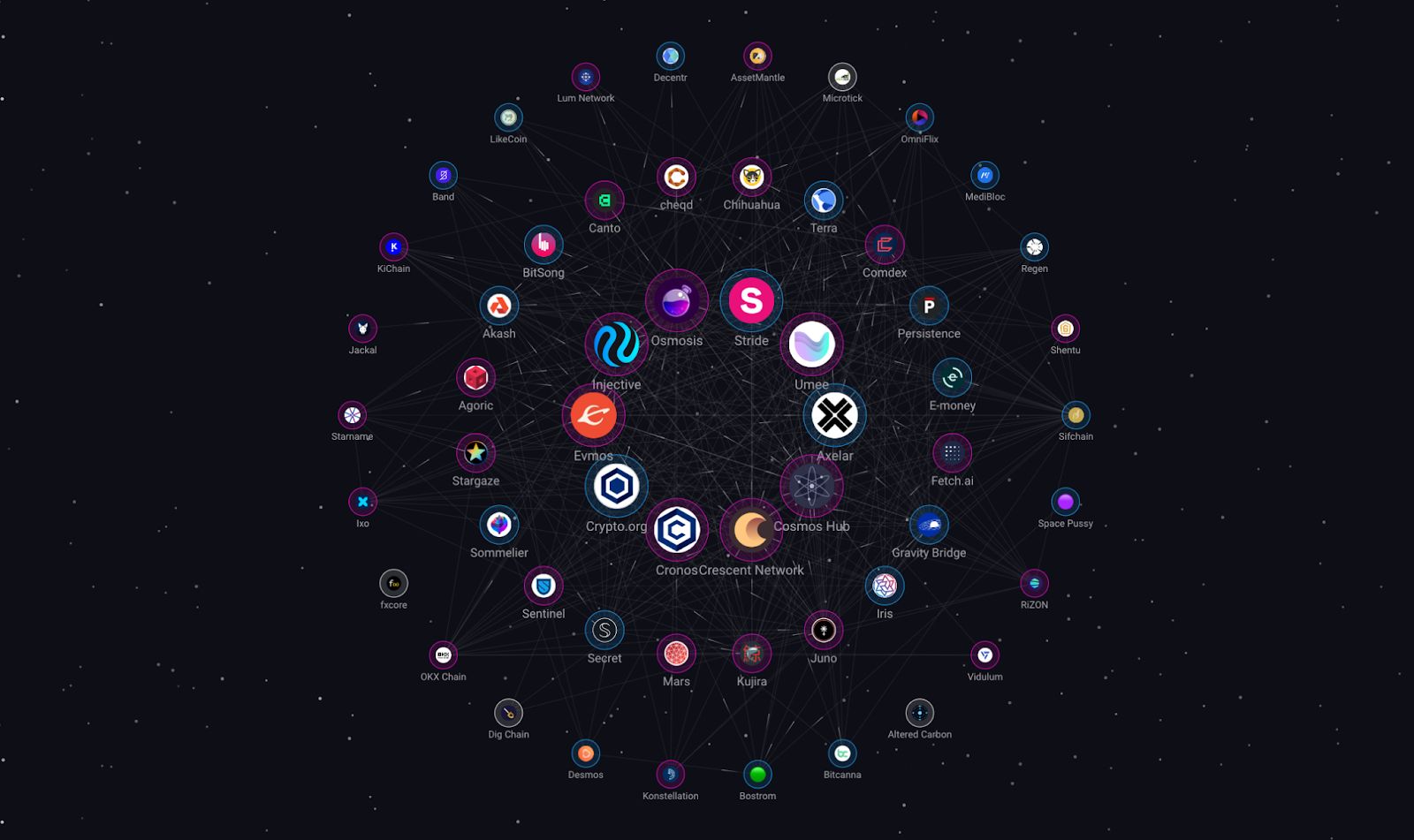
Cosmos networks sorted by 30D IBC volume, as seen on Map of Zones.
Beyond serving as the native staking and governance token for the Cosmos Hub, ATOM currently has little utility. There was an attempt to better establish ATOM as the interchain reserve currency in the fiercely debated ATOM 2.0 proposal, but the proposal was ultimately vetoed by governance. The Cosmos Hub’s lack of utility may have contributed to its slide behind Osmosis in both IBC connections and monthly IBC volume.
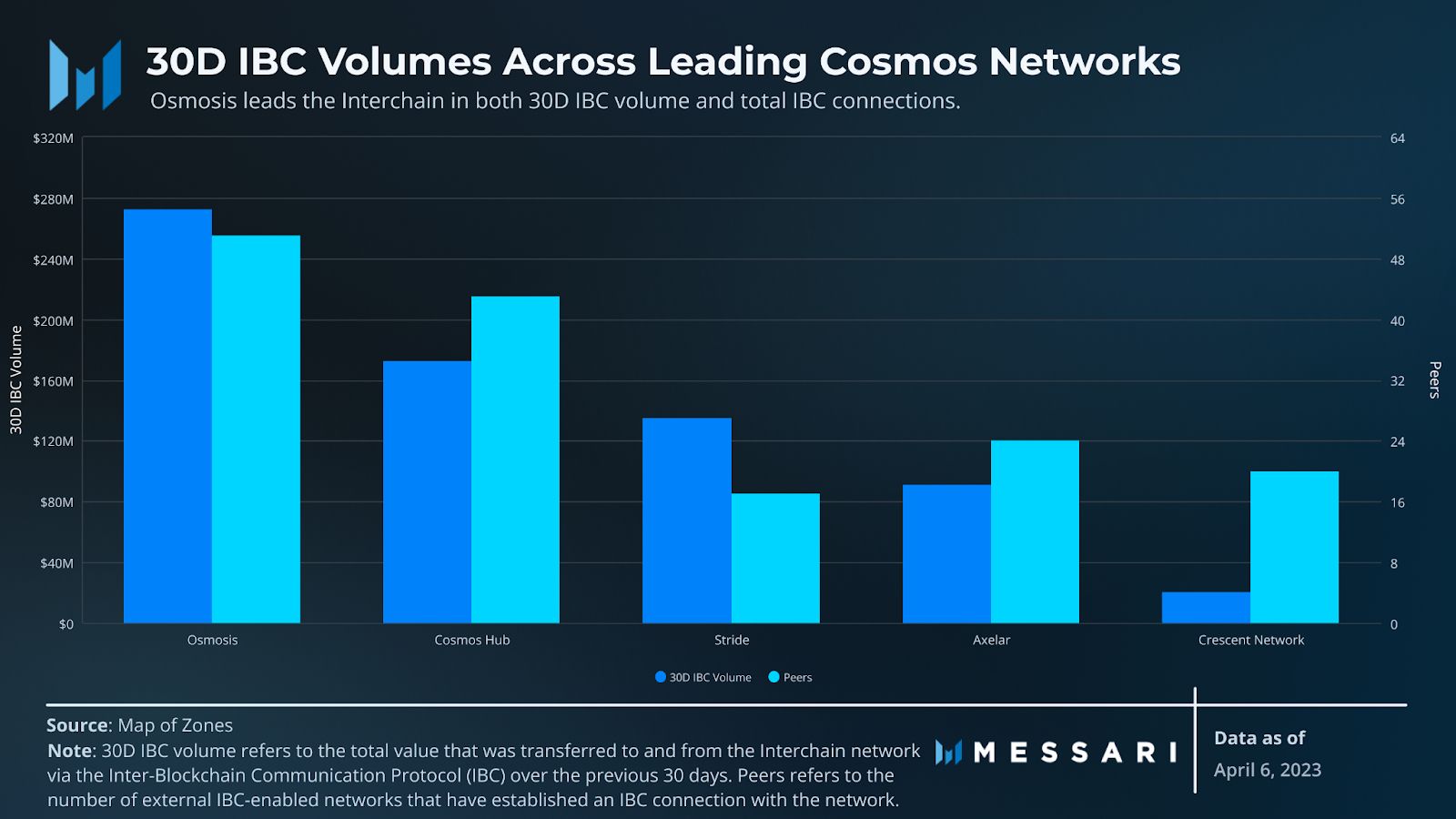
Despite Osmosis seeing the majority of IBC volume, the Cosmos Hub gained significant utility as the on- and off-ramp for the Interchain, thanks to ATOM’s wide availability and relatively deep exchange liquidity. However, this narrative could be threatened as Noble, a highly anticipated Cosmos network focused on generic asset issuance, plans to issue a Cosmos-native USDC.
Currently, the Cosmos Hub’s greatest offerings appear to be its high levels of economic security, decentralization, and large and active community.
Replicated Security
Replicated Security is the first version of Cosmos’ Interchain Security (ICS) model. Interchain Security enables a well-established Provider Chain with a high value staked on it, like the Cosmos Hub, to lease security to a Partner Chain that may not attain similar levels of decentralization and security on its own. In its current form, Replicated Security requires the Cosmos Hub’s entire validator set (currently 175 validators) to run an additional node to secure Neutron with the same ATOM stake.
Partner Chains must receive over ⅔ of the Provider Chain voting power to be onboarded. Currently, validators can’t individually opt in or out once a Partner Chain has been onboarded. In other words, Partner Chains must provide enough value to satisfy at least ⅔ of the Provider Chain’s voting power.
Securing Partner Chains presents additional costs for validators of the Provider Chains in the form of hardware and labor, which can make it challenging for smaller validators on the Provider Chain, which may already be operating at a loss, to sustain their operations.
If small validators are defined as validators that collectively represent less than 10% of the total ATOM staked to the Cosmos Hub, then small validators currently represent 96 (~55%) of all validators in the Cosmos Hub’s active set.
According to validator and Neutron core contributor Spaydh, it costs at least ~$600 per month to run a Cosmos Hub validator. By this estimate, 22 (~13%) of the Cosmos Hub’s validators may currently be operating at a loss. If costs double while all else remains unchanged, as many as 42 (24%) of the Cosmos Hub’s validators may be operating at a loss.
Many validators already intentionally operate with excessively slim profit margins or at a loss for a variety of reasons. That said, the addition of a Partner Chain will disproportionately impact smaller validators, with smaller validators representing 17 of the 20 (85%) newly projected loss-making validators.
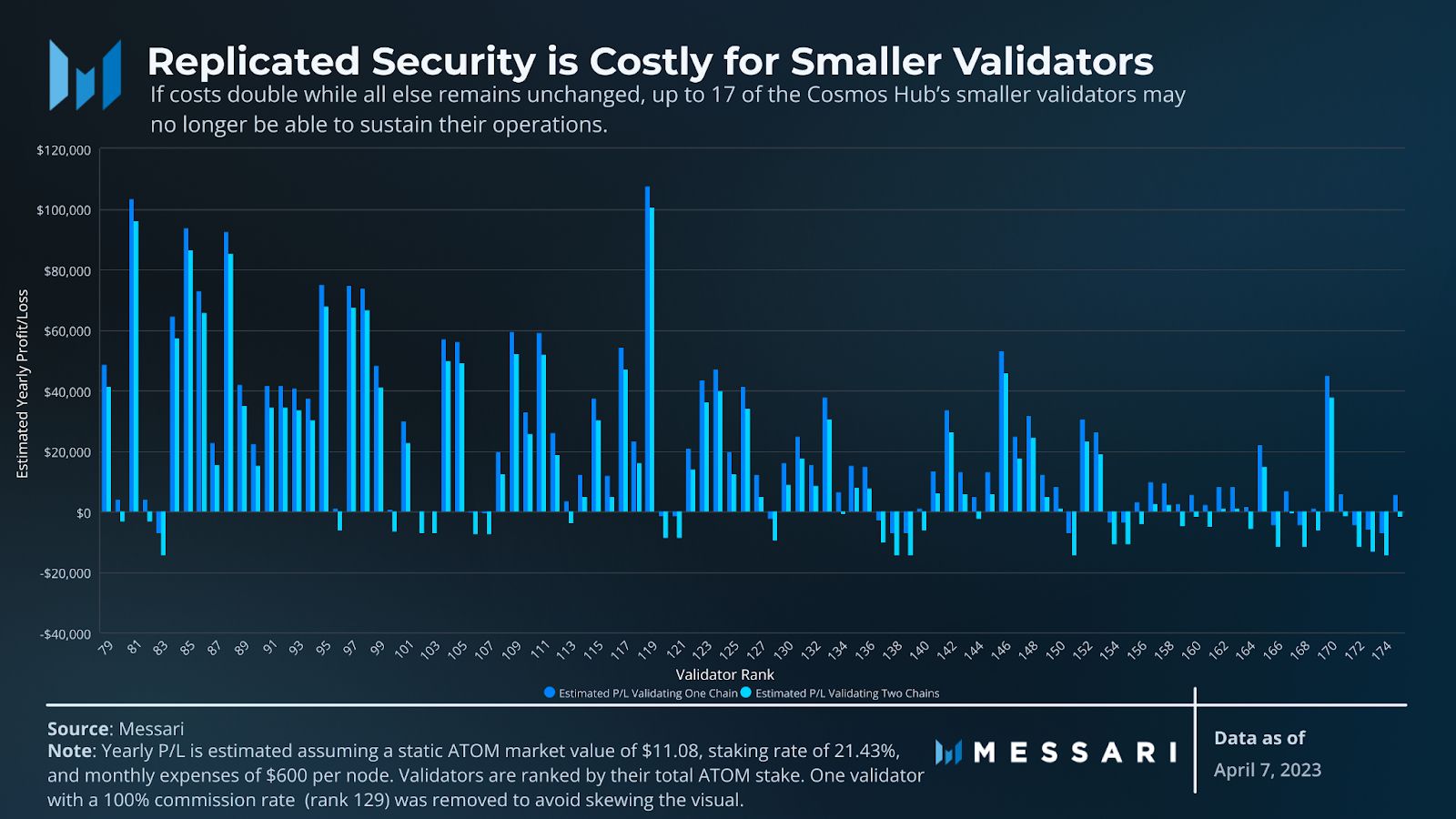
In reality, the above is a rough estimate at best: The cost associated with running a validator can easily exceed $600; ATOM’s market price and inflation rate can vary; and validators may adjust their commissions. Regardless of the exact numbers, forcing all of the Cosmos Hub’s validators to validate a Partner Chain will undoubtedly shrink profit margins for all validators.
In the short term, it could potentially terminate profits for about a fifth of the smaller validators if favorable agreements aren’t reached beforehand. This could have a centralizing effect on the Cosmos Hub’s active validator set, as smaller validators are pushed out and replaced by larger validators.
Neutron
Governance Concerns
As the Cosmos Hub prepares to onboard its first Partner Chain, the discussion amongst validators and governance participants has been heating up. Ertemann of Lavender Five, a reputable Cosmos validator, voiced concerns that onboarding Neutron guarantees little to zero economic value accrual for ATOM stakers and infrastructure providers. Ertemann brings up an important point. The proposal to launch Neutron offers the Cosmos Hub 25% of transaction fees and MEV revenues, in addition to 7% of the total NTRN supply for ATOM stakers (representing 58.3% of the initial circulating supply).
To put things in perspective, Juno, a fully sovereign Cosmos blockchain branded as “The Home of CosmWasm,” currently sees around 45,000 transactions per day. Neutron is similar to Juno in that it’s a permissionless CosmWasm-enabled network. Neutron will likely be a more attractive platform than Juno for builders and users because it inherits the high levels of security provided by the Cosmos Hub.
Terra, on the other hand, handled ~600,000 transactions per day during the month prior to its collapse. At the time, Terra was the only permissionless CosmWasm platform to offer levels of security comparable to the Cosmos Hub. Its transaction fee revenues can likely provide a better glimpse at Neutron’s potential. Assuming validators set fees to at least $0.05 per transaction and Neutron can achieve similar activity levels as Terra did, Neutron can bring in ~$11 million per year from transaction fees alone, with much more growth potential. Nonetheless, even impressive transaction fees and MEV revenues may not be enough to subsidize smaller validators, who earn commissions proportional to their smaller stakes.
Since Cosmos networks use Delegated Proof-of-Stake, Cosmos Hub validators are only entitled to the genesis NTRN allocation if they are stakers. While it may seem like a simple solution to subsidize Cosmos Hub validators with an additional portion of the total NTRN supply, it’s unlikely that it would be effective in practice. There’s significant competition to break into and remain in the active set. With the smallest validators in the active set constantly changing and Neutron being limited by the Cosmos Hub’s 14-day voting period, a successful NTRN airdrop to validators would be impractical.
On the contrary, Interchain Foundation team member ala.tusz.am suggested that while it’s the burden of the Partner Chain to prove its worth before launching, it’s the burden of the Provider Chain to ensure that its validator set can sustain the load.
Neutron’s Response
Neutron core contributors recently announced plans to reduce the financial burden for smaller validators by potentially offering a soft opt-out option for the ~65 Cosmos Hub validators in the bottom 5% of the active set. On the one hand, this mechanism would compromise Neutron’s liveness, particularly during upgrades since up to 5% of the network may be offline. On the other hand, it could significantly enhance the sustainability of smaller validators’ operations without any impact on the high levels of security Neutron inherits from the Cosmos Hub. Assuming the soft opt-out feature that’s currently undergoing testing can be successfully implemented, validators that opt-out will continue to receive the same revenue from the Partner Chain as if they’d chosen to opt-in without having to incur additional costs.
EffortCapital, a proponent of launching Neutron on Replicated Security, questioned why validators that opt-out should continue to earn rewards for validating the Cosmos Hub if the primary purpose of the Cosmos Hub is to serve as a security provider for Partner Chains. He goes on to explain that validating is a business, and as such, there is a risk that all validators may temporarily operate at a loss. While it’s not in Neutron’s interest to reward ATOM stakers that aren’t contributing to the chain’s security, a more advanced opt-out mechanism that distributes revenues appropriately requires a Cosmos Hub upgrade — a much bigger lift.
On the other hand, Jacob Gadikian, CEO of Notional Labs, a highly active service provider involved in validating, auditing, and developing Cosmos networks, argued that the community should size the opportunity and give Neutron a chance. He explained that while it’s unlikely for Interchain Security to be optimal at launch, it can be improved over time.
Opportunities
While launching Neutron on Replicated Security may present some challenges for the Cosmos Hub’s validator set, Cosmonauts expect it to mark the birth of the Atom Economic Zone. This ATOM-aligned ecosystem aims to expand the Cosmos Hub’s services to nurture the growth of the broader Interchain economy. As a permissionless CosmWasm-enabled blockchain, Neutron can complement Interchain Security with its vertical scaling capabilities.
As previously mentioned, easily accessible and reliable LSDs are essential for the growth of Cosmos’ DeFi ecosystem. Several liquid staking solutions, like Stride, Quicksilver, and pStake, have arisen for Cosmos-native assets since Cosmos Hub Proposal 69’s failure. Still, all of them are currently governed and secured by their own native tokens and validator sets. As such, they would struggle to safely scale with demand.
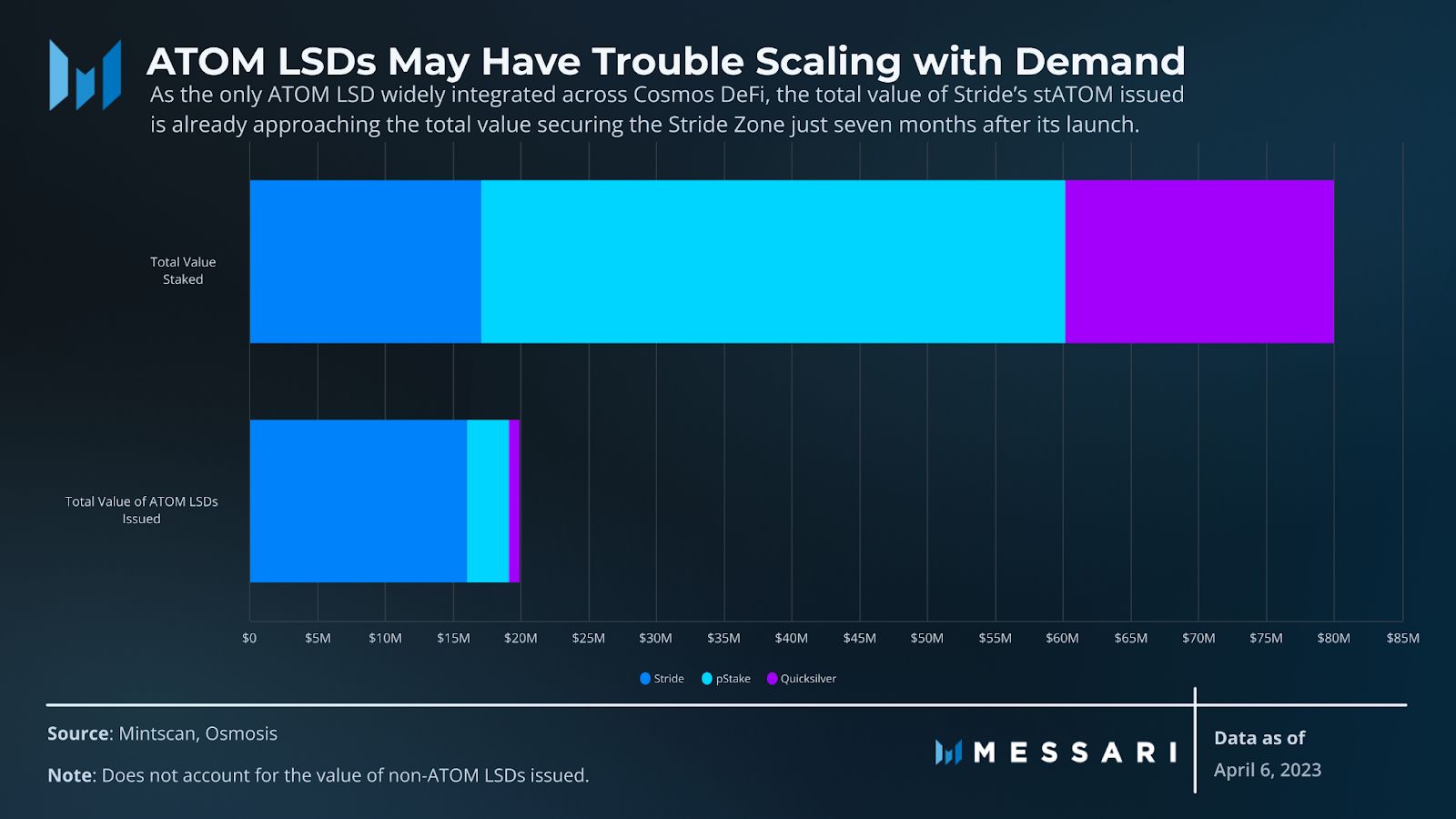
In September 2022, the Lido community demonstrated interest in deploying a custom implementation of Lido on Neutron to help serve the liquid staking needs of the Cosmos ecosystem. If the proposal to launch Neutron passes and the Lido DAO chooses to deploy Lido on Neutron, Lido would become the first Cosmos-native liquid staking solution to inherit the high levels of security provided by the Cosmos Hub. As the leading liquid staking solution for Ethereum and the broader crypto ecosystem, a Lido deployment on Neutron can have huge implications for Cosmos DeFi. It would also create healthy competition for Stride, which plans to transition to Interchain Security in the near future.
Neutron can make up for some of Cosmos’ shortcomings, like the lack of easily accessible and secure DAO tooling. As an open-source CosmWasm app, DAO DAO currently provides some of the Interchain’s most impressive DAO tooling, but it’s limited by only being deployed on Juno. Should DAO DAO, or a similar application, be deployed on Neutron, Neutron may be able to establish itself as the preferred platform for Interchain DAOs and SubDAOs to securely organize their operations.
Furthermore, by leveraging Interchain Accounts (ICA) and Interchain Queries (ICQ) from day one, applications built on Neutron can retrieve data from other IBC-enabled blockchains in a permissionless and trustless manner. At the same time, they enable users to execute transactions across the Interchain without cross-chain complexity. Any project interested in launching a CosmWasm application can then deploy on Neutron and instantly gain access to all of Cosmos’ cross-chain liquidity. When combined with the appropriate DAO tooling, this combination may be exactly what’s needed to help kickstart the active management of Cosmos DAOs’ treasuries.
Should Cosmos Hub governance decide to give it a chance, the launch of Neutron on Replicated Security will mark the start of a new era for the Cosmos Hub. The monetization of the Cosmos Hub’s security can help ease the transition from incentivizing stakers with excessive inflationary emissions to compensating stakers with real revenue. Neutron has already taken steps to incorporate valuable community feedback in the proposal, demonstrating that it won’t squander the opportunity to set meaningful precedents and pave the way for future Partner Chains.

AJ is a Governance Analyst at Messari. Before joining Messari, he was an operations specialist at a Cosmos DeFi appchain.