Gearbox Unpacked

Have you ever looked at a liquidity pool with an attractive yield and wished you could execute the strategy with more size? Gearbox is a decentralized, general leverage-as-a-service (LaaS) protocol composed of passive, single-asset LPs and borrowers seeking leverage. The protocol first went live in December 2021 and recently launched V2, which is freshly open to the public. Users can deposit collateral and open credit accounts, which are smart contract generated addresses that enable users to interact with their favorite DeFi protocols. A credit account acts as an isolated smart contract that holds the user’s collateral and borrowed funds, maintains liquidation thresholds, and enforces token permissions. In this sense, users can think of a credit account as a programmable DeFi wallet.

A list of whitelisted smart contracts and tokens is governed and maintained by GEAR token holders, where holders can propose and discuss the pros and cons of new integrations. Since Gearbox does not isolate tokens in its own silo of contracts, the process of adding protocol and token support is significantly easier than your standard DeFi protocol. Assets never enter the custody of a single person or company. Instead, they interact with third-party protocols, making the entire protocol composable with the rest of DeFi. This unique advantage makes Gearbox shine. As long as all assets within a requested pool have Chainlink oracles, which enable the protocol to have a reliable source of truth on asset prices and liquidation thresholds, that pool can be added to Gearbox under the discretion of governance.
Users seeking passive yield can deposit USDC, DAI, ETH, WSTETH, or WBTC to earn interest. Users seeking leverage then borrow from these pools to execute the potential strategies discussed below. Third-party liquidators are responsible for liquidating positions and earn a 4% fee as an incentive to do so. Proper liquidation should return LPs’ assets to their pools and protect depositors from exposure to bad debt.
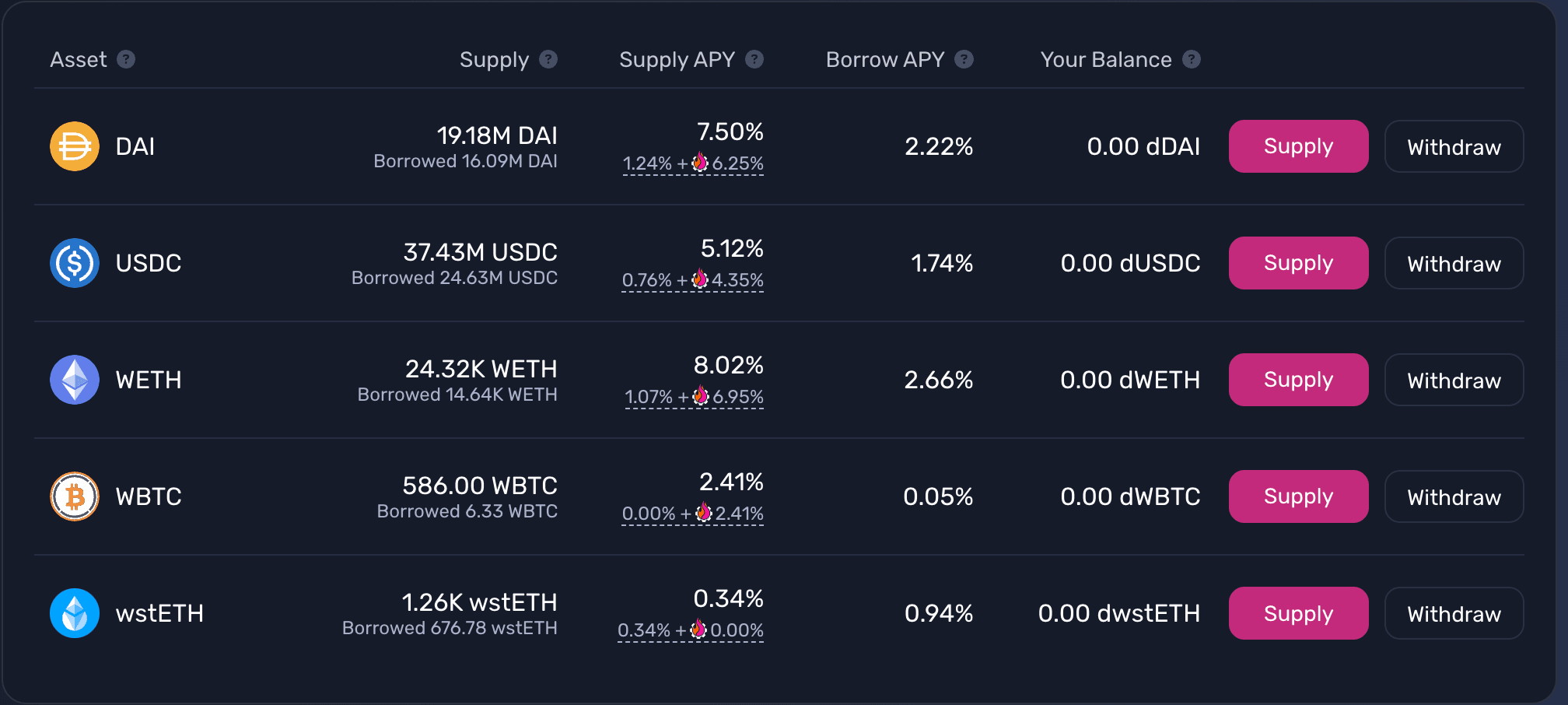
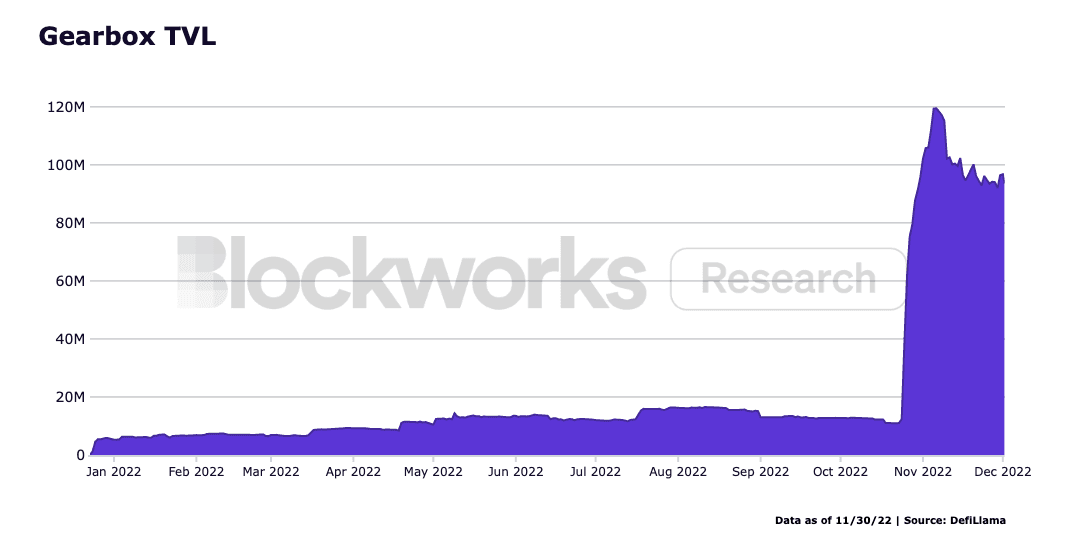
Gearbox charges a 1.5% liquidation fee. The protocol also charges a 50% APY spread fee between what LPs receive and what farmers pay for borrowing. These fees flow strictly to the DAO treasury address. At this time, fee sharing to GEAR holders is not active, but governance could elect to do this in the future. So far, the protocol has attracted a peak TVL of $120M, which includes both asset suppliers and borrowers. The surge in TVL corresponds with inflationary GEAR token rewards for providing supply-side liquidity. Gearbox also opened itself for the public to use, whereas for the prior year it was open to a strict whitelist.

Pibblez leads coverage on emerging L1s, infrastructure, and stablecoins. Previously worked as a Research Analyst at Kraken.