Ethereum December 2025 Update

Ethereum’s Real Economic Value (REV) declined further in December 2025, falling to its lowest monthly level since May 2020. Network revenue compressed to $14.4M, extending November’s sharp contraction.
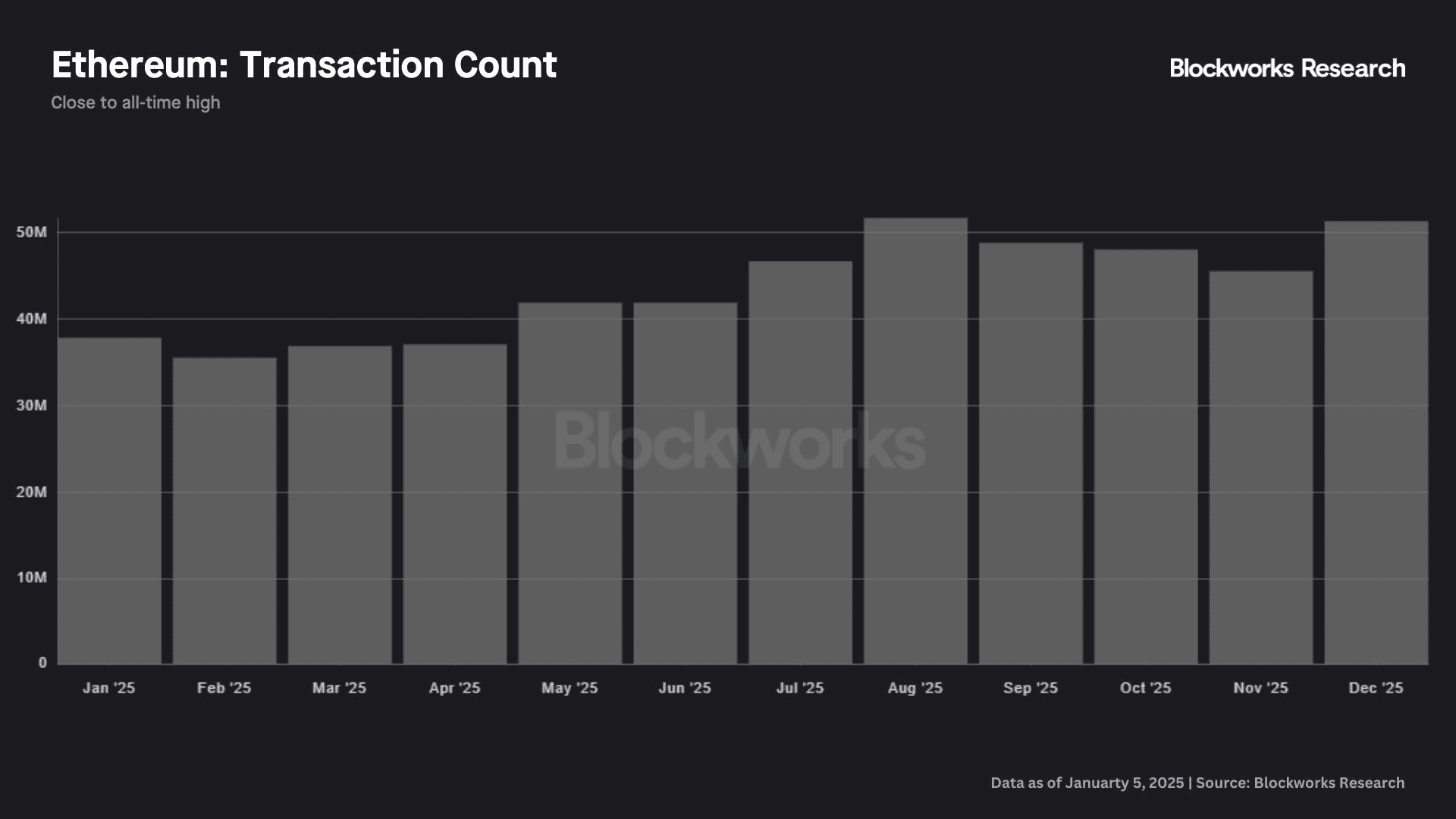
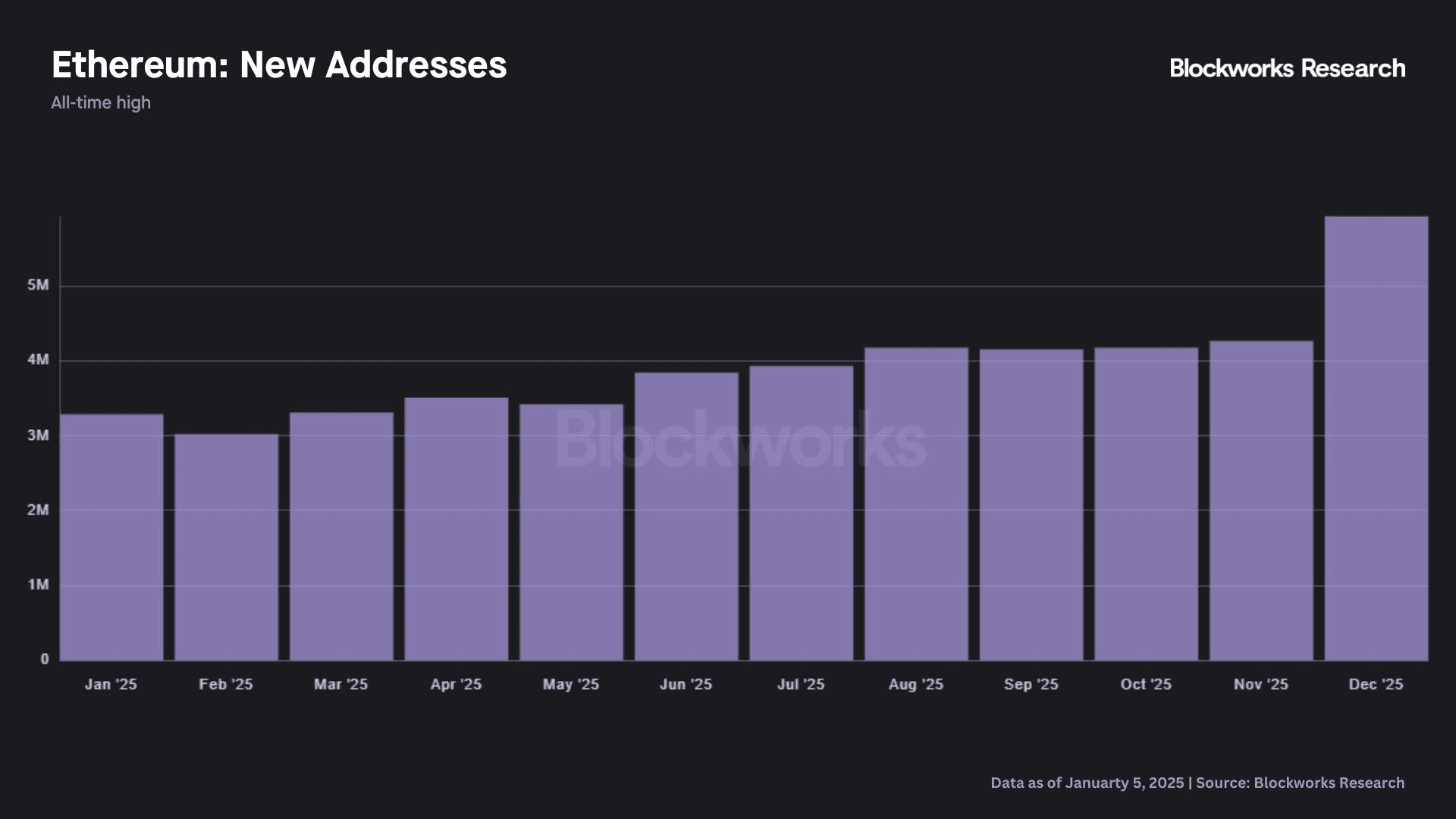
However, this decrease was not due to a decrease in onchain activity. In fact, as shown below, it was the complete opposite, as monthly transactions neared an all-time high (reaching over 51 million). Ethereum also saw an all-time high in monthly active addresses of 17.13 million (surpassing the 16.8 million users recorded in August 2025). This milestone was largely thanks to new users coming to Ethereum (as shown below).
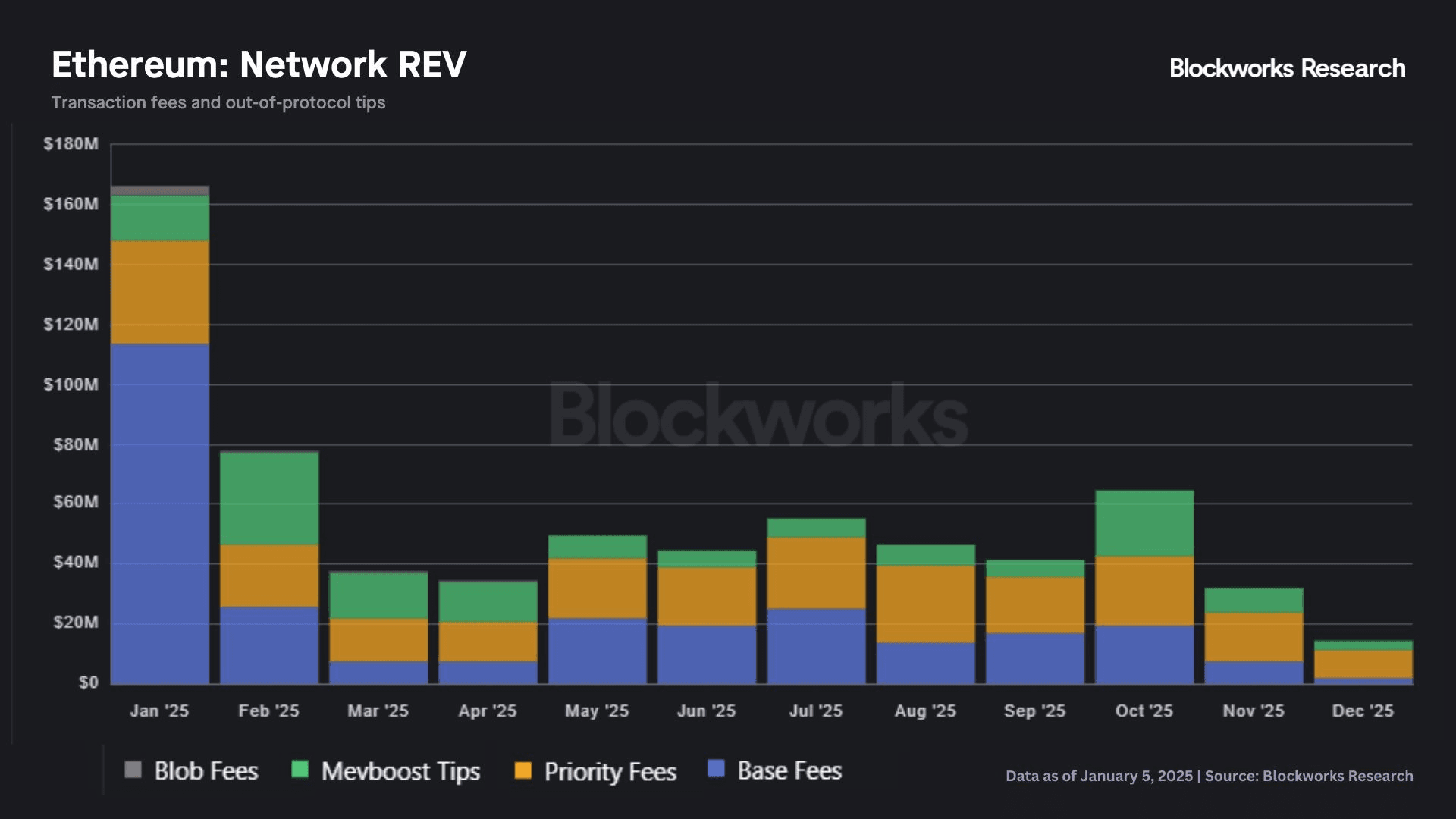
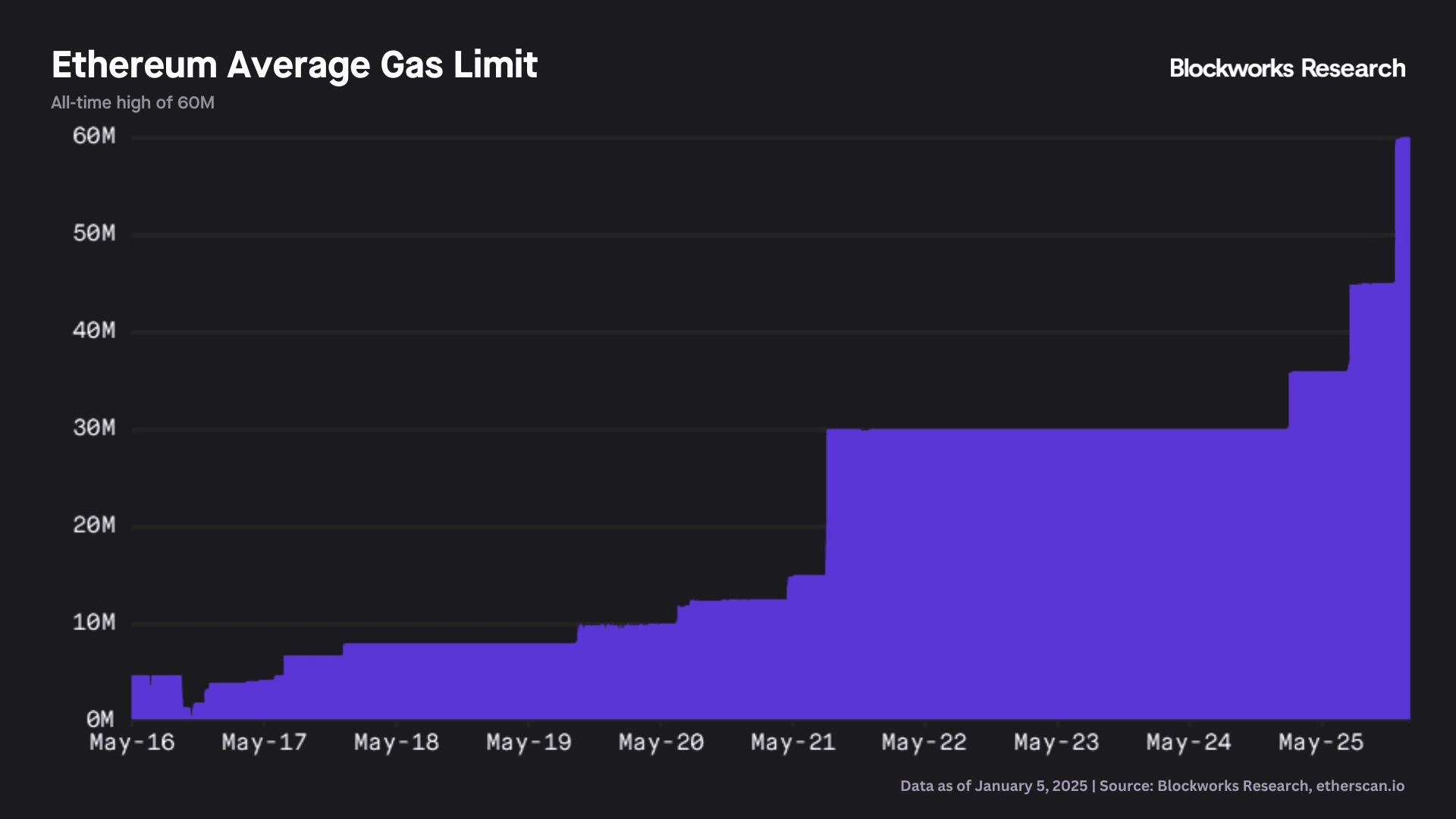
The sharp drop-off in REV underscored the effect of the most recent gas limit increase. With average gas limits at all-time highs, additional blockspace capacity helped absorb demand without driving fee pressure, even during periods of moderate activity. As a result, higher throughput translated into lower marginal fees rather than increased revenue. The dynamic reinforces a key tradeoff in the current network regime: gas limit expansions improve scalability and user experience but dampen fee generation in the absence of strong transactional demand. In December’s low-volatility environment, the expanded gas ceiling amplified the revenue downside, contributing to REV printing its lowest level in years.This caused Ethereum’s share of total network revenue (all sources of income) to slip further in December, falling to a new low. While Ethereum remained one of the larger individual contributors, its relative position continued to erode as revenue increasingly concentrated on alternative execution layers and high-throughput venues. Hyperliquid maintained its lead for another month, capturing the largest share of network revenue, while Tron also maintained a sizable portion despite more competition from stablecoin chains. In December 2025, Ethereum maintained its dominant position in the data availability (DA) market, continuing to account for the clear majority of total data consumption (excluding EigenDA). While market share fluctuated modestly week to week, Ethereum consistently captured roughly two-thirds to three-quarters of DA usage through most of the month. The one-week spike from Celestia came from a non-public namespace ID (possibly a test run as the activity quickly faded to 0 soon after). Ethereum DEX activity softened further in December 2025, with total volume falling to roughly $48B, marking a continued step-down from November and the lowest monthly print since early October 2024. The decline reflected persistently low volatility, tight trading ranges, and a broad retreat in speculative participation as year-end liquidity thinned. Stablecoin-to-stablecoin swaps remained the dominant category, accounting for the largest share of volume, but also saw further contraction as arbitrage and rebalancing opportunities diminished.

Marc covers Ethereum, Bitcoin and their L2s. Previously led Ethereum and DeFi research at CoinShares.