Enterprise Note: The Capitulation of the Buyback Narrative

Introduction
In the first week of 2026, Helium and Jupiter sparked debate on X about what the true purpose of buybacks are. In 2025, many projects initiated a buyback and burn system, believing it would demonstrate token alignment and potentially drive the token price upward. Examining the data, we can see that a significant portion of the major protocols with buybacks underperformed the broader market. We believe that treating protocol revenue as capital to be reinvested to grow the business is generally a superior option to buybacks, especially for early-stage protocols and projects.
The White Flag Announcements: Helium & Jupiter
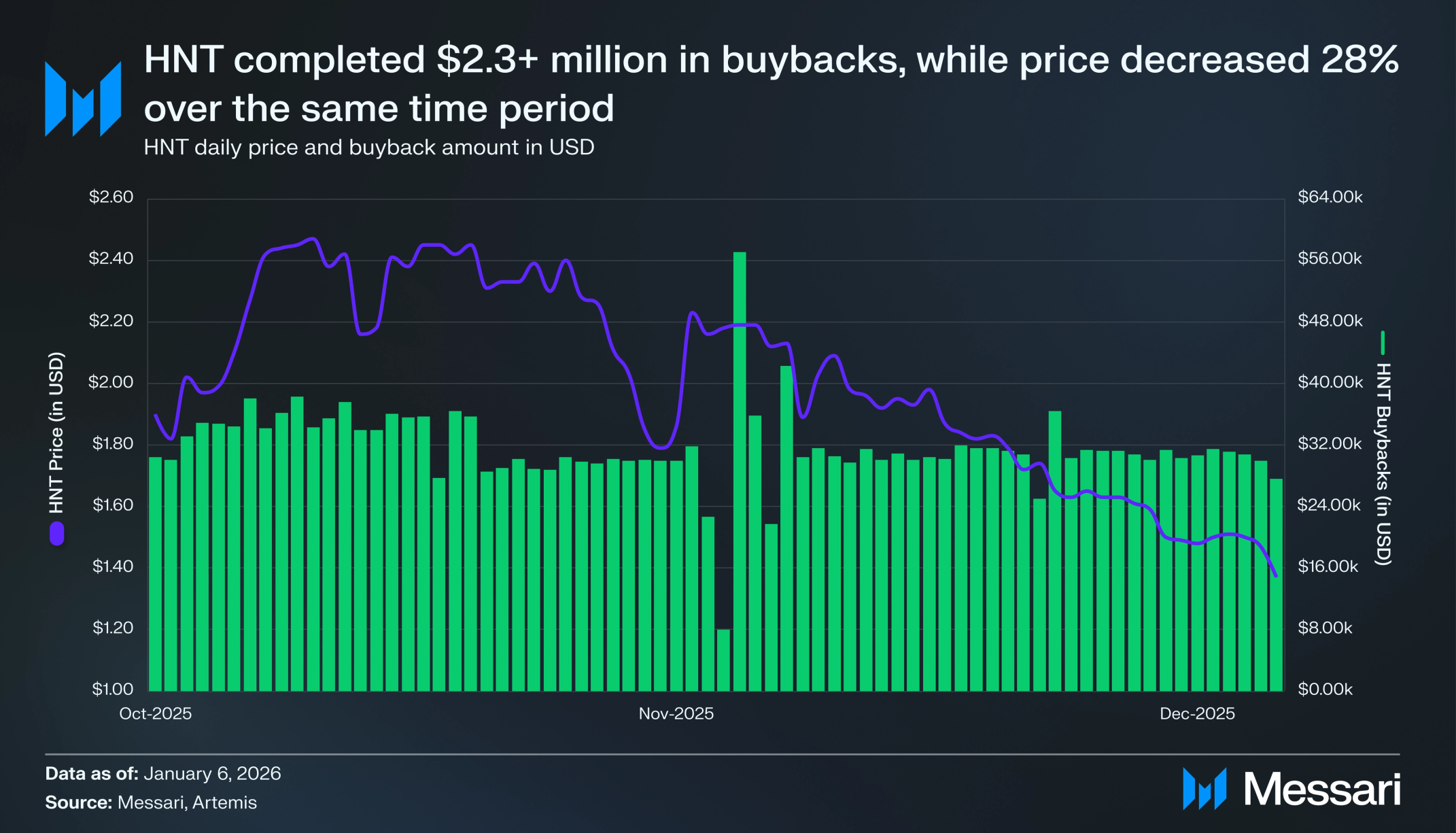
On January 2, 2026, Helium’s CEO Amir Haleem announced the suspension of HNT buybacks. Stating that the "The market doesn't seem to care." Despite generating $3.4 million in revenue in October alone, the buyback program failed to stop the price decline of 75.55% YoY from $6.42 to $1.57. Instead of a buyback, revenue will now be redirected to Helium Mobile subscriber growth. For a deeper analysis, read Helium Mobile Discontinues Buybacks: Analysis and Investor Relations Implications.
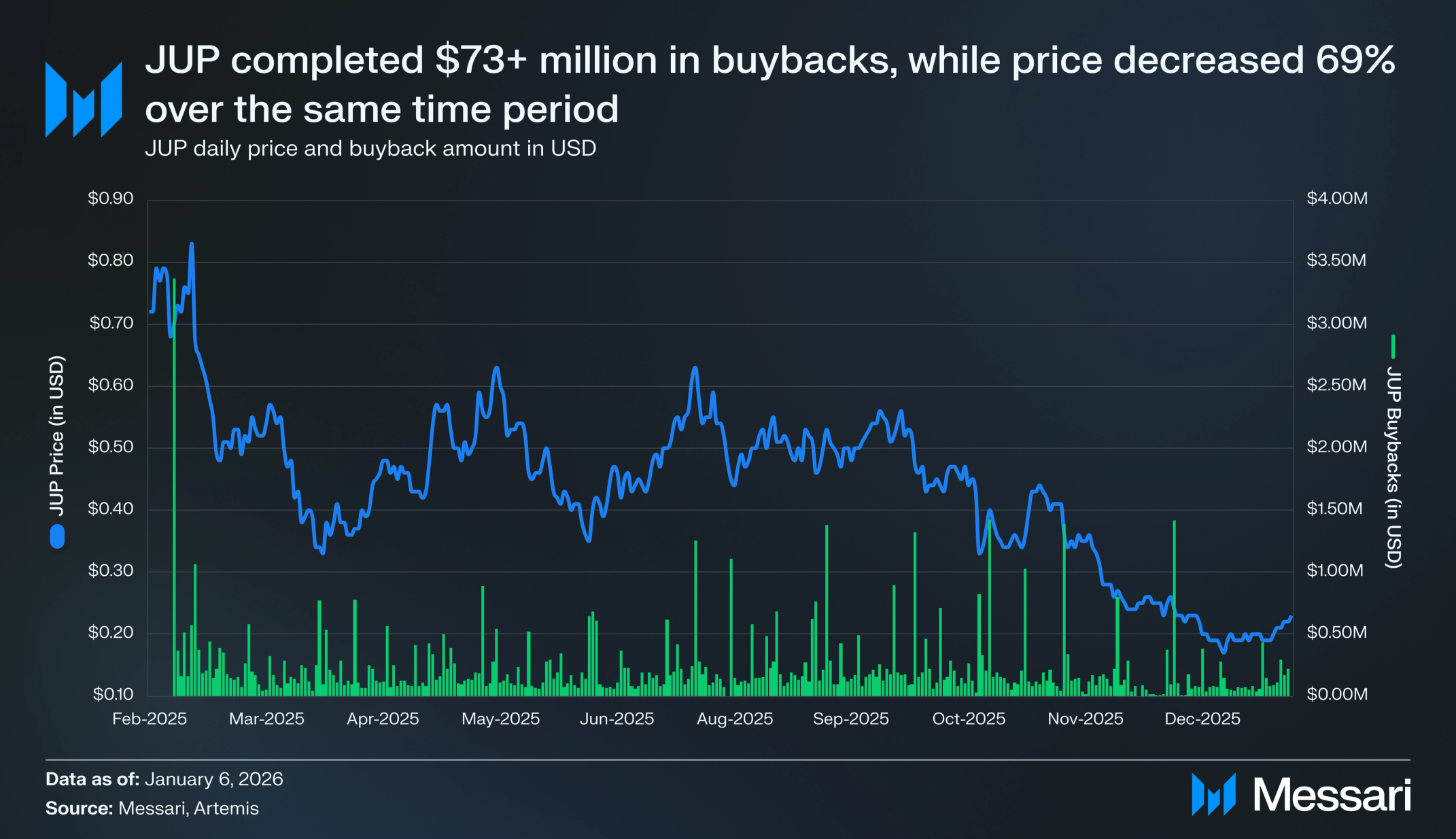
Jupiter’s Co-founder, Siong, has proposed halting the buyback program to reallocate funds toward growth incentives and user subsidies. Jupiter has spent over $73 million on buybacks in 2025 and during this same period, the token decreased 74% from its peak of $0.86 to $0.22.

Jeremy is a research analyst at Messari with interests in Infra, DeFi, and Enterprise adoption. Prior to joining Messari, Jeremy worked as an analyst at Fidelity Digital Assets.