Emerging Casino Business Models

The world of onchain applications has potentially found a semi-sustainable business model that mirrors traditional casinos but with a distinct crypto twist. Onchain casinos monetize speculation by tying speculative entertainment value to token revenues.
Not unlike traditional brick-and-mortar casinos, onchain casinos create consistent revenue by providing games of chance and skill, while extracting a fee from each play or hand. Onchain crypto apps achieve this by integrating buy/sell taxes into their tokens.
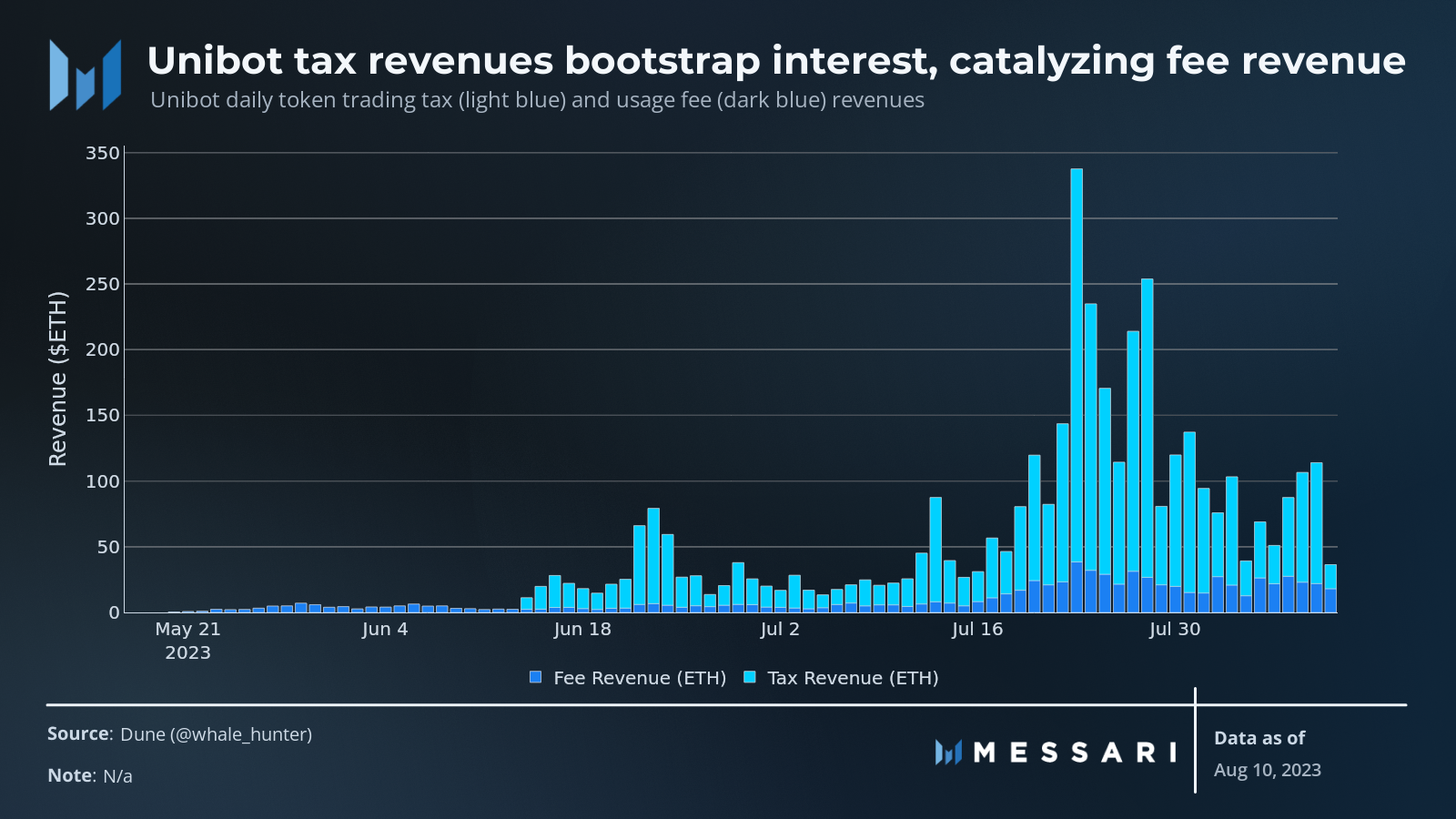
Several coins, notably Unibot, Espresso, and Bullet Game, have potentially begun to carve out niches for themselves using this model. By far the leader in this movement, Unibot allows onchain crypto users easy access to new token sniping, wallet mirroring, and more. The project generates revenue from in-app usage, but the majority of the revenue comes from buy/sell taxes on UNIBOT trades.
Bullet Game takes things a step further by integrating their BULLET token directly into the product. Bullet game is an onchain, telegram-based Russian Roulette game where players bet BULLET in order to play. The loser of the roulette game pays out their BULLET balance across the winning players, minus a 1% token burn and 9% fee split to tokenholders.
By monetizing speculation and subsequently returning profits to tokenholders—either via token buybacks, burns, or distributions, these tokens can jumpstart their projects “fundamentals.” However, adding 5% taxes isn’t a panacea solution. The model's success hinges on maintaining trading interest in the token. This interest is directly contingent upon the utility of the service on offer. Project teams can’t rely solely on taxation to maintain profits. As always, continued product innovation combined with expanding social awareness will be key for these projects to succeed.