EigenLayer: Supercharging Crypto Innovation

2024 is shaping up to be an exciting year in the digital asset market. Institutional BTC ETF flows have driven an increased interest in crypto assets, and a pending ETH ETF approval has the potential to kindle the flame. In light of this mania, the Ethereum staking rate has increased to 26% of circulating supply, and the total amount of ETH staked sits at an all-time high of 31.5M ETH ($112B). ETH ETF applicants have recently amended their applications to include language that indicates a desire to stake a portion of assets to earn yield, so an ETH ETF approval would likely bring unprecedented inflows to the ETH staking market.
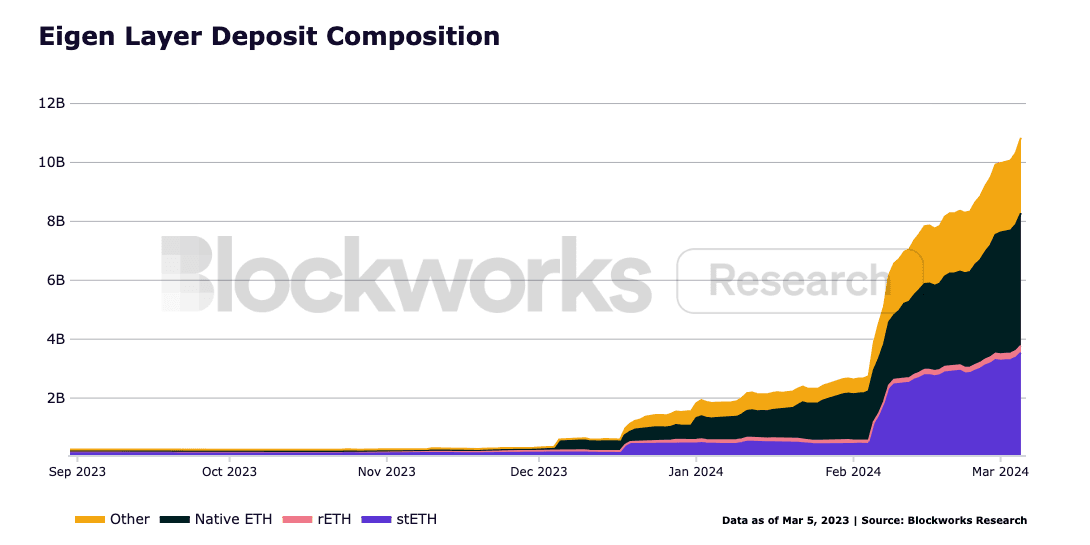
With $112B of capital today, and a likely higher amount by the end of 2024, how can staked ETH be utilized further, especially as increased institutional staking dilutes the current staking reward rate? EigenLayer is one potential product that will introduce further utility to staked ETH, and its success could drastically change the demand structure seen today. The protocol attracted $10.4B of ETH in just a few months, ranking it the second largest protocol on Ethereum, next to Lido. What is EigenLayer’s value proposition, and what are the risks?
Eigen 101
Over the past few years, developers have introduced continual innovation across the DeFi space, including DEXs, lending markets, liquid staking derivatives, stablecoins, and perpetual futures exchanges. With a full suite of decentralized banking solutions in the market and as the ecosystem matures, attention now turns to what may emerge next.
Enter EigenLayer, which introduces the concept of restaking, a DeFi primitive where market participants can utilize their staked ETH positions to commit to additional obligations in exchange for more rewards. It gives protocols access to the economic security of Ethereum, while granting depositors access to additional monetary incentives in exchange for taking on more responsibilities. EigenLayer’s introduction of restaking signifies a notable development in the Ethereum ecosystem, introducing leverage to enable participants to optimize their holdings.
Prior to the launch of EigenLayer, maximum capital efficiency on a staked ETH position would look something like this:

Pibblez leads coverage on emerging L1s, infrastructure, and stablecoins. Previously worked as a Research Analyst at Kraken.