DoubleZero: IBRL/acc

We maintain our constructive view from April, with heightened confidence that DoubleZero could see above-consensus early stake penetration. The adoption slope ahead of mainnet, especially given Helius Validator’s pending migration, suggests DoubleZero could quickly surpass the 15% stake mark, an acceleration that meaningfully pulls forward our validator fee capture scenarios. The combination of technical differentiation through FPGA-based architecture, broad client support, and economic incentives through the stake pool creates multiple adoption vectors that should sustain growth momentum through mainnet launch.
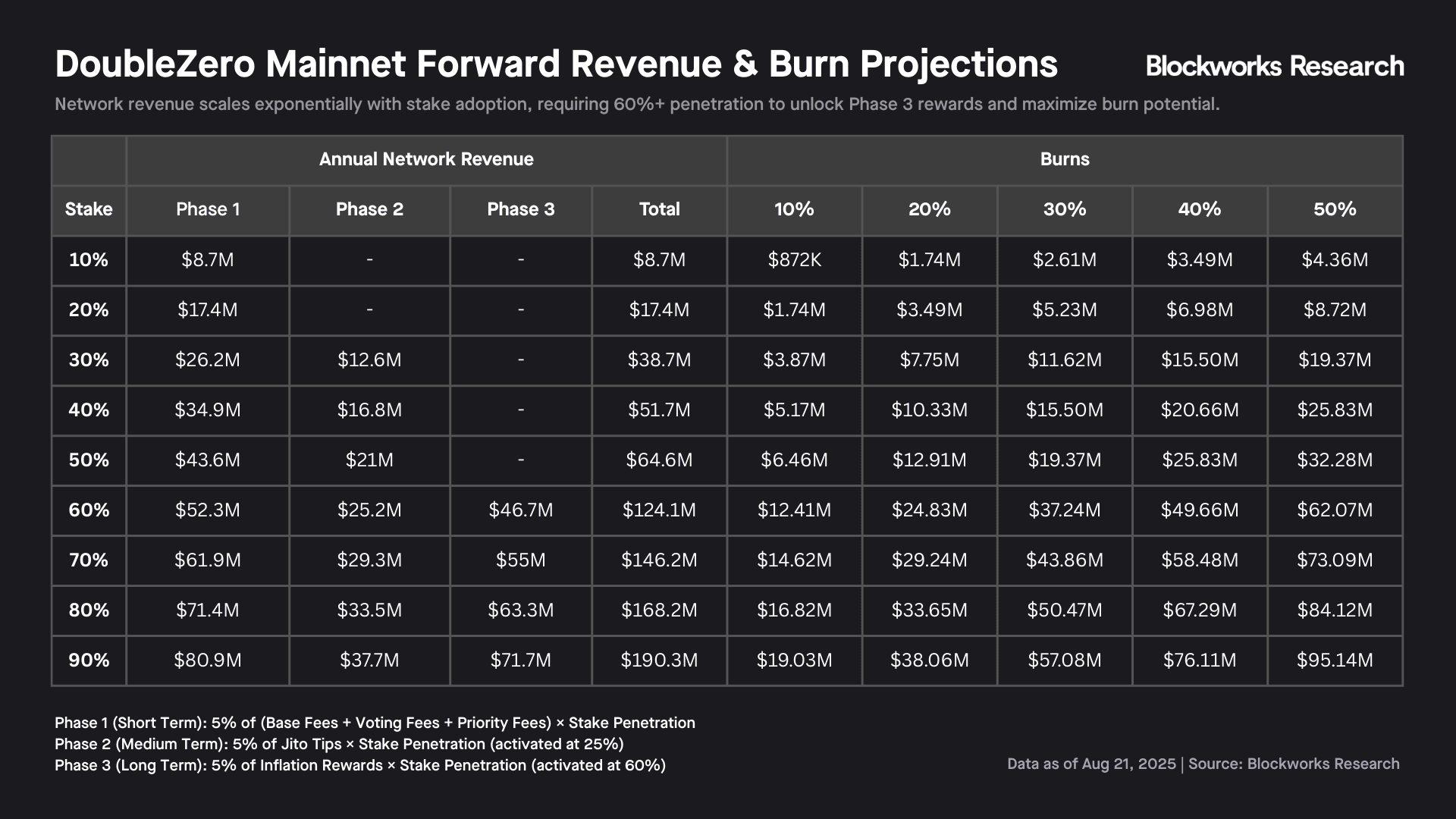
Operator feedback on the 5% fee structure remains positive, with validators viewing it as justified by the multicast capabilities, spam filtering benefits, and reduced CPU overhead that enhances block building performance. The DoubleZero team has structured fees across three phases, initially charging 5% on base, voting, and priority fees at launch, then adding 5% on MEV revenue (Jito tips) only when DoubleZero can demonstrate it increases these revenues by more than 5% for validators, ensuring a net positive outcome, and finally applying 5% to inflationary rewards only once a supermajority of Solana stake joins DoubleZero and enables fundamental protocol improvements like shorter slot times and larger block sizes. All fees are paid as seat fees denominated in SOL, with the structure designed to align DoubleZero's incentives with validator profitability throughout the adoption timeline.
The April CoinList token sale to 234 validators raised $6.5M through ~87M 2Z tokens, demonstrating strong early validator financial commitment that aligns with the accelerated adoption trajectory we're observing. This successful fundraising round suggests validators are backing their technical adoption with meaningful capital allocation.
Key catalysts into launch:
- Confirmation and timing of major validator migrations
- Public testnet stability and capacity expansion

Nick leads coverage on the DePIN and Proof of Work sectors. Previously led research and engineering at a DePIN-focused accelerator.