Discussion: Does Bitcoin need Layer-2s?


Prompt
How does the Bitcoin ecosystem’s new vision of Layer 2s and Bitcoin secured chains stack up to other L2 and Appchain ecosystems like Ethereum? Does Bitcoin need Layer 2s?
Primer
The conventional view has positioned Bitcoin primarily as a digital store of value, whereas Ethereum and other smart contract-enabled blockchains have been seen as foundations for building on-chain applications or providing crucial services like Data Availability, Consensus, and/or Settlement. These platforms have catalyzed novel or enhanced functionalities - such as efficient trading on Solana, Layer 2 settlements on Ethereum, and bespoke app chain creation on Avalanche and Cosmos. In contrast, Bitcoin's utility was traditionally limited to centralized financial (CeFi) institutions or through controlled bridging solutions like wBTC.
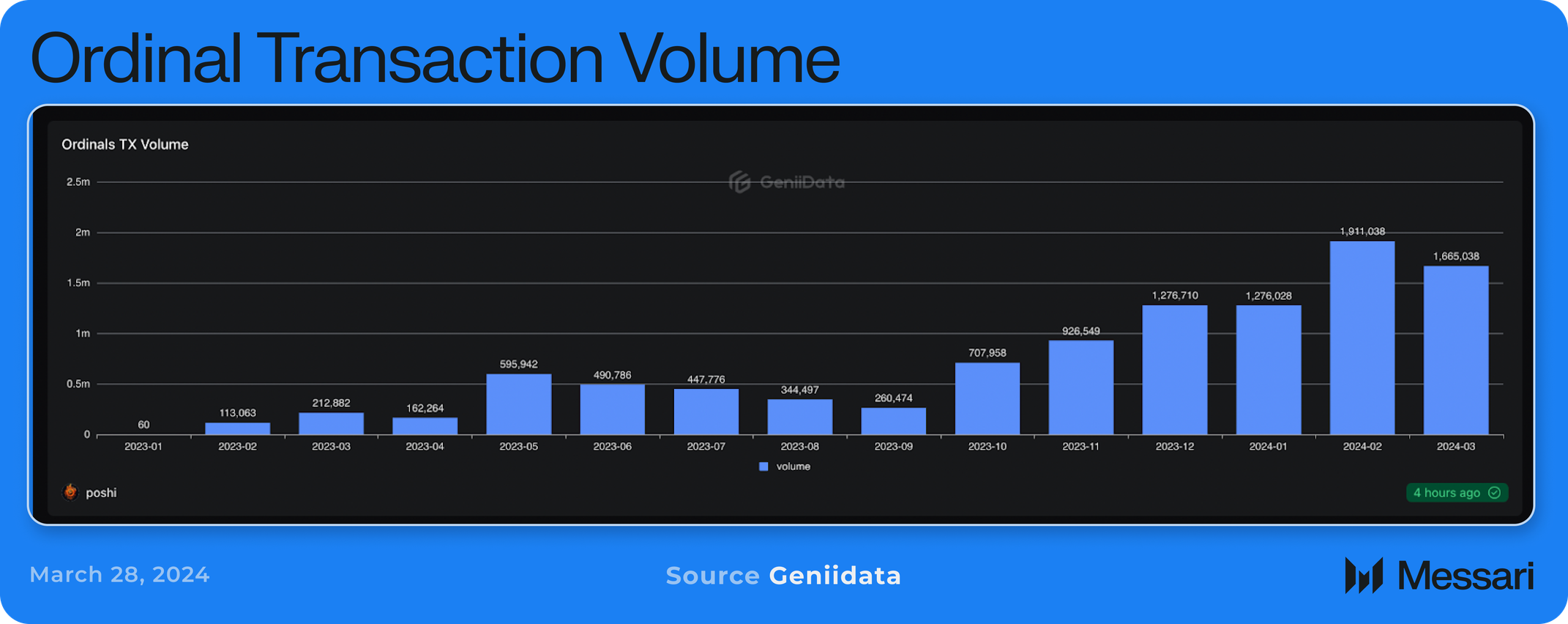
This perception began to shift in 2023 with the surge in Ordinals, Inscriptions, and BRC20 tokens. Inscriptions alone amassed nearly $3 billion in sales, as reported by CryptoSlam. This marked a significant milestone, offering a trust-minimized method for token creation and trading on Bitcoin, which attracted considerable trader interest. Currently, Bitcoin Ordinals see 1-2 million transactions per month, competitive with numerous Layer 1 and Layer 2 platforms.
The release of the BitVM framework came at an opportune moment, responding to the increased on-chain activity and the desire to apply BTC in more diverse applications. BitVM provides a framework that leverages Bitcoin's existing, albeit basic, infrastructure to enable off-chain computation verification, which can then be settled or disputed on-chain. This development opens up Bitcoin to the possibility of rollups, decentralized bridges, EVM-compatible smart contracts, and other foundational elements that have spurred innovation on other platforms.

Nikhil is a Researcher focused on Web3 Infrastructure and Decentralized AI. Previously he was leading BD at Upshot and prior to that was working on growing Avalanche at Ava Labs.

Kinji formerly covered crypto at Morgan Stanley. His primary interests are DeFi, Ponzi's and unstable stablecoins.

Kunal previously worked in equity research and now considers himself a financial analyst in crypto. He specializes in valuation and bottom-up analysis for Layer-1 and DeFi protocols because he has yet to learn of a way to value NFTs.