Derivatives Gone Wild: An in-depth look into futures and options markets around Black Thursday

The last few weeks have been choppy for bitcoin. And that's putting it lightly. After surging to $10k last month, it began selling off with the rest of the market including equities, gold, and oil as it dropped below $4,000. This was in large part due to what’s being referred to as Black Thursday where Bitcoin dropped nearly 40% in its worst single-day since April 2013 when a flood of trading volume crashed Mt. Gox, which was handling three-quarters of all trading at the time.
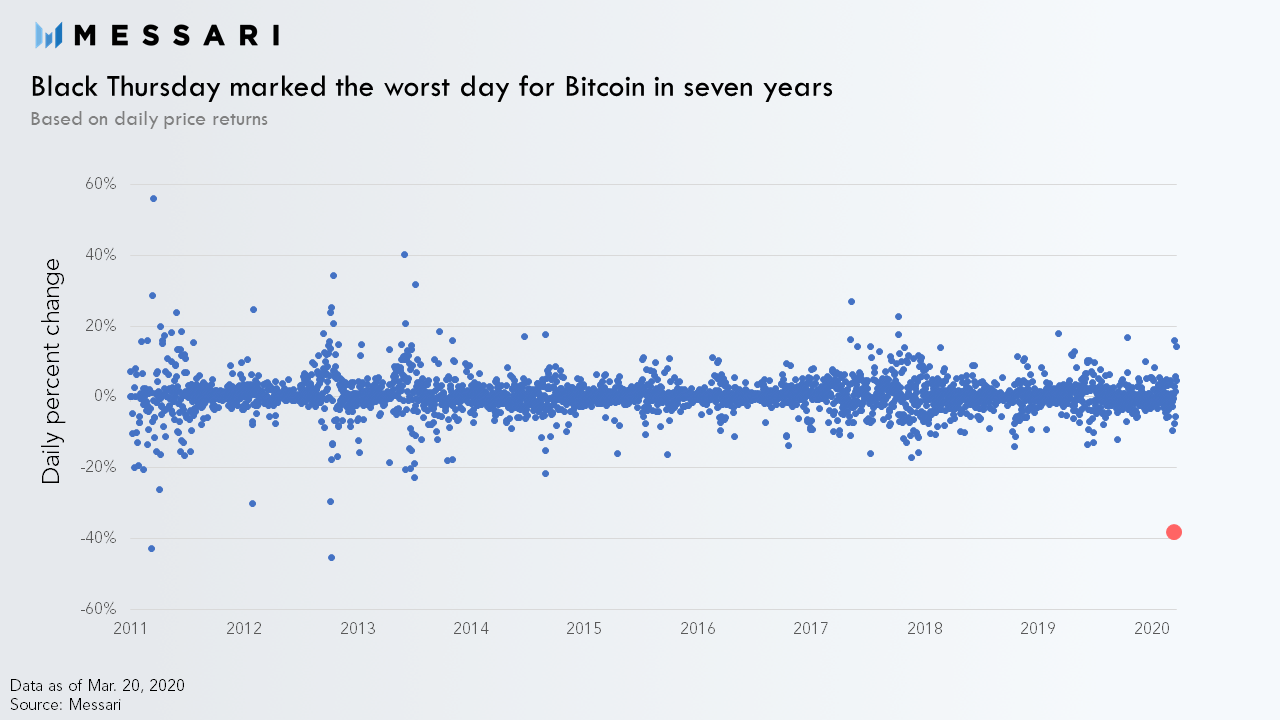
This remarkable volatility in the spot market has wreaked havoc on the nascent, but maturing derivatives market. Leveraged traders saw their positions decimated as a cascade of liquidations ensued. Funding rates plummeted in an attempt to bring perpetual swaps closer to spot. Market makers couldn’t accurately price these instruments and spreads widened to historic levels. It was mayhem, to say the least.
Futures
Periods of heightened volatility present opportune times for the best traders to make money. This comes at the expense of the less skilled who often scramble to cover their losses. Either way, it leads to substantial trading which we saw as aggregate futures volume surpassed $45 billion, eclipsing the prior high of $33 billion.
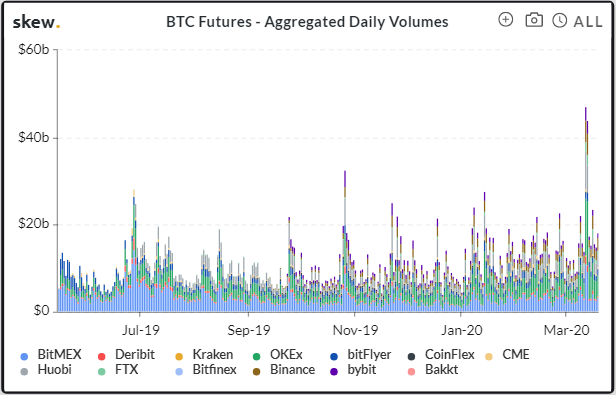
Despite the fact bitcoin futures contracts are offered by the largest derivative exchange in the world, CME Group, and other well-funded, regulated institutions such as Bakkt, its the off-shore, un(der)-regulated institutions that attract the highest volume. This is a direct result of the infamous perpetual swap, which was pioneered by BitMex and offers a ludicrous 100x leverage contract, unheard of elsewhere in finance. “Perps” as they’re called, are similar to futures contracts but have no expiration date. Their price is maintained through a funding mechanism where longs and shorts periodically pay the other depending on market interest.
