DeFiChain - Decentralized Finance, Secured by Digital Gold

The following report was written by Messari Hub Analyst(s) and commissioned by DeFiChain, a member of Messari Hub. For additional information, please see the disclaimers following the article
Using Bitcoin as an additional layer for security and mechanism for achieving high confidence immutability, DeFiChain brings a single-purpose, DeFi only blockchain to the Bitcoin ecosystem. DeFi on Bitcoin is a lot to unpack, and along with the arrival of the long-awaited taproot soft fork, it may be the kind of development that heralds a new era of Bitcoin-based smart contract platforms.
Bitcoin Sidechains
Layer-2 innovation in the Bitcoin world has historically focused on scaling. Starting with state channels, which grew into the lightning network, these efforts have led to fiat interfaces like Strike - a payments service that uses the lightning network to enable micropayments. Another direction of innovation in the Bitcoin space was cross-chain atomic swaps, which are decentralized means of transferring value from Bitcoin to other blockchains such as Litecoin or Decred. These original experiments spawned services such as Komodo and Rubix, which enable cross-chain atomic swaps between Bitcoin and other early Layer-1 chains.
While progress on scaling and swaps was slowly being made in the Bitcoin Layer-2 space, DeFi grew into its own on Ethereum, as smart contracts were the raison d’etre for the latter. Bitcoin, by contrast, was designed for one thing and one thing only - enabling the decentralized transfer of value. The Bitcoin community has historically been very resistant to change, and this reluctance to deviate from Satoshi’s original vision was what led Vitalik Buterin to found Ethereum in the first place. When the community added the key innovation that enabled the lightning network, SegWit, the resulting upgrade forked the community, giving birth to Bitcoin Cash. The reluctance to add ‘bells and whistles’ to the original vision for Bitcoin is deeply ingrained, and it is unlikely the Bitcoin mainnet will ever evolve smart contract capabilities. Meanwhile, the rise of DeFi on Ethereum has been undeniable. How could Bitcoin join the DeFi revolution without sacrificing its principles? One answer is a Bitcoin sidechain, like DeFiChain.
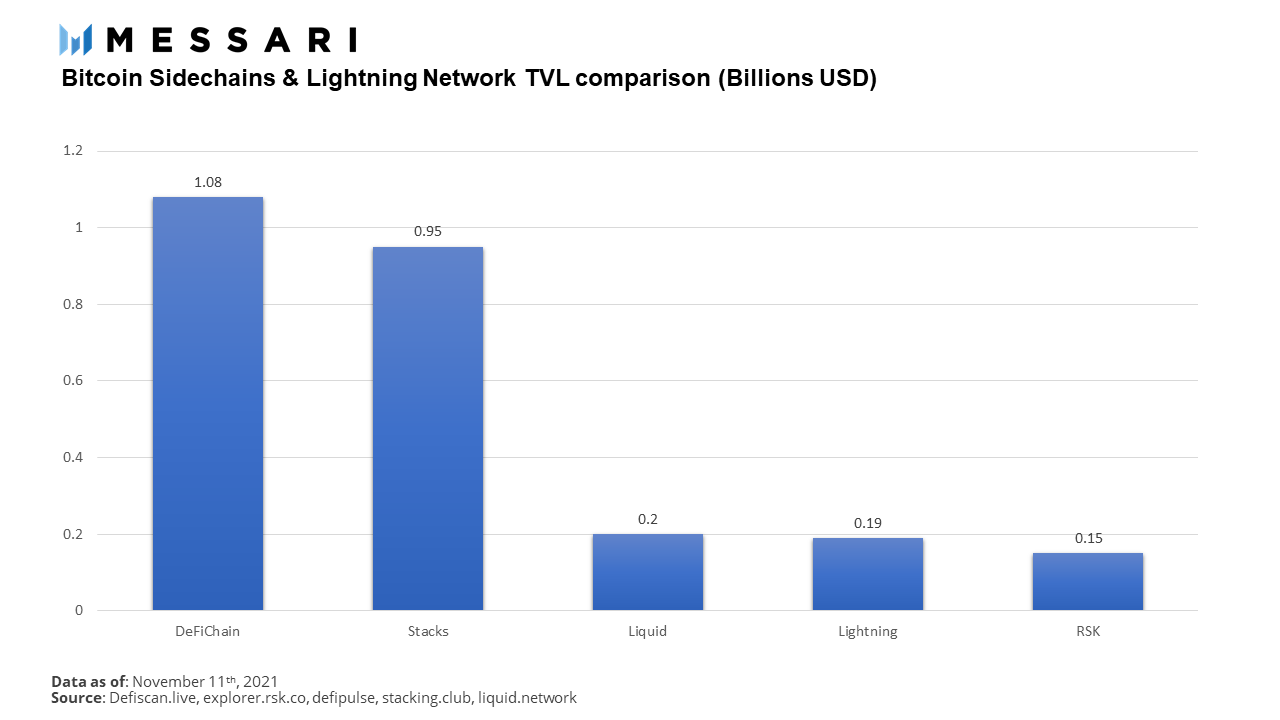
In 2014, Blockstream researchers published the first technical paper describing a ‘pegged’ sidechain that allowed the transfer of assets between the Bitcoin mainnet and a sidechain. They were followed by the Rootstock team, who beat Blockstream’s launch of Liquid Network to a mainnet release in 2018. DeFiChain launched its whitepaper in 2019 and achieved mainnet release in 2020. Today, the Bitcoin sidechain space is populated by a handful of projects with a TVL of approximately $2 billion at the time of writing.
Smart Contracts
Bitcoin has Script - a language that enables some level of programmability. Script allows basic operations, like locking funds for particular users or creating multi-user accounts. Introduced as early as the 0.1 version by Satoshi, it was only meant to enable simple logic - for example, to perform a transaction only if certain conditions were met. Bitcoin was never meant to create Crypto Kitties or ‘The Metaverse’.
How Smart is Smart?
To program complex apps like 3D environments or composable DeFi apps like Aave, the programming language needs to achieve ‘Turing completeness’ - a deep computational/philosophical threshold of computational ability. Turing-complete languages can essentially program ‘anything’ - from multi-sig contracts to immersive 3D environments. Turing-completeness was the capability that Vitalik Buterin and his co-founders unlocked in Ethereum via the Solidity programming language. In the design space of Layer-1s, one can think of this as the first decision to make - will the chain be Turing-complete or not? And like all decisions, involves tradeoffs.
Turing-completeness is computationally expensive - you do not expect your calculator (remember those things?) to run the latest ray-tracing AAA game. When creating a distributed financial system that will run on millions of machines, one may need to constrain their imagination. Making a ray-tracing calculator would be a billion-dollar mistake if aiming for rapid calculations.
The Non-Turing Advantage
By selecting a non-Turing-complete design, a blockchain can achieve smart-contract capabilities while retaining security, speed, and simplicity. When the entire scope of a smart-contract language is limited, it greatly reduces the ‘surface area’ of would-be hackers to target. Further, reduced functionality is a result because the chain is customized for specific use-cases - which brings speed and efficiency to the table. Lastly, a reduced scope can also mean simpler smart contracts, which is a boon for developers who build on the system - both from a deployment and maintainability perspective. DeFiChain has chosen this fine line to tread, perhaps in keeping with their Bitcoin antecedents of rejecting bells and whistles in favor of single-minded purpose.
Dapps vs. Sidechains
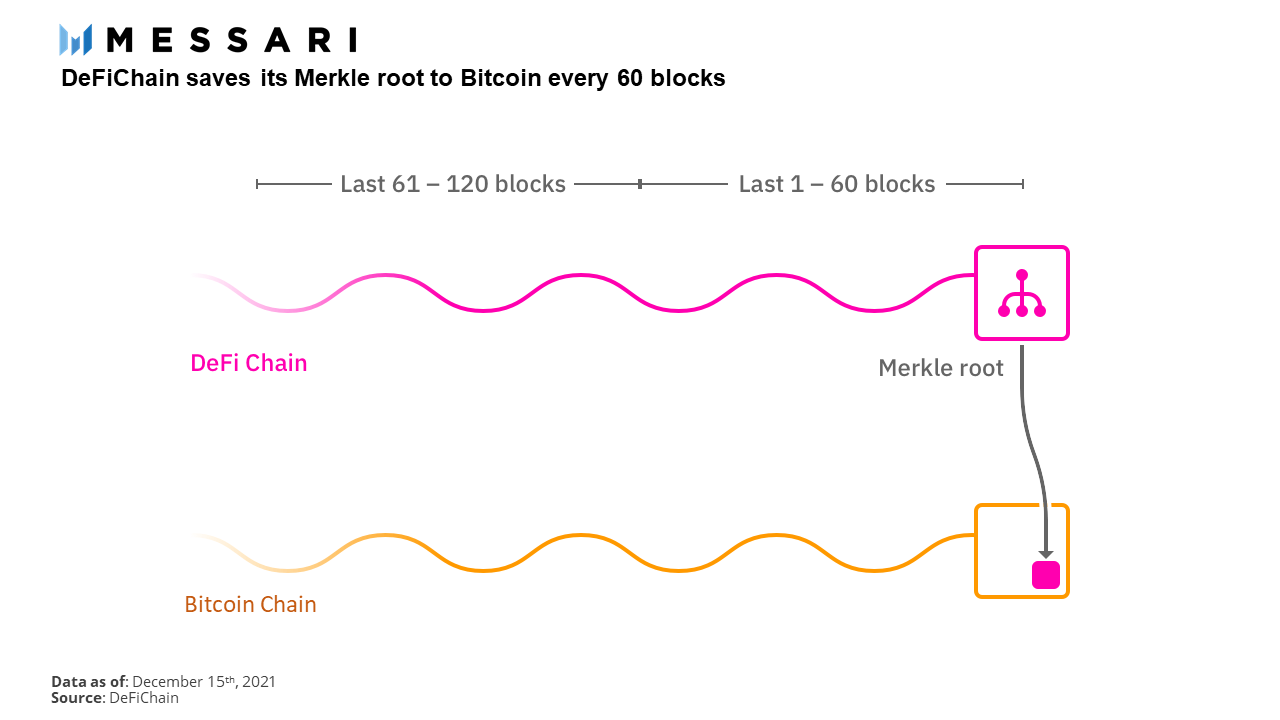
So why not make a Bitcoin Dapp using Script? Why move to Layer-2 (if we liberally include sidechains)? A Bitcoin Dapp would still be subject to the block times, block sizes, as well as the limitations of Script, which may not serve the purposes of a particular use-case. The sweet spot on the Turing-completeness spectrum may be different from that of Bitcoin, and some wiggle-room may be needed to add the op-codes required to enable the desired result. DeFiChain opted for a Proof-of-Stake (PoS) sidechain to enable enhancements in op-codes based on the Bitcoin source code. To further secure the immutability of its transactions, DeFiChain anchors itself to Bitcoin. Every few minutes, the most recent Merkle root generated on DeFiChain is saved to the Bitcoin chain, and the state of the DeFiChain is therefore immutably checkpointed at regular intervals.
DeFi on Bitcoin
A chain purpose-built for DeFi need not be Turing-complete, according to DeFiChain. In fact, by making this decision, a lot of efficiencies can be achieved. The following is the feature-set currently targeted by DeFiChain:
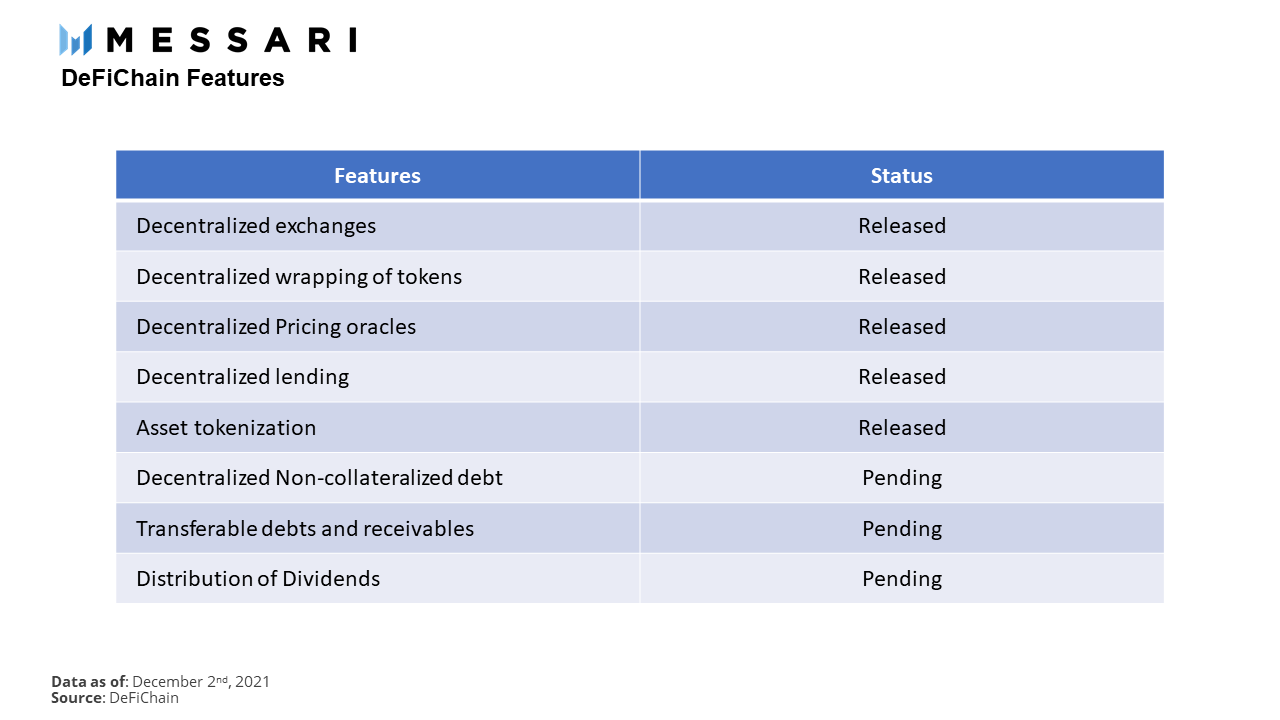
This is a very constrained design space that essentially requires a small set of abilities to unlock all of the above: a Decentralized Exchange (DEX), Oracles, Loans and assets powered by Vaults and ‘Operators’, all of which (except the DEX) were unlocked by the recent ‘Fort Canning’ update to the chain.
DeFiChain DEX
The DefiChain DEX is a constant-product Automated Market Maker in the style of Uniswap V2. The pools (which are funded by liquidity providers for yield) contain pairs of tokens, one of which is always DFI or dUSD. The other token is a wrapped token, which has now expanded to include synthetic tokenized stocks.
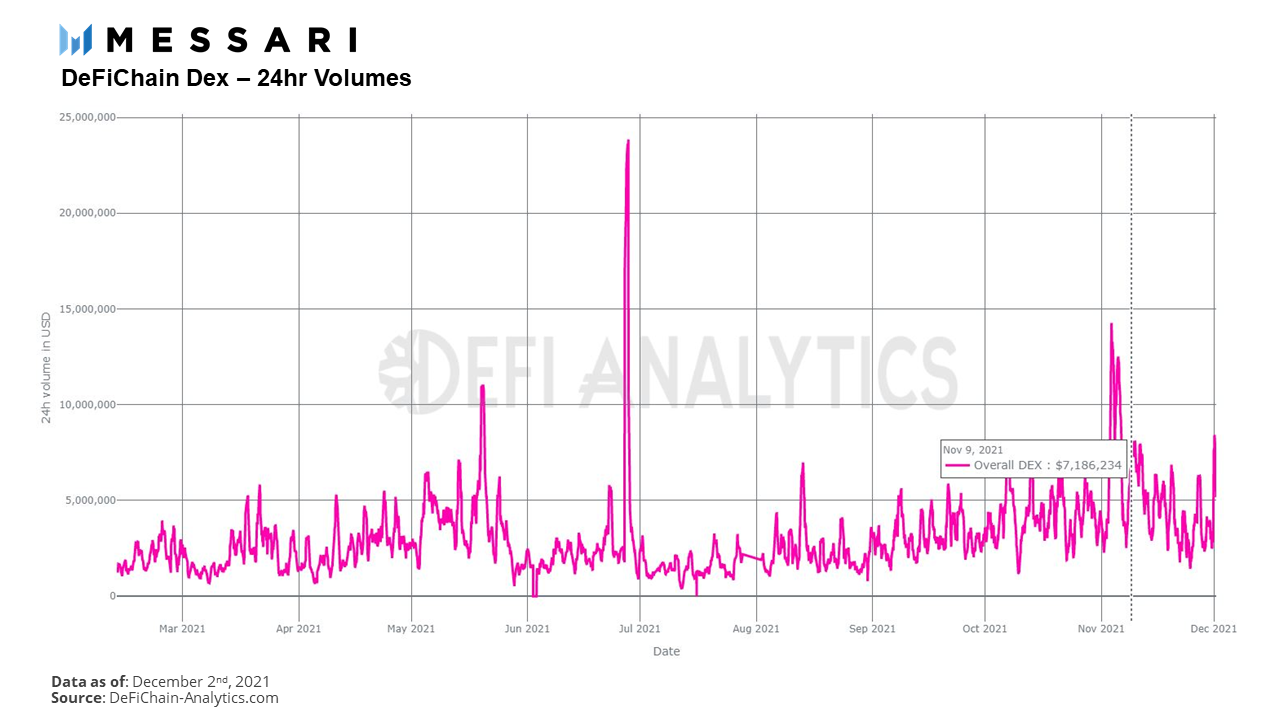
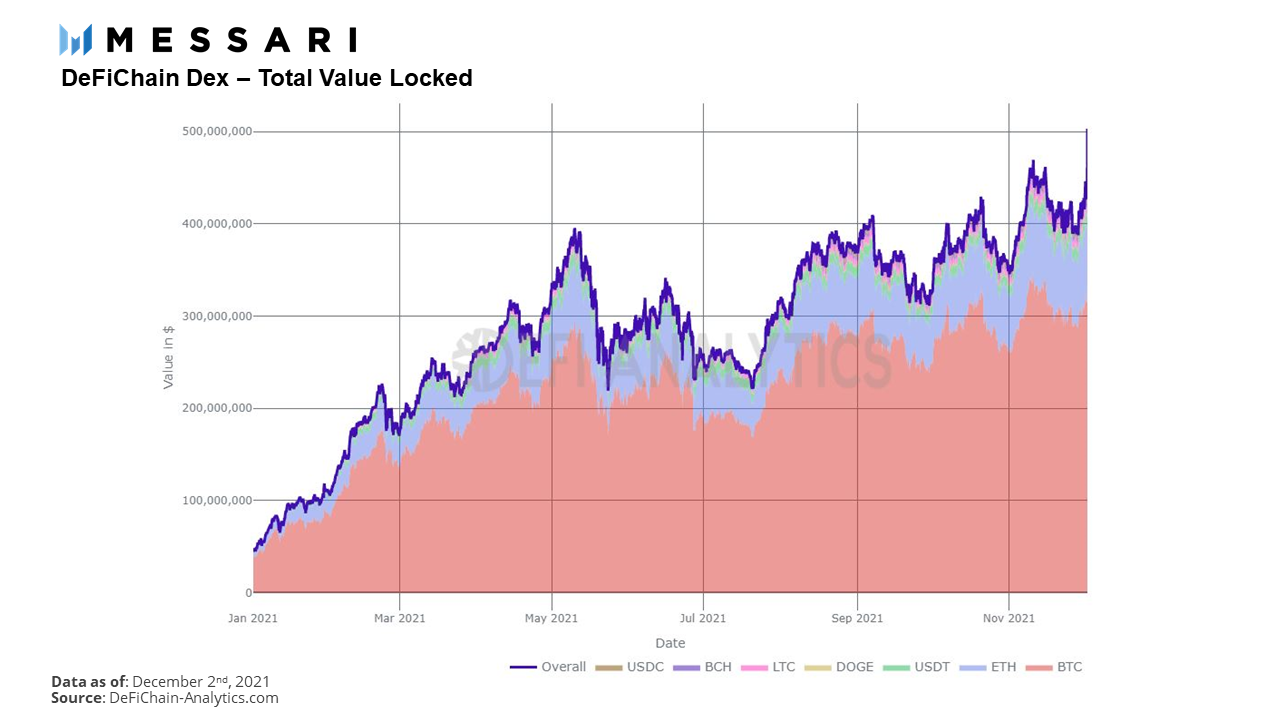
The DEX supports 23 pairs at the time of writing, with a total value locked of approximately $450 million in collateral.
Operators and Opspaces
An Operator is the equivalent of a Dapp developer on DeFiChain. In a non-Turing world, one cannot code an arbitrary smart contract on the chain but instead can set the parameters for the functionality already available on the chain. Currently, these are loans and futures. The Operator can set the collateralization levels, interest rates, fees, and oracles of these products for users. These settings only apply within a sandbox provided to each operator, called an Opspace. This allows for multiple operators to offer similar services but with different parameters - enabling competition to provide the best value for users, as well as enabling the targeting of different services entirely. Currently, there is only one Opspace, operated by the DeFiChain team itself, with a vision of opening more to other operators in the future.
The Use Case
A user can lock their coins (currently BTC, DFI, USDC, USDT) in ‘vaults’ in a particular Opspace. They can then mint (operator-approved) synthetic tokens called dTokens, which are transferred to the user as an over-collateralized loan (150% collateralization ratio required at the time of writing). These dTokens can represent a cryptocurrency like BTC or ETH, ERC20 tokens, stablecoins, or stocks. The users are charged an interest rate in the same token they minted, which they will have to pay to release their collateral. This is where the price-tethering mechanism comes into play - the user will need to buy the token on the DeFiChain DEX to pay back the loan. The prices are determined using oracles approved by the Operator, which at the time of writing is the DeFiChain team itself, who have recently inked a deal with Nasdaq to provide stock prices. Once paid back, the principal amount returned is burned, and the interest is sent back to the DEX to be swapped for DFI coin, which is then also burned - ensuring that all minted tokens are completely collateralized throughout their life cycle. These transactions are triggered automatically once the loan is paid back. Therefore, the mechanism is designed to create demand for the ‘tokenized’ synthetic tokens in DeFiChain’s DEX.
For example, Alice wants to mint ‘dBTC’:
- Alice deposits 150K DFI coins into a vault, priced by the oracle at a spot rate of $0.10 per DFI.
- Alice, therefore, has $15,000 worth of collateral.
- At the minimum collateralization ratio of 150%, she can mint up to $10,000 worth of tokens as a loan.
- To avoid liquidation risk due to price movement in DFI or BTC, Alice mints dBTC worth $5,000.
- Her loan collateralization is now 300%.
- Even if the price of BTC doubles, Alice is still at the 150% minimum collateralization.
- To recover her collateral after one year, Alice will have to pay back the loan of dBTC, plus the interest rate set by the Operator, in dBTC.
- Assuming the interest rate interest payment is 0.025 dBTC, Alice will have to purchase this from the DEX, and repay the original amount she minted plus 0.025 dBTC.
- Alice then receives her 150k DFI.
- The principal she returned in dBTC is then burned, and the interest payment is swapped back to DFI coin on the DEX, which is also burned.
Compared to the proven Perpetual Futures model, this is a new approach to creating synthetic assets, and how closely the prices will track the referenced asset over time remains to be seen. To further improve the liquidity of these markets and perhaps improve the peg to the spot price, DeFiChain will launch a full-fledged liquidity mining program for these synthetic assets and intends to launch a Perpetual Futures model in early 2022.
How Decentralized is DeFiChain
The DeFiChain is a Proof-of-Stake chain with a hybrid SPV-federated peg to the Bitcoin mainnet. This means the pegged assets are in multi-signature custody of a set of ‘pegnatories’. These pegnatories are relied upon to provide security to the funds.
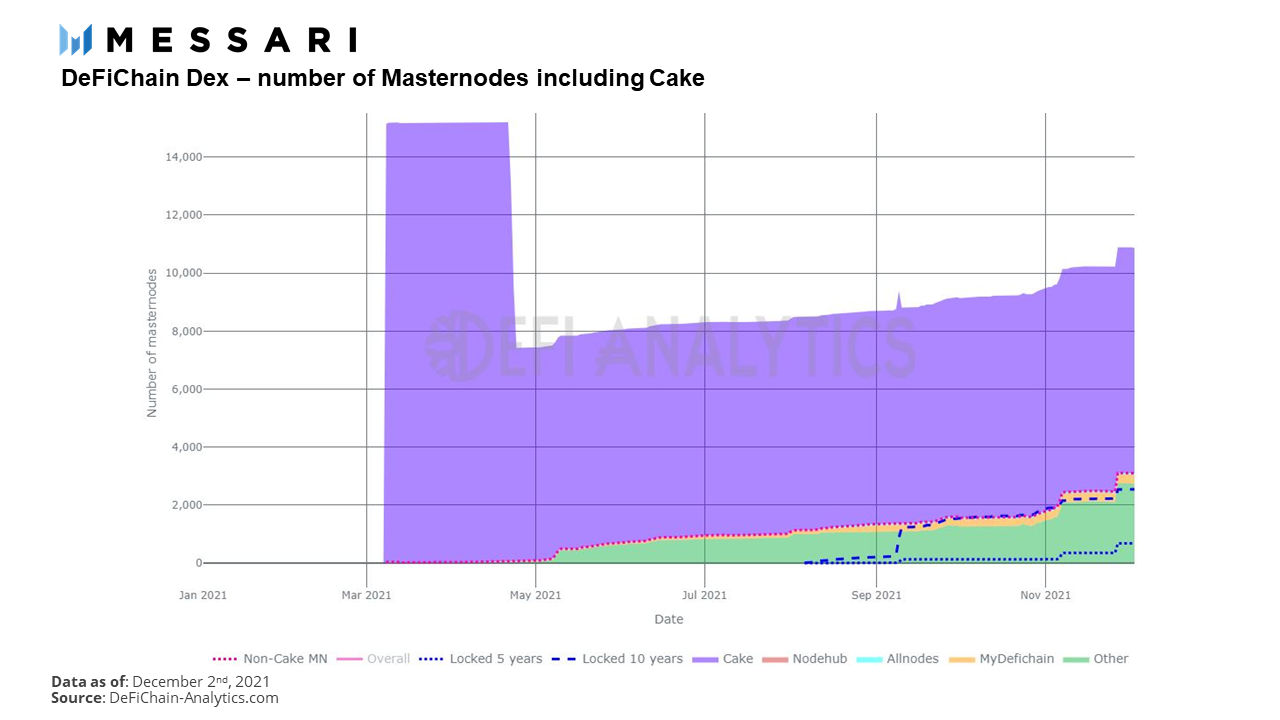
As a PoS chain, the chain is secured by ‘Masternodes’. Most of the masternodes are currently operated by Cake DeFi, - a CeFi company that runs a masternode staking pool service on behalf of its users - though the number of masternodes being run by community members has grown.
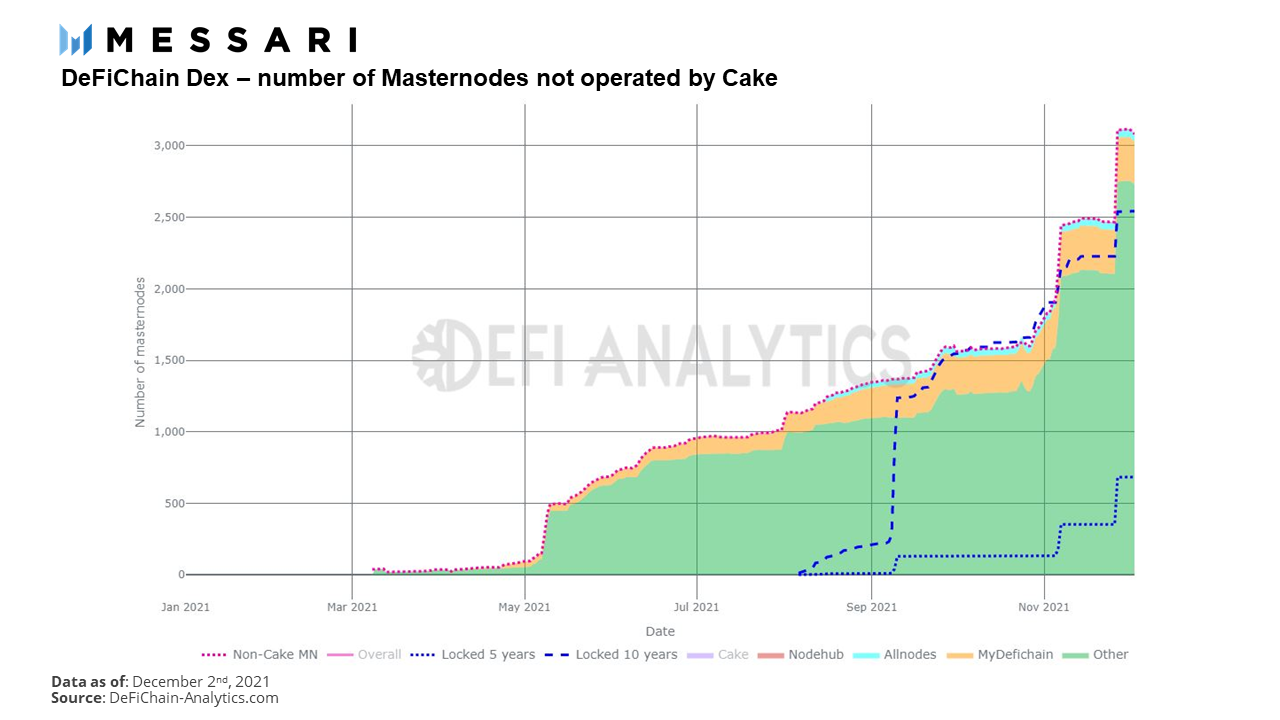
In early May 2021, Cake dropped to a constant 7,350 masternodes, and has maintained that number since, as new masternodes entered the ecosystem.
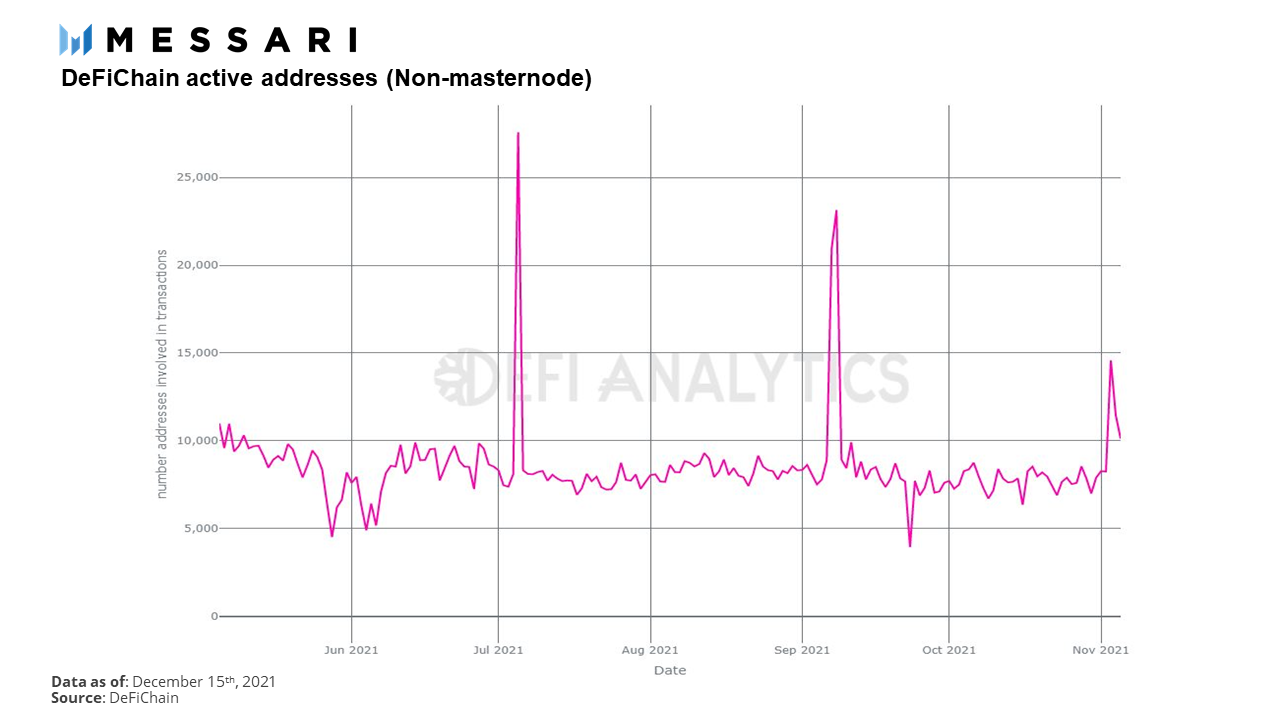
DeFiChain also has around 10,000 active addresses at the time of writing, not counting the addresses operated by masternodes.
The DFI Coin
The DFI coin has three uses in DeFiChain. First, it is used for all fee payments, from DEX transactions, token transfers, loan interest payments, and the upcoming Futures and Options features. Second, DFI is mandatory as collateral for the creation of dTokens. Third, DFI is used for governance - enabling holders to submit and vote on improvement proposals for DeFiChain.
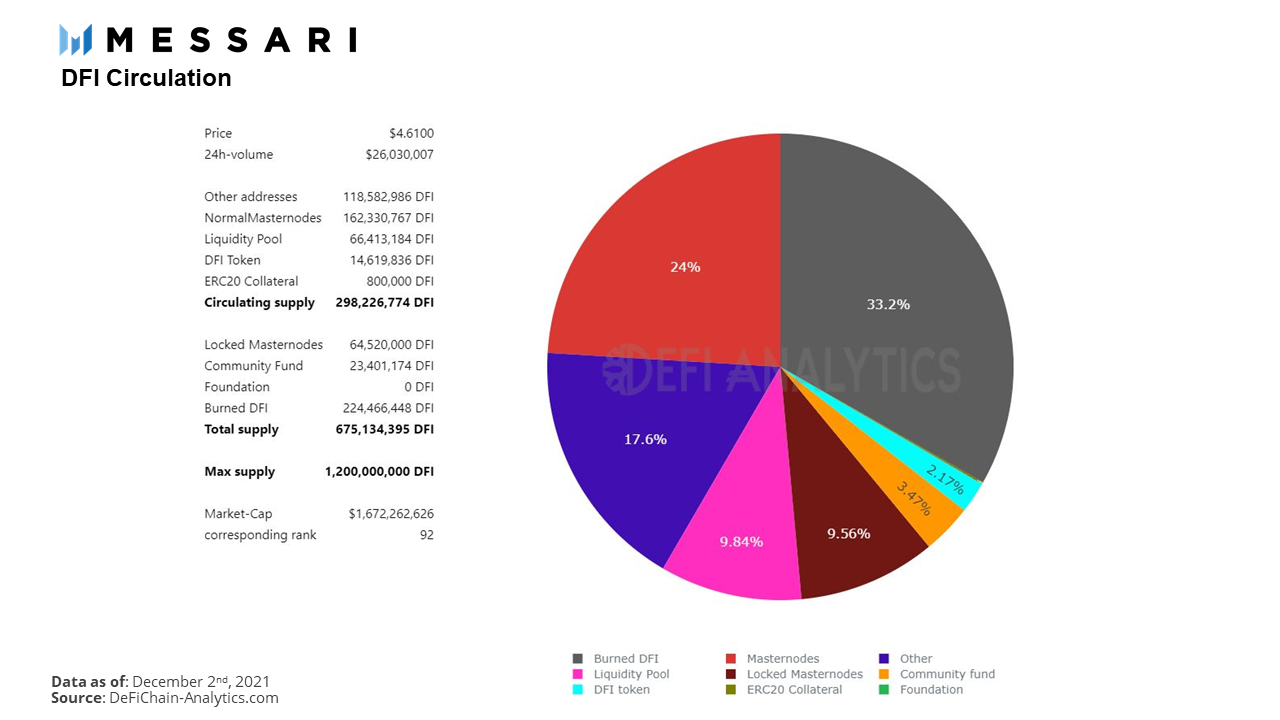
DeFiChain utilizes a deflationary emission scheme with the total supply capped at 1.2 billion DFI coins. The emission rate starts with 405.04 DFI per block, with 4.91% going to a ‘community fund’ governed by DFI holders. Over time, the emission rate will decrease by 1.658% every ‘cycle’, which is approximately two weeks. This slow deflation aims to avoid the dramatic ‘halvenings’ like in Bitcoin.
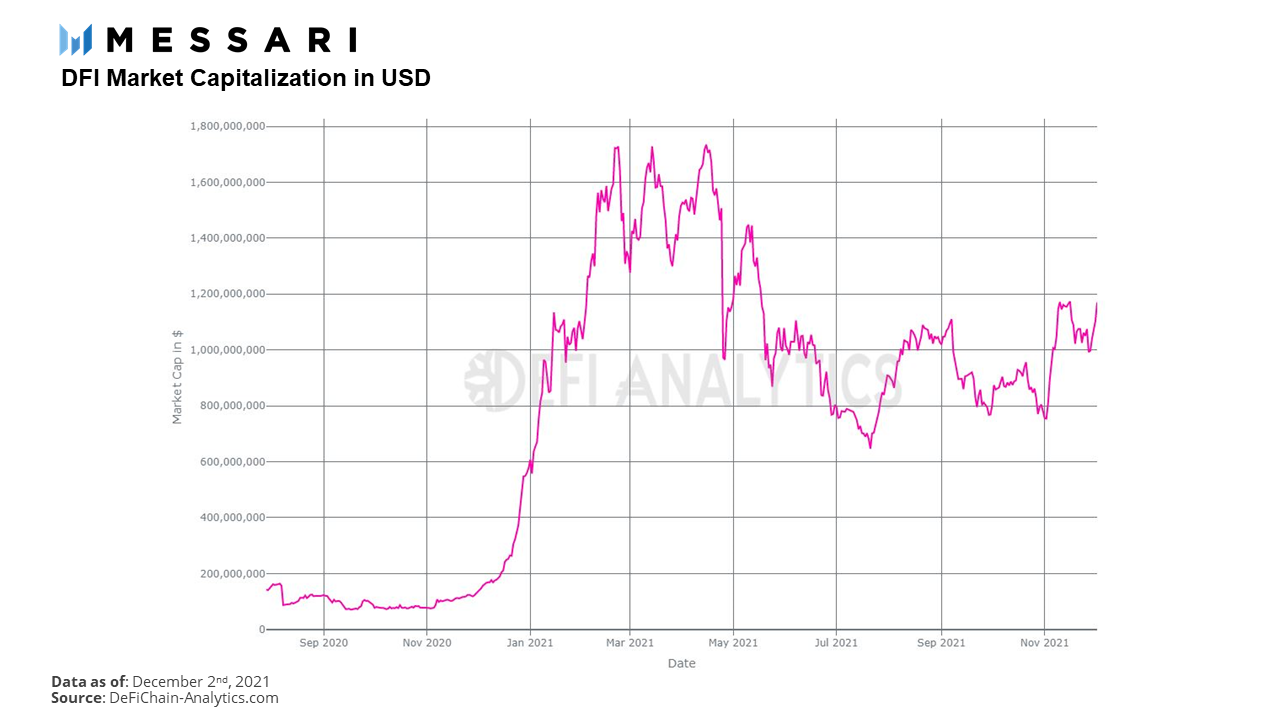
The market capitalization is just short of $1.2 billion at the time of writing, after reaching all-time highs of near $1.8 billion earlier this year.
The current coin distribution across users, masternodes, community fund, and other entities can be seen below. The circulating supply is around $300 million.
Competition
Stacks network is a blockchain which leverages Bitcoin, whose STX token has jumped in value in contrast to the recent struggles of Bitcoin. Stacks uses a new language called Clarity, which is an expressive type of language, similar to Turing-complete languages. As such, it has a number of announced projects ranging from NFTs to writing platforms and survey apps secured by Bitcoin finality. However, its main DeFi offering is a native staking app that rewards users who lock STX for a period of time with BTC. No clear leader has emerged in this nascent space, and multiple teams are viewing DeFi as a natural next step in the evolution of the Bitcoin universe. Alternatively, DeFiChain has announced plans of introducing an EVM-based solution in addition to its current offerings, perhaps to avoid being outflanked by the arrival of mature Ethereum Dapps to the DeFi battleground in Bitcoin. This upcoming relaxation of their non-Turing-complete stance may prove to be a game-changer for DeFiChain, especially if they can attract mature Dapps to their fold. This is a game of execution in unexplored territory but bodes well for the entire space, which stands to gain from the heightened competition that is sure to ensue.
Conclusion
The DeFi-on-Bitcoin space is at an early exploratory stage, and DeFiChain is one of its early experiments. The multiple theses of tokenizing synthetic assets without a current Perp-like funding rate, the separation of Operators and Opspaces from user spaces, and a fundamental stance of adopting a non-Turing-complete approach are yet to be tested thoroughly. Timing, with regard to the entire space will also have a crucial role to play. Is DeFiChain picking the right moment to introduce the Bitcoin world to the many wonders of DeFi? Or is it a case of too little too late, with Ethereum winning out as the natural home for DeFi? Either way, it looks like DeFiChain will have a lot to say about whether digital-gold-with-wheels can eventually succeed.
