Data Decoded: Ethereum

Our new Dune Dashboard tracks KPIs for Ethereum, the most developed Layer-1 blockchain. This document complements the dashboard and explains the metrics, guiding investors to data-driven decisions about the protocol.
Financials
In order to execute transactions on Ethereum, users must pay a fee to the network. The composition of the transaction fee changed with the implementation of EIP-1559 on August 5, 2022. The EIP introduced a new pricing mechanism with a dynamic fee (base fee) that expands or contracts to network congestion. Users can also include a tip (priority fee) to incentivize miners/validators to include their transactions in a block. Before EIP-1559, 100% of transaction fees were paid to miners. Now, all base fees are burned and priority fees are paid to validators.
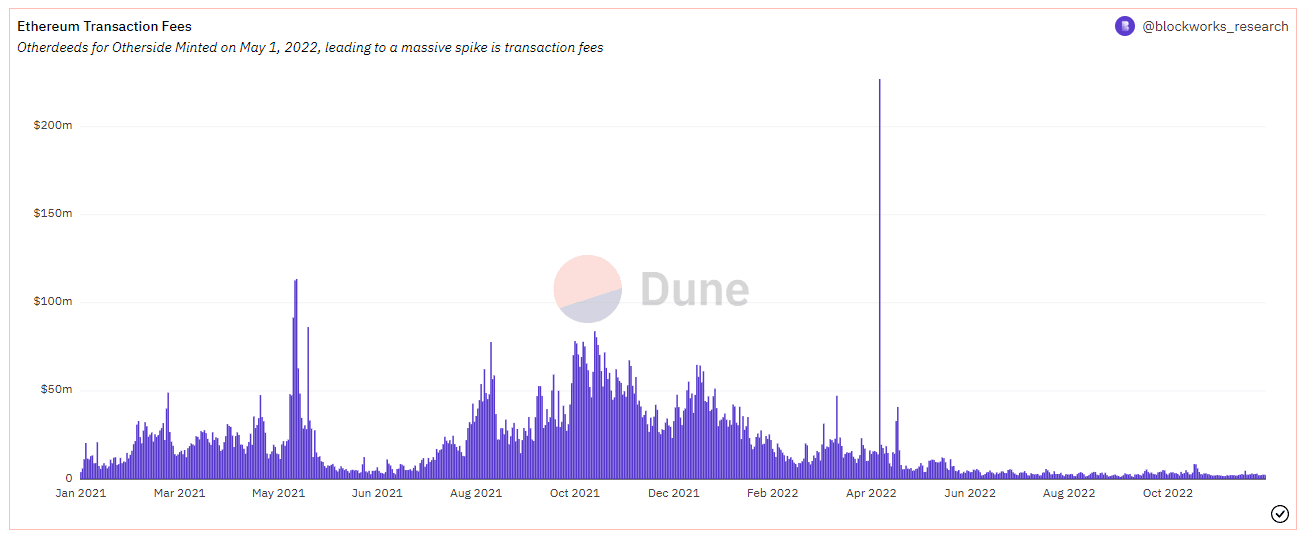
The transaction fee chart shows the total dollar amount paid by users to settle transactions on the Ethereum network. The anomaly on May 1, 2022 is due to the Otherdeeds mint. So many users competed to mint this NFT, it more than doubled the previous transaction fee daily high!
The Ethereum Cash Flows to Holders and Stakers table tracks the cash flow to ETH holders and ETH stakers. Stakers generate all cash flow that holders do, plus additional staking rewards. The protocol has evolved through various upgrades over time, impacting how revenue and costs have accrued over time. Two major changes are EIP-1559 and the Merge.
The best part about this table? It automatically refreshes in real-time. The revolution will not be reported quarterly.

Dan leads the build out of the Analytics product, spending most of his time with onchain data.