Crypto Design 201

Usability in crypto is a two-pronged battle: one at the product level and one at the ecosystem level. How do we design for both?
I found myself asking this question on Monday at the Oslo Freedom Forum (OFF) in New York. OFF gathers activists and dissidents with leaders in technology, business, philanthropy, music, and art. The goal is to discuss “making the world more peaceful, prosperous, and free.”
The event included a panel discussion titled “Why Decentralization Matters,” organized by Alex Gladstein and moderated by Laura Shin. Panelists included Megha Rajagopalan of Buzzfeed News, Venezuelan designer/engineer Alejandro Machado, and crypto entrepreneurs Andy Bromberg of Coinlist and Amber Baldet of Clovyr.
Megha and Alejandro shared their experiences in places where the consequences of weak privacy and central bureaucratic shortcomings are all too tangible - even deadly. Amber emphasized that in the pursuit to thwart authoritarianism, how you build software matters. Andy noted that building tech for tech’s sake is not enough, just as developing a revolutionary medicine is useless if it never makes it into people’s hands.
All panelists agreed that decentralization could help solve real problems. The common holdup: usability.
Aka design.
Obvious premise: Broad crypto adoption won’t happen until decentralized tech has comparable usability to existing tools, and we won’t get meaningful impact from these innovations until we achieve widespread adoption.
Obvious problem: Usability is a key focus of designers, but crypto has a shortage of designers. How do we bridge the gap?
Maybe we can start by boiling things down to the dollars and cents at stake.
Generally in tech, designers are typically hired later in the process of a company’s development, and aren’t always included in the decision-making phases of product development. This is especially true in crypto, despite ample evidence that design-focused companies enjoy a critical competitive advantage.
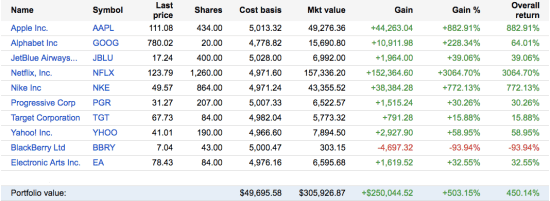
The UX fund, a 2006 grouping of ten companies with good user experiences, generated 450% returns over a 10-year period versus NASDAQ’s 93.2%:
Source: Geoff Teehan
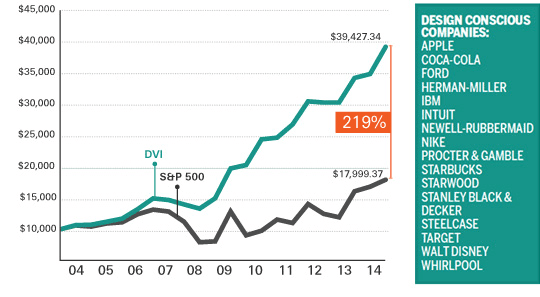
In a study by the Design Management Institute, a market capitalization-weighted index comprised of design-driven companies showed 10-year returns of 219% over the S&P 500:
Source: Stanley Lei
To put things in more human terms (as designers do), Lyft’s approachability helped people start to trust ride-sharing. Airbnb (RISD founders!!) enriched people’s travel experiences by making apartment rentals feel like crashing with a friend. Nest gave folks a way to check on their dog from work (that’s what I do, anyway).
These public outperformers and private unicorns were all propelled by good design. Crypto projects would do well to learn from their great centralized counterparts.
Especially since the need for design may be even greater in crypto given how teams are attempting to rethink foundational elements of society like the essence of money, value, and trust itself.
Great, but isn’t design still just about making things pretty after the MVP has been built? Shouldn’t it come later?
No. Steve Jobs put it best: “Design isn’t just what it looks like and feels like. Design is how it works.” It’s integral to good companies and good products.
Design is figuring out which problems to solve and how to solve them. Design is using empathy to listen deeply, challenge assumptions and make innovative leaps.
Design is shaping how you experience a product and how that product affects your wider experiences.
Design is a verb before it’s a noun.
Design thinking has given us a richer way to accommodate the needs, goals and desired behaviors that drive a product or organization’s appeal and usefulness. The process of thoughtful ideation, iteration, prototyping and testing in rapid succession not only synchronizes well with agile development environments, it allows more inclusion from stakeholders and end users, more creativity from synaptic brainstorming, and more testing of the assumptions we often take for granted.
But before you go hire a designer for the sake of checking a box, you need to understand designers aren’t one-size-fits all.
There are UX Designers, Interaction Designers, Visual Designers, User Researchers, Data Analysts, and Strategists. In addition to these specialities there’s a holistic all-in-one type called a Product Designer.
The kind of design that will help your project get where you want it to go will operate at three levels simultaneously: the visual, the usable, and the systemic.
Let’s parse those…
Design Level I: Visual Resonance
Despite the many gifts of design thinking, it’s often difficult in tech to argue for the multifaceted role of design when its most visible and tangible manifestation is in the visual realm.
In a way, the aesthetic talent that gives designers a voice in the room can also be the thing that shoots us in the foot.
Visually engaging interfaces get first place in the race for people’s attention because visual perception has long been our way of making sense of the world. Visual information is critical as a sensory input, a communicator of tone, and a tool that enables higher powers of cognition, critical thinking and creativity. It’s the first place digital products can connect with people, relay a message and inspire community.
That said, visual resonance is only one aspect of a holistic designer’s toolkit.
Associating design only with the aspects of composition and materiality is like associating a doctor only with their ability to put on a bandaid. Ideally, your doctor not only has a broad enough understanding of the human body to keep you intact internally and externally and cure ailments, she’s also driven by a deeper purpose of ensuring your overall health and holistic wellbeing. The kind of “doctor” we need in the decentralization landscape treats an individual patient holistically, diagnoses wider trends in health, and helps to shape widespread awareness and innovation.
Design Level II: Usability Plus
Usability is the ease with which a tool can be learned and used. It’s equally important to design how it can come to be cherished and valued. Crafting usability requires a combination of empathic intuition and perceptive observation.
Anticipating, designing for, and assessing the value that people experience around a product is not as easy as it might sound.
If you’re trying to ascertain whether a dog is delighted or not, it’s easy. Is his tail wagging? He’s delighted.
Human beings are not so transparent.
Making usable and valuable products that people love often involves making things people don’t know they need, and implementing in ways you can’t know are right for that particular context until you experiment, innovate, and assess. (Designers often get things wrong, but we’re pretty good at learning from our mistakes.)
Given the complex processes required to interact with blockchain technologies, usability is a particularly tricky goal to achieve for crypto projects. What is usable for existing technologies is not necessarily optimal for decentralized technologies.
Yet many dApp solutions I see are near exact copies of their non-blockchain equivalents. If blockchain is redefining value and the role of trust in exchanges, we probably need to redefine usability in digital experiences as well.
Design Level III: Systemic Impact
This may be the most under-appreciated aspect of design in crypto.
The arguments touting the relevance and impending ubiquity of blockchain technology are many. As Andy pointed out at OFF, it’s unique that one technology could address problems as diverse as privacy abuse and currency revaluation.
Like any new tech, though, crypto is a field that can be adapted for misuse as often as it is for its loftier applications. The usability battle in the crypto space is as much as about designing for impact across a global ecosystem as it is designing products that work well and resonate with early adopters.
We must design resonant, usable, scalable products that honor all of the human beings using them, not just those with early access.
We must parse clouded motivations and hard-to-decipher data so that anyone can unpack them.
We must communicate the ecosystem’s underlying principles and benefits to a wider audience - not just a Silicon Valley echo chamber.
We must encourage people to reclaim their agency.
Discussions like the one at the Oslo Freedom Forum present an opportunity for diverse groups to assemble and think carefully about creative, long-term solutions to the world’s biggest problems.
China is becoming a panopticon. Millions are starving in Venezuela. Billions still lack access to basic financial services, while inequality continues to stretch further even in “advanced economies” like the U.S.
A lot is riding on fixing crypto’s design foundations.
So let’s figure this shit out.
Faye Hayes, Head of Design at Messari + Artist
Interested in more insights like this? Subscribe to Unqualified Opinions.