Crypto and Music: Jamming into Web 3.0

Speak to any music artist and you’ll hear a similar set of problems: Those ‘lucky’ enough to get a record deal often have up to 80% of royalties taken by their label – and that’s before needing to pay any remaining distributors or managers. In fact, according to a Citigroup report, artists generally only capture 12% of the revenue from their music. This layer of middlemen was once pivotal given the physical effort needed to create music, but the Internet began to democratize that by enabling anyone with some simple software to produce it for cheaper. While this sort of breakthrough is an example of how technology can disrupt the music industry, middlemen still exist today. See the infographic below for a breakdown of revenue. Note the distribution allocated to parties such as platform cost and record labels.
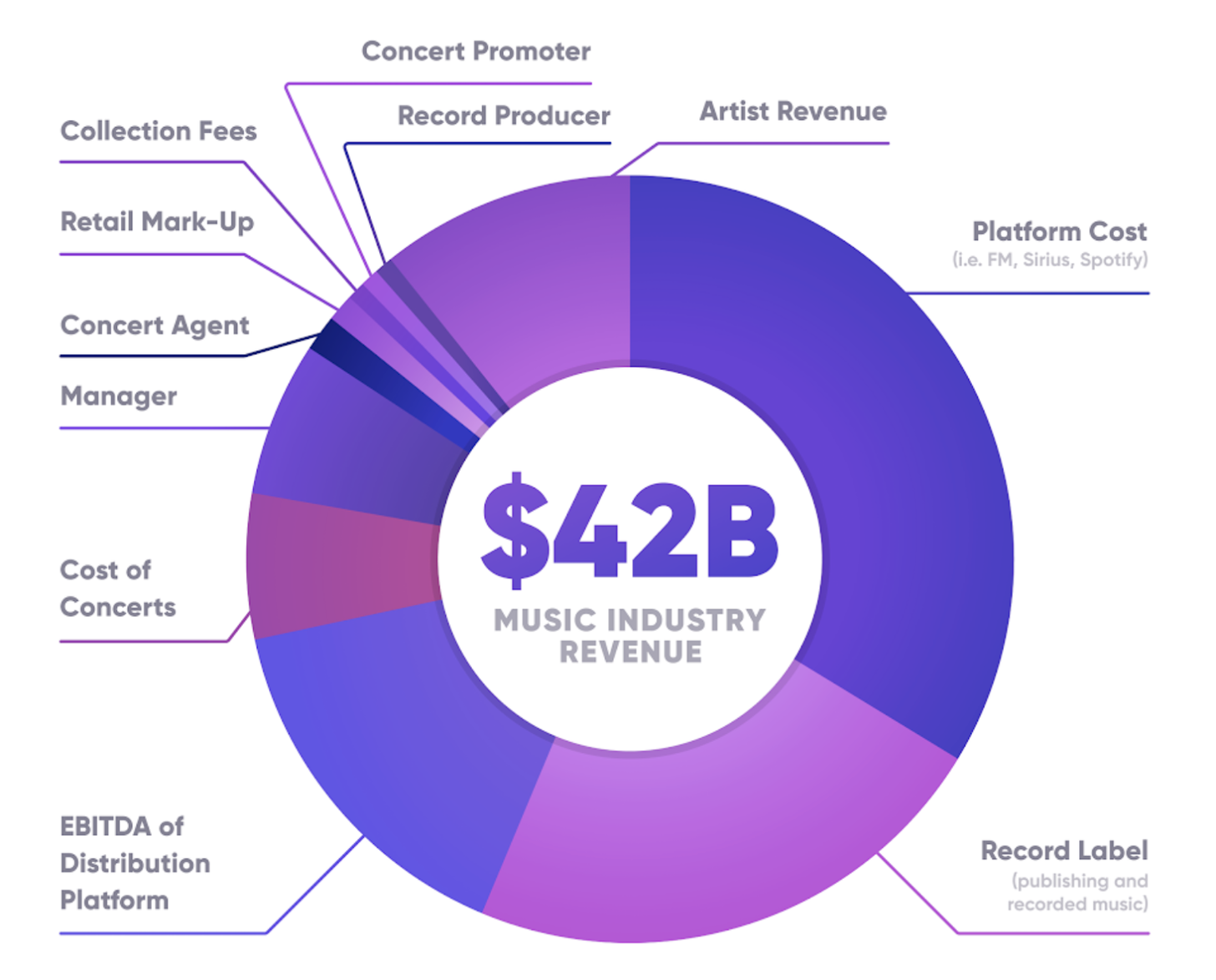
Source: Audius
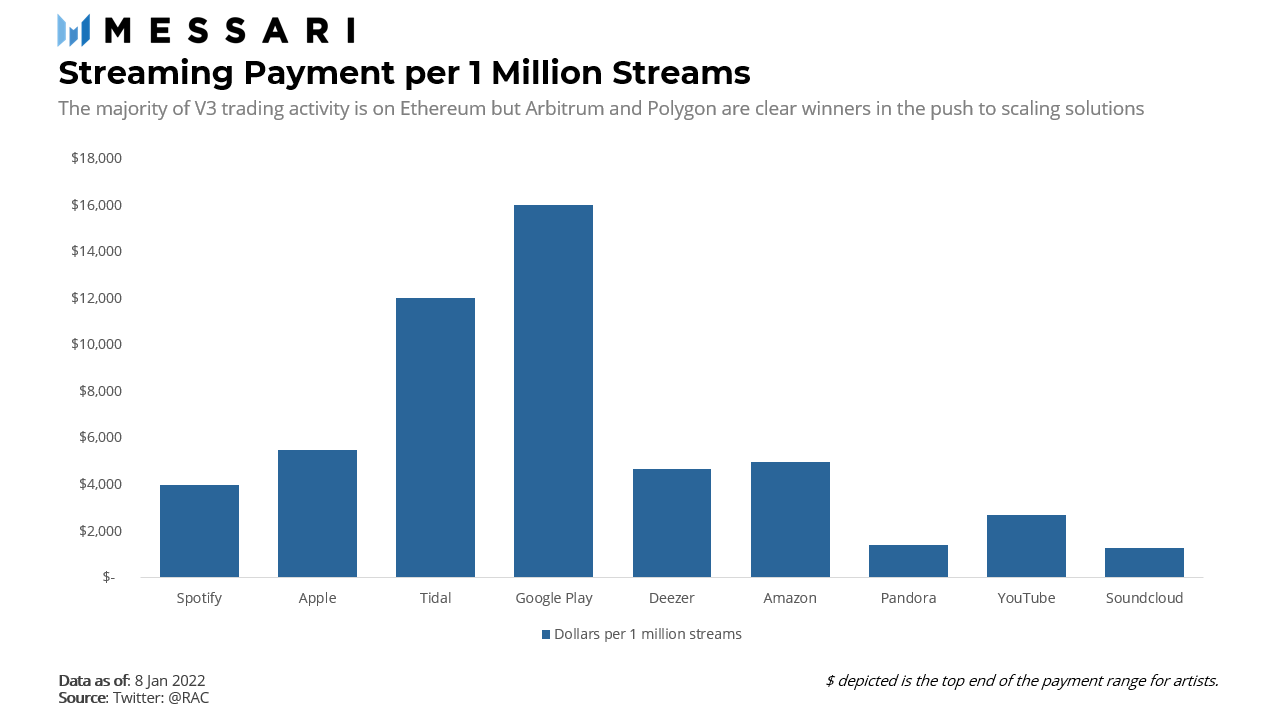
That said, probably everyone you know uses Spotify, Apple Music, or some other music streaming service, so it may be shocking to learn just how little revenue artists receive through these platforms. Out of approximately 8 million artists on Spotify, only 42,100 artists (0.53%) made over $10k for the year; just 13,400 (0.17%) made over $50k, or the equivalent median wage for workers in the US in 2020. Put simply, only a fraction – really only a fraction of a fraction – earn as much as the median US worker.
Don’t tell the companies that. Opposite the artists, Spotify’s latest Q3 2021 financial results read glowingly for shareholders. 381mm Monthly Active Users generated $2.8bn in revenue for the company, of which $112mm became free cash flow for the business to spend on themselves. Talk about undervaluing artistic work, it’s no surprise artists feel unfairly rewarded.