Burning The Path to Becoming a Deflationary Asset

Four months ago on August 4th, EIP-1559 went live which altered Ethereum’s transaction fee system. EIP1559 reformed the Ethereum fee market, creating a “base fee” – minimum price per unit of gas – that dynamically changes based on network activity.
Ethereum base fee burns hit an all-time high in November with just over 360K ETH burned. The ETH burn rate has continued a 19% month-over-month growth rate over the past two months.
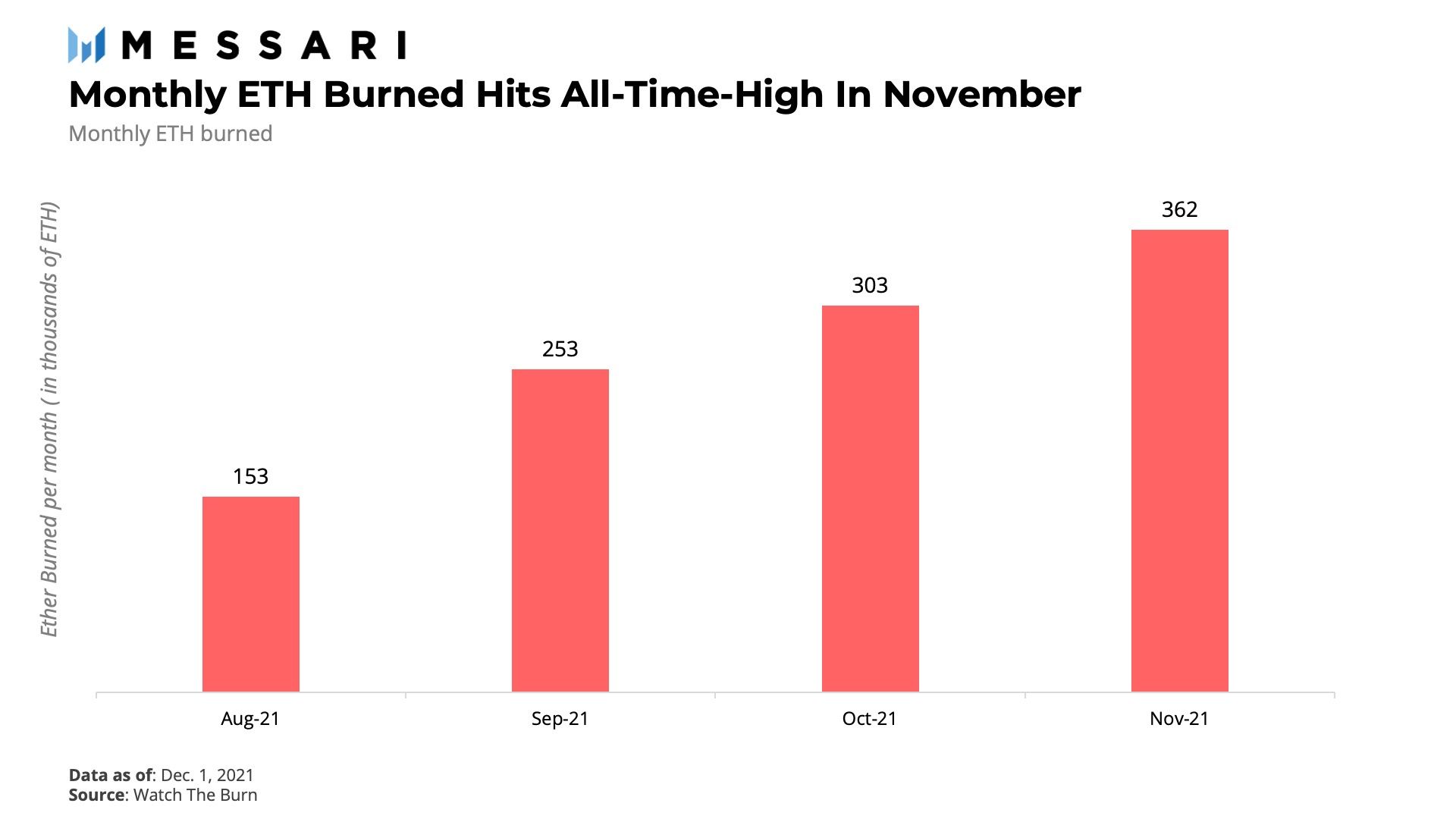
OpenSea currently accounts for the largest percentage of ETH burns (~117k ETH) with ETH transfers (transfers of ETH on the network) coming in second (105K) and Uniswap V2 (100k) coming in third.
Ethereum net issuance continues to decline with only ~37K ETH issued in November.
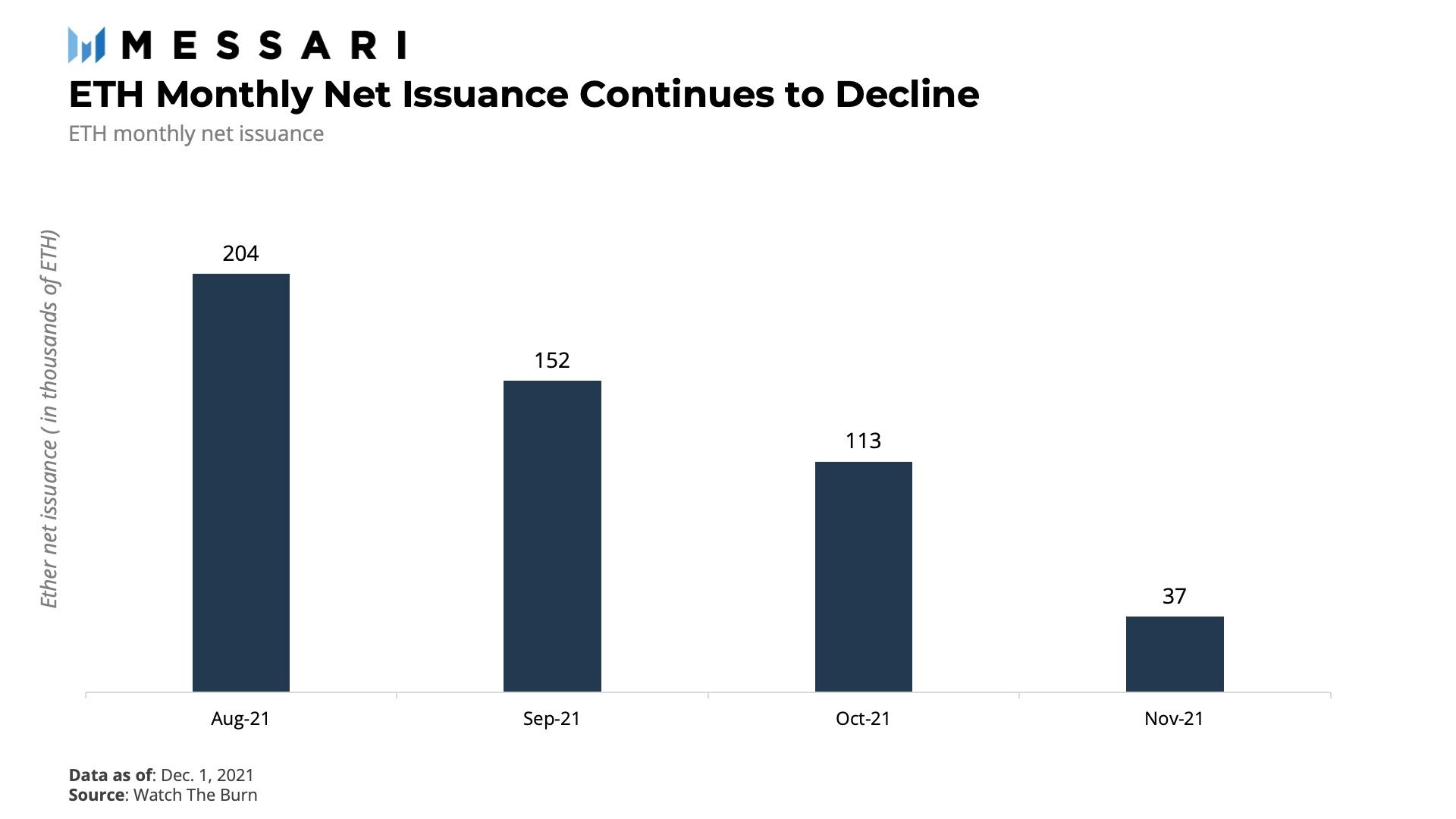
At this rate, if market demand continues, Ethereum may see its issuance become deflationary relatively soon. In fact, it's possible that December might become the first month in which Ethereum experiences negative net issuance (deflation).

Mason was a Senior Research Analyst at Messari focused on Web3 protocols and cryptoassets. Before Messari, Mason worked at ConsenSys as a Content Marketer focused on marketing strategy. Mason obtained his Master’s in Business Management at Hong Kong Baptist University.