BTC & ETH Update: Macro Dominates

Market Commentary
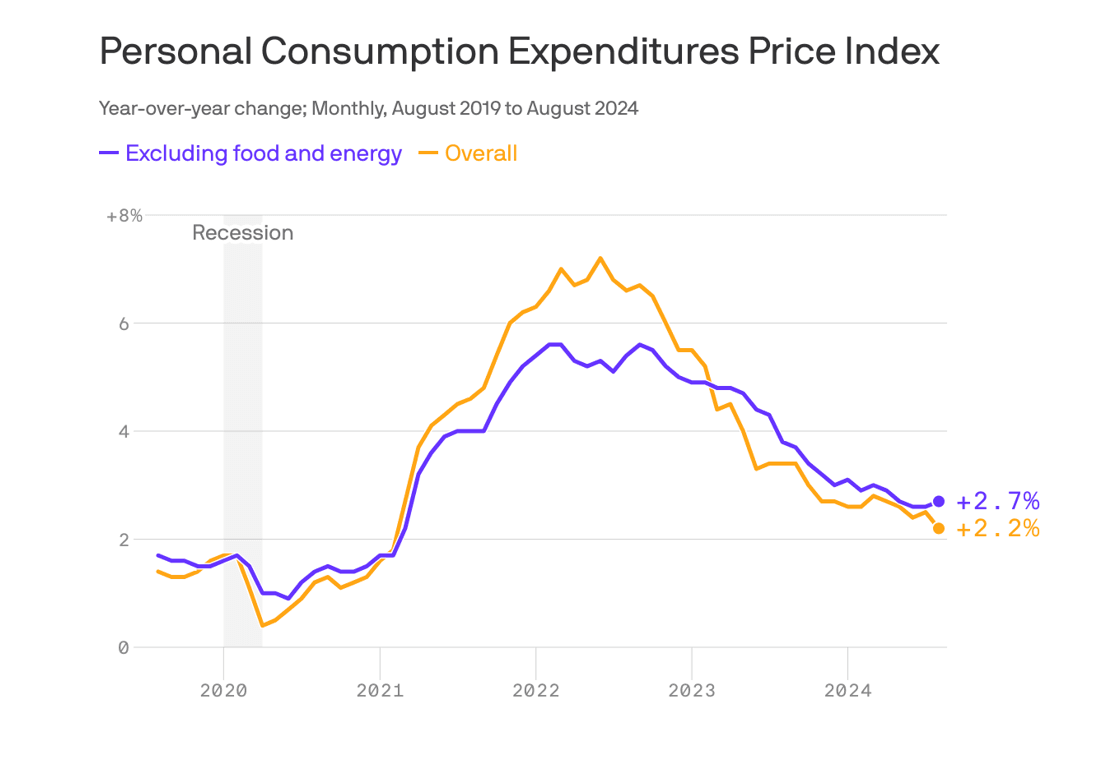
Federal Reserve officials' preferred measure of inflation—the Personal Consumption Expenditure (PCE) price index—rose just 2.2% over the past 12 months. Over the past six months, PCE inflation was 1.9% annualized and only 1.5% annualized over the past three months. The continued reduction in PCE is a welcomed sign for the FED. Below we show the PCE (and Core) price index over time.
With inflation concerns seemingly behind us, the focus has shifted to the economy’s health, opening the door to monetary easing. This was evidenced by interest rates coming down from their multi-decade highs as the FED opted to cut by 50bps. The timing and size of the cut were likely related to two key factors. First, with inflation approaching the Fed's target, maintaining high interest rates to suppress demand is no longer deemed necessary. Second, as shown in the chart below, there's growing concern about the steadily weakening labor market, which requires preventative action. Recent statements from Fed officials indicate that while the first factor provided the general motivation for a rate cut, the second factor specifically drove the decision to implement a more aggressive half-point reduction, reflecting the Fed's dual focus on price stability and labor market health. Looking ahead, the Fed anticipates a more gradual approach to rate cuts but remains prepared to act more decisively if economic conditions deteriorate.
Zooming in on economic data, the latest S&P Global survey reveals a stark contrast in the U.S. economy. With a robust overall Purchasing Managers' Index of 54.4, the economy appears strong, primarily due to the dominant service sector offsetting manufacturing weakness. This divergence explains varied perceptions of economic health. The survey suggests the strongest quarter since Q1 2022, with services expanding at record rates in the past two years, while the manufacturing output index was below 50 for the second consecutive month. For reference, services typically contribute around 75% of US GDP.
Furthermore, the upcoming September nonfarm payrolls report, due October 4, 2024, could significantly influence the Federal Reserve's next rate decision. Weaker-than-expected jobs report might prompt markets to anticipate another substantial rate cut from the Fed. Below we show the three-month rolling average for change in nonfarm employment since January 2022.


Marc covers Ethereum, Bitcoin and their L2s. Previously led Ethereum and DeFi research at CoinShares.