Bitz, Eclipse, and Celestia: Downstream Effects

Celestia: Downstream Effects
Celestia’s modular DA revenue model relies on consistent, high-throughput applications to justify its blobspace. With Eclipse as the overwhelming driver of Celestia DA revenue, and Eclipse’s TPS now substantially decreased, Celestia has a near-term revenue problem.
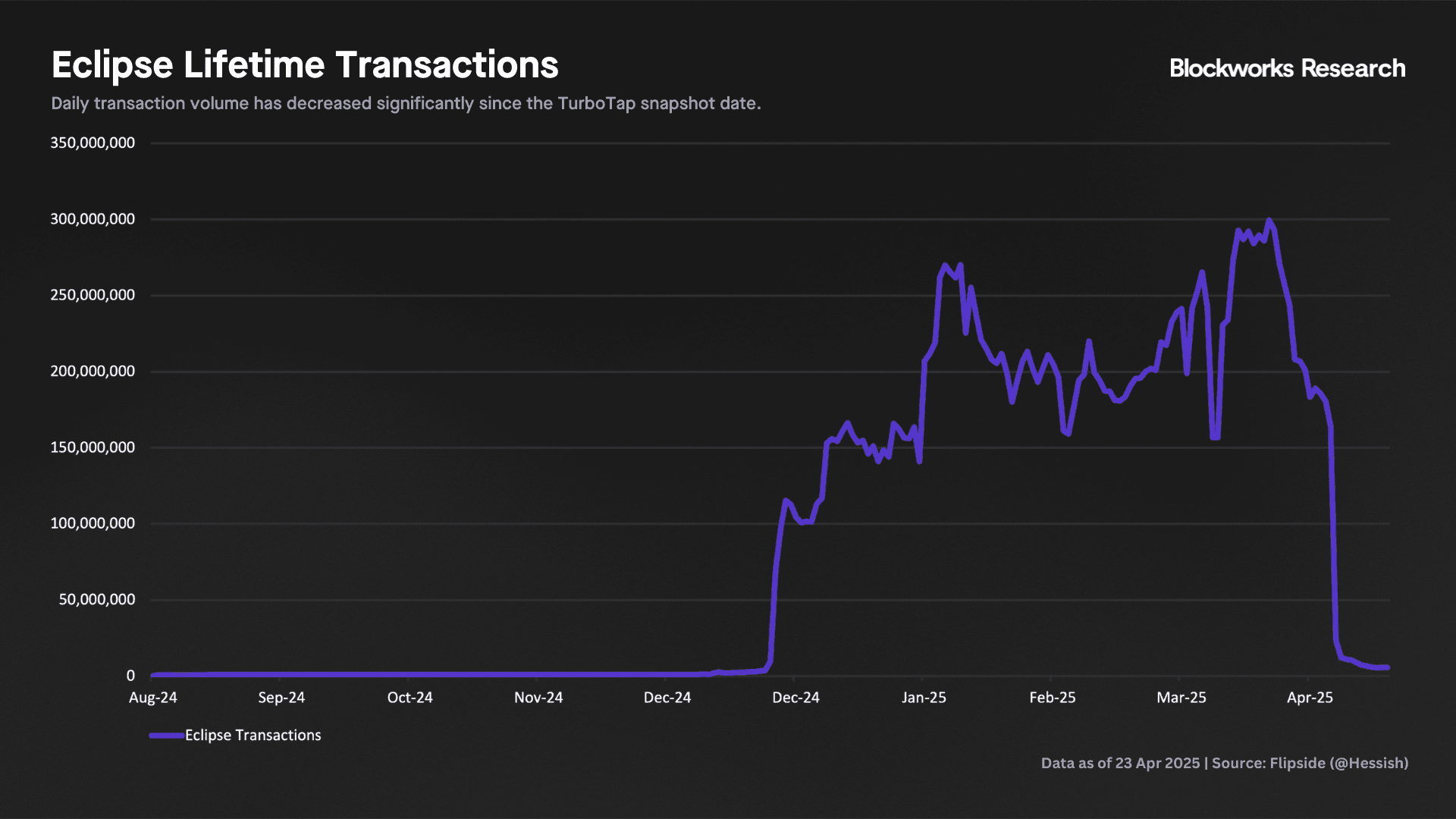
Eclipse interfaces with Celestia by posting data to its DA layer, with each block representing one “Blob” on Celestia of varying size dependent on the number and complexity of the associated transactions. While Turbo Tap drove a significant volume, each transaction used for ~18k compute units (CUs), with Bitz transactions currently consuming ~500k CUs. To achieve a similar level of gas fee generation, Bitz would need to scale to ~80k active miners, roughly 40x from current levels. Alternatively, this could be met through a ~400x increase from current total transaction volume across Eclipse’s top 20 applications, excluding Bitz and TurboTap.
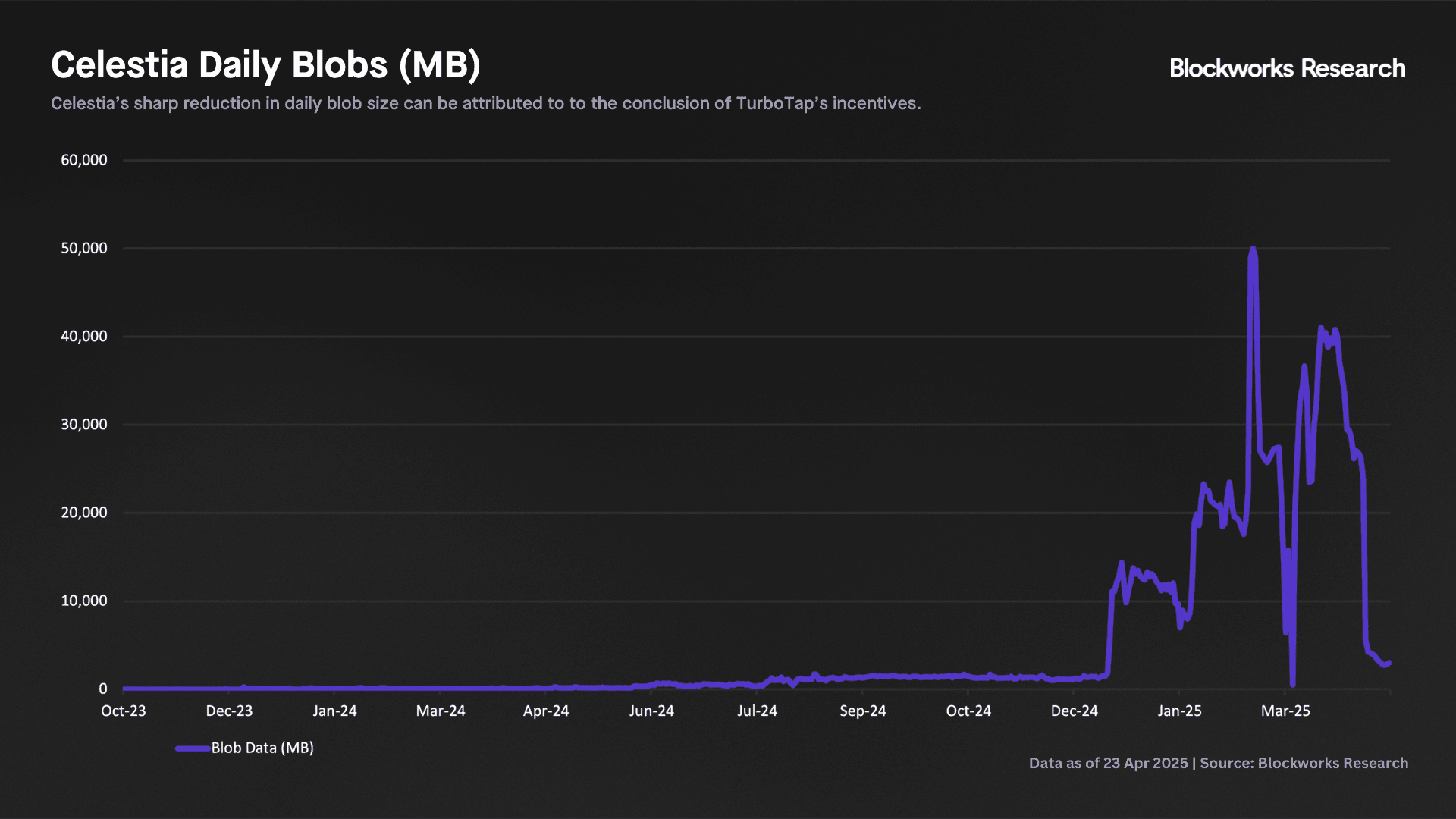
To date, Eclipse has been responsible for significant data availability fee generation:
- 94% of all-time blobs

Nick leads coverage on the DePIN and Proof of Work sectors. Previously led research and engineering at a DePIN-focused accelerator.