Bittensor: Covenant Null and Void

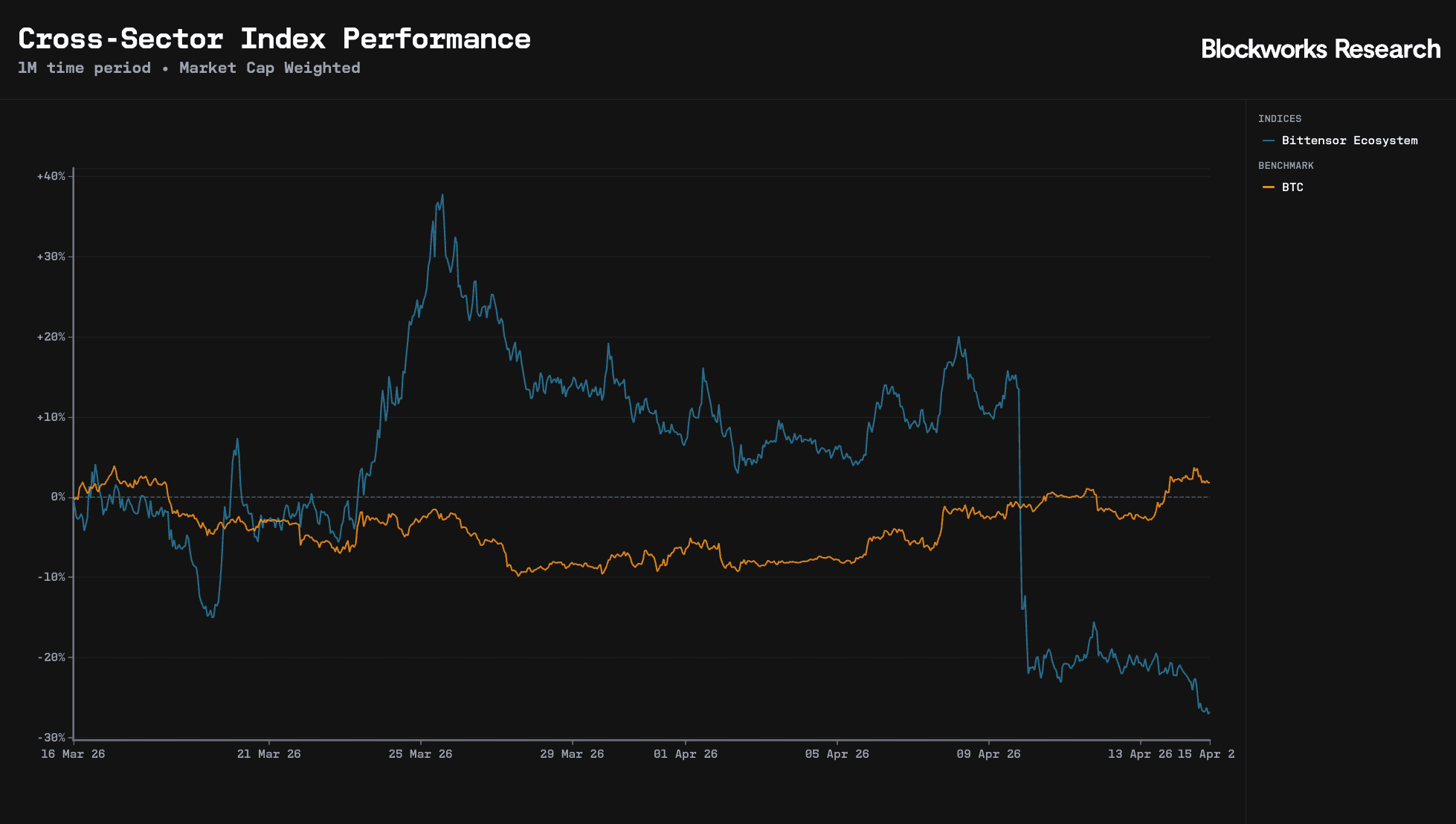
The Covenant incident is best understood as two separate events that happened to coincide. The first is a personnel dispute with a founder relationship that deteriorated, a 100% miner emission burn that violated the network's core incentive methodology, a market repricing that Covenant experienced as targeted aggression, and an exit executed with maximum reputational damage. This incident stress-tested Bittensor's governance architecture in public and found it wanting in ways that matter for every investor with TAO or alpha token exposure, regardless of how one assigns blame between the two principals.
The exit incentive problem has no current solution. Bittensor's design assumes the network is more valuable than any individual subnet because it provides the emission subsidy, the staking base, and the validator infrastructure that smaller teams could not replicate independently. That assumption inverts when subnets mature, develop external revenue, their own brand, and their own community. There is no legal lock-in, no proprietary distribution channel, or shared data layer that makes migration costly. Onchain data confirms the scale. ~$12.1M in alpha was liquidated from Covenant's primary wallet alone in the exit window, spread across 80+ individual sell transactions structured to limit per-trade slippage while sustaining consistent downward price pressure on all three subnet alpha tokens.
TAO holders have no formal claim on subnet revenues. Alpha token holders in a given subnet hold a claim on future emissions from that subnet but hold no claim on revenue generated by external commercial activity. The only linkage between subnet commercial success and alpha token value is reflexive. Commercial success attracts staking capital, which appreciates the alpha token price, which increases TAO demand via the AMM mechanism. Further, no fee accrual flows from subnet commercial activity to the TAO base layer. TAO's value thesis rests entirely on the network effects argument — that subnet success drives alpha demand, which drives TAO demand. That argument assumes successful subnets stay onchain. Covenant showed they might not. The alpha-holder subnet election mechanism — which would have given stakers formal governance rights over the productive layer they are funding — was explicitly planned, publicly announced, and then delayed at the dTAO launch in February 2025 to give early subnet owners more operational latitude. Ironically, that delay produced the exact outcome the mechanism was designed to prevent.
The governance critique is structurally valid. Steeves used the same market mechanism available to any TAO holder, and he cannot unilaterally suspend emissions. But the market followed his signal in a way it would not have followed any other holder's, because his reputation, technical authority, and social capital within the community are not replicable by any other participant. That is soft power that does not appear in the protocol rules, and it is genuinely incompatible with the network's decentralization claim at this stage of development. It may be an acceptable transitional state, but cannot be the permanent architecture if the institutional investor pitch is "no single entity controls this."
The subsidy-to-revenue ratios are indefensible at their current scale. Bittensor is spending ~$941.9M in 30-day annualized emission subsidies to generate low seven-figures in external revenue. Currently, only 65 registered subnets are receiving emissions, as the flow-based Taoflow model zeros out subnets with net negative TAO inflows. The annualized subsidy is therefore concentrated entirely within that cohort, making the effective per-subnet subsidy roughly double what the headline figure implies.
In Bittensor, the coverage ratio, defined as external inflows divided by emission-funded outflows, measures how much of the TAO the network is spending is offset by real capital entering the ecosystem. A ratio below 100% signals the network is subsidizing activity that is not yet generating equivalent external demand. Currently, total 30-day network inflows sit at $23.0M against $78.5M in outflows, a network-wide coverage ratio of ~29%. Targon, the inference marketplace specifically highlighted as a demand-side revenue story, posts a 28.4% coverage ratio, well below breakeven.

Nick leads coverage on the DePIN and Proof of Work sectors. Previously led research and engineering at a DePIN-focused accelerator.