Bitcoin Update

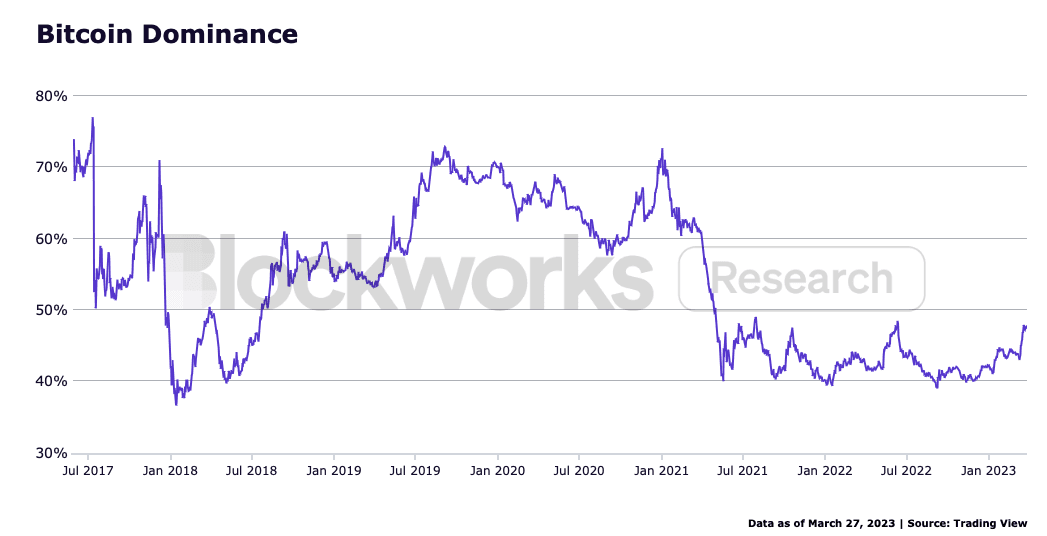
Crypto markets have rallied significantly to kick off 2023, with BTC outperforming most of the market. Bitcoin Dominance, or the percentage of the total crypto market capitalization that is composed of BTC, is up from ~39% in September 2022 to ~48% as of March 27. While normally a slowly evolving network, the past few months have been exciting for Bitcoiners with Taproot adoption increasing, the introduction of Ordinal inscriptions, and Rollkit announcing a solution leveraging Bitcoin as a data availability layer for rollups. Some of these innovations show promise for helping Bitcoin transition to a fee based compensation model for miners as the block reward declines.
Taproot
On November 14, 2021, the Bitcoin network underwent a soft fork to implement an upgrade known as Taproot. If you wanted to use a complex bitcoin script prior to Taproot’s implementation, the entirety of that script needed to be included within every transaction. This consumed a lot of block space and therefore made transactions utilizing complex scripts, such as multi-sig wallets or Lightning Network contracts, much more expensive. Additionally, transactions utilizing data-intensive scripts were easily identifiable on-chain, which reduced privacy on the Bitcoin network even further.
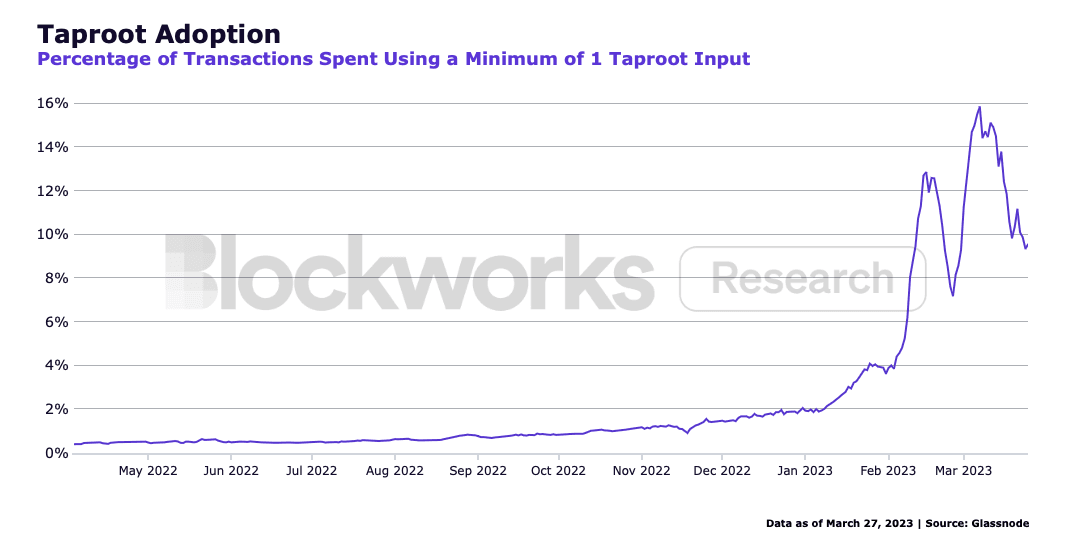
Taproot made it possible to partition scripts in a way that only executed functions are revealed on-chain, thus making complex transactions much cheaper and indistinguishable from a normal BTC transfer. However, up until the beginning of 2023, the portion of transactions on the Bitcoin network that actually spent at least one Taproot input was just 1-2%, signaling a lack of product market fit for the highly anticipated Bitcoin upgrade.
Ordinal Inscriptions

Sam leads coverage on Ethereum, L2s, Aave, Compound, as well as NFTs and gaming. Previously worked on a hedge desk at UGC.