Bitcoin September 2025 Update

Market Commentary
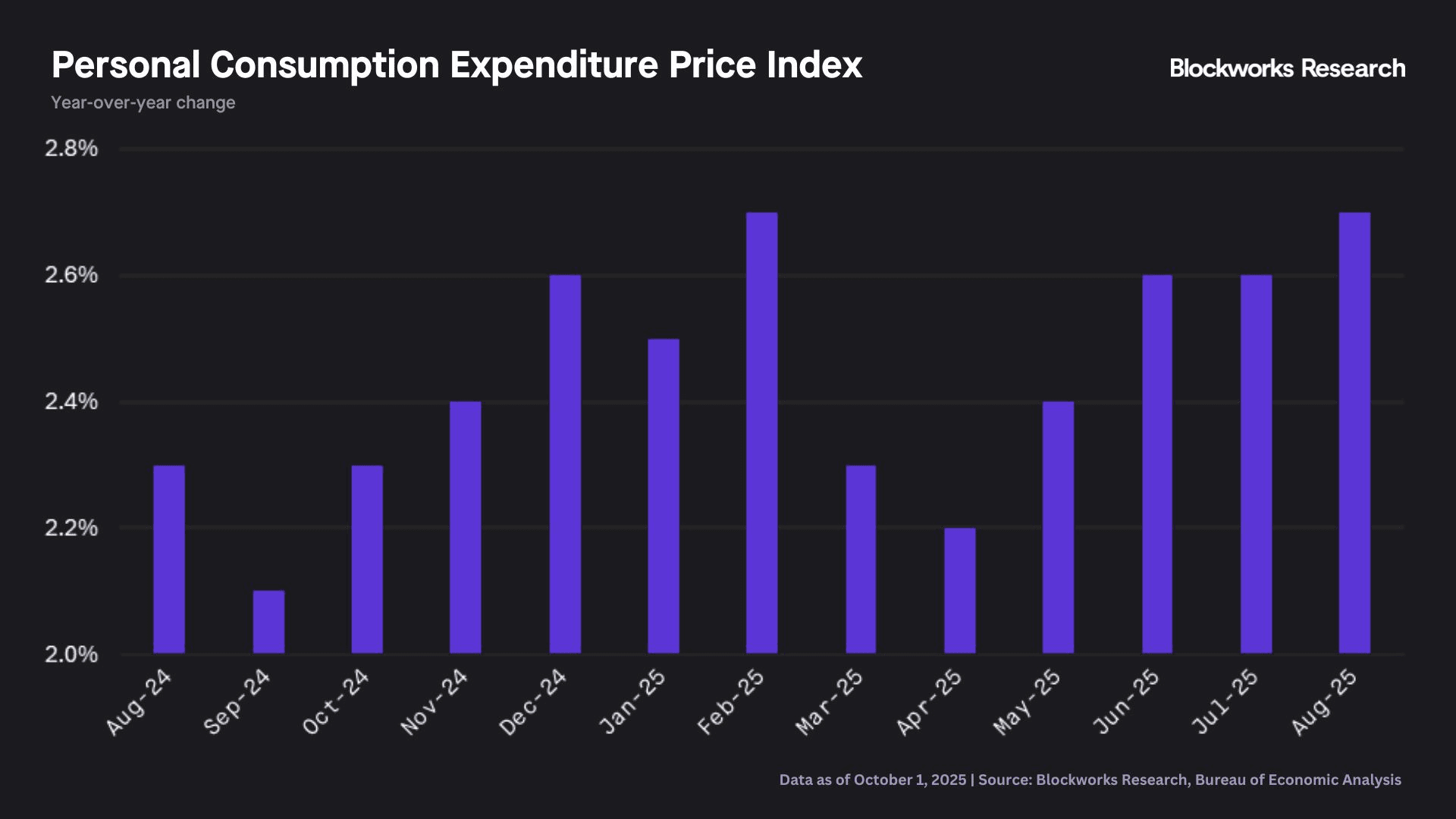
The August PCE report reinforced the “sticky but contained” inflation narrative. Headline PCE rose 0.3% MoM and 2.7% YoY, ticking slightly higher from July’s 2.6%. Core PCE held steady at 2.9% YoY (+0.2% MoM), in line with consensus. The composition showed services inflation remaining firm, driven by a 0.4% increase in housing-related categories, while goods prices were more muted, rising just 0.1%. Energy contributed modestly higher (+0.8%), while food posted a 0.5% gain. On the demand side, consumer momentum remained stronger than expected. Personal income rose 0.4% MoM and spending accelerated 0.6% MoM, both exceeding forecasts. The savings rate also edged up to 4.6%, suggesting households still have some buffer despite cumulative headwinds from tariffs earlier in the year. Notably, much of the spending strength came from services categories, consistent with the post-summer “revenge spending” dynamic. The chart below highlights the YoY trend in PCE over the past 12 months, showing a plateau just under 3%, underscoring the challenge of fully dislodging services-driven inflation even as goods prices remain soft.
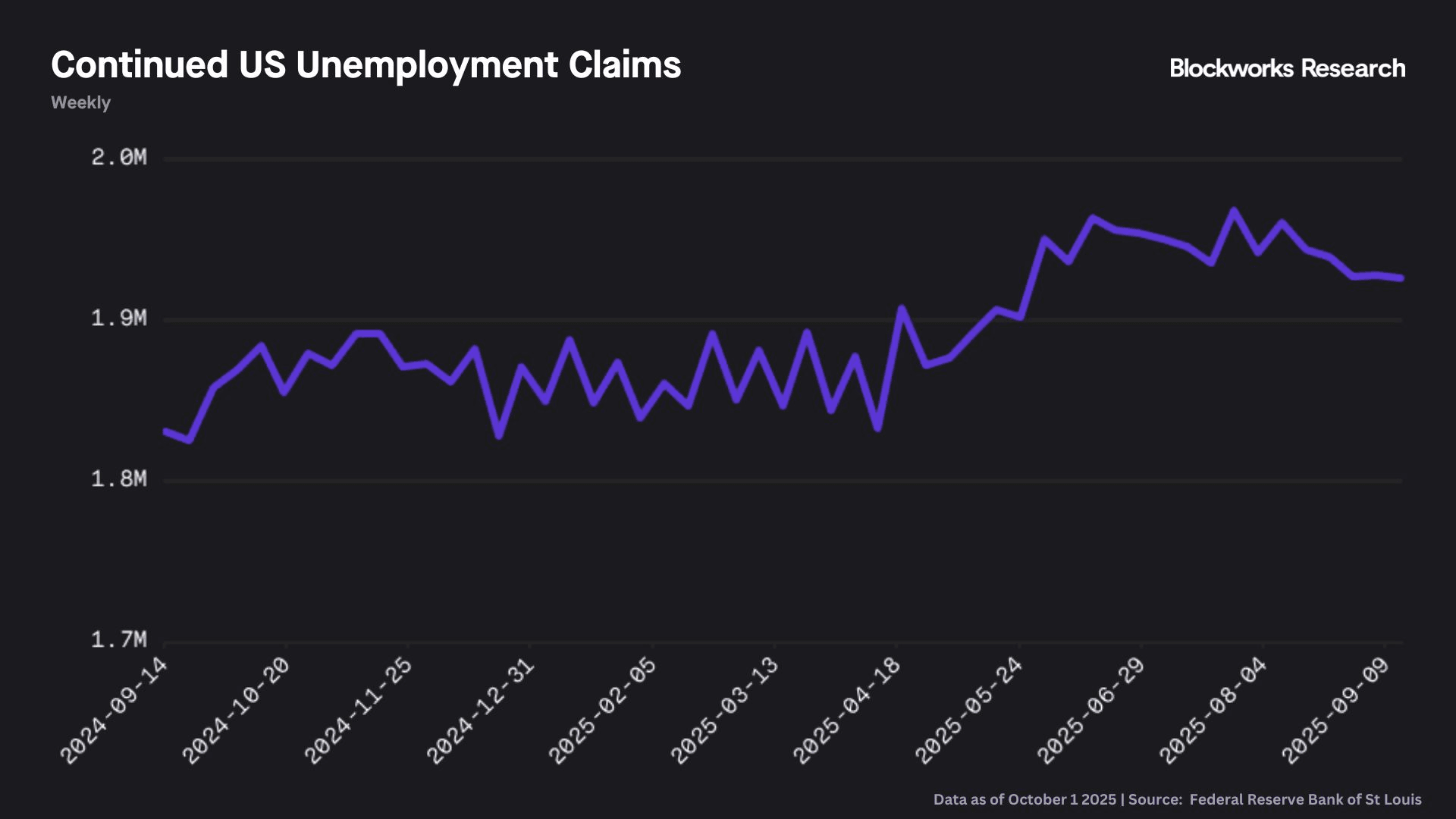
Weekly continued unemployment claims remain elevated, holding just under 1.93 million through mid-September. The data show a distinct step-up in May/June 2025, when claims pushed above the 1.95 million mark, before settling into a sideways range over the summer months. This pattern suggests a structural re-leveling rather than a steadily deteriorating labor market. Similar dynamics were observed in both 2023 and 2024, when claims reset higher before stabilizing. The current trajectory points to incremental cooling in labor demand rather than outright weakness, consistent with a labor market that remains relatively resilient even as broader conditions adjust. From a policy perspective, the August print is unlikely to alter the Fed’s trajectory. Policymakers have already telegraphed two additional 25bp cuts by year-end, and markets remain firmly priced for the next move in October. With inflation still running above the 2% target but stabilizing, the Fed has scope to proceed cautiously while balancing growth risks. The chart below tracks weekly unemployment claims since September 2024, highlighting the transition from sub-1.9 million levels in early 2025 to the current plateau near 1.93 million.
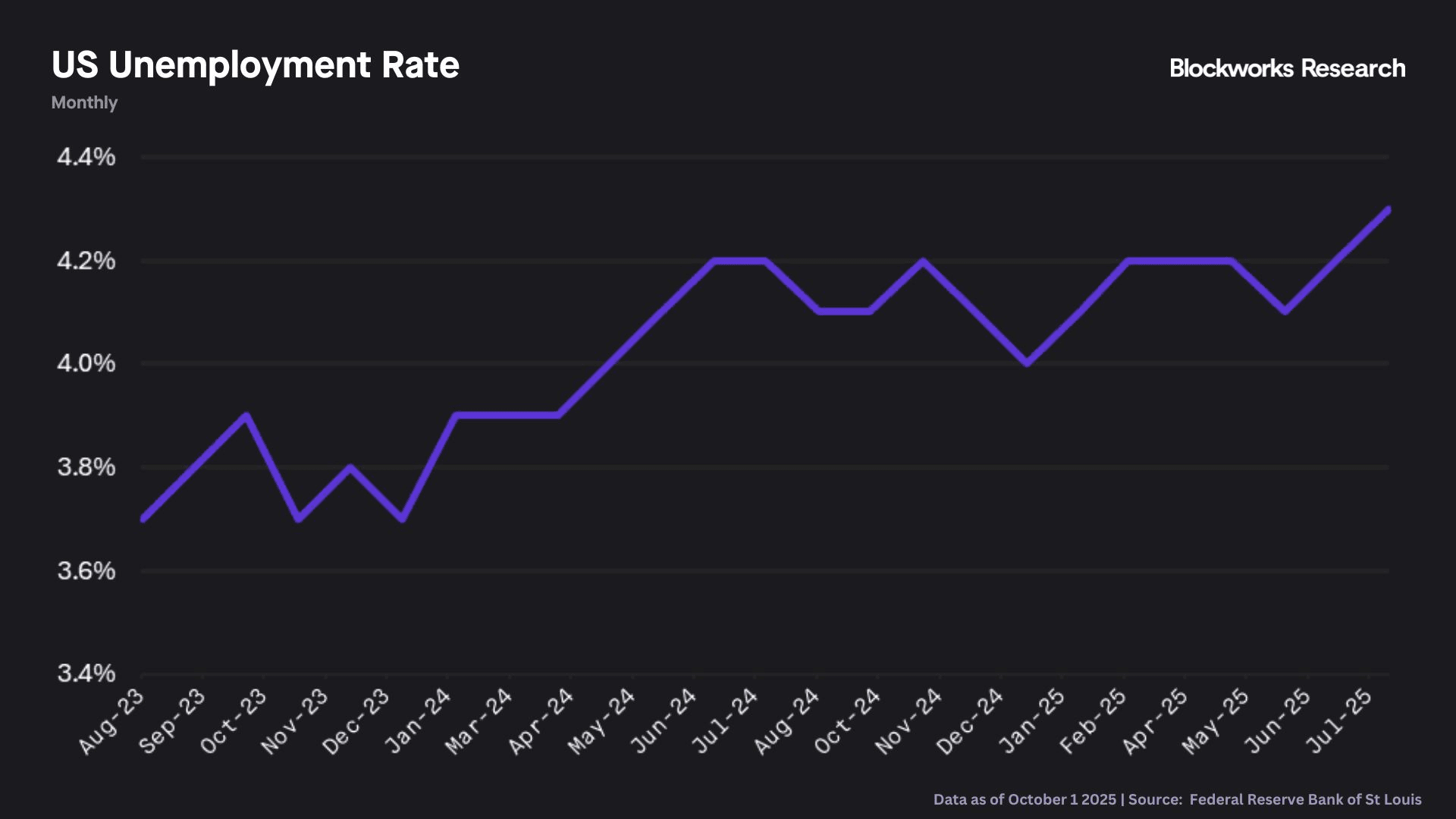
Despite robust headline metrics, low unemployment at 4.3% (shown below), a booming stock market, 3.8% GDP growth, and inflation stabilizing near 2.9%, consumer sentiment remains deeply negative, with the University of Michigan index down 21% YoY and now below levels seen in the 2008–2009 recession, while the Conference Board’s confidence measure slipped to 94.2 in September. The disconnect reflects pressure from persistent cost-of-living concerns as wages are rising more slowly, and inflation in essentials leaves 65% of Americans feeling financially squeezed. While robust growth is being driven by data center and AI investment with limited labor benefits, hiring rates have slowed to five-year lows, particularly affecting younger workers. The net effect is that Americans perceive far more distress than top-line data suggest, underscoring the fragility of the “morning in America” narrative.

Marc covers Ethereum, Bitcoin and their L2s. Previously led Ethereum and DeFi research at CoinShares.