Bitcoin January 2026 Update

Market Commentary
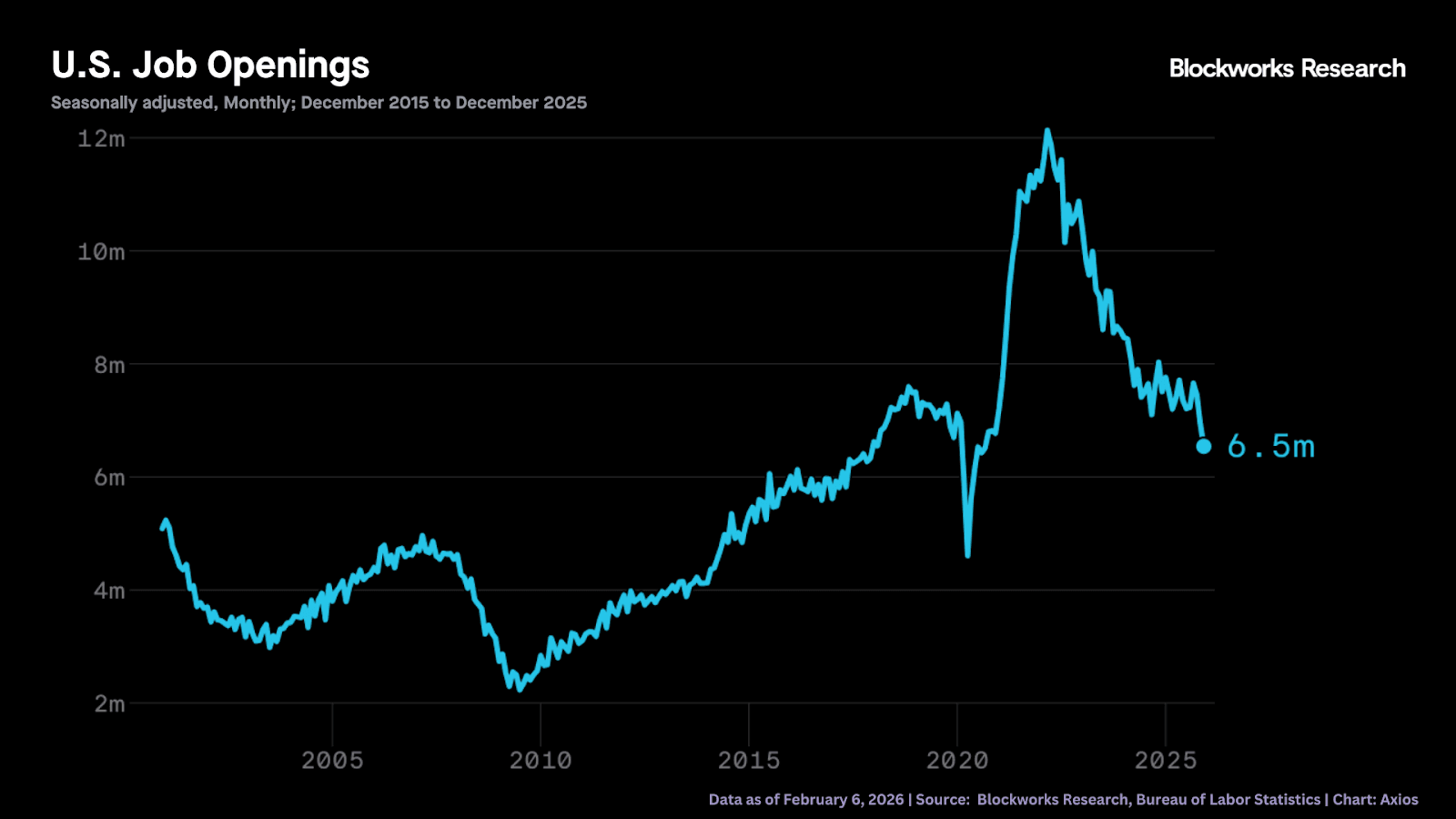
The latest JOLTS release suggests the labor market is no longer merely stabilizing but beginning to show clearer signs of deterioration. Job openings plunged by 386,000 in December to 6.5 million, driving the openings rate down to 3.9% from a recent peak of 4.6% in September. Hiring improved slightly, with the hiring rate ticking up to 3.3%, but it remains consistent with the sluggish pace last seen in the early 2010s, underscoring how muted labor market activity has become. At the same time, other indicators are starting to point toward a pickup in layoffs, with jobless claims rising and January job cuts posting their highest level since 2009. With fewer than one open job per unemployed worker, the labor market is shifting away from the tight conditions of recent years and raising the risk that policymakers misjudge whether the economy is simply cooling or sliding into a deeper employment slowdown heading into 2026.
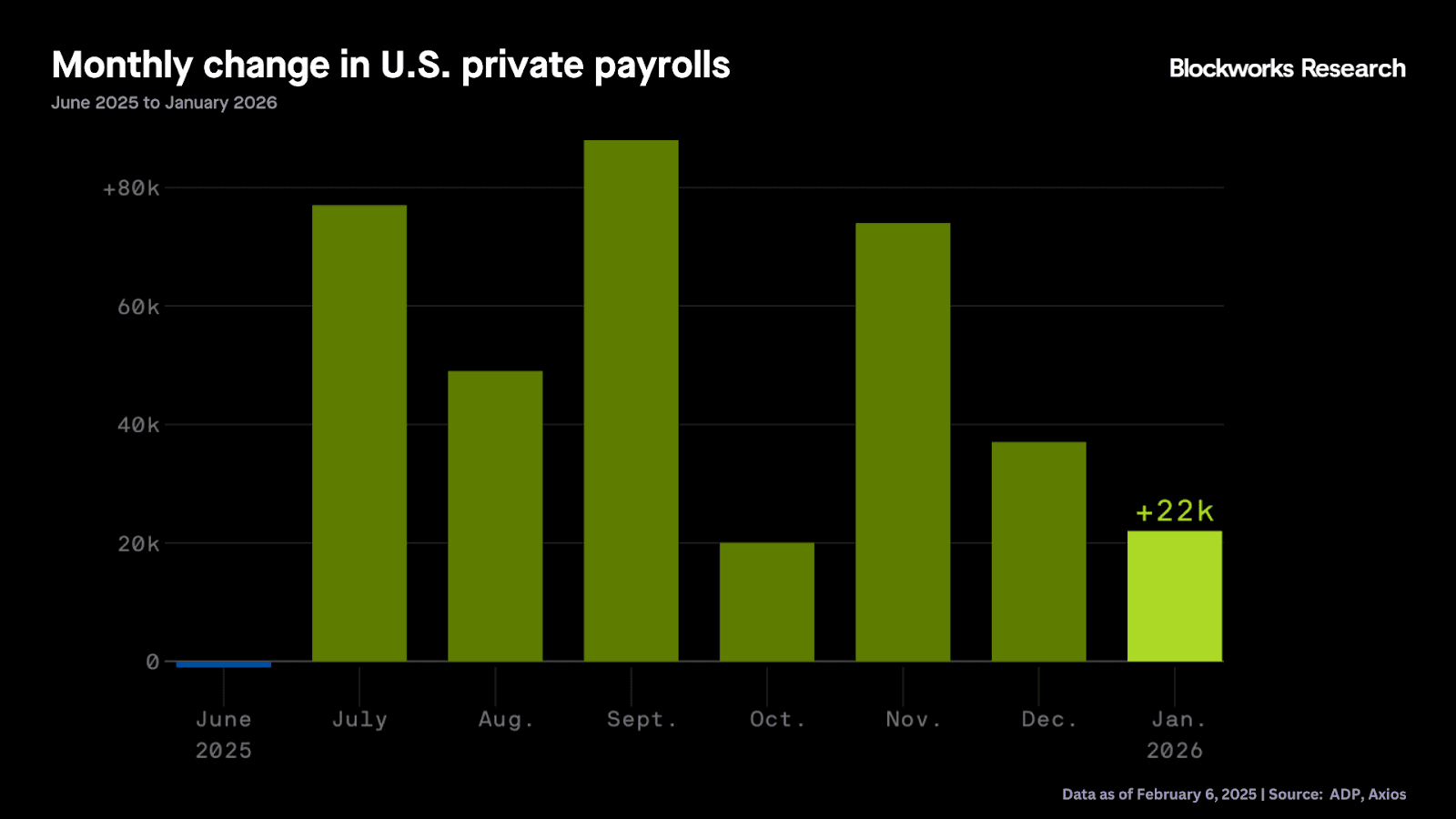
The January ADP report reinforces the view that the labor market is becoming increasingly narrow and fragile, even as outright deterioration remains uneven. Private employers added just 22,000 jobs in January, with hiring concentrated almost entirely in health care (+74,000) while several other sectors, including professional and business services (-57,000), saw meaningful declines. Job growth was driven solely by medium-sized firms, as small businesses were flat and large employers shed 18,000 positions, underscoring how limited and uneven hiring has become. The primary bright spot remains wage growth for job stayers, still running at 4.5% year-over-year, but the broader signal is that labor market momentum is fading and opportunities for job seekers are becoming more constrained heading into 2026.
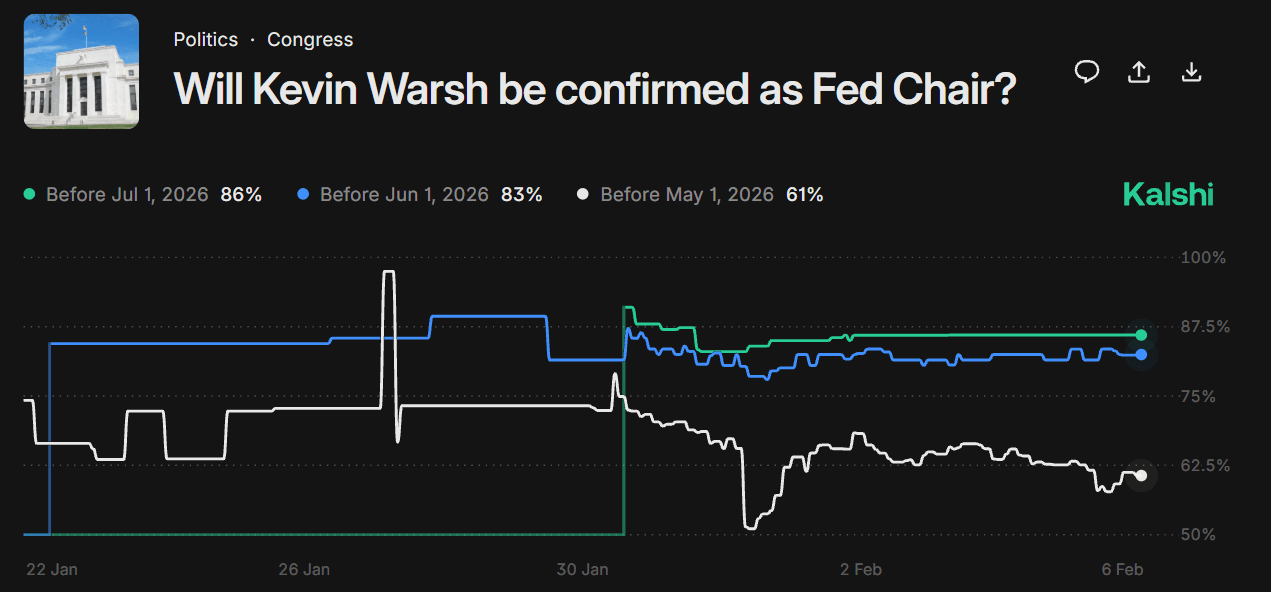
President Trump’s nominee for Federal Reserve Chair, Kevin Warsh, has introduced a new layer of policy uncertainty into an already fragile macro backdrop. Warsh has been deeply critical of what he views as Fed groupthink, arguing that the institution’s balance sheet expansion and reliance on forward guidance have distorted markets and contributed directly to the inflation surge of 2021–2022. He has called for a meaningfully smaller Fed footprint in the financial system, contending that aggressive balance sheet reduction could create room for lower short-term interest rates without reigniting inflation. If confirmed, Warsh could challenge modern central banking orthodoxy, pushing for a more growth-driven easing path alongside tighter constraints on quantitative support.

Marc covers Ethereum, Bitcoin and their L2s. Previously led Ethereum and DeFi research at CoinShares.