Bitcoin Cash hard fork

This post was originally published on August 01, 2019, and sent to Messari Pro subscribers.
How quickly history is forgotten. Today is the second anniversary of the user-activated soft fork (UASF) and subsequent Bitcoin Cash hard fork which led to the multiple “Bitcoins” we see today.
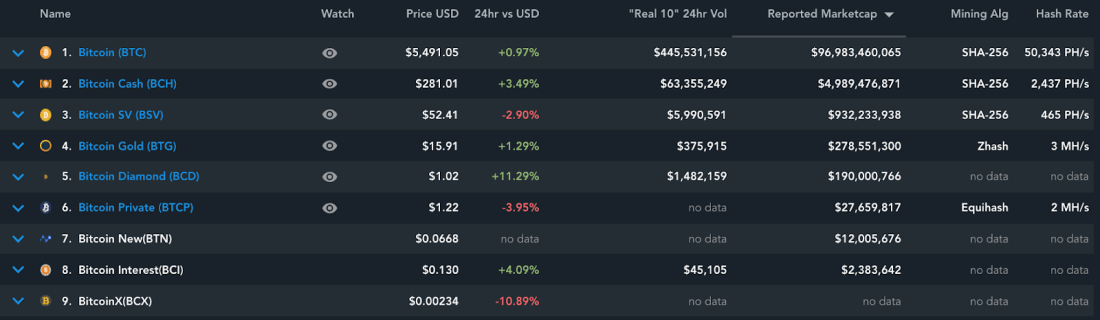
For many in the space, this is an important, almost religious, topic. We won’t opine on the importance but instead outline the events that led up to the fork. To start: Bitcoin’s 1MB cap was not a part of the genesis block, but rather introduced by Satoshi in 2010 believing it could be phased in after a certain block height. Shortly thereafter, one of the early developers, Jeff Garzik, argued Bitcoin “should be able to at least match Paypal’s average transaction rate.” This is the crux of the big block argument, as increasing Bitcoin’s block size supports higher transaction rates and lower fees.
Later in 2015, Jeff formalized his ideas into a Bitcoin Improvement Proposal (BIP100) that outlined a dynamic block size that can be adjusted between 1MB and 32MB through miner votes. BIP 100 never gained traction and the idea eventually died out. Another early developer, Gavin Andresen, wanted a more predictable increase in block size to 8MB over time.
Similarly, Adam Back suggested a 2MB increase with 4MB in two years and 8MB in four years before reassessing. This idea garnered more support but proved to be a hard sell to the Bitcoin community who viewed it as a temporary fix and by and large seemed to be against a hard-fork. Without support for BIP100 and other proposals “big blockers” looked to Mike Hearn’s BitcoinXT that activated Gavin’s proposal for 8MB blocks. If you’ve never heard of Bitcoin XT that’s because it failed to gain adoption like earlier client forks.
Instead of larger blocks a new idea, Segregated Witness (SegWit), was introduced with the promised to alleviate Bitcoin’s scaling woes by improving efficiency and paving the way for Layer 2 solutions, namely the Lightning Network. However, the original proponents of big blocks didn’t go away and at this time were comprised of the large mining players. In February 2016, many miners stated they would only activate SegWit if the block size doubled to 2MB. This once again sparked a debate on how Bitcoin should scale and what the block size should be.
