Bitcoin April 2026 Update

Market Commentary
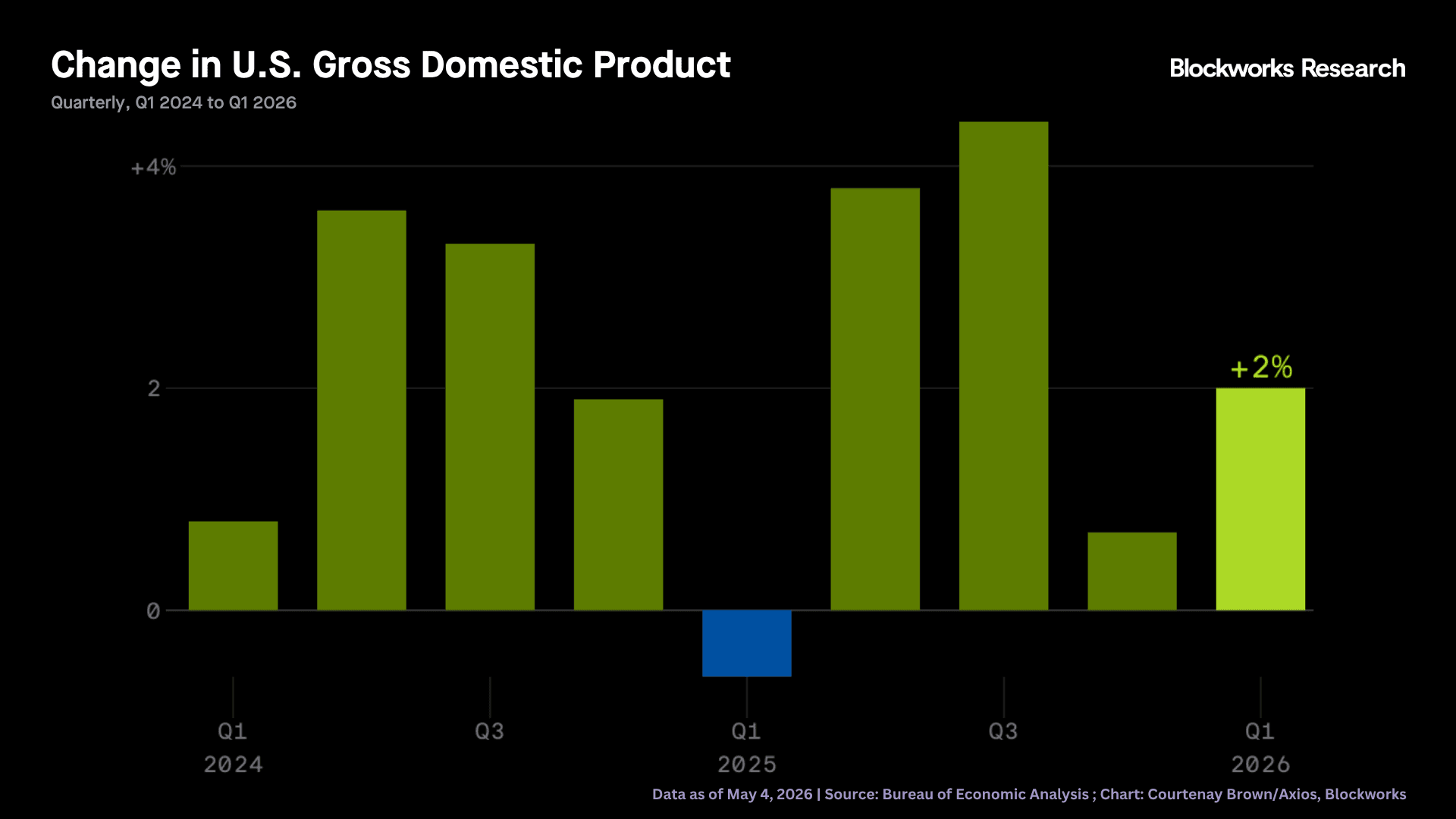
US GDP grew at a 2% annualized pace in Q1 2026, with AI-related capex doing most of the heavy lifting. Business investment surged 10% annualized, and information processing equipment and software alone contributed 1.3% to growth, more than consumer spending's 1%. Beneath that, the Iran war energy shock is starting to bite.
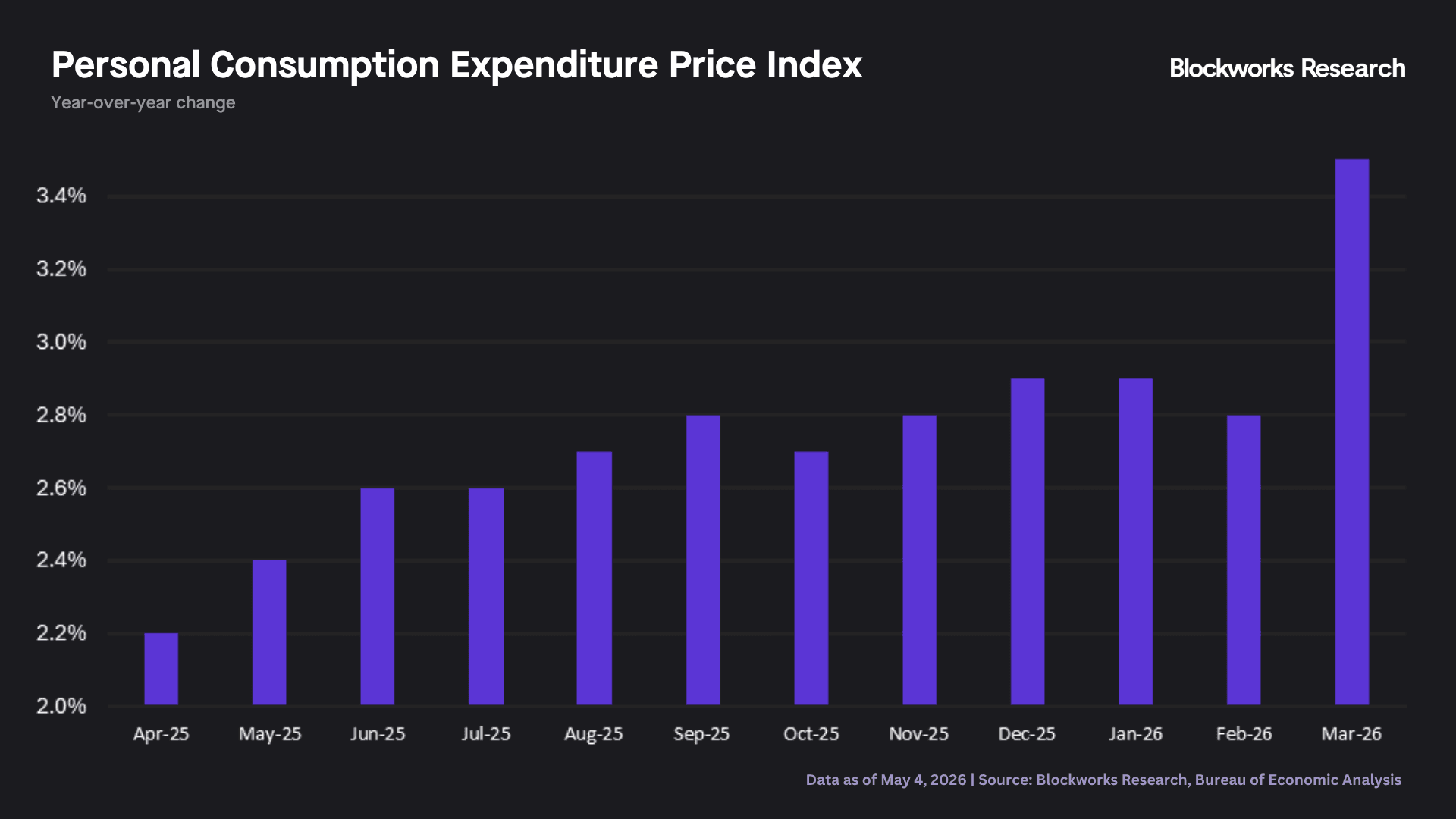
Headline PCE jumped to 3.5% YoY in March from 2.8%, the personal savings rate fell to 3.6% (the lowest since 2022), and consumer spending is outpacing income growth. Labor remains tight (initial claims at the lowest since 1969), but AI is keeping growth afloat while inflation risks build, and the longer the conflict drags on, the greater the risk energy prices erode that cushion.
Network Activity
Bitcoin REV remained subdued in April, holding near ~$5.4M and extending the multi-month compression in transaction fee activity observed since mid-2025. Despite stabilizing after February’s decline, REV continues to sit near cycle lows, underscoring persistently weak onchain demand and limited fee pressure across the network. Bitcoin's average mining cost held in the ~$82K range through April, but the rally in BTC price narrowed the gap meaningfully. The 30-day average mining-cost-to-price ratio compressed to ~1.12 from ~1.21 in March, with the spot ratio dipping toward ~1.05 by early May. The industry remains underwater on average, but the trajectory is clearly improving, and another leg higher in BTC could push the marginal miner back into profitability for the first time in months. Scale advantages continue to favor the largest, most efficient operators, while higher-cost miners remain under financial strain heading into May.

Marc covers Ethereum, Bitcoin and their L2s. Previously led Ethereum and DeFi research at CoinShares.