Bitcoin April 2024 Update

Market Data:
Market Commentary
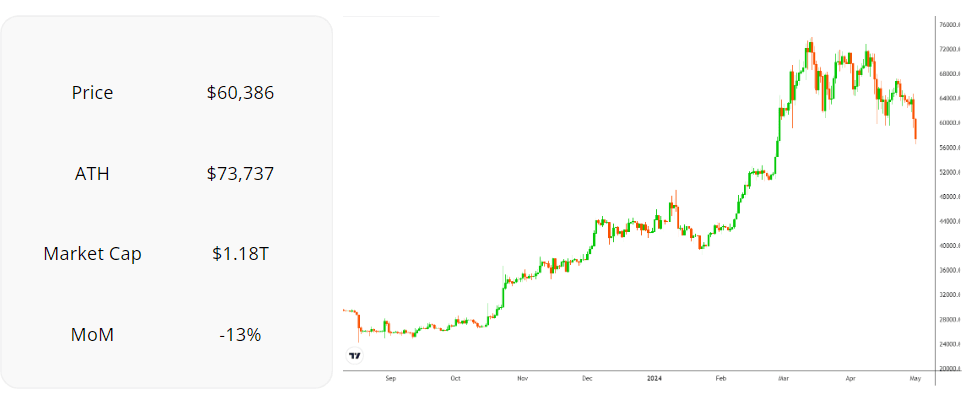
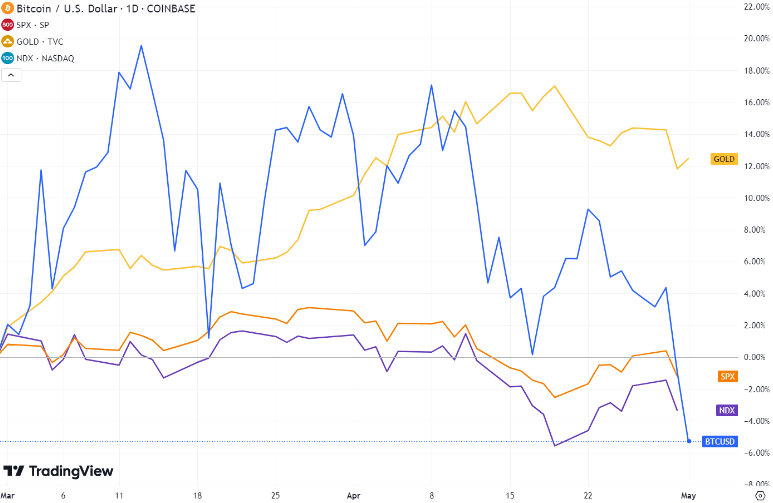
In April, markets fell as inflation data remained elevated above the Federal Reserve’s 2% target rate and the likelihood of interest rates staying higher for longer increased. The latest Consumer Price Index (CPI) report from the Bureau of Labor Statistics showed a surge in price pressures from 3.2% in February to 3.5% in March 2024, surpassing forecasts of a 3.4% increase. The S&P 500 fell 4.1%, while the NASDAQ fell 3.5%, ending a 5-month winning streak for equity holders. This was not surprising for a month that saw geopolitical tensions in the Middle East and sticky inflation data. With the latest economic data showing that prices are still rising too quickly, the Federal Reserve decided to hold interest rates steady for the sixth time and acknowledged “lack of further progress” on cooling inflation. One month ago, markets were pricing in two rate cuts this year. Those odds have now dropped to an estimated 40% chance of one rate cut by year-end. As a result, treasury two-year yields topped 5% - the highest level since November while the dollar notched its fourth consecutive monthly advance, its longest winning run since September 2022. These macro factors did not help as BTC ended the month down 13%, falling from $69.3K to $60.4K, its worst monthly performance since January 2022. Conversely, gold had a great month, hitting an all-time high at $2,400 per troy ounce. Given the economic outlook, as a supportive mechanism, the Fed also announced it would slow the run-off of its multi-trillion-dollar balance sheet from $60B to $25B. While we are still far away from another era of quantitative easing, a reduction of the current tightening regime by more than half is something worth paying attention to.
Hong Kong’s first spot BTC (and ETH) ETFs started trading on April 29th. First-day flows reported $12M in trading volume, a drop in the bucket compared to the US BTC ETFs’ first day which was measured in the billions. However, the size of ETF markets between the two nations is vastly different, with the US Bitcoin ETF market larger than the entire Hong Kong ETF market combined. One differentiator between the two products is that the HK ETFs allow for in-kind redemption (vs cash-only redemption in the US). This design allows those with existing ETH/BTC coins an easier process to enter the market and vice versa. Overall, the launch of HK crypto ETFs may not move the needle in initial flows but rather is more symbolic of the global markets' newfound acceptance of crypto as a legitimately investable asset class.
BTC ETF inflows slowed down in April, reaching a total AUM of $53B on April 30. Notably, BlackRock’s IBIT halted its 71-day inflow streak on April 24, triggering some concerns as the fund previously consistently attracted new investments daily. However, it is important to zoom out and realize that after starting with an AUM of 2,621 BTC on Jan. 11, IBIT has increased its holdings by as much as 10,378% becoming a member of the $10B ETF club and the fastest ETF ever to reach that milestone. This pause in inflows is likely temporary as investment managers readjust their portfolio risk and investment platforms take some time to establish the necessary compliance framework to sell Bitcoin ETF products.

Marc covers Ethereum, Bitcoin and their L2s. Previously led Ethereum and DeFi research at CoinShares.