Bi-Weekly Recap: October 28 - November 11, 2022

Key Stories
FTX / Alameda
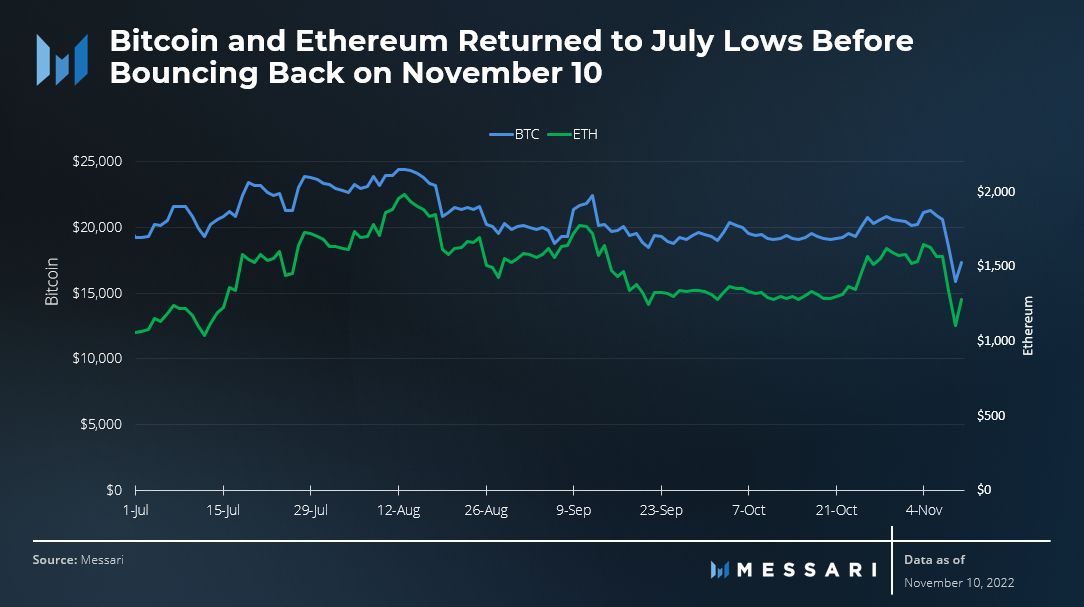
The FTX meltdown is not only the story of the crypto week, but maybe of the last 10 years. We covered the FTX/Alameda drama in our play-by-play along with the potential implications in our in-depth piece yesterday. The episode sent the crypto market into a tailspin early this week. ETH and BTC both sold off sharply, dropping over 20% on November 8 and 9, before nearly retracing to their previous levels on November 10.
In the few short hours since that piece, published on November 10, FTX partnered with Tron to allow swaps off of the FTX platform for holders of TRX, BTT, JST, SUN, and HT. The withdrawals were backed by a special credit facility funded with $13 million. CEO Sam Bankman-Fried also came out to announce he was pursuing funding to help pay back customers. He also highlighted how the primary cause for the liquidity issue was mislabeled accounts, which lead to a misunderstanding of customer leverage.
While withdrawals on FTX still seemed to be paused for most FTX users, a small subset was able to withdraw. During that time, it seems some withdrawals were allowed for Bahamian residents. FTX claimed this is due to local regulations. A black market has since opened up for those looking to use Bahamian connections to withdraw funds from FTX, including through the FTX NFT platform. Late on November 10, the Securities Commission of The Bahamas froze the assets of FTX, further limiting those able to withdraw. SBF subsequently resigned, and FTX went into Chapter 11 bankruptcy.
U.S. regulators weighed in. SEC Chair Gary Gensler called crypto “significantly non-compliant” and indicated consumers need better protections. The White House said they were “monitoring the crypto crash” and also called for more regulation. One way or another, regulation is likely coming in the next few months.

Tom is a Sr. Research Analyst at Messari. His primary focus is on Layer-1's as well as the relationship between traditional finance and crypto. Prior to joining Messari, Tom worked in Investment Consulting at Meketa and Investment Management at SSGA. Tom studied Finance at Bentley University and earned his CFA and CAIA Charters.